Paris rewards you for slowing down. This private 2.5-hour evening in Saint-Germain-des-Prés is built for exactly that: a guided stroll through classic streets, story-filled stops (including an 11th-century Abbey), and art links that make the neighborhood feel personal, not touristy. I like that the pace stays intimate—you’re not dodging tour groups at every corner.
My other big favorite is the tasting. You finish at a family-run wine bistro (in the same family since 1950) and you get 2 glasses of French wine plus a plate of French cheese. One consideration: it’s still a walking tour, so if you tire easily, you’ll want to set expectations with your guide about slower breaks and comfort.
In This Review
- Key highlights at a glance
- Saint-Germain-des-Prés after dark: why this “2.5 hours” works
- Getting started at Saint-Germain-des-Prés (and why the meeting point matters)
- The Abbey and the art-map of the neighborhood
- Place Furstenberg to the museum: what you’ll actually learn
- Rue de Seine and the private galleries: street-level Paris culture
- Rue des Saints-Augustins: Picasso, Louis XIII, and the subtle drama of old addresses
- The finish: a family bistro tasting with locals (and a real Paris ending)
- Price and what you’re really paying for ($98.54 per person)
- English on the walk: what to expect and how to set yourself up
- How much walking is too much?
- Who should book this Saint-Germain evening tour?
- Should you book it?
- FAQ
- FAQ
- How long is the Saint-Germain-des-Prés evening experience?
- Where does the tour start and end?
- Is this a private tour?
- What’s included in the cheese and wine part?
- Are museum or entry fees included?
- Is the tour offered in English?
- Will I receive a mobile ticket?
- Is the meeting point near public transportation?
- Can I get a full refund if I cancel?
Key highlights at a glance
- Private and low-crowd by design: only your group, so you can actually hear and ask questions
- Wine and cheese included: 2 glasses of French wine with a plate of French cheese at the end
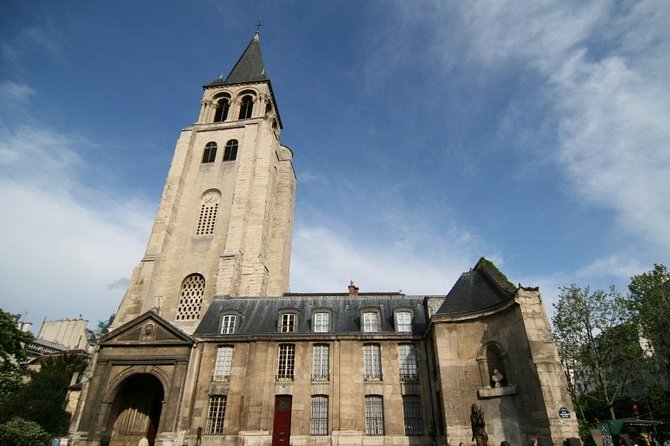
- 11th-century Abbey stop: a real anchor point for understanding Saint-Germain
- Delacroix Museum connection: Eugène Delacroix Museum is part of the Louvre network
- Art-and-writer street storytelling: links to Picasso and writers you’d otherwise miss
- Family bistro with local energy: conversations flow easily, and on some days there can even be dancing
Saint-Germain-des-Prés after dark: why this “2.5 hours” works
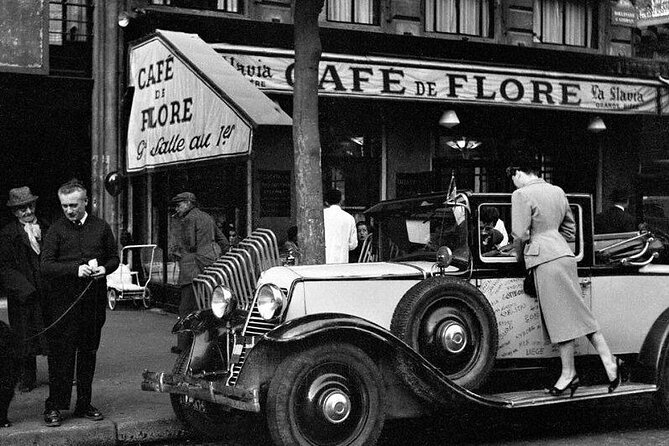
Saint-Germain-des-Prés is one of those Paris neighborhoods that can feel either magical or overly staged, depending on when you go and who you’re with. This tour is timed like a gift. You’re out in the evening when the streets loosen up, the pace feels more human, and the stops don’t feel like a checklist.
What makes this one different is how it connects the dots. You’re not just seeing “pretty streets.” You’re getting why those streets matter: the mix of writers, artists, and old-school Paris life that helped shape the neighborhood’s reputation. The walking route flows from major landmarks to smaller corners—so you end with a sense of place, not just photos.
And because it’s private, you can match the rhythm to your group. If you like to linger at details—doorways, courtyards, street façades—you’ll have the freedom to do it. If you prefer a faster pace, you can keep things moving too.
Getting started at Saint-Germain-des-Prés (and why the meeting point matters)
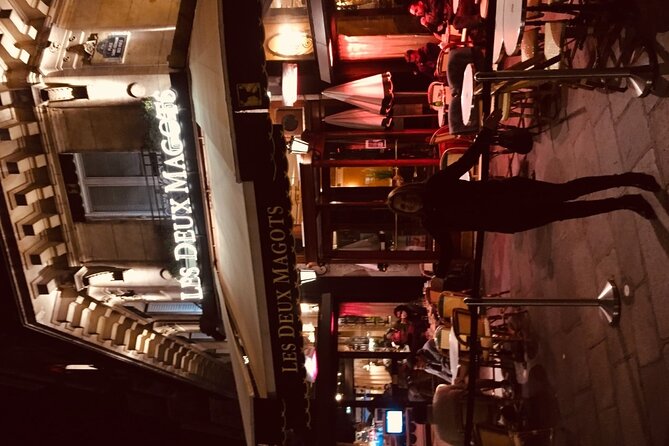
The tour starts in Saint-Germain-des-Prés (75006) and ends back at the same meeting spot. That’s a small detail, but it helps a lot. You don’t need to plan another transport step for the end of your evening—especially nice if you’re planning dinner after.
It’s also close to public transportation, which matters in Paris where “easy” can turn into “long walk” if you misjudge a station distance. Since the tour is about 2 hours 30 minutes, having a near-transit start keeps the night from getting eaten by logistics.
One more practical tip: wear shoes you can walk in for a couple of hours. This is not a sit-and-stare museum tour. You’ll be moving through streets tied to art and literature, so you’ll want comfort for the cobblestones and the small uphill-and-downhill bits that show up in this part of Paris.
The Abbey and the art-map of the neighborhood
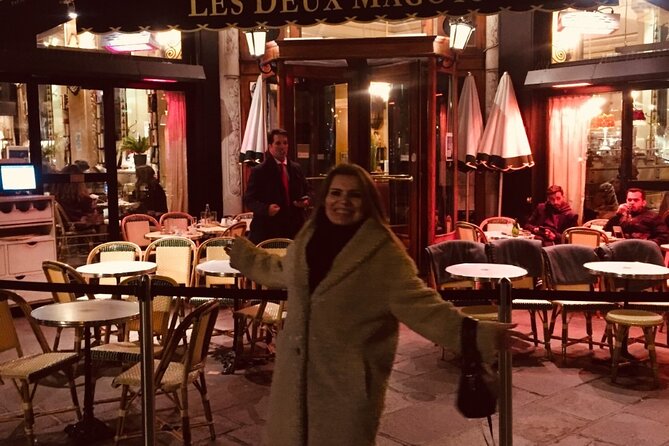
Early on, you visit the 11th-century Abbey area. Even if you don’t know every French religious term, you’ll feel the time jump instantly. This stop works as an anchor: it gives you context for why Saint-Germain became such a creative magnet. The building and surrounding streets don’t just look old; they explain why artists and writers would gravitate here in the first place.
Then the tour shifts to Place Furstenberg, one of those Paris squares that feels made for slow conversations. It’s romantic in an understated way—more “quiet charm” than “big spectacle.” You’ll likely notice how the square’s layout pulls you inward, creating a natural pause in the walk.
From there, you head toward the Eugène Delacroix Museum, which is part of the Louvre Museum network. This is a smart choice for an evening tour. You’re not going from one huge museum hall to another; you’re getting a focused art stop that fits the time window. Delacroix is a great bridge between classic Paris and the more bohemian side of Saint-Germain, so it helps the story feel cohesive.
Practical consideration: museum time can affect pacing. If you tend to rush, you may want to let your guide know you prefer the “high points” view. If you love lingering, tell them that too—private guiding makes that kind of adjustment possible.
Place Furstenberg to the museum: what you’ll actually learn
Here’s what I like about this section: it connects buildings to people. You see how Paris geography becomes biography. Place Furstenberg isn’t just a square. Rue-and-square rhythms start to make sense as you connect them.
With the Delacroix stop, you’re also getting a sense of Paris art life beyond postcard-famous names. Delacroix is known enough to feel significant, but the museum setting keeps it personal. You’re more likely to feel like you’re stepping into a specific artistic world rather than passing through a crowd.
Because free entrances are included for the places selected on the route, this part also helps value. You’re not paying separate entry fees just to do the meaningful stops.
One small caution: if your goal is to maximize time in only the largest sites, an art-focused museum stop might feel like a “detour.” But if your goal is to understand the neighborhood—this is one of the better ways to do it.
Rue de Seine and the private galleries: street-level Paris culture
After the museum area, the route leads you down Rue de Seine, known for private art galleries. This is one of those streets where the vibe changes block by block. Even if some galleries aren’t open to walk-ins at that moment, the street still tells a story about how Paris culture works: art isn’t just in big public spaces. It’s also in small rooms, private visits, and the quiet ecosystem of people who collect and create.
This is where you’ll start to feel the tour’s “shortcut.” You won’t just wander randomly. You’ll walk with someone who can point out what’s worth noticing and what’s just noise.
If you’ve ever wandered art streets in Paris and felt like you were missing the subtext, this is the fix. You learn what to look for: gallery entrances, the tone of storefronts, and the kind of creative world that grew there.
Rue des Saints-Augustins: Picasso, Louis XIII, and the subtle drama of old addresses
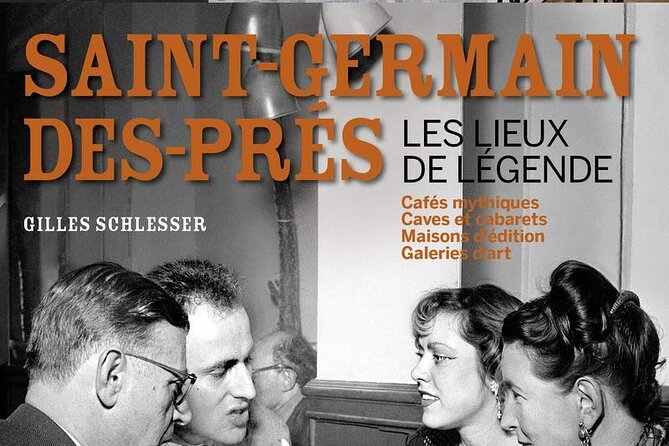
Next is Rue des Saints-Augustins, and it comes with two big connections that make the street feel alive: it’s linked to Picasso’s former studio and also to an area where King Louis XIII resided.
This is the kind of storytelling that changes how you see old streets. You stop treating them like background and start treating them like a timeline. Paris addresses can feel like trivia, but on this walk they become clues—why artists chose certain areas, how power shaped neighborhoods, and how a street’s identity can shift across centuries.
It also adds variety to the evening. Earlier stops were about major institutions and classic landmarks. This is more about the human scale: a street that housed studio life and royal presence in the same general neighborhood fabric.
The finish: a family bistro tasting with locals (and a real Paris ending)
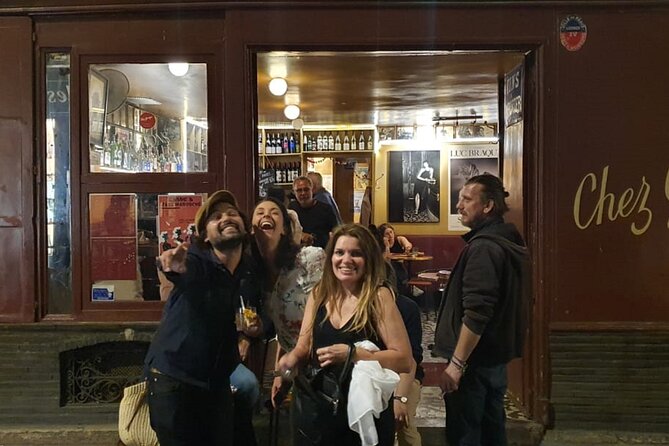
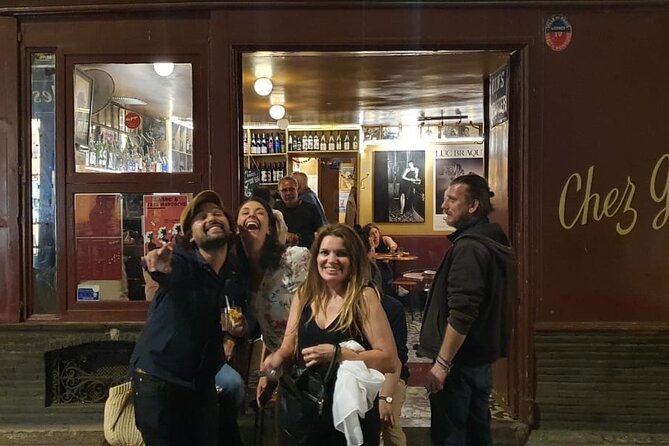
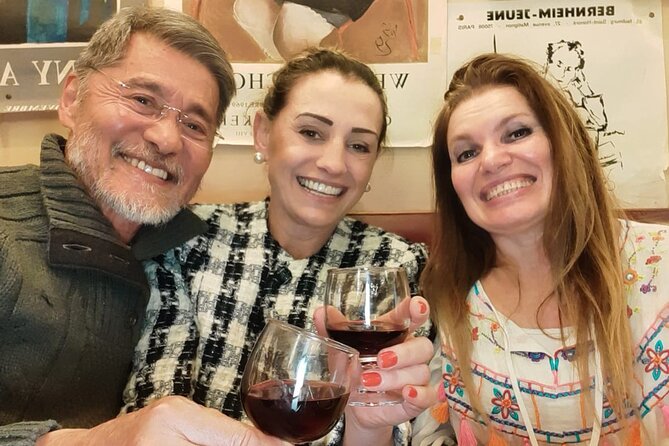
The day’s finale is at an authentic local French wine bistro owned by the same family since 1950. This is where the tour turns from sightseeing into lived experience.
You’ll enjoy a simple, very Paris kind of pairing: cheese and wine. The point isn’t just eating and drinking. It’s the atmosphere. This is the place where locals gather, conversations move easily, and the energy stays warm. Some days, there can even be dancing—so think of it as a possible bonus, not a guaranteed schedule item.
Value-wise, the tasting is the part you feel right away. You get 2 glasses of French wine and a plate of French cheese as part of the experience, and that’s usually the most expensive portion of “evening plans” in Paris if you were doing it on your own.
One tip before you go: pace yourself. If you’ve been walking and standing for most of the tour, you’ll enjoy the tasting more if you slow down at the end and let the food and wine do their job—no sprinting afterward.
Price and what you’re really paying for ($98.54 per person)
At $98.54 per person for about 2 hours 30 minutes, this isn’t a budget “walk with a map.” It’s a guided evening with included entrances and an included tasting. That’s where the price makes sense.
You’re paying for three things:
- Private guiding (only your group, not shared with strangers)
- Time-saving route logic (you’re walking a coherent loop with meaningful stops)
- Included value (free entrances in selected places plus the cheese-and-wine component)
If you were to replicate this independently, you’d likely spend money on museum or site entries, then add a separate dinner-style wine-and-cheese stop. This tour folds those costs into one plan, and it also gives you the story glue—Picasso and Louis XIII links, plus the writer-and-artist Saint-Germain context.
Group discounts are mentioned as a feature too. If you’re traveling with friends or family, that can improve the value quickly because the private guiding cost gets distributed.
English on the walk: what to expect and how to set yourself up
The tour is offered in English, which is a big deal if you want the commentary to land. That said, language can vary from guide to guide and even moment to moment.
Here’s how you protect yourself: if clear English is crucial, reach out at booking time and make sure your guide can accommodate your needs. If you want slower explanations or more back-and-forth, say so early. Private tours work best when you communicate what you want from the evening.
Also, the route has lots of story beats. If you miss one detail, it can feel like you’re behind. A simple fix: ask a question when something grabs you—your guide can steer you back on track.
How much walking is too much?
This is the one area where I’d tell you to plan realistically. One person described the experience as a bit too much walking. That’s not shocking in a neighborhood where streets are charming and full of corners, and where you’re moving between landmarks rather than staying put.
If walking is your limiting factor, don’t assume you’re stuck. Private guiding usually means you can request:
- a slower pace
- more frequent pauses
- a slightly adjusted route if possible
Go into it knowing you’ll be on your feet for most of the tour. If you want “light strolling,” this can still work, but only if you manage your expectations and pace yourself.
Who should book this Saint-Germain evening tour?
Book it if you want:
- a private guided evening in a classic Paris neighborhood
- art and writing connections (not just monuments)
- a built-in ending where cheese and wine are included
- a route that feels like you’re learning how locals see Saint-Germain
Skip it if:
- you want minimal walking
- you’re only interested in large, famous museums with long interior time
- you don’t care about neighborhood stories and just want a quick photo loop
This tour is a great fit for couples, friend groups, and solo travelers who like structure but still want a human-feeling night.
Should you book it?
Yes, if your idea of a great Paris night is part street-walking, part art context, and part local-style food and wine. The combination of an Abbey stop, a focused art museum moment at the Eugène Delacroix Museum, and a proper cheese-and-wine finish at a family bistro since 1950 creates a full arc. You end the evening with the feeling that you actually learned something about Saint-Germain, not just passed through it.
Before you go, do two simple things: wear comfortable shoes, and confirm your language expectations if English clarity matters a lot to you. With that, this is the kind of evening that makes Paris feel personal.
FAQ
FAQ
How long is the Saint-Germain-des-Prés evening experience?
It runs about 2 hours 30 minutes.
Where does the tour start and end?
It starts in Saint-Germain-des-Prés, 75006 Paris, France, and it ends back at the same meeting point.
Is this a private tour?
Yes. It’s private, meaning only your group participates.
What’s included in the cheese and wine part?
You get a plate of French cheese and 2 glasses of French wine.
Are museum or entry fees included?
You get free entrances in the places selected on the route.
Is the tour offered in English?
Yes, it’s offered in English.
Will I receive a mobile ticket?
Yes. The experience includes a mobile ticket.
Is the meeting point near public transportation?
Yes, it’s near public transportation.
Can I get a full refund if I cancel?
Free cancellation is available, and you can cancel up to 24 hours in advance for a full refund.