REVIEW · PARIS
Award-Winning Paris French Bakery Experience — Le Marais, 4th Arr
Book on Viator →Bookable on Viator
Bread, flour, and real technique in Le Marais. This class is set inside a working boulangerie in Paris’s 4th arrondissement, where you learn how dough turns into classic French favorites with expert help. It’s also small—max 9 people—so the guide can watch what your hands are doing.
Two things I really like: you start with a traditional French morning breakfast or goûter, and you leave with your own freshly baked baguette to take home. The best part is getting your hands on real dough—rolling, kneading, mixing, and baking under a master baker’s guidance, not just watching from the sidelines.
One drawback to consider is that you may not start from totally raw, end-to-end croissant dough in every format; some guests report pre-prepped elements. In other words, the class is hands-on, but it still runs like a real bakery schedule, which can mean less start-from-zero time than you might picture.
In This Review
- Key things to know before you bake
- Why Le Marais makes this French baking class feel extra real
- Meeting at Miss Manon in the 4th Arr: plan your arrival time
- The first taste: breakfast or goûter before you touch the dough
- The bakery tour you can actually learn from
- Hands-on baguettes, croissants, and pain au chocolat at the workbench
- Learning technique, not just collecting pastries
- From oven to bag: taking home your baguette (and keeping it good)
- Price and value: what $114.88 buys you in practice
- Who should book this class (and who might want a different experience)
- Should you book this Paris French bakery experience in Le Marais?
- FAQ
- Where does the class start?
- How long is the baking experience?
- Is the tour in English?
- What’s included in the price?
- Do they provide hotel pickup?
- Can I get a refund if I cancel?
Key things to know before you bake
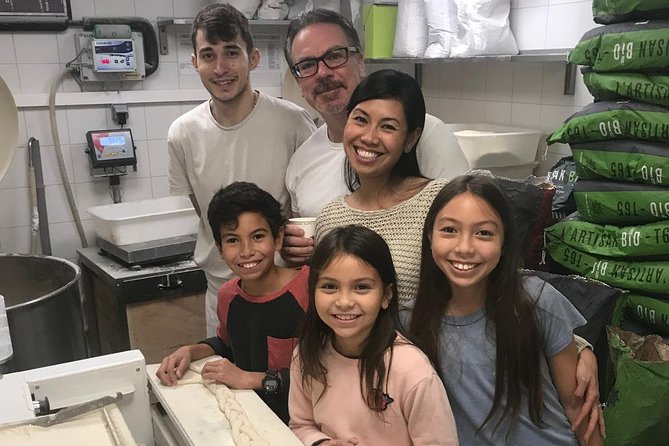
- Small group size (max 9) means more attention at the bench.
- Breakfast or goûter on arrival sets the tone before you roll dough.
- Multiple classic items are often part of the class flow, including baguettes and croissant-style pastries.
- A master baker leads the session, with English support and clear step-by-step instruction.
- You take home what you make, especially your own baguette.
- This happens in an active bakery—tight spaces and stairs are part of the reality.
Why Le Marais makes this French baking class feel extra real
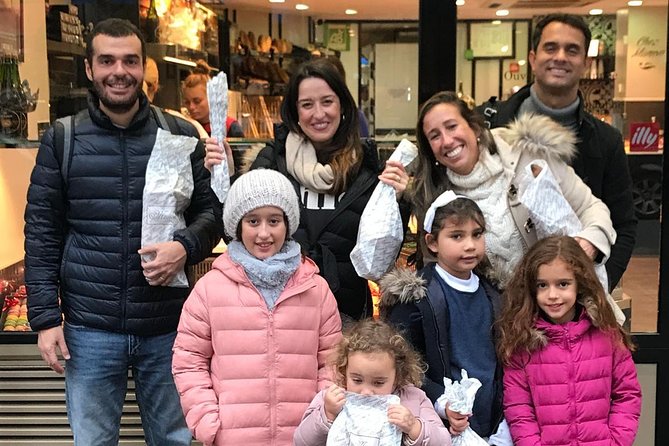
Le Marais is a smart choice for this kind of experience. You get an old-Paris neighborhood vibe right where food culture is taken seriously, and you can easily pair the class with a morning walk afterward. It also keeps you close to lots of shops and cafés if you want a low-key day before or after baking.
More importantly, the class isn’t staged in a test kitchen. You’re in a working bakery environment, so you see how production and teaching fit together. That matters because French bread is not just a recipe. It’s timing, feel, fermentation, oven heat, and attention.
If you’re a bread lover, you’ll appreciate the contrast between what looks simple on a menu and what it takes to produce consistently good results day after day.
Meeting at Miss Manon in the 4th Arr: plan your arrival time
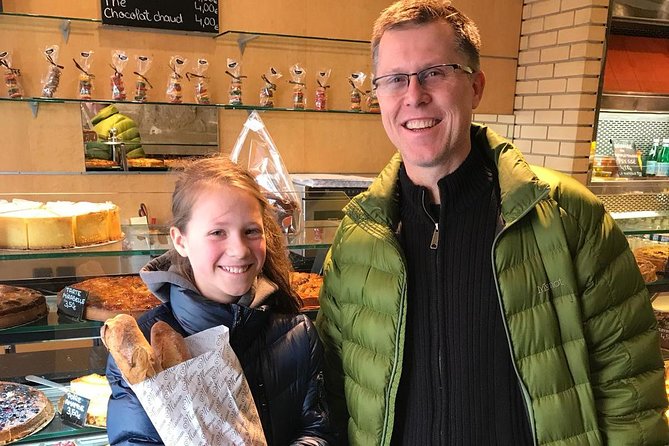
Your meeting point is Miss Manon at 87 Rue Saint-Antoine, 75004 Paris. The tour ends back at the meeting point, so you don’t need to worry about getting across town after class.
One practical tip: show up early enough to get oriented. Morning and afternoon tours use different locations, and there can be real-world shuffling when you’re working inside bakeries. A few minutes of calm makes the whole experience smoother.
Also, wear shoes you trust. This kind of workshop can involve walking in and out of bakery spaces and, in at least one account, steep staircases. You’ll be standing, moving around, and staying close to work areas.
The first taste: breakfast or goûter before you touch the dough
You start with a traditional French breakfast on arrival for morning tours, or a goûter in the afternoon. That’s a key part of the experience because it gets you into the rhythm of a French bakery visit—coffee, pastry, and the pleasant sense that something warm is coming.
Then you sample baked goods before class work begins. Think of this as your “what we’re aiming for” moment. You’ll get to taste French baking in front of you, which makes the technique you learn feel more concrete.
If you’re trying to decide whether this is worth doing beyond the baking, this is why it’s valuable: you’re not just learning how to cook. You’re learning the goal.
The bakery tour you can actually learn from
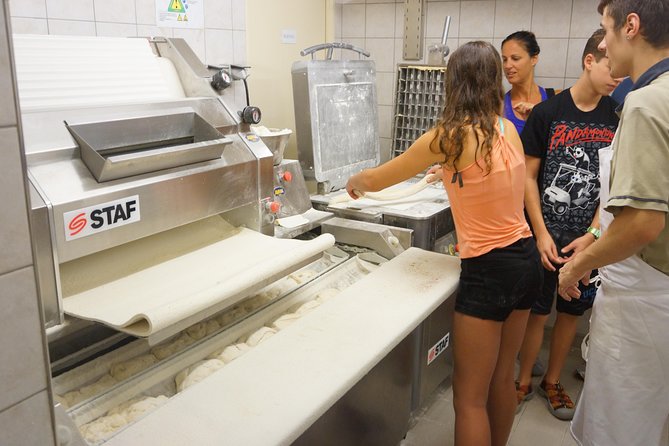
After the initial food, you go into the back room and see how the bakery operates. You’ll learn how bakers work with handmade details alongside industrial tools—things like machines used for batch production and the ovens that give French pastries their distinctive character.
This is the part I find most useful if you cook at home. Most cooking classes only teach the “how” of one finished item. Here, the focus is on process: how production works when there are customers waiting, staff moving, dough changing through time, and heat that needs respect.
Some guests also describe seeing a view into a lower-level baking area under a café, which adds an extra layer of “wow, this is a real operation” to the tour. Even if your route looks different, the theme stays the same: you’re inside the system, not just beside it.
Hands-on baguettes, croissants, and pain au chocolat at the workbench
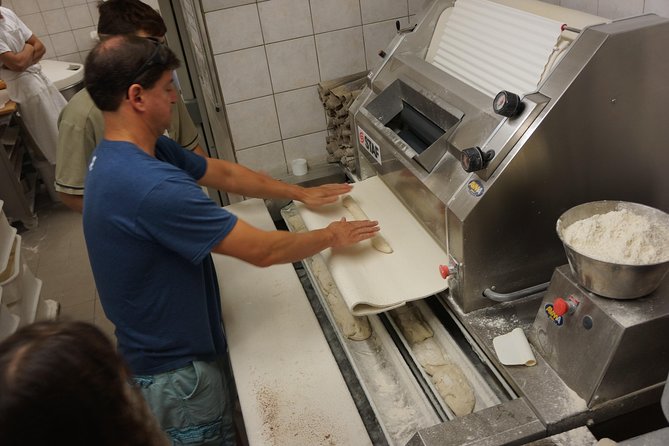
Then the fun part starts: hands-on baking under guidance from a master French baker. You’ll knead, roll, mix, and bake—learning technique while you do it. The goal is to give you enough skill that you can recreate the basics later, not just collect a souvenir.
A class like this often includes shaping baguette dough and making pastries such as croissant-style items and pain au chocolat. Some guests mention making baguettes and boules, plus items like financiers and croissants. What you personally make can depend on timing and what’s happening in the kitchen.
You might meet guides like Mourad, Alice, Lisa, or Elyse, with reviews praising English support and a friendly, patient teaching style. If the guide is Mourad, expect humor along the way; if it’s Alice or Lisa, expect clear direction and a pace that works even when you’re new.
One realistic note: you’re in a working bakery, so not every step is necessarily done from scratch at the bench. If you’re hoping for a totally start-to-finish croissant journey, set expectations that you’ll still get hands-on shaping and baking, even if some dough prep happens earlier.
Learning technique, not just collecting pastries
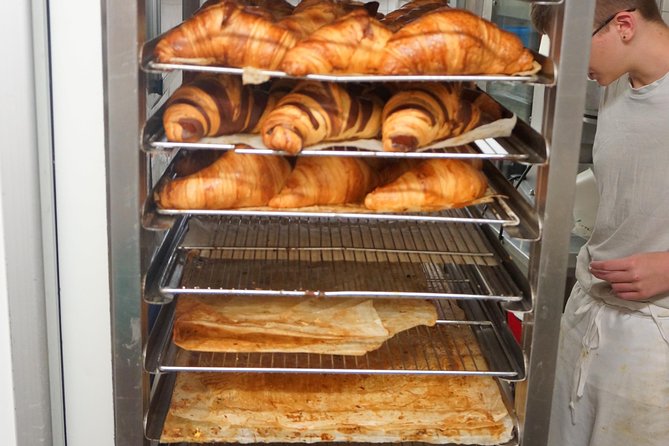
French pastry skills can sound intimidating—until you see the method. The class is set up to help you understand the why behind the motions: how dough should feel, how to handle it without overworking, and how fermentation and oven heat change the result.
That’s why the “master baker” element matters. You learn with feedback in real time. If your dough is sticking or behaving oddly, the guide can correct your technique on the spot. That kind of coaching is hard to get from a cookbook.
You’ll also learn how the bakery balances craft and efficiency: handmade steps for the parts that require touch, and machines for batch production. That makes the lesson feel practical. You’re not just learning a romantic tradition—you’re seeing how it works at scale.
Some guests mention that the workspace can feel cramped because you’re in the middle of an active bakery setup. If that makes you nervous, take it as a sign you’re getting the real thing. You’re learning right where the work happens.
From oven to bag: taking home your baguette (and keeping it good)
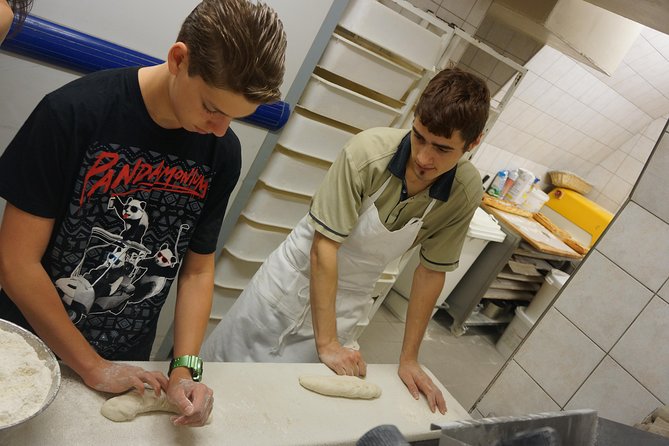
At the end, you leave with your very own homemade baguette. That’s not just a nice perk. It’s a built-in way to judge your success. When you take the baguette home, you get to feel how it holds up outside the bakery environment—crust texture, aroma, and that fresh bread smell that makes your apartment feel like Paris.
You’ll likely also take home other items you help make, depending on the class flow. Many guests describe leaving with a big bag of baked goods and eating them as snacks right away.
Storage tip for real life: eat the baguette sooner rather than later for the best texture. If you’re walking around Le Marais afterward, plan your route so the bread doesn’t get crushed. Put it in a tote or sturdy bag, not a soft pouch.
Price and value: what $114.88 buys you in practice
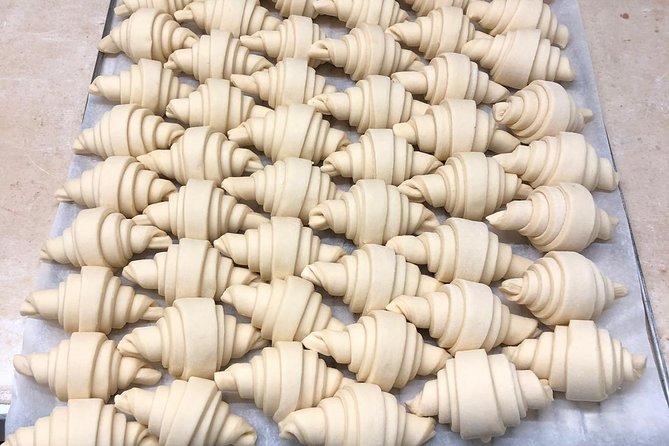
This class costs $114.88 per person for about 2 hours. On the surface, that can feel high if you’re comparing it to a basic cooking class. But this isn’t just a recipe lesson. You’re paying for a teaching staff, ingredients and oven time, and the privilege of learning inside a real French bakery.
The included items also matter. You get a traditional breakfast/goûter, a bakery tour, the small-group baking class, and a baked baguette to take home. When you factor all of that in, the value becomes clearer: it’s part food experience, part skill-building workshop.
The small-group cap (max 9) is a big value lever. In a larger group, your hands-on time shrinks and feedback becomes limited. Here, the format is designed so you can actually be coached.
Booked about 51 days in advance on average, which is another hint that this is popular. If you want a weekend slot, earlier booking helps.
Who should book this class (and who might want a different experience)
This is a strong pick if:
- You want hands-on French baking rather than a lecture or tasting-only tour.
- You enjoy learning from a real working environment, with both craft and production tools in view.
- You’re traveling with family and kids can handle a supervised activity in a busy space. Reviews mention great experiences with children when an adult is present and the instructor is patient.
This may be less ideal if:
- You’re expecting a super long, every-step, start-from-zero croissant class. Some guests describe pre-prepped elements, so the hands-on portion may feel shorter than described for certain pastries.
- You dislike tight spaces or stairs. Because it takes place in a real bakery, walking up and down inside the shop can be part of the experience.
If you’re a first-timer who wants the basics of baguette technique and confidence to bake later, this class is exactly the kind of structured introduction that helps.
Should you book this Paris French bakery experience in Le Marais?
I’d book it if you want an authentic, small-group bread workshop that ends with real bread in your hands—plus breakfast or goûter to start. The master baker instruction and working bakery setting are the difference between this and a generic demo class.
I’d think twice if your main goal is a long, fully from-scratch pastry journey with zero shortcuts, especially for croissants. The format sounds designed to teach technique and let you bake, but it’s still paced like a working bakery.
If you do book, come ready to get flour on your sleeves, arrive a bit early, and ask your guide questions while you work. The people leading these sessions are often praised for making the class fun and understandable, and that’s where you’ll get the most value.
FAQ
Where does the class start?
The meeting point is Miss Manon, 87 Rue Saint-Antoine, 75004 Paris, France. The tour ends back at the meeting point.
How long is the baking experience?
It runs about 2 hours (approx.).
Is the tour in English?
Yes, the class is offered in English.
What’s included in the price?
You get traditional French breakfast at arrival, a tour of a French bakery, a small-group baking class, and your baguette to take home.
Do they provide hotel pickup?
No. Hotel pickup and drop-off are not included.
Can I get a refund if I cancel?
Free cancellation is available if you cancel up to 24 hours in advance for a full refund.