Montmartre can feel like a postcard. This tour brings it closer to real life, walking you through quieter lanes while still hitting the big-name landmarks. I like the built-in mix of street-level wandering plus story stops that explain why this hill became the artists’ home base. I especially love the croissant moment at a top bakery, because it turns the whole experience into more than just sightseeing.
Here’s the trade-off: you’re going uphill. Expect some steep inclines on cobblestones, and the route is about 2 km total, so you’ll want comfortable shoes and a steady pace.
In This Review
- Key Points Worth Booking For
- Entering Montmartre Through Place Blanche’s Local Side
- Meeting Point to Hill Climb: What 2 km Feels Like in Real Life
- Montmartre Village: Cobblestones, Artists, and the Why Behind the Hill
- Moulin Rouge Area and the Bakery Stop That Changes the Mood
- Le Mur des Je t’aime: A Square of Love With a Side of Legend
- Le Moulin de la Galette: Windmills, Expensive Streets, and a Secret Passage
- Au Lapin Agile Vineyards: Last-Gasp Grape Growing on the Hill
- Sacré-Cœur Grand Finale: Getting a Different View of the Basilica
- Price and Value: Why $44.44 Can Make Sense Here
- Who This Tour Fits Best in Your Paris Plan
- Practical Tips to Get the Best Day Possible
- Should You Book Hidden Montmartre?
- FAQ
- How long is the Hidden Montmartre walking tour?
- What is included in the tour price?
- Is the tour in English?
- Are dietary requirements possible?
- Where does the tour start and end?
- What is the cancellation policy?
Key Points Worth Booking For
- Croissant tasting included at a prize-winning bakery stop near the start
- Secret streets focus, not a crowded checklist walk
- Panorama time from angles around Sacré-Cœur that many people miss
- Montmartre vineyards and a real sense of how the hill still produces wine
- Small group size capped at 14, which helps questions and pacing
- Flexible options for small-group or private touring
Entering Montmartre Through Place Blanche’s Local Side
The walk starts at Place Blanche, right as Montmartre begins to feel like its own little world. From there, the day is designed to get you oriented fast: not just where things are, but how the neighborhood works on foot. You’ll get a sense of the hill’s layout, the rhythm of staircases, and why people keep returning here even after seeing the usual sights.
Two practical perks matter. First, the tour is in English with a local guide who gives you tips for what else to do and eat during your stay. Second, the group cap of 14 travelers keeps it manageable when the streets get narrow and the hill gets steep.
Meeting Point to Hill Climb: What 2 km Feels Like in Real Life
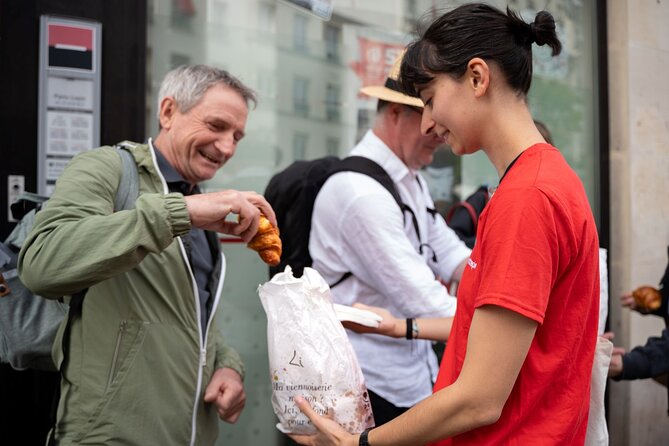
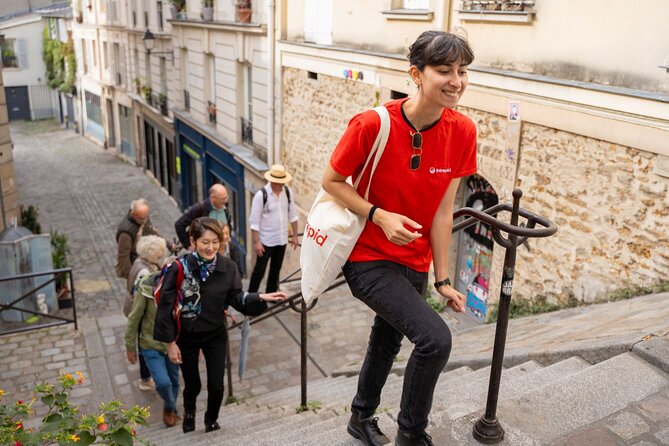
The full tour runs about 2 hours and covers roughly 2 km (1.2 miles). That distance sounds modest until you add cobblestones and repeated climbs. One thing I’d plan for: you won’t just be walking on level ground.
You do get a few built-in breaks at key points, so this doesn’t feel like a nonstop grind. Plus, the stops are spaced to keep your legs working while your brain stays interested. You’ll also have chances to look around, not just move through crowds.
If you’re traveling as a family, it’s described as child-friendly, but the hill means kids should be ready for stairs and uneven surfaces. If anyone in your group tires easily, going a little slower at the start helps a lot.
Montmartre Village: Cobblestones, Artists, and the Why Behind the Hill
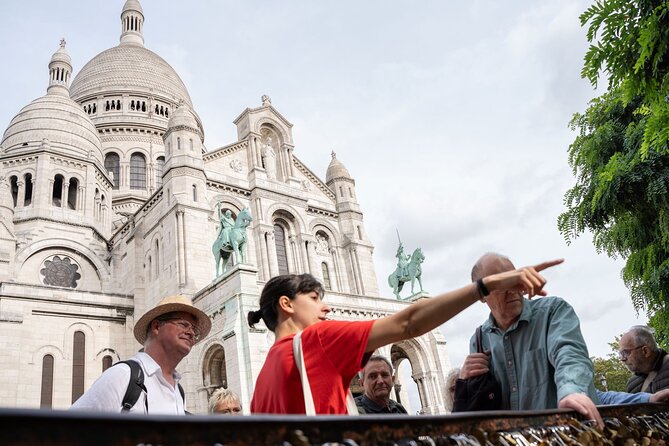
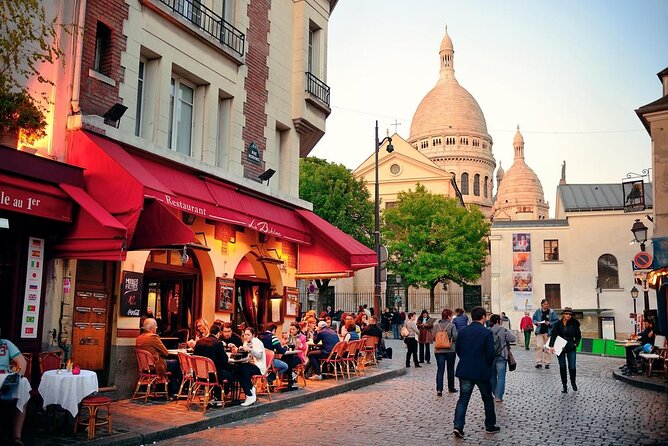
Your first major stop sets the tone. Montmartre is nicknamed the Village, and for good reason: it was built around artists’ lives, with painters drawn to the steep streets and the creative energy. This is one of the most visited parts of Paris now, which is exactly why a tour that focuses on the “real local side” matters.
What I like about the approach here is that it doesn’t just point at famous places. You get context about why Montmartre became a magnet for artists in the first place, then you’re guided through little local streets rather than only the busiest paths. That difference is huge for your photos too. You’re more likely to capture the character of the neighborhood instead of only crowds.
One consideration: because Montmartre draws heavy foot traffic, “hidden” still means you’ll sometimes be walking through lively streets. The goal is to reduce the worst crush and show you quieter segments where the neighborhood feels lived-in.
Moulin Rouge Area and the Bakery Stop That Changes the Mood
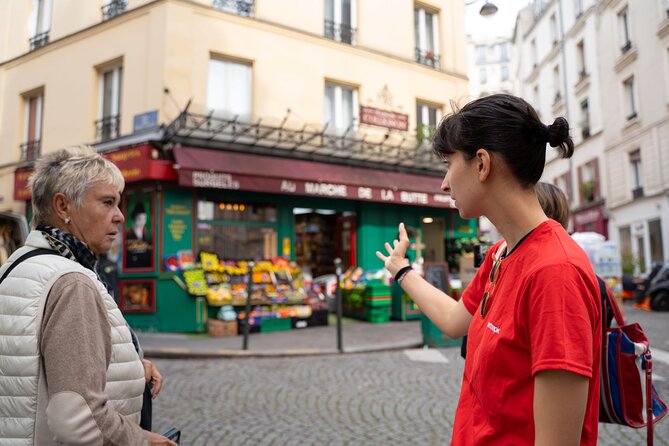
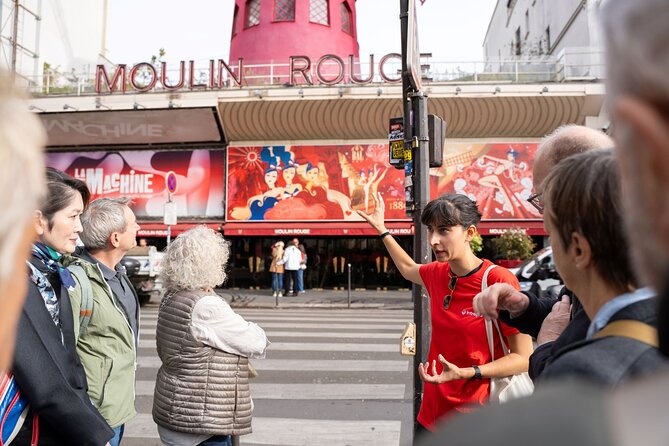
Opposite the Moulin Rouge windmill, the tour begins the uphill climb. This is where you get that classic Montmartre vibe: landmarks, viewpoints, and streets that seem designed for wandering. Along the way, you’ll spot references tied to pop culture and art, including the café from Amélie and the general story of Van Gogh’s home in the area.
Then comes the part that turns the temperature down on the whole experience: a stop at one of Paris’s best bakers, a shop recognized for prestigious prizes. Here you sample a buttery croissant (not included as an extra purchase on your own). This is one of those moments that makes you slow down and actually enjoy what you’re doing, not just check off stops.
A small drawback to note: the croissant stop is a set tasting, but additional food and drinks aren’t included. If you want water, coffee, or more pastries beyond what’s included, you’ll be paying separately.
Le Mur des Je t’aime: A Square of Love With a Side of Legend
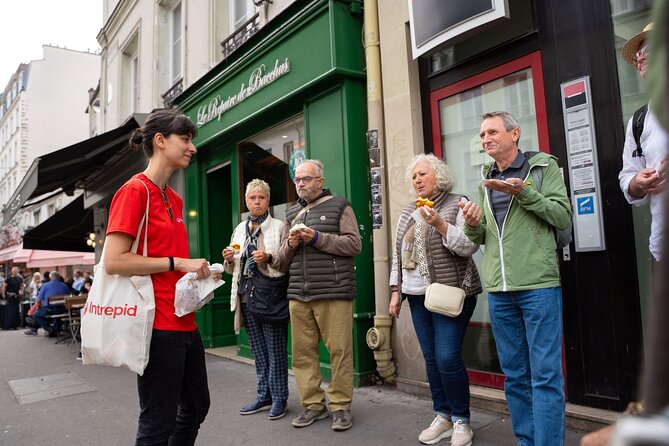
After the bakery, the route takes you to Le Mur des Je t’aime. This is the kind of place that looks simple until you learn the details. You’ll hear how “je t’aime” appears in 250 different languages, which makes the wall feel like a living snapshot of the world arriving in Paris.
But the tour doesn’t treat the wall like a quick photo stop. You’ll also hear a crazy legend tied to the first Parisian bishop. And that’s your pattern here: every photo moment is paired with a story that gives it meaning.
From there, you climb stairs again to reach one of Montmartre’s loveliest squares and learn about the one-time home of Pablo Picasso in the area. This section works well because it mixes romance, absurd legend, and real art history without turning into a lecture.
Le Moulin de la Galette: Windmills, Expensive Streets, and a Secret Passage
Next you pass by one of the last remaining windmills in Paris, now privatized. It’s a striking contrast: a historic structure you’d expect to feel public and open, but instead it’s tucked into modern reality. That’s very Montmartre, honestly—old signs, changing spaces.
Then you walk the “Champs-Élysées” of Montmartre, a stretch associated with some of the capital’s most expensive houses. You’ll get a sense of how art-world bohemia eventually met luxury, and you’ll see the neighborhood’s layers without needing a museum ticket.
Here’s one of the strongest practical features of this route: you’ll go through a totally secret passage that leads to both one of the best views over Paris and a very cute cobbled street. This is the kind of stop that’s worth paying for even if you’re not a big “history” person. It’s the payoff for walking the hill and trusting the guide’s routes.
Keep your camera ready. Views tend to be quick, and the passage is part of the fun. The only real consideration is that the quality of the view depends on weather.
Au Lapin Agile Vineyards: Last-Gasp Grape Growing on the Hill
Montmartre’s vineyards are the surprise element. You’ll see where urban wine grapes are grown and learn how the hill produces a surprisingly good red wine. It’s one of those facts that makes you look at the neighborhood differently, because it adds agriculture to the usual art-and-stairs mental picture.
Opposite the vineyard entrance is Le Lapin Agile, and your guide connects it to the legend of Lolo, the painting donkey. Even if you don’t know the story, the key is that you’re standing in the place where Montmartre’s creative myths overlap with real geography.
This stop also breaks up the pacing nicely. After a section with stairs and streets, you get a moment that feels wider and more open, with a different kind of atmosphere.
Sacré-Cœur Grand Finale: Getting a Different View of the Basilica
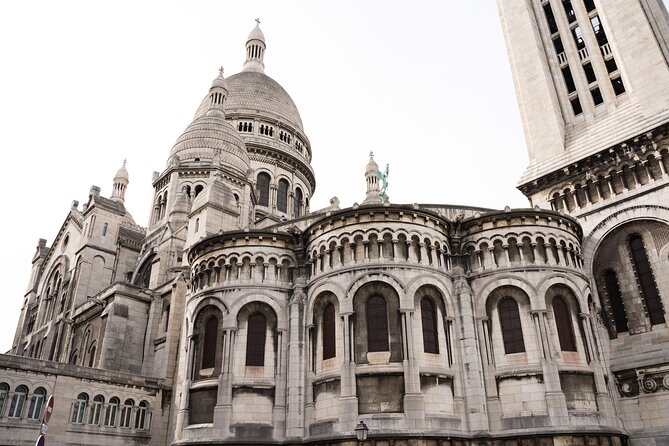
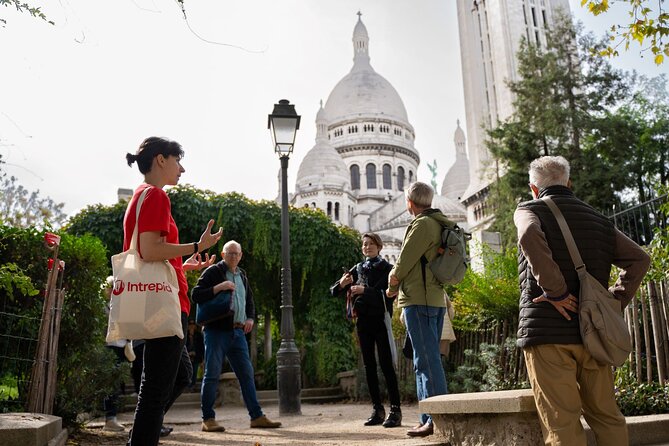
The last stretch leads you to Basilique du Sacré-Cœur. Sacré-Cœur is iconic, but this tour gives you something more specific than simply arriving at the front steps. You’ll stop to admire a view of the church from a perspective that very few tourists know about, then you’ll continue on to a grand finale panorama over Paris.
This is where the tour earns its “hidden” label. If you only visit Sacré-Cœur like a checklist item, you’ll likely see the same angles everyone else sees. When you’re guided to a lesser-known viewpoint, the basilica stops feeling like a single destination and starts feeling like part of a broader hilltop story.
You’ll also get time for your guide’s final advice—what to see next and where to go for food and walks while you’re still in the area.
Price and Value: Why $44.44 Can Make Sense Here
At $44.44 per person for about 2 hours, the price is in the mid-range for a Paris walking tour, but the value comes from what’s included and what’s avoided.
You get:
- a croissant tasting at a recognized bakery
- guided storytelling tied to specific corners of Montmartre
- key viewpoints and secret route segments
- a local English-speaking guide with practical stay tips
The biggest value lever is the time and routing. Montmartre is easy to do poorly on your own because of the hills and the “tourist funnel” effect. You’ll spend energy figuring out which streets are worth it and which ones are just crowded. Here, the route is built to get you moving efficiently while still feeling personal—especially with the 14-person maximum.
Is it worth it if you only care about the top icons? If that’s your goal, you might be able to self-tour. But if you want the neighborhood’s logic, the vineyard detail, and the viewpoint payoff, the included stops help the price feel less abstract.
Who This Tour Fits Best in Your Paris Plan
This tour is a strong fit if you:
- want a small-group Montmartre walk rather than a bus-to-everything sprint
- care about art stories and the artists connected to this hill
- like mixing sightseeing with one real food highlight
- want a guide to help you plan the next day’s wandering
It’s also a good option for first-time Montmartre visitors who don’t want the “I saw it, next” feeling. And because it’s child-friendly and works for most travelers, it’s often easier to recommend than tours with long museum time.
The only group I’d think twice about is anyone who can’t manage steep, uneven walking. The route includes climbs and cobblestones, and even though it’s only 2 km, it can feel intense if you’re not used to hills.
Practical Tips to Get the Best Day Possible
- Wear shoes you trust on cobbles and stairs. This is not a flat stroll.
- Plan to go at least a little slower than normal. The route is built for pacing, not speed.
- Bring a light layer if conditions change. Montmartre can feel cooler and windier near viewpoints.
- Ask your guide for follow-up ideas at the end. The tour is designed to end with a smart recommendation moment so you can extend the day.
If you want photos, keep your expectations realistic: secret passages and quieter lanes help, but you still share Montmartre with the city. The goal is to improve your chances, not make crowds disappear.
Should You Book Hidden Montmartre?
Book it if you want Montmartre to feel like a neighborhood, not a maze of ticket lines. The best reason is the combination of included croissants, artist-connected storytelling, and route choices that get you to viewpoints and back-street character.
Skip it only if you hate hills and uneven pavement or if you mainly want the simplest postcard angles with no extra context. If you’re comfortable with short but steep walking, this is one of the most efficient ways to get more out of a Montmartre afternoon or morning.
FAQ
How long is the Hidden Montmartre walking tour?
The tour lasts about 2 hours and includes approximately 2 km (1.2 miles) of walking.
What is included in the tour price?
You get a croissant tasting, guided exploration of cobbled streets, key panoramas, and local tips for what else to see and do. Additional food and drinks are not included.
Is the tour in English?
Yes, the tour is offered in English.
Are dietary requirements possible?
Yes. The tour can cater for vegetarians.
Where does the tour start and end?
It starts at Place Blanche (Pl. Blanche, Paris) and ends at Basilique du Sacré-Cœur de Montmartre (35 Rue du Chevalier de la Barre, 75018 Paris).
What is the cancellation policy?
You can cancel for free up to 24 hours in advance for a full refund. If you cancel less than 24 hours before the start time, the amount paid is not refunded.