REVIEW · GUIDED
Notre-Dame Cathedral Exterior & Latin Quarter Guided Tour
Book on Viator →Bookable on Viator
Notre-Dame looks closer here. This guided walk strings together Paris layers you usually only see in fragments—Latin Quarter streets, Roman echoes near Cluny, the climb to the Panthéon, and the drama of Notre-Dame’s outside carvings and gargoyles. You’ll cover the big ideas that shaped the city from Roman times to today, while your guide keeps the stories clear and current, in English, for a small group.
I especially like the pace and focus. A tour size capped at 11 means you can actually ask questions instead of shouting at the back, and you can tell the guides (like Pierre-Louis, Benjamin, and Jean Pierre) enjoy answering. I also like the route choices: you get to walk where cars can’t, including cobblestone lanes and a real uphill stretch toward the Panthéon—so Paris feels like Paris, not like a photo stop line.
One consideration: you won’t be doing a guided interior visit of Notre-Dame. The interior is off-limits for guided tours, so plan on enjoying the façade, sculptures, and gargoyles from outside. If you’re hoping for the full cathedral experience, you may need another plan for a separate visit later.
Key highlights at a glance
- Max 11 people keeps the tour personal and question-friendly
- Car-free walking route in the Latin Quarter, with cobblestones and a hill
- Multiple landmark exteriors in just about 2 hours
- Churches you might not prioritize—including St. Séverin and St-Julien le Pauvre
- Notre-Dame’s façade focus, with context for the 2019 fire
- Tailored trip tips based on what you’re most interested in
In This Review
- Starting at Place Saint-André-des-Arts: getting your bearings fast
- Quartier Latin streets and Notre-Dame’s outside views that make sense
- Fontaine Saint-Michel and the 19th-century story behind the drama
- St. Séverin Church: Gothic details you’ll remember
- Musée de Cluny and the Roman Baths ruins: early Paris still visible
- The Panthéon climb: France’s big thinkers and repurposed power
- St-Julien le Pauvre: a quieter counterpoint near Notre-Dame
- Notre-Dame exterior finale: gargoyles, sculptures, and the 2019 story
- What makes the small-group format a big deal
- Walking comfort: cobblestones, uphill streets, and a realistic fitness check
- Language, tickets, and what you actually get for your money
- Who should book this Latin Quarter and Notre-Dame guided tour
- Should you book this tour?
- FAQ
- FAQ
- How long is the Notre-Dame Cathedral exterior and Latin Quarter guided tour?
- How many people are in the group?
- Is the tour offered in English?
- What’s the meeting point and where does the tour end?
- Are tickets for monuments included?
- Is the tour physically demanding?
- Can I bring a service animal?
- Is free cancellation available?
Starting at Place Saint-André-des-Arts: getting your bearings fast
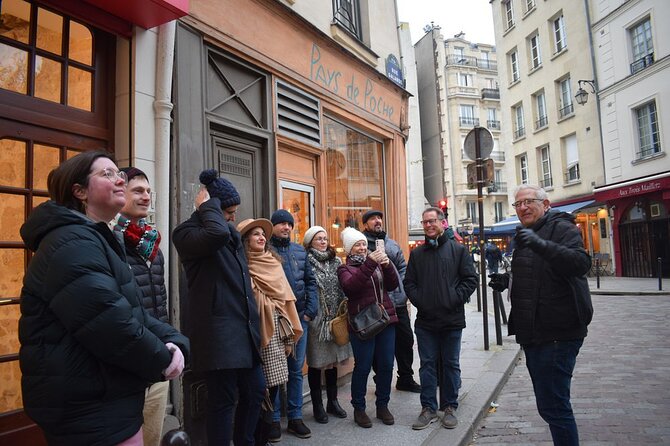
The tour begins in the Latin Quarter area at Place Saint-André-des-Arts (75006). It’s a smart starting spot because it helps you understand the layout of this part of Paris: narrow streets funnel you toward monuments, but the views pop in unexpected places. You’re also close to public transportation, which matters because this is a walk-first experience—there’s no accommodation pickup.
Price-wise, $50.47 for about 2 hours may sound modest compared with ticket-heavy tours. The value is that you’re paying for interpretation: the guide connects what you’re seeing to what it meant when it was built, rebuilt, and repurposed. That’s what turns a list of sights into a story you can remember later when you’re alone with a map.
Quartier Latin streets and Notre-Dame’s outside views that make sense
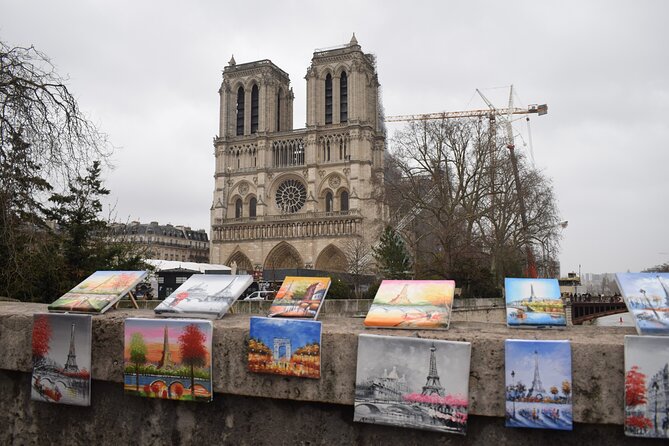
The early stretch sets the tone: you start in the Quartier Latin and move through the historic heart of Paris with an expert guide. You’ll admire Notre-Dame from the outside along the way, which is useful even if you’ve seen photos. There’s a difference between spotting a cathedral and understanding how the street grid and river-adjacent geography shaped what you can see.
This is also where you learn the “why” behind the neighborhood. The Latin Quarter isn’t just trendy cafés and student energy; it’s a place where power, learning, religion, and everyday life have overlapped for centuries. You’ll hear how the area evolved from Roman-era Paris into the medieval city that people recognize today. If you like history that ties directly to the buildings in front of you, this part is a win.
One more practical benefit: you’re out walking early in the day while you still have energy for the cobbles later. If you’re scheduling this with other activities, I’d treat it like the backbone of your first big outing in central Paris.
Fontaine Saint-Michel and the 19th-century story behind the drama
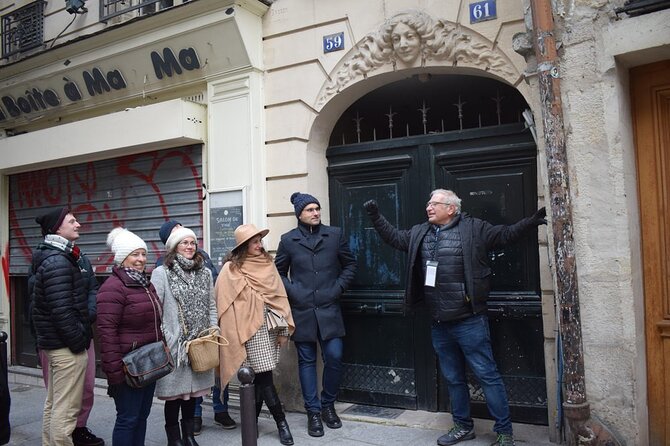
Next comes Fontaine Saint-Michel, a 19th-century fountain with a dramatic statue of Archangel Michael defeating the Devil. It’s a striking pause in a neighborhood that’s otherwise defined by churches, streets, and the rhythm of foot traffic. The guide’s job here is to translate something you could easily treat like background into a symbol with a timeline.
This stop is short, but it helps you “reset your eyes.” Paris fountains are often more than decorative; they’re political, religious, and artistic statements all wrapped together. Even if your photography instinct kicks in, I’d listen first—then take photos after, when you know what you’re looking at.
St. Séverin Church: Gothic details you’ll remember
St. Séverin Church is one of those places that can feel almost accidental when you find it on your own. On this tour, it gets time for a reason: it’s a Gothic masterpiece and a chance to spot medieval architecture details that don’t always get the spotlight like the more famous cathedrals.
You’ll hear stories tied to what’s inside the church—especially the stained-glass elements and architectural features like the double ambulatory. Even if you’re not a church-architecture superfan, this is where the guide can make the building click. You stop looking at it as “an old church” and start noticing how it was designed for processions, light, and crowd movement.
A small timing note: it’s a relatively brief stop. That’s not bad—it keeps the tour moving. But if you’re the type who wants longer quiet time for reading inscriptions and staring up at stonework, you might want to follow up later on your own.
Musée de Cluny and the Roman Baths ruins: early Paris still visible
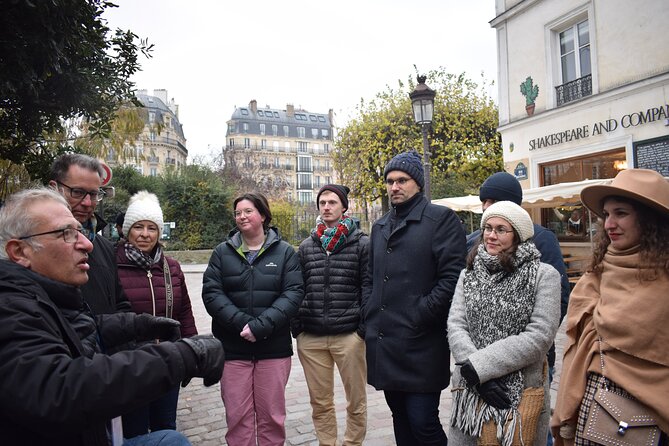
Then the route shifts time periods. You’ll head to the Musée de Cluny area to see the ruins of the Cluny Roman Baths—remnants from early Paris, when the city was known as Lutetia. This stop is especially valuable if you’ve been thinking of Paris as “always medieval.” The baths show a different kind of city life: one built around public bathing and Roman urban routines.
And even if you don’t spend lots of time in museums, this is a good way to connect objects and architecture to real daily habits. Roman baths weren’t just for hygiene. They were social spaces, part of how people gathered, talked, exercised, and passed time. Seeing the ruins in context makes that idea feel tangible.
The Panthéon climb: France’s big thinkers and repurposed power
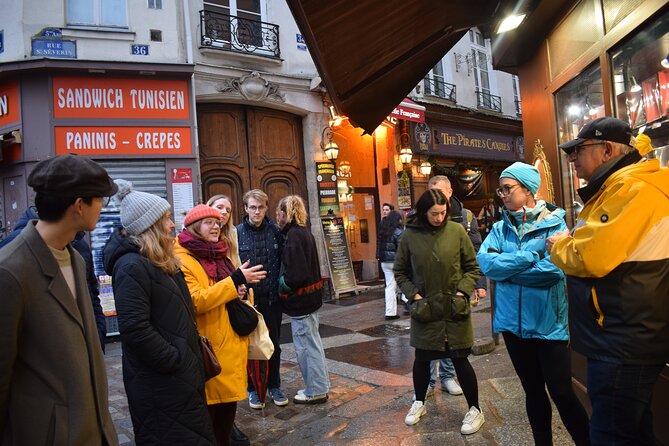
Next is the uphill trek to the Panthéon, a neoclassical mausoleum where major French figures are laid to rest. The guide will connect the name and the place to the story of France’s intellectual and cultural identity.
This part is timed well within the two-hour flow, but it’s also the most physically demanding segment because you’re moving uphill. If you have moderate mobility concerns, pace yourself and take short breaks. The payoff is that the Panthéon is a strong visual anchor: it changes the tone from medieval streets to monumental neoclassical Paris.
Also, this is a great stop if you like understanding how buildings shift roles. A structure that began as a church later became a monument to French excellence. That kind of repurposing is a recurring theme in Paris—and hearing it out loud helps you spot it elsewhere later.
St-Julien le Pauvre: a quieter counterpoint near Notre-Dame
Right next to Notre-Dame, in a calmer square, you’ll visit St-Julien le Pauvre. It dates back to the 12th century and offers a very different feel from the grand scale of Notre-Dame itself. The church’s Byzantine-style elements create a contrast that makes the neighborhood feel more layered and less one-note.
This is a short stop, so you shouldn’t expect long lingering. Instead, think of it as a palate cleanser: you see a smaller, older form of sacred architecture just as the tour is setting you up for Notre-Dame’s façade finale.
Notre-Dame exterior finale: gargoyles, sculptures, and the 2019 story
The tour culminates at Notre-Dame Cathedral. Since the interior is forbidden for guided tours, you’ll focus on what’s actually accessible: the façade, the sculpture program, and the famous gargoyles. This is not a compromise; it’s a different kind of experience.
From outside, Notre-Dame works like a history book written in stone. You’ll get the cathedral’s dramatic storyline—medieval origins through to the tragic 2019 fire—so you understand why the building looks like it does now and why so much care goes into its restoration. It’s also one of the easiest “final moments” to remember. You’ll be able to look up at details and know what you’re seeing instead of just admiring the size.
If your goal is pure inside-impressions, you’ll need another visit route. But if your goal is to understand the cathedral as a landmark shaped by centuries, this tour gives you exactly the angle you can use right away.
What makes the small-group format a big deal
This tour caps at 11 people, which is a practical sweet spot for a walking experience. On a route with multiple stops, a smaller group keeps you together, reduces long waits at each corner, and makes it easier for the guide to tailor answers.
You can also feel it in how the guides teach. In particular, I’m drawn to the way guides like Pierre-Louis and Jean Pierre are described as fun and responsive—breaking down timelines so the 1800s (and earlier) don’t feel like a jumble of dates.
And the tour ends with tailored tips for the rest of your trip. That matters more than people think. Paris is big, but your time is small. A good guide helps you choose what to see next based on your interests rather than following a generic checklist.
Walking comfort: cobblestones, uphill streets, and a realistic fitness check
This is listed as having a moderate physical fitness level requirement. Practically, you’ll be on foot for about two hours, with cobblestones in the Latin Quarter and an uphill stretch toward the Panthéon.
If you’re comfortable walking a city block at a time and handling some uneven pavement, you’ll likely be fine. If not, you might still enjoy it, but consider bringing shoes with grip and planning for slower pacing.
Also note: there’s no pickup or drop-off. Wear what you’d wear for a long urban walk, and keep your day structured so you’re not cutting it close to another timed activity.
Language, tickets, and what you actually get for your money
The tour is offered in English and uses a mobile ticket. That’s convenient for planning—no paper ticket hunt in a crowded station area.
Admission varies by stop. Some sections are marked as admission ticket free, while general monument or museum entry is listed as not included. Add to that the key fact that Notre-Dame interior isn’t part of the guided experience, and you get a clear picture: this is a walking-and-context tour, not a ticket sprint.
So is $50.47 good value? For me, yes—because the sights are major, the route is efficient, and the guide time is the product. You’re paying to connect buildings to stories, not just to stand near them with an audio app.
Who should book this Latin Quarter and Notre-Dame guided tour
This tour fits best if you want:
- A structured way to explore the Latin Quarter without getting lost
- Notre-Dame context without waiting for a cathedral interior tour
- Church architecture and symbolism, including stops beyond the biggest-name sites
- A small-group walking pace with room for questions
It may be less ideal if you want lots of indoor museum time or a long, slow photographic session at each monument. The stops are meaningful, but the format is designed for coverage plus explanation within a tight window.
Should you book this tour?
If you’re planning a first or second trip to Paris, I think this is a smart buy. You get the feeling of being guided through the “shape” of the city—Latin Quarter streets, Roman-era remnants, neoclassical monuments, and Notre-Dame’s stone story—all in about two hours with small-group attention.
I’d book it if you like learning as you walk and you’re okay with keeping Notre-Dame’s interior as a separate wish for another day. If you’re determined to see Notre-Dame from the inside on the same trip, then you’ll need to pair this with a different plan for interior access.
FAQ
FAQ
How long is the Notre-Dame Cathedral exterior and Latin Quarter guided tour?
It’s about 2 hours.
How many people are in the group?
The tour is maximum 11 travelers.
Is the tour offered in English?
Yes, it’s offered in English.
What’s the meeting point and where does the tour end?
It starts at Place Saint-André-des-Arts (75006 Paris) and ends at Notre Dame.
Are tickets for monuments included?
The tour information notes that some stops are admission ticket free, but entry tickets to monuments or museums are generally listed as not included, and Notre-Dame interior isn’t part of the guided visit.
Is the tour physically demanding?
It’s listed as requiring moderate physical fitness. You’ll be walking for about two hours, including cobblestone streets and an uphill segment toward the Panthéon.
Can I bring a service animal?
Yes, service animals are allowed.
Is free cancellation available?
Yes. You can cancel for a full refund up to 24 hours before the experience starts.