REVIEW · PRIVATE
Private tour of the battlefields of Verdun from Paris in Van (2/7 travelers)
Book on Viator →Bookable on Viator
WWI in Verdun isn’t just dates and maps; it’s stone, mud, and concrete you can walk up to. I like how this tour mixes battlefield sights with the places where the story is explained, including Fort de Douamont and the Memorial Museum of Verdun. I also like the small-group comfort because riding out of Paris early is a long day. The main drawback to plan for is the start time at 6:00 am and the full 13–14 hour schedule.
The guide for this tour is Régis, and that matters. In a full-day setting, a guide who can connect what you see—trenches, ossuary alcoves, and ruined villages—to what it meant in 1916–17 keeps the day from becoming a checklist. If you’re looking for a quick drive-by with minimal walking, this may feel like a lot.
In This Review
- What makes this Verdun private tour worth your time
- A 6:00 am departure out of Paris (and why it’s a smart move)
- Memorial de la Voie Sacrée: supply lines you can see in stone
- Douaumont Ossuary: when the scale becomes personal
- Fort de Douamont: the 155mm cannon story you can walk through
- Fleury-Devant-Douaumont: a village wiped out so often it disappeared
- Verdun Cathedral, Victory Monument, and Porte Chaussee: history beyond the trenches
- Tranchée des Baïonnettes: the bayonets that made it symbolic
- The Memorial Museum of Verdun: where you end, and why that matters
- Tips that make the day smoother (and more meaningful)
- Who this private Verdun tour fits best
- Should you book this private Verdun battlefield day from Paris?
- FAQ
- How long is the private tour?
- What time does the tour start in Paris?
- Is this tour private?
- How many people are in the van?
- What’s included in the price?
- Is lunch included?
- Which major sites will you visit?
- Do you need good weather?
- Is there a minimum number of travelers?
What makes this Verdun private tour worth your time
- Private van and small group feel: you’re in a comfortable, air-conditioned minivan with only your group.
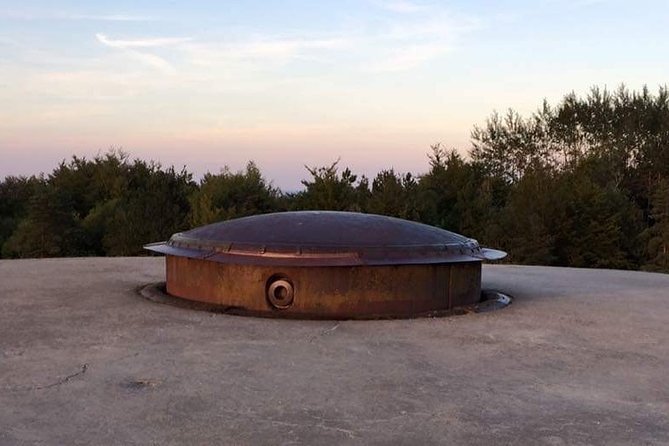
- Fort de Douamont with real underground galleries: you’re not only seeing exterior ruins; you’ll walk inside the work that held a 155mm retractable cannon under an armored dome.
- The Douaumont ossuary’s scale: you’ll see the memorial built as a national necropolis with French and German remains.
- Sacred Way context in plain language: the Memorial de la Voie Sacrée explains the supply line between Bar-le-Duc and Verdun.
- Ruins with sharp details at Fleury-Devant-Douaumont: a village site that was taken and retaken many times in a two-month stretch.
- A balanced Verdun town stop: cathedral, victory monument, and Porte Chaussee add perspective beyond the front line.
A 6:00 am departure out of Paris (and why it’s a smart move)
This tour runs long, roughly 13 to 14 hours, and it starts early—6:00 am in Paris. The big benefit of that early push is daylight for the battlefield areas and fewer time-sinks later in the day. You also get less of that awkward mid-morning traffic shuffle out of the city.
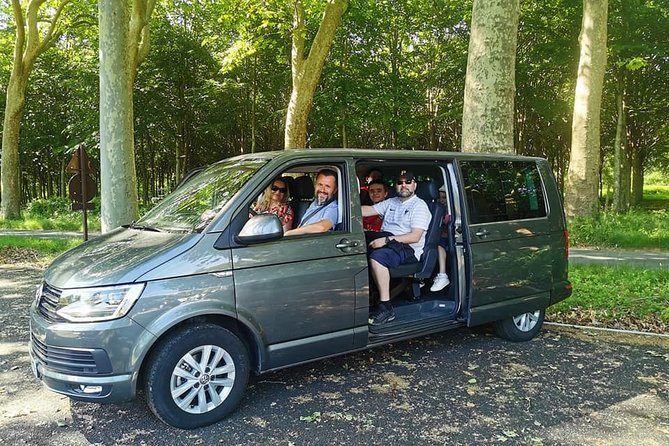
You’ll ride in a comfortable, air-conditioned minivan with a driver/guide (for this tour, in French) and a small headcount. The schedule is tight enough that having a dedicated van matters. You’re not hunting buses, and you’re not waiting around between distant sites.
Price-wise, it’s $465.43 per person, which can look steep at first glance. But you’re paying for private transport out of Paris for a full day, plus guided handling of the major memorial stops and included admissions (Fort de Douamont and the Memorial Museum). If you compare this to piecing together trains, taxis, and separate tickets, the “saved stress” is often the real value.
Memorial de la Voie Sacrée: supply lines you can see in stone
The day begins at the Memorial de la Voie Sacrée—a stone monument tied directly to the supply route that kept Verdun alive during the fighting. It’s credited to sculptor Barrois and architect Schmitt, and the design is meant to be read like a story. The memorial honors those who worked the Sacred Way, the axis between Bar-le-Duc and Verdun that moved food and ammunition and also evacuated wounded.
What I like here is that it explains the “engine” behind the battlefield. People often picture the front line, but the Sacred Way was the system feeding it. Helmeted markers later trace each kilometer of the road, turning something abstract into a physical measure.
The monument itself is in two parts: a wall shaped like an arc, with a bas-relief frieze showing soldiers of the Sacred Way and the connection between rail and road. That rail-and-road link is a quiet reminder that war runs on logistics long before it runs on heroics.
A small consideration: this stop is short—think about 15 minutes—so if you like lingering and reading every plaque, you’ll want to use your guide’s explanations to slow down mentally.
Douaumont Ossuary: when the scale becomes personal
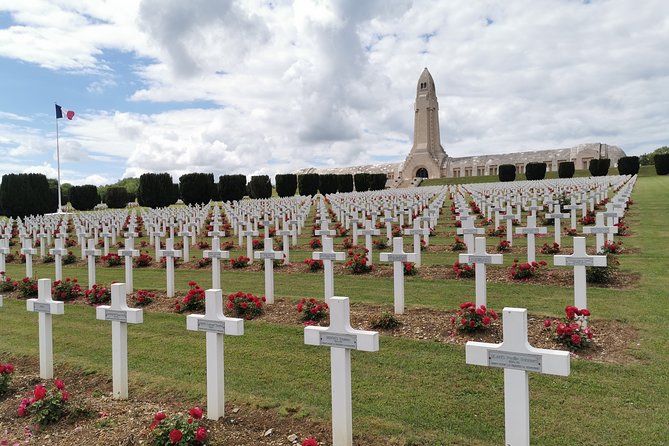
Next comes the Douaumont Ossuary, a memorial holding the remains of French and German soldiers who died on the battlefield. Through small windows, you can see skeletal remains of at least 130,000 unidentified fighters, filling alcoves at the bottom of the building. That number is almost impossible to hold in your head, so the setting does the work for you.
Inside, you’ll find plaques with names of French soldiers who died during the Battle of Verdun. The ossuary was built on the initiative of Charles Ginisty, bishop of Verdun, and it’s designated a national necropolis. Even if you don’t speak the language, the idea is clear: this is organized remembrance, not a pile of bones.
In a day with major sites, this is one of the places where silence feels appropriate. It’s also one of the most emotionally heavy. If you get overwhelmed easily, give yourself a moment after you enter—then let your guide set the tone with context.
Fort de Douamont: the 155mm cannon story you can walk through
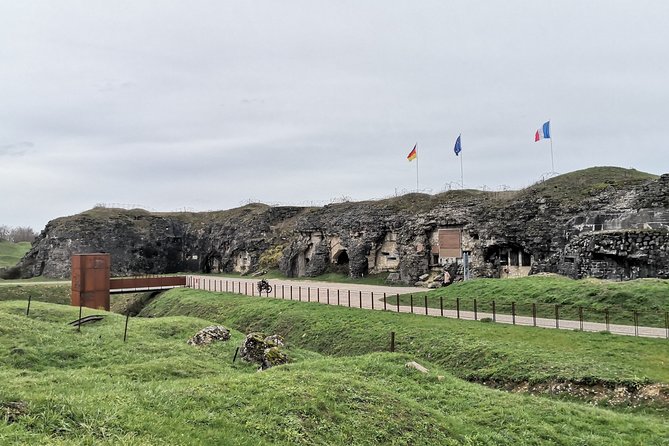
After the ossuary, you move to Fort Douaumont (often described as Fort de Douamont). This was the largest and tallest fort among a crown of 19 defensive works built in the 1890s to protect Verdun. The fort’s importance isn’t just that it existed; it was tied to the era’s “we can break anything” artillery thinking.
In 1915, the French general staff believed even the best-protected forts might not survive German 420 mm guns. That prediction mattered quickly. On February 25, 1916, the fort—occupied by 60 French soldiers—was taken without a fight by German forces, just four days after the Battle of Verdun began. The Germans held it for eight months, using it as shelter and support for operations on the Meuse’s right bank.
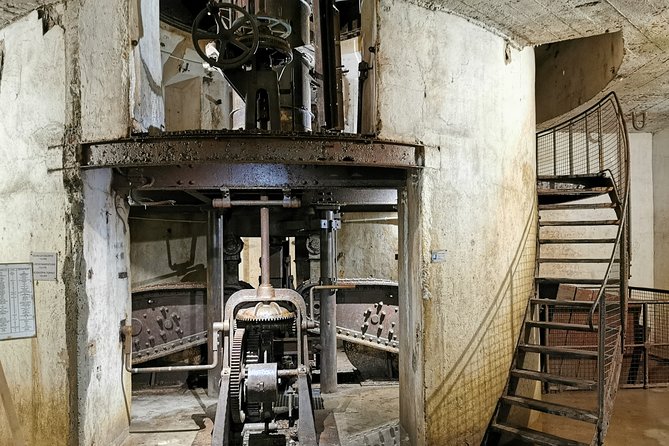
Here’s what makes this stop valuable beyond the battlefield narrative: the fort still houses a 155mm retractable cannon under an armored dome, and you’ll walk through underground galleries. That changes the feel from “museum about war” to “war machinery you can sense.” You’re moving inside the same type of protective structures that made the front line so hard to break.
The fort stop is about one hour, with admission included. If you’re the kind of person who likes architecture, engineering, and the physical logic of defense, you’ll get a lot out of this hour.
Fleury-Devant-Douaumont: a village wiped out so often it disappeared
Then you’ll get to the ruined village area of Fleury-Devant-Douaumont, a site that was destroyed in 1916 and not rebuilt. Today it functions as a place of remembrance, with the emptiness doing some of the emotional work.
From June to August 1916, German command launched multiple offensives in this part of the front. The village was taken and retaken 16 times in two months. Fighting around the ruined village was intense from July 13 to August 5, 1916. Then, on the night of August 17–18, the colonial infantry regiment of Morocco launched an assault and definitively took over the village.
Even the short time you spend here—about 15 minutes—can feel like it should be longer, because the details are so specific. You’ll likely find yourself thinking about how a place stops being “a village” after repeated shelling, and turns into a battlefield landmark.
Practical note: this kind of site isn’t about stepping into buildings. It’s about reading ground and scale, so wear shoes that handle uneven terrain.
Verdun Cathedral, Victory Monument, and Porte Chaussee: history beyond the trenches
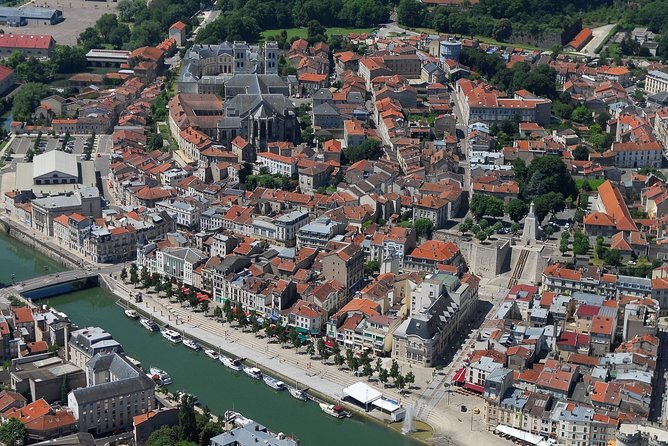
The tour doesn’t only stay in the mud. It also brings you into Verdun town, which helps you understand why this area mattered before 1916 and after 1918.
First is Verdun Cathedral, dedicated to the Virgin Mary. Built from 990 in a Romanesque-Rhenish plan, it’s described as the oldest in Lorraine and among the oldest in Europe. The building suffered ravages in the 11th and 12th centuries, then saw reconstructions and additions. From the 14th to 16th centuries, it was modified in Gothic style. After a 1755 fire that cost it two of its four bell towers, it was redesigned in baroque and rockery styles. It was severely damaged by bombing during the First World War and restored afterward.
Next is the Monument de la Victoire. It was inaugurated in 1929, and the 73 steps lead down to a crypt that houses repertoires of names of soldiers who received the Verdun medal. At the top, a 30-meter-high tower holds a warrior leaning on his sword, looking east. Every year on November 1, a ceremony welcomes the Sacred Flame under the Arc de Triomphe in Paris.
Finally you’ll pass Porte Chaussee, built in 1380 along the Meuse as one of three monumental gates of the Grand Rempart de Verdun. It was redesigned in 1690, served as a military prison from 1755 to 1860, then was bought by the city in 1889. It’s classified as a historic monument since March 21, 1881.
These town stops are short—often 10 to 30 minutes each—but they matter. They remind you that Verdun wasn’t only a battlefield. It was a lived-in place with churches, civic memory, and fortifications long before the cannon roar.
Tranchée des Baïonnettes: the bayonets that made it symbolic
Back toward the battlefield memory sites, you’ll visit the Tranchée des Baïonnettes, a monument commemorating the Battle of Verdun in 1916. The site was classified as a historic monument in 1922 and recognized as a national memory center in March 2014.
The most common story behind the name is striking: in June 1916, soldiers preparing for the offensive were covered by earth from shell impacts that fell around their trench. Bayonet rifles remained protruding from the ground, their owners buried with weapons in hand. Later, in December 1920, President Alexandre Millerand inaugurated the memorial at Bois Morchée, on the commune of Douaumont (Meuse). That moment helped shape how people remember the battle.
This is a “symbol becomes a landmark” kind of place. It’s also a good stop for pausing, because after Fort Douaumont and the ossuary, you’ll want a site that’s visually straightforward but emotionally heavy.
The Memorial Museum of Verdun: where you end, and why that matters
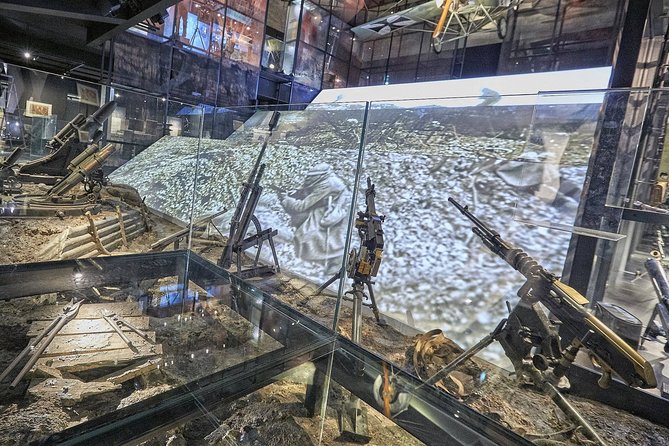
Your final major stop is the Memorial Museum of Verdun in Fleury-devant-Douaumont. The museum experience is described as placing you at the heart of the battlefield. The route is split by floors: the ground floor focuses on the experience of combatants on the front line, and the first floor puts you into the broader contexts of countries at war.
The new memorial was reborn in February 2016 after more than two years of work. The improvements included opening the building outward and adding an extra floor of more than 600 m². It also includes an interactive space, plus a 175 m² temporary exhibition area (as listed). If you’re the type who wants the battlefield explained, not just seen, this is where your day gets tied together.
One extra detail worth knowing: the terrace of the museum lets visitors look out onto the environment of the memorial, giving you a panorama of the battlefield. After a long day of named sites and specific events, that view is where everything starts to connect in your mind.
Admission is included, and you’ll have about one hour here.
Tips that make the day smoother (and more meaningful)
This is a long day with emotional weight, so think about comfort and pacing.
- Wear real walking shoes. The day includes outdoor battlefield sites and a fort with underground galleries, so your feet will do a lot of work.
- Plan for quiet moments. You’ll be at places where you don’t want to rush through photos. Take a breather between stops, especially after the ossuary.
- Let Régis do the talking when you need it. The strongest moments tend to be when the guide explains how the site fits the larger battle story.
- Have a lunch plan even though lunch isn’t included. Since lunch isn’t part of the price, bring something simple or plan to buy food on your own timeline.
One more practical point: this tour requires good weather. Since you’re spending significant time outdoors and moving between sites, you’ll want to keep an eye on forecasts close to departure.
Who this private Verdun tour fits best
This tour is a great fit if you want serious WWII/WWI content without the chaos of public transport. The small-group van format makes it easier to hear the guide and keep your place in the day. It also suits anyone who wants a guided route that combines major memorials with fort engineering and a few town landmarks.
If you’re traveling with mixed interests—some people want the architecture of a fortress, others want the memorials—this itinerary tends to keep everyone engaged. Fort Douaumont and the Memorial Museum are the strongest “explainers,” while Fleury-Devant-Douaumont and the Sacred Way bring the battlefield’s logic into view.
If you prefer a slow museum pace or you don’t handle emotion well, this may feel like too much in one day. But if you’re ready for a full, structured overview of Verdun, it’s well paced for learning.
Should you book this private Verdun battlefield day from Paris?
I’d book it if you want a guided, high-value long day with real included admissions and a guide named Régis who brings the subject to life. The combination of Douaumont Ossuary, Fort de Douamont, and the Memorial Museum hits the key memorial “anchors,” and the town stops add the missing context that makes Verdun feel like a real place, not just a battlefield.
I wouldn’t book it if you’re looking for a casual half-day or if you’re traveling solo. There’s a stated minimum of 2 participants, and bookings that don’t meet the minimum can be canceled.
If you can handle an early start and you’ll enjoy learning as you walk, this is a strong way to experience Verdun with structure, comfort, and context.
FAQ
How long is the private tour?
The tour runs about 13 to 14 hours.
What time does the tour start in Paris?
It starts at 6:00 am.
Is this tour private?
Yes. It’s private, and only your group participates.
How many people are in the van?
The tour is described as using a minivan with a maximum of 6 travelers, keeping the group small.
What’s included in the price?
Private transportation by air-conditioned minivan, support from the operator in the Paris area, a driver/guide (in French for this tour), and admission tickets to the Verdun Memorial Museum Battlefield and Fort de Douamont.
Is lunch included?
No, lunch is not included.
Which major sites will you visit?
You’ll visit the Memorial de la Voie Sacrée, the Douaumont ossuary, Fort Douaumont, Fleury-Devant-Douaumont, Verdun Cathedral, Monument de la Victoire, Porte Chaussee, Tranchée des Baïonnettes, and the Memorial Museum of Verdun.
Do you need good weather?
Yes. The experience requires good weather, and if it’s canceled due to poor weather, you’ll be offered a different date or a full refund.
Is there a minimum number of travelers?
Yes. The tour operates with a minimum of 2 participants, and it can be canceled if that minimum isn’t met.