REVIEW · NORMANDY
Découverte Bénédictine
Book on Viator →Operated by PALAIS BENEDICTINE · Bookable on Viator
A liqueur palace in fairy-tale stone. Découverte Bénédictine is a focused 1 hour 30 minutes visit to the Palais de la Bénédictine in Fécamp, where you pair museum wandering with a guided distillery look and a proper taste in the Winter Garden. It’s an easy way to understand why this Norman bottle became famous, without needing a whole day.
I especially like the on-site museum mix of religious art and industrial context, not just product marketing. I also like that the tour ends with a guided Bénédictine liqueur tasting, then time to browse bottles and souvenirs in the shop.
One heads-up: the experience can feel strict about language and ticket access, and at least one guest reported a QR code issue in the building and that it was in French for them. So if you need everything in English, plan to read the leaflet carefully and confirm language expectations when you arrive.
In This Review
- Key moments I’d plan around
- Palais de la Bénédictine: the wow factor starts before you learn anything
- The self-guided museum: religious art plus the brand’s working story
- The story of Bénédictine: monk, grimoire, and a recipe that travelled
- Inside the distillery and cellars: hammered stills and traditional aging
- Winter Garden tasting in La Vérrière: a calm end point (and an adult-only taste)
- Price and time: a value play if you like stories, not just drinks
- How to make it work smoothly in Fécamp
- Who should book this (and who might want a different plan)
- Should you book Découverte Bénédictine?
- FAQ
- How long is Découverte Bénédictine?
- What’s included in the ticket price?
- Is there a tasting for children?
- What languages are available?
- Where does the tour start and end?
- Is the ticket mobile?
- What’s the cancellation window?
Key moments I’d plan around
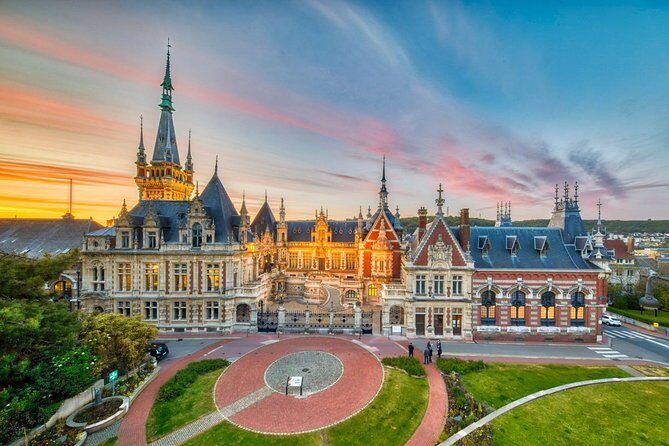
- Palais de la Bénédictine architecture: tall campaniles, spires, and ornate stonework that feels more like a theme building than a factory stop.
- Sacred art + industrial history: gilded chalices and illuminated books, then a room explaining the brand’s production story.
- The distillery tour: the only Bénédictine distillery in the world, explained with real process and traditional cellaring.
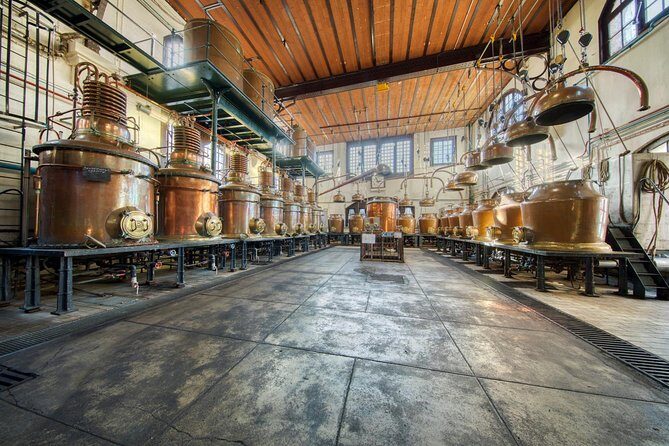
- The hammered copper stills: 19th-century equipment you can actually see, not just hear about.
- Winter Garden tasting: a relaxing end point in La Vérrière, with adults-only tasting.
Palais de la Bénédictine: the wow factor starts before you learn anything
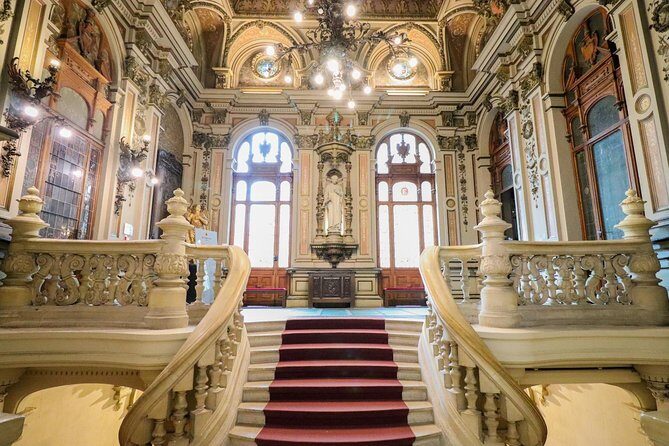
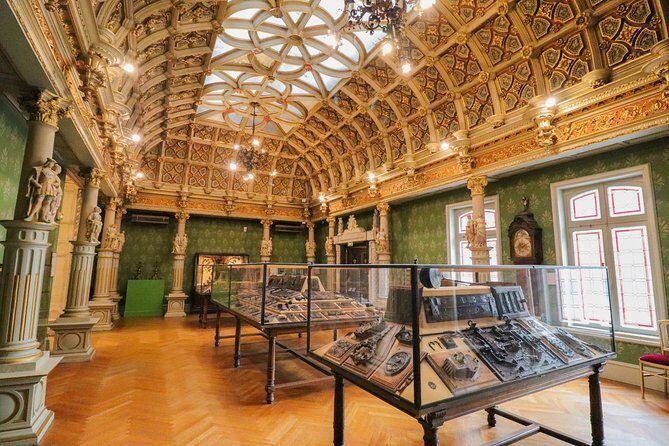
When you arrive in Fécamp, the Palais de la Bénédictine doesn’t try to blend in. It’s a neo-Renaissance style building with tall campaniles, spires, and heavy stonework that feels theatrical in the best way. Even if you’re not a liqueur person, it’s the kind of place where you pause just to take it in, then move inside with a grin.
This visit works because it doesn’t rush. You start with self-guided time, then switch to a guided distillery and cellars portion, and you finish with a tasting. That rhythm matters. You’re not only consuming information; you’re letting the place set the mood first.
Also: the ticket is a mobile one. That’s convenient, but do keep an eye on your phone battery. Old stone buildings can be slow for connectivity, and if your ticket system relies on a scan, you’ll feel happier with a charged device.
You can also read our reviews of more tours and experiences in Normandy.

The self-guided museum: religious art plus the brand’s working story
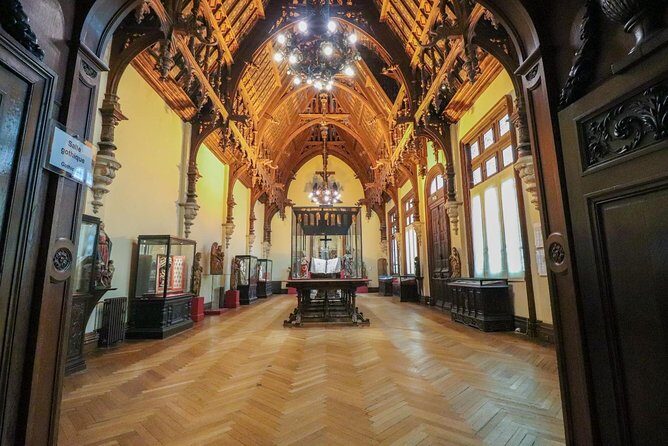
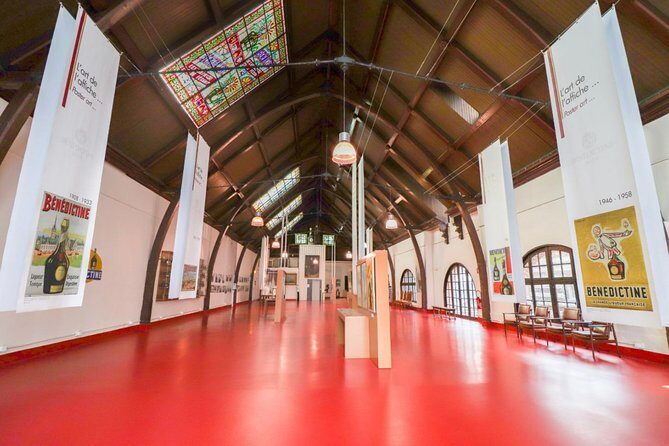
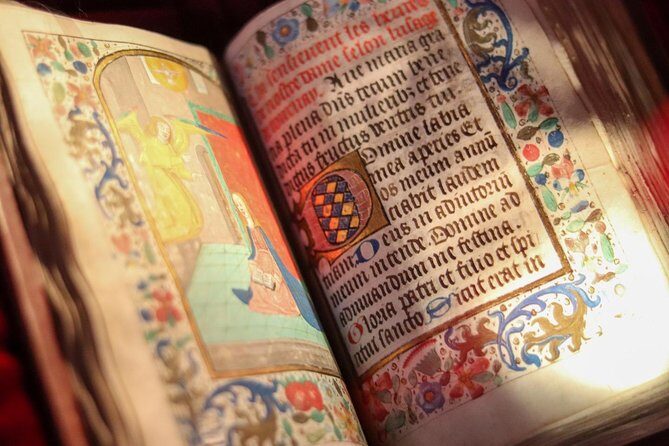
Your visit begins in a small museum centered on Benedictine religious art. You’ll see striking items such as gilded chalices and illuminated books. The tone is devotional, not commercial, which makes the later liqueur story land better. You’re seeing the spiritual symbols that frame the Benedictine theme, even though this is ultimately a drink.
Then you transition from the sacred to the practical with a room dedicated to industrial history. That’s a smart move for first-timers: you don’t just get the legend; you get the production story behind it.
For navigation, you get a leaflet in multiple languages (French, English, Italian, Dutch, Spanish, Russian, and German). That means you can slow down where you want and skip what you don’t. If you speak only one language, the leaflet still gives you a helpful structure while you explore at your own pace.
Practical tip: use the leaflet to mark your must-see pieces before you enter the museum rooms. It helps you avoid wandering too long and then feeling rushed later for the guided distillery portion.
The story of Bénédictine: monk, grimoire, and a recipe that travelled
What really makes Bénédictine interesting isn’t only the taste. It’s the mix of legend, geography, and old-school “recipe as treasure” thinking.
The narrative starts with Dom Bernardo Vincelli, a Benedictine monk from Venice, who is said to have created a healthful elixir using 27 herbs and spices from around the world. Whether you treat the story as history or myth, the point is clear: this liqueur is built on the idea of a carefully blended remedy.
The thread continues in the 19th century, when Alexandre Le Grand—described as a wine merchant from Fécamp—discovered the recipe in an abbey library. That discovery is what connects local Norman ambition with an older Benedictine tradition recorded in a grimoire tied to 1510.
You’ll hear these pieces as you move from the museum into the guided parts. The way they’re presented gives you context for the distillery stop: it’s not just hardware. It’s how a centuries-old idea becomes a physical process.
Inside the distillery and cellars: hammered stills and traditional aging
The guided tour leads you into the heart of the operation: the distillery and the cellars. You’ll learn that it’s the only Bénédictine distillery in the world. That’s a strong claim, and it’s exactly why the tour feels different from a typical “factory walkthrough.”
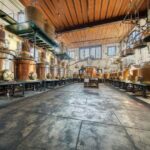
One of the most memorable details is the 19th-century hammered copper stills. Seeing equipment that old changes your perception. It’s not a modern industrial plant built for speed; it’s production built around tradition. The tour also highlights how traditional cellaring techniques are used, which helps explain why the taste and character of liqueur depend on time as much as on ingredients.
You’ll also learn that Bénédictine’s ingredients are sourced from around the world. That makes the name make sense. Even if you’re not tasting herbs individually, you’re understanding the sourcing logic behind the flavor style.
Why this matters for you: if you’ve only ever thought of liqueurs as sweet after-dinner drinks, this part reframes it as an artisanal process. You walk away knowing there’s a craft logic behind the bottle, not just marketing.
If you’re the kind of person who likes photos, bring a phone camera that can handle indoor lighting. Some rooms can be dim, and copper and stone surfaces show reflections that make great shots—if your camera exposes well.
Winter Garden tasting in La Vérrière: a calm end point (and an adult-only taste)
After the distillery story, you head to La Vérrière for tasting in the Winter Garden. This is where the visit slows down on purpose. The idea is to let the flavors land after the process explanation, and it works well because your brain has something to connect: the 27-herb legend, the distillery method, and the aging.
The tasting is for adults over 18 only. If you’re traveling with kids, they can still join the visit as long as they’re accompanied by an adult, but they won’t be served the tasting alcohol. That’s important to know so you don’t end up managing disappointment in the moment.
There’s also a café area where you can pick up pastries and drinks. It’s a nice way to round out the stop if you want a snack after your tour. Then, before you leave, save time for shopping in the palace’s retail shop. That’s where unique bottlings and souvenirs are sold on-site.
Practical tip: buy what you actually want to carry. The shop sells bottles, and while that’s the fun part, you’ll want to think about luggage space if you’re moving on to other parts of France.



Price and time: a value play if you like stories, not just drinks
The price is listed as $12, with an included admission ticket and a tasting. For 1 hour 30 minutes, that’s a pretty strong value if you care about learning what you’re tasting.
Here’s what you’re getting for that time:
- Access to the Palais de la Bénédictine and its museum portion
- A guided distillery and cellars visit
- A Bénédictine liqueur tasting for adults over 18
That’s more than most “single-product” experiences. You’re not only tasting; you’re getting the building, the art, the production, and the aging context. For a short stop in Normandy, this is efficient.
Timing also helps. You get a choice of morning or afternoon departure, and the tour caps at a maximum of 48 travelers. Smaller groups tend to mean you can move through rooms without constant bottlenecks. Still, plan to be flexible—old buildings and ticketed spaces can create natural slowdowns.
One more practical detail: last admission is one hour prior to closing. If you’re arriving late in the day, you may miss parts of the experience. In Normandy, that matters because you’ll likely be balancing other sightseeing too.
How to make it work smoothly in Fécamp
This is a straightforward stop, but the details help.
Start at 110 Rue Alexandre le Grand, 76400 Fécamp. The activity ends back at the same meeting point. That keeps things simple, and you won’t need to figure out how to get back to the center.
It’s also near public transportation, which is handy if you’re not driving. And there’s a lift for disabled people, plus service animals are allowed.
A practical advice for phones and tickets: if you’re relying on mobile confirmation or QR scanning, keep an offline copy (screenshots) and don’t wait until the last second. Stone buildings can be stubborn with connectivity, and one guest noted scanning problems tied to weak signal.
Finally, keep your tasting expectations clear. It’s adults-only. If your group includes teens or younger kids, decide ahead of time what they’ll do during the tasting portion so the day stays pleasant.
Who should book this (and who might want a different plan)
This experience suits you if:
- You’re curious about a local Norman product and want the story behind it
- You like museum time, especially when it mixes art with industrial context
- You enjoy distillery tours that explain process and traditional aging
- You want a compact, memorable stop that pairs well with a day in Fécamp
It may feel less ideal if:
- You need a guaranteed tour language in English for every part of the visit. The self-guided leaflet is multilingual, but at least one guest reported the guided portion was only in French for them.
- You’re coming only for taste and dislike learning. The tasting is there, but the real strength is how the visit ties art, legend, and production together.
- You’re sensitive about scanning tech. If QR or mobile scans are part of your plan, arrive with a backup method.
Should you book Découverte Bénédictine?
If you’re in Normandy and want a smart, short outing that blends place, story, and a real tasting, I’d book it. The Palais de la Bénédictine is visually impressive, the museum gives you context beyond the bottle, and the distillery tour focuses on distinctive, historic equipment like the hammered copper stills.
I’d only hesitate if language flexibility is a deal-breaker for you or if you dislike experiences that involve a fair amount of walking through indoor rooms before the tasting. For most people, though, this is good value for a one-stop immersion in an iconic local spirit.
FAQ
How long is Découverte Bénédictine?
It lasts about 1 hour 30 minutes.
What’s included in the ticket price?
The admission ticket is included, along with a guided distillery tour and a Bénédictine liqueur tasting.
Is there a tasting for children?
No. The tasting is for adults over 18 only, though children can participate if they are accompanied by an adult.
What languages are available?
You’ll get a leaflet for the self-guided tour in French, English, Italian, Dutch, Spanish, Russian, and German.
Where does the tour start and end?
It starts at 110 Rue Alexandre le Grand, 76400 Fécamp, France, and ends back at the same meeting point.
Is the ticket mobile?
Yes, the experience uses a mobile ticket.
What’s the cancellation window?
You can cancel for a full refund up to 24 hours in advance of the experience start time.
If you tell me your travel month and whether you’ll have a car, I can suggest the easiest time slot to aim for in Fécamp.