REVIEW · PARIS
Freemasons, myths and revelations about a secret society
Book on Viator →Operated by Cultival · Bookable on Viator
Freemasonry has a way of pulling you in. This guided historical walk in Paris hunts for visible and hidden Masonic traces across Saint-Germain and the Bourbon Palace area, then helps you separate real history from the usual myths. It’s built around the initiation idea of secrecy: new members are brought in by cooptation, and they’re expected not to reveal other members’ identities.
I especially like two things. First, the guide’s job is practical: you learn to distinguish symbols and decipher what’s true versus what’s rumor. Second, the experience is designed for real conversation—several people praised the guide’s willingness to exchange ideas and answer questions, including one named Rita.
One thing to consider: if you’re expecting lots of major interior visits or many heavy-stop building moments, you may feel the walk leans more on explanations than on stopping at big-ticket sites. In other words, it works best when you enjoy reading clues on facades and statues, not when you want museum-style access.
In This Review
- Key highlights to know before you go
- Freemasonry clues in the streets of Paris
- Why Saint-Germain-des-Prés and the Bourbon Palace show up
- What you’ll actually see: signs, facades, and statues
- How the guide shapes your experience (and why Q&A matters)
- Bourbon Palace to Place de la Concorde: how the walk feels
- Price and value: is $17.09 worth it?
- Getting there and making the timing work
- Who this tour suits best
- Should you book this Freemasons walk?
- FAQ
- How long is the Freemasons walking tour?
- Where do you meet, and where does the tour end?
- Is a mobile ticket provided?
- What’s the group size?
- Is the tour affected by weather?
- Can I get a full refund if I cancel?
Key highlights to know before you go
- Street-level symbol spotting: expect discussion of Freemason signs you can actually see on the way.
- Saint-Germain energy: the walk focuses on the historic feel of the neighborhood around Saint-Germain-des-Prés.
- Bourbon Palace angle: you’ll connect local landmarks to the broader Masonic story the guide is telling.
- Q&A can make or break it: when the guide is responsive, the tour turns into a lively class.
- Good timing matters: be on time, because the group can move without you.
Freemasonry clues in the streets of Paris
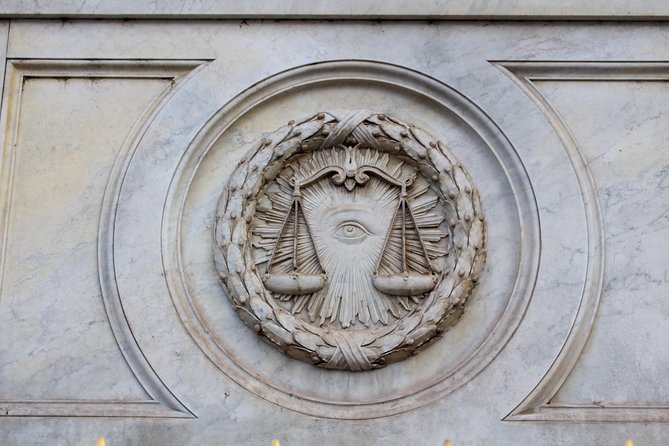
Paris loves a mystery. This tour gives you one with receipts—at least the historical kind. You’re not just told legends. You walk, you look, and your guide points out where myths started, how the order formed, and why secret-society stories spread so easily.
The basics are clear from the start: Freemasons are linked to a British origin in 1717, and the initiation culture emphasizes secrecy. The tour frames that secrecy as part of what fuels fantasies and misconceptions. That matters, because a lot of people approach Freemasonry expecting mind-bending conspiracies. This experience asks you to slow down and focus on origins, organization, key figures, and the claimed influence on society.
And yes, you’ll spend time outdoors. One review notes it’s an all-under-the-sun kind of outing—so plan accordingly.
Why Saint-Germain-des-Prés and the Bourbon Palace show up
The tour routes you between Saint-Germain-des-Prés and the Bourbon Palace area, which is a smart choice for two reasons.
First, Saint-Germain-des-Prés is visually “story-rich.” Even when you don’t know what you’re looking at, the neighborhood makes you want to look closer: old streets, architectural details, and that classic Paris layering of eras. That’s exactly the environment where symbols—real or rumored—get noticed over time.
Second, tying the walk to the Bourbon Palace gives the story a stronger sense of place. The tour isn’t only about spotting marks. It’s about connecting those marks to a bigger narrative: where Freemasons came from, how they organized themselves, and why people cared. Using landmark-heavy zones like these helps keep the tour from floating in generalities.
If you like walking tours that “teach you how to see,” this location combo is a good match.
What you’ll actually see: signs, facades, and statues
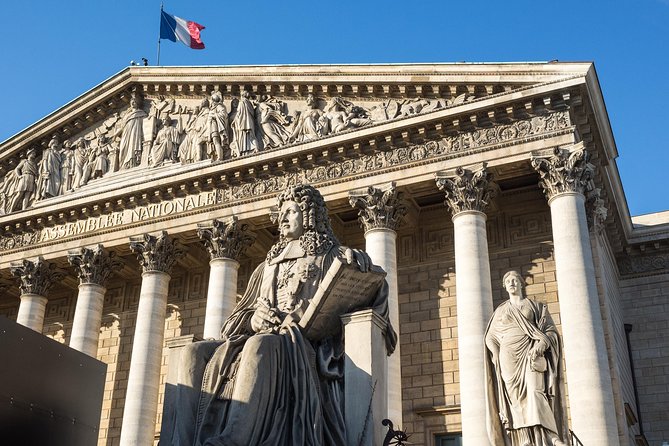
Here’s the core of the experience: you hunt for Masonic traces—some visible, some “hidden” in the sense that people tend to overlook them. The overview describes scattered symbols that illustrate secrecy in initiation rites. On the ground, that usually means your guide is pointing out details on buildings and other features.
One detailed review described a guide using a binder of Freemasonic signs, then showing those signs on building facades. That tells you the method: the tour is structured around the idea that you can learn to recognize recurring symbol patterns.
Another review complains the tour relied too little on the buildings encountered, saying it was barely a building and two statues commented on over the full time. That’s useful for setting expectations. You can go in with the right mindset: this isn’t necessarily a “stop into five historic interiors” plan. It’s more like a guided street-reading exercise.
What I’d do if I booked this: I’d plan to spend the whole time scanning details—doorways, facade ornament, sculptural elements—while also listening to the history thread your guide is building. If you treat it like a Symbol Safari with a chatty professor, it tends to work better.
How the guide shapes your experience (and why Q&A matters)
This tour lives or dies by the guide’s teaching style. The good news: multiple reviews highlight exactly what you want from a tour like this—clear explanations, lots of exchanges, and an ability to answer questions. One reviewer praised a very dedicated guide who explained the history with anecdotes and made it feel like it connected to the walk itself.
The other news: at least a couple of reviews mention the guide being harder to engage—unclear explanations, less openness to questions, or a tour that felt directed more toward people already initiated. That doesn’t mean the tour is only for insiders. It means the experience can vary depending on who’s leading your group that day.
If you get a guide like Rita—named in multiple reviews—you’re more likely to get a lively session where questions are welcomed and the guide feels passionate. If you’re someone who likes to interact, ask questions early. Then build on what the guide shows you—facades and symbol references make it much easier to ask smart follow-ups.
Practical tip: bring curiosity, but also be patient. You’re learning a visual language. That takes a little time.
Bourbon Palace to Place de la Concorde: how the walk feels

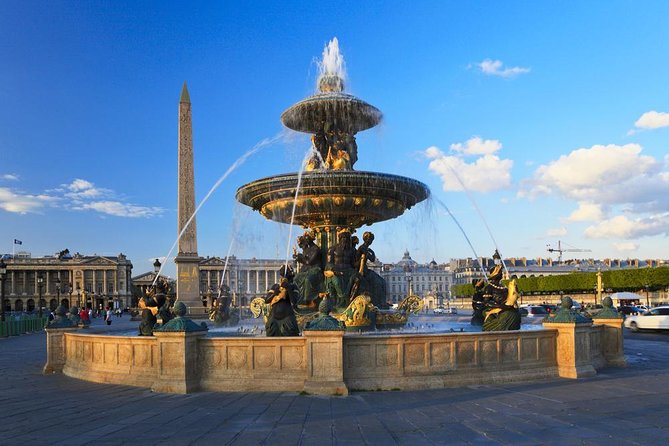
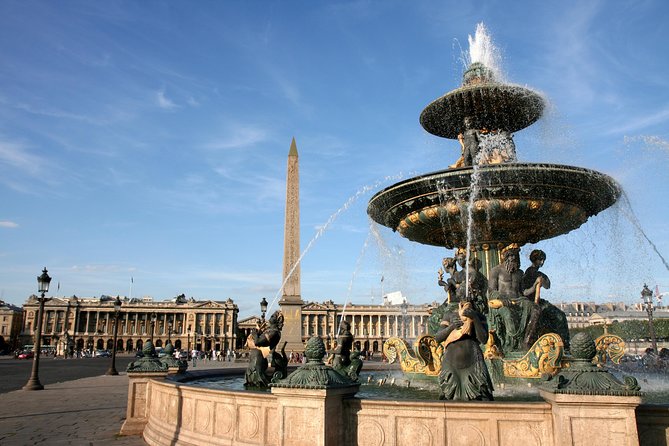
The route ends at Place de la Concorde. That gives the day a classic Paris arc: from the Left Bank (Saint-Germain-des-Prés) toward one of the city’s big central spaces.
Along the way, you should expect a mix of street wandering and short “look here” moments—facade details, statues, and small side streets. One review even described it as a beautiful walk between Saint Germain des Prés and the square courtyard of the Louvre. That suggests the route can pass through big, easy-to-recognize zones while still focusing on smaller details.
Because the end point is Place de la Concorde, you can usually roll into other plans right after. It’s a convenient landing zone for the rest of your day.
Just remember: this is an approximately 1 hour 45 minutes walk, and some reviews put it closer to 2 hours. So don’t schedule something that requires you to sprint the second you arrive at Concorde.
Price and value: is $17.09 worth it?
At $17.09 per person, this is priced like a “grab it and go” guided walk, not a premium museum ticket. For that money, you should judge it on two factors:
- You’re paying for interpretation, not entrance fees. The only included item is the guide. That means you’re buying the thinking—how to read symbols, how to explain origins and myths, and how to connect Freemasonry to French context.
- Your guide effort matters a lot. A stronger guide turns a symbol walk into a memorable session. A weaker one can make it feel like it could have happened from a binder at a desk.
So yes, it can be a great value. But it’s not magic. You still need to show up ready to walk, look, and listen.
If you’re the type who enjoys learning from street details—especially when the guide points out patterns—you’ll probably feel like it was worth every euro (or dollar, in your case).
Getting there and making the timing work
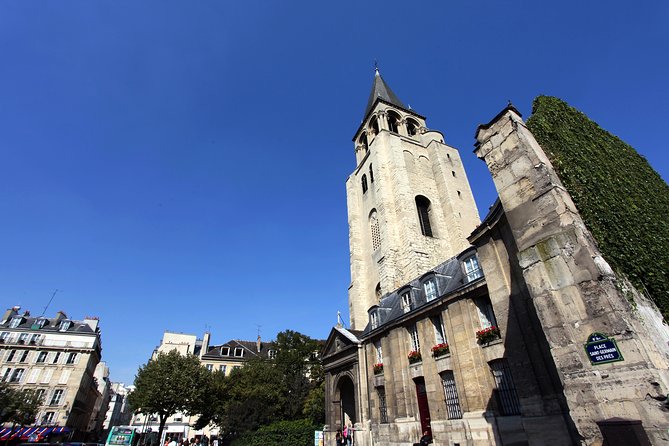
The tour starts at Church of Saint-Germain-des-Prés, 3 Pl. Saint-Germain des Prés, 75006 Paris, and it ends at Place de la Concorde, 75008 Paris.
Two practical notes from the experience details:
- You’ll have a mobile ticket.
- It’s a walk you should treat like a timed class. One review warned that if you’re not right on time, the group can leave without you.
So arrive early, not “on the dot.” Also, wear shoes that handle cobblestones and stop-and-start walking.
This is also described as requiring good weather. If weather turns bad, you may be offered a different date or a full refund.
Who this tour suits best
This works best if you want:
- A historical walk with a clear theme (not random sightseeing).
- A guide who explains how to read symbols and separate truth from fiction.
- A format that’s short enough to fit into a day, with enough time to think as you walk.
It may not be ideal if you want:
- Many big building interiors or long architectural stopovers.
- A tour that feels like a formal lecture with heavy seated time.
- A “hands-off” experience. This one asks you to actively look at what the guide shows you.
And if you’re traveling with kids, it’s a mixed bag. One review mentioned attending with two children around ages 12 and 15 and finding the guide inaccessible. If you’re bringing younger teens, I’d go in expecting that engagement will depend heavily on the guide’s ability to explain clearly and take questions.
Should you book this Freemasons walk?
I’d book it if you enjoy street-level learning and want a focused themed walk between two major Paris anchor points: Saint-Germain-des-Prés and Place de la Concorde. The price makes it easy to try, and the best version of the tour sounds like exactly what you hope for—illustrated clues, good explanations, and a guide willing to talk.
I would hesitate if you want lots of interior access or lots of landmark-heavy stops. The tour can feel more like “symbol spotting plus conversation” than “major buildings, one by one.” Since the experience depends on teaching style, it’s also worth mentally going in ready to ask questions early—because the tour’s success is tied to that back-and-forth.
FAQ
How long is the Freemasons walking tour?
It runs for about 1 hour 45 minutes (approx.). Some reviews describe it closer to 2 hours.
Where do you meet, and where does the tour end?
You start at the Church of Saint-Germain-des-Prés (3 Pl. Saint-Germain des Prés, 75006 Paris). The tour ends at Place de la Concorde (75008 Paris).
Is a mobile ticket provided?
Yes, the tour includes a mobile ticket.
What’s the group size?
The group is limited to a maximum of 25 travelers.
Is the tour affected by weather?
Yes. It requires good weather. If it’s canceled due to poor weather, you’ll be offered a different date or a full refund.
Can I get a full refund if I cancel?
You can cancel for a full refund up to 24 hours before the experience’s start time. If you cancel less than 24 hours before, the amount paid is not refunded.