REVIEW · PARIS
Paris: Montmartre Macaron Baking Workshop
Book on GetYourGuide →Operated by MACA’RONG · Bookable on GetYourGuide
Macarons need focus, not luck. In Montmartre-area Paris at Maca’Rong, you learn Italian meringue and leave with at least 15 macarons you made and decorated yourself. It’s a fun mix of technique and creativity, plus tea and coffee to keep you moving.
I especially like the small group setup, limited to 8 people, which means Kanika and Vouthy can correct your process instead of just talking at you. And I love the hands-on decorating step, where you personalize shells using a double nozzle.
One thing to plan around: this workshop is not suitable for people with lactose intolerance or food allergies, and you can’t just hang back and watch. Everyone must have a reservation, since it’s built as a participant-only class.
In This Review
- Key things that make this macaron class worth it
- Walking into Maca’Rong on Rue Legendre
- Tant pour tant and the ratios that keep you sane
- Italian meringue macaron shells: the step that prevents heartbreak
- Piping practice on templates so your shells stay even
- Decorating macarons with a smaller double nozzle
- The baking and filling flow: what happens while shells set
- What you take home: box-packed macarons, not just memories
- Pricing and value: why $150 can make sense in Paris
- How to fit it into your Montmartre day
- Who this macaron workshop suits best
- Should you book Maca’Rong’s Montmartre macaron workshop?
- FAQ
- How long is the Paris Montmartre macaron baking workshop?
- How big is the class?
- What languages are offered during the class?
- How many macarons will I make and take home?
- What fillings does the class include?
- Does the workshop teach Italian meringue?
- Is this workshop suitable for children?
- Is it suitable for people with food allergies or lactose intolerance?
- Where do I meet the class?
Key things that make this macaron class worth it
- Italian meringue method designed to help you avoid cracked, hollow shells
- Small group of up to 8, with hands-on coaching from Kanika and Vouthy
- Personal design time using a smaller double nozzle for unique patterns
- At least 15 take-home macarons packed in a special box, plus box bags
- Ganache demo with raspberry or mango-passion options to pair with your shells
- Tant pour tant setup prepared so you can focus on technique, not measuring
Walking into Maca’Rong on Rue Legendre
This class starts at 175 Rue Legendre, inside the Maca’Rong shop on the ground floor. It feels like a real atelier, not a tourist show. You’re not just tasting. You’re working.
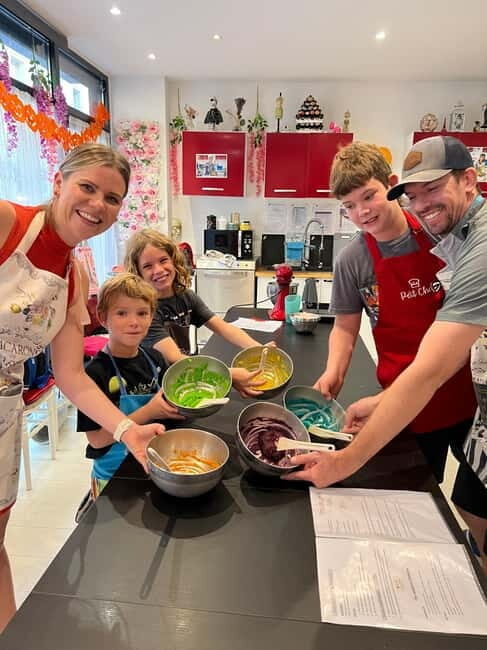
You’ll have a table, ingredients and tools set up for you, and a clear sense that the goal is practical results you can repeat later. Tea and coffee are included, and the vibe stays friendly and relaxed even when things get technical. Also, the class runs for 2 hours total, so it’s structured and efficient.
And because it’s capped at 8 participants, you get more of the good kind of attention: quick corrections when you need them, not long explanations you’ll forget.
You can also read our reviews of more tours and experiences in Paris

Tant pour tant and the ratios that keep you sane
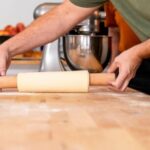
Before you pipe anything, you get your base ingredients ready in individual bowls using tant pour tant. That matters more than it sounds. Macarons are picky. Your consistency can’t rely on guessing.
This setup means you can spend your mental energy on the steps that actually make or break shells: whipping, folding, and piping. You’ll also get a guide to macaron making that covers the Italian meringue method as the main approach, while still explaining alternative techniques for context.
What I like here is that it’s not just a one-method demo. You get enough explanation to understand why the Italian meringue route works, and that gives you confidence in your own kitchen later.
Italian meringue macaron shells: the step that prevents heartbreak
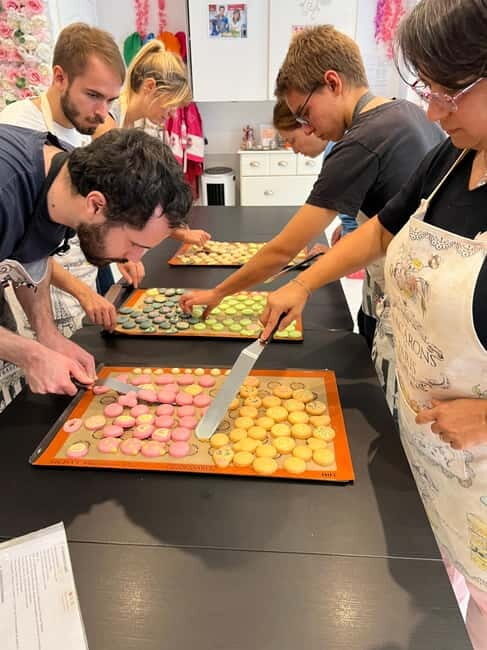
The centerpiece of the workshop is mastering the Italian meringue method. It’s described as slightly technical, but efficient. In plain terms, you’re using hot sugar syrup to stabilize egg whites, which gives you a more predictable meringue structure for the shell batter.
This is where you’ll learn the key movement that home cooks struggle with: macaronage. You’re not just mixing. You’re folding until the batter hits the right texture. The guide uses clear cues to help you recognize when the dough shines properly. Get this part right, and your shells are far more likely to dry evenly and bake into that classic macaron look.
Also, the coaching style is hands-on. Kanika and Vouthy guide you through the process and keep you on track with checks and reminders. One review noted they even quiz participants to help the steps stick, which is smart. You don’t want to leave and then forget the most important texture cue two days later.
Piping practice on templates so your shells stay even
Once the batter reaches the right stage, you move to piping. The workshop doesn’t assume you know how to handle a piping bag. You’ll learn how to fill it without wasting batter, which sounds small until you’ve spilled half your bowl on a counter.
Then comes the practical part: piping onto round templates. This is a big deal because even shells need even circles. You’re being trained not for perfect art, but for consistent results that match the baking cycle.
If you’ve never piped before, you might feel awkward for the first few rounds. That’s normal. The class pace is built so you can correct your flow as you go, not just once at the beginning.
Decorating macarons with a smaller double nozzle
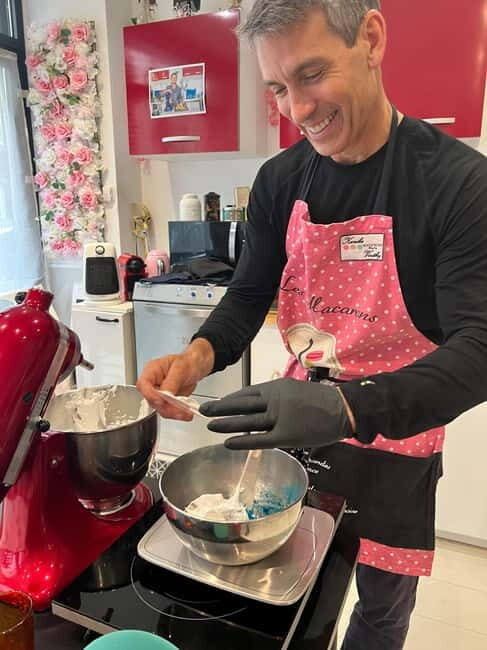
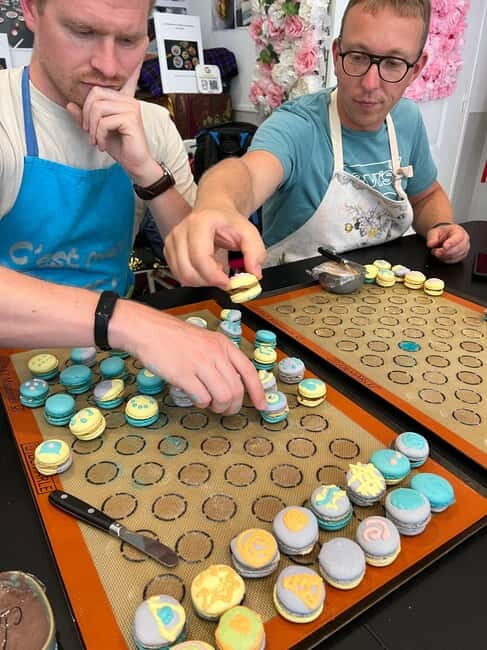
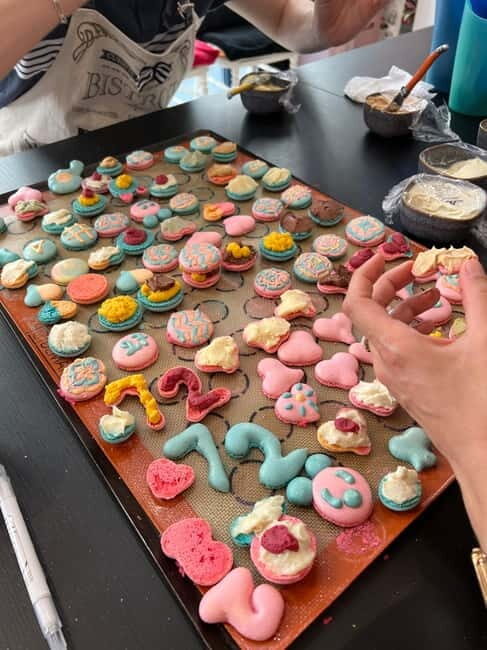
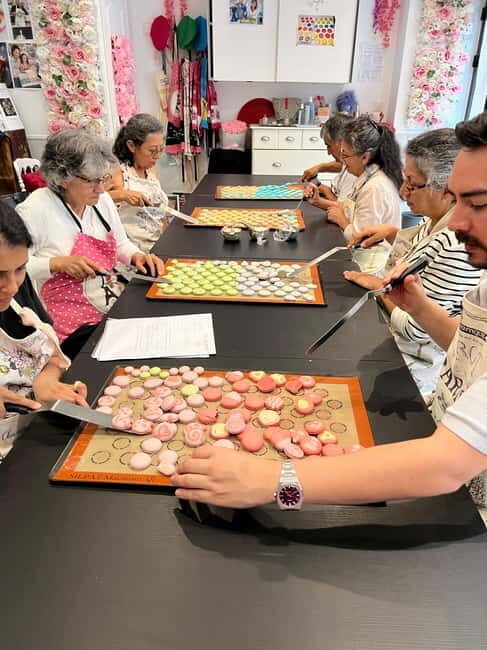
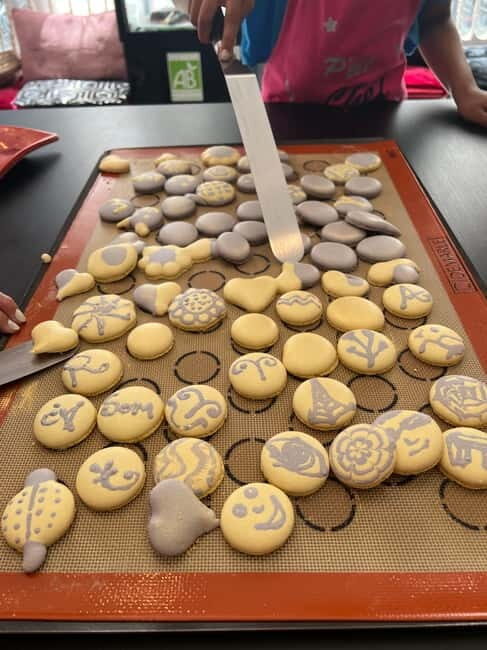
Here’s the fun switch: personalization. After piping round shells, you learn to embellish them with your own designs using a smaller double nozzle.
This is where the workshop gets very “you’re actually making macarons” and less “watch me do it.” You’re choosing patterns and placing them carefully on the shells. Depending on how precise your piping is, you’ll end up making around 15 macarons to take home.
This is also one of the most satisfying sections for families and mixed-age groups. Kids and adults both enjoy it because it’s creative without being random. You’re learning a technique, not just picking toppings.





The baking and filling flow: what happens while shells set
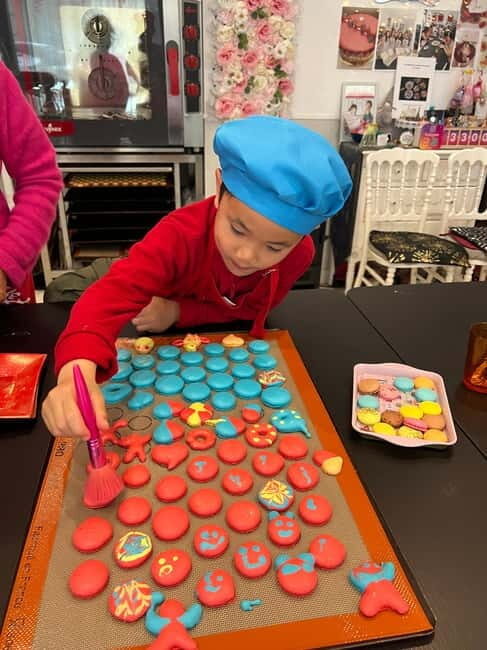
When your shells bake, the class doesn’t just stall. You get a ganache-focused demo while macarons do their thing.
You’ll learn how to prepare a raspberry ganache, and the class also discusses raspberry or mango-passion ganache as filling options. The point isn’t only flavor. It’s texture and consistency, so filling doesn’t seep or turn into a mess.
Your class package includes multiple fillings as well, listed as 10 fillings. That means you’re not limited to one flavor pairing. You get choices that let you match filling to the shell you worked so hard to pipe and decorate.
Also, there’s a chef sharing a secret recipe as part of the experience. Even if you’ve made macarons before, having a French pâtisserie lens on technique and flavor balance helps.
What you take home: box-packed macarons, not just memories
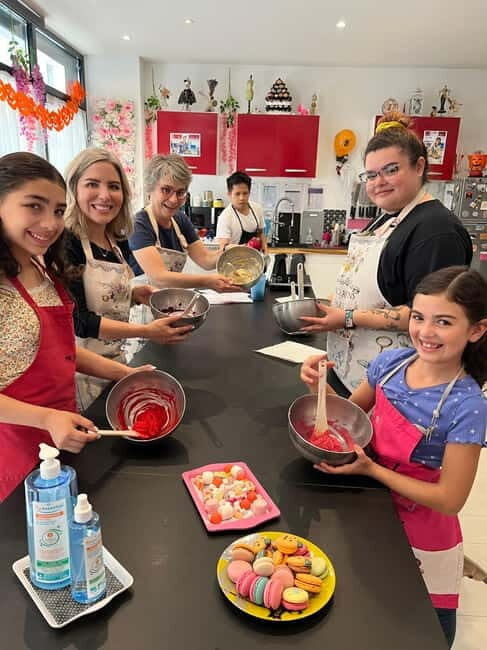
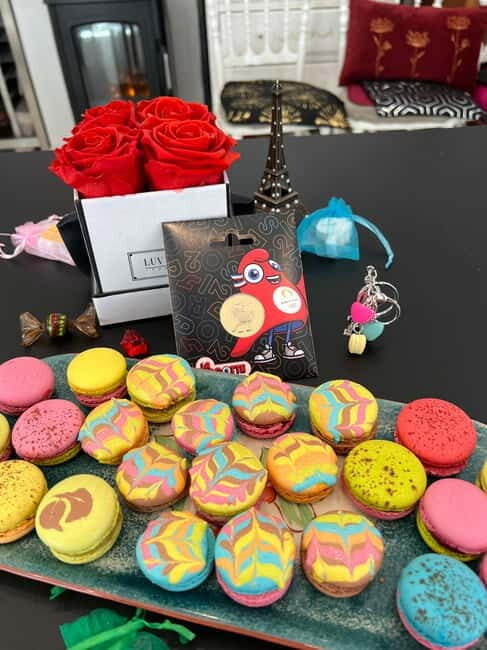
The workshop is built around a real takeaway: you’ll craft at least 15 macarons to take home, packed in a special box. You also get bags for your box of macarons, which sounds minor until you’re carrying fragile treats through a Paris day.
The best part is that you’re not taking home plain macarons. You’re taking home macarons you piped, learned macaronage for, decorated, and paired with fillings. That’s what makes this different from buying a pretty box from a shop window.
If you love variety, this class hits that sweet spot. You can’t make a whole batch at home during a trip and call it “value,” but here you get a meaningful batch in a short time, and you control flavors and designs.
Pricing and value: why $150 can make sense in Paris
At $150 per person for 2 hours, you’re paying for instruction plus ingredients plus materials, not just a cookie tasting.
Here’s the value logic I use:
- You get coaching through the hardest parts (Italian meringue and macaronage). That’s where most people fail at home.
- You leave with at least 15 macarons, not a single sample. Even if you compare to typical Paris pricing for boxed macarons, the math improves when you think in terms of quantity and variety.
- The class is small (max 8). Small group teaching is usually the difference between learning a technique and being entertained by one.
If your goal is to eat a few macarons, you’ll spend less elsewhere. If your goal is to learn enough to make your own at home, this is one of the cleaner ways to do it without guessing.
How to fit it into your Montmartre day
The meeting point is in the Montmartre area, but it’s not right on top of Sacré-Cœur. One practical note: it’s about a 20-minute walk to Montmartre from the workshop location.
That means you can pair this with:
- a morning or early afternoon walk in the neighborhood, then the class
- lunch nearby, then an activity that doesn’t depend on weather
Because the workshop is only 2 hours, you’re not stuck planning your whole day around it. You do need to show up on time with your spot reserved, since this is participant-only.
Who this macaron workshop suits best
This works best if you want a hands-on Paris food activity with real technique. You do not need special baking skills. The class is designed for beginners but still teaches the Italian meringue method in a way that advanced bakers can respect.
It’s also a great fit for families and multi-age groups. Reviews mention kids and adults enjoying the creative decorating step and learning the precise shell steps. The structure helps everyone stay engaged.
Avoid it if any of these apply:
- lactose intolerance or food allergies (not suitable)
- wheelchair users (not suitable)
- children under 6 years old
- babies under 1 year old
- you want to observe without participating (not possible; everyone must be reserved)
Should you book Maca’Rong’s Montmartre macaron workshop?
I’d book it if you want more than a souvenir. This is a technique class disguised as a sweet day out. The Italian meringue method, the macaronage training, and the piping-and-decoration sequence give you a repeatable skill set, and you take home macarons you can be proud of.
I’d skip it if you have dietary restrictions that make macarons unsafe for you, or if your priority is simply buying macarons and moving on. Also, if you really dislike hands-on food prep, this class will feel like work, not just fun.
If you do fit the target audience, this is one of those rare Paris activities where you leave with both a story and something edible.
FAQ
How long is the Paris Montmartre macaron baking workshop?
The workshop lasts 2 hours.
How big is the class?
It is a small group limited to 8 participants.
What languages are offered during the class?
The instructors speak English and French.
How many macarons will I make and take home?
You will make and take home at least 15 macarons.
What fillings does the class include?
The class includes 10 fillings and a demonstration focused on raspberry or mango-passion ganache for your macarons.
Does the workshop teach Italian meringue?
Yes. The class focuses on the Italian meringue method for macaron shells.
Is this workshop suitable for children?
It is not suitable for children under 6 years old.
Is it suitable for people with food allergies or lactose intolerance?
No. It is not suitable for people with food allergies or lactose intolerance.
Where do I meet the class?
Meet at the Maca’Rong shop on the ground floor at 175 Rue Legendre, and go inside.