REVIEW · SAINT LAURENT SUR MER
From Paris: Normandy D-Day Beaches Day Trip
Book on GetYourGuide →Operated by ParisCityVision · Bookable on GetYourGuide
Normandy hits different in one long day. This Paris-to-Normandy outing strings together the places that shaped D-Day—starting at Pointe du Hoc and ending with Arromanches—with an English-speaking guide explaining what you’re seeing.
I especially like two things: the American Cemetery itself, with its precise scale and calm (170 acres and 9,387 white marble headstones), and the way the day also includes the cliff assault at Pointe du Hoc plus time to look around. One possible drawback: it’s a 14-hour trip, so you won’t have hours to linger at each stop like you would on a multi-day visit.
The pace is real, but it’s also efficient. You’ll get a coach ride out of Paris, guided site visits, and just enough breathing room in Arromanches to eat, stretch, and absorb the setting.
In This Review
- Key moments I’d circle on your calendar
- Why this Paris-to-Normandy day trip is worth it
- From central Paris to Pointe du Hoc: the ride that sets the tone
- Pointe du Hoc: when the cliff tells the story
- The Normandy American Cemetery at Colleville-sur-Mer: order, scale, and views
- Omaha Beach: what you see is simple, what you know makes it heavy
- Longues-sur-Mer and the Atlantic Wall battery: seeing the defenses clearly
- Arromanches-les-Bains: lunch, the Mulberry harbor, and the coastline returning
- Optional add-ons: Juno Beach and a museum stop (timing dependent)
- Price and value: what $199 buys you on a single-day Normandy mission
- What to expect with the pace: long day, real time, minimal lingering
- How to get the most out of your guide time
- Who this Normandy day trip is best for
- Who might want a different plan
- Practical tips before you go
- Should you book this D-Day beaches day trip?
Key moments I’d circle on your calendar
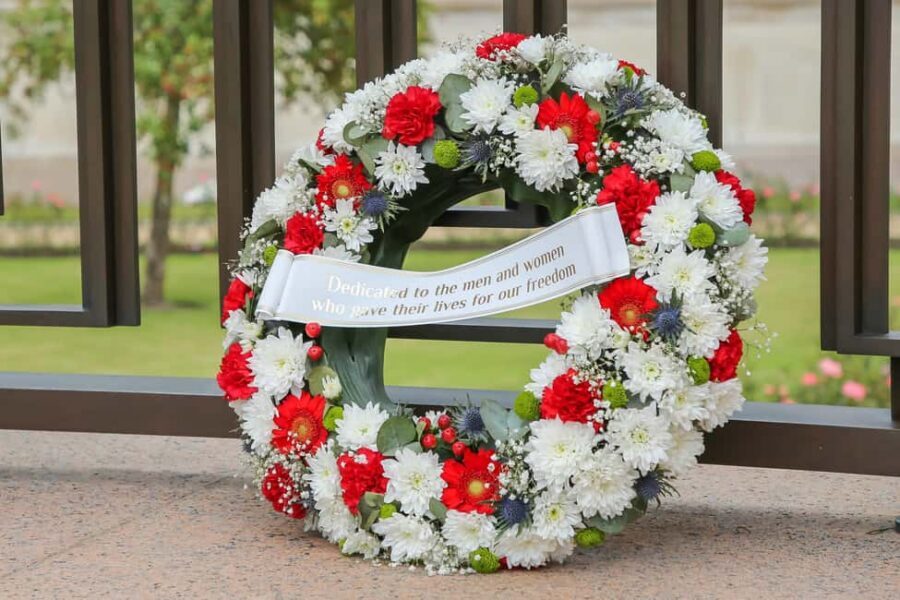
- Pointe du Hoc (cliff-top ranger assault views) with a guided stop that gives the site context
- Normandy American Cemetery overlooking Omaha Beach, with time to walk the grounds
- Omaha Beach photo stop plus the larger landing-picture explained
- Arromanches free time for lunch and a look at the Mulberry harbor remains
- Longues-sur-Mer German battery stop for Atlantic Wall context
Why this Paris-to-Normandy day trip is worth it
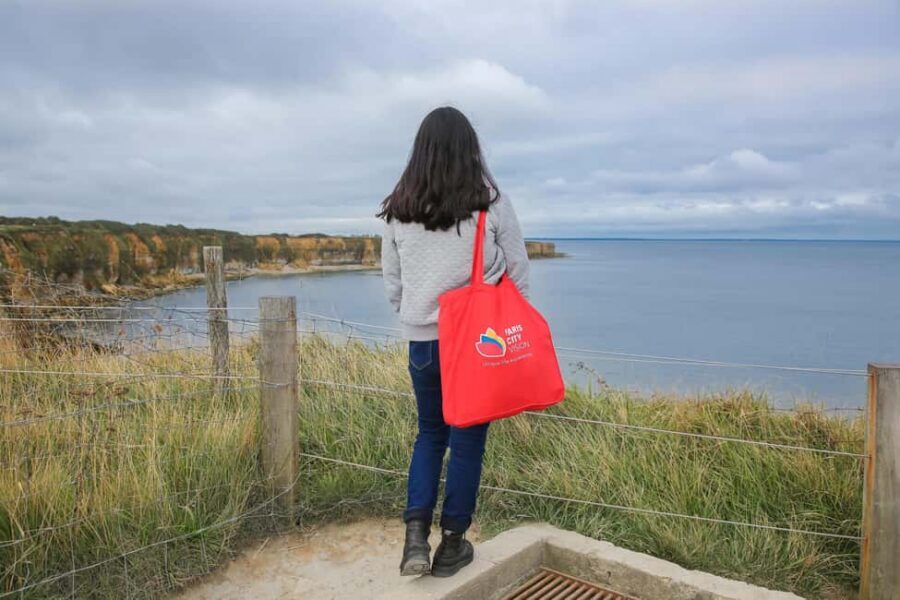
If you only have one day, this is one of the most practical ways to see the major D-Day landmarks without turning your trip into a logistics project. The day runs on an air-conditioned coach with a live English guide doing the heavy lifting: translating the geography into a story you can actually follow.
I like that the experience is built around both American and German perspectives of the battlefield. You’re not just “watching history” from a distance; you’re standing at key points and getting the basic facts that explain why each spot mattered.
A good one-day Normandy visit still has tradeoffs. You’ll cover a lot of ground, and some stops are more “look, learn, move” than “wander slowly for hours.”
From central Paris to Pointe du Hoc: the ride that sets the tone
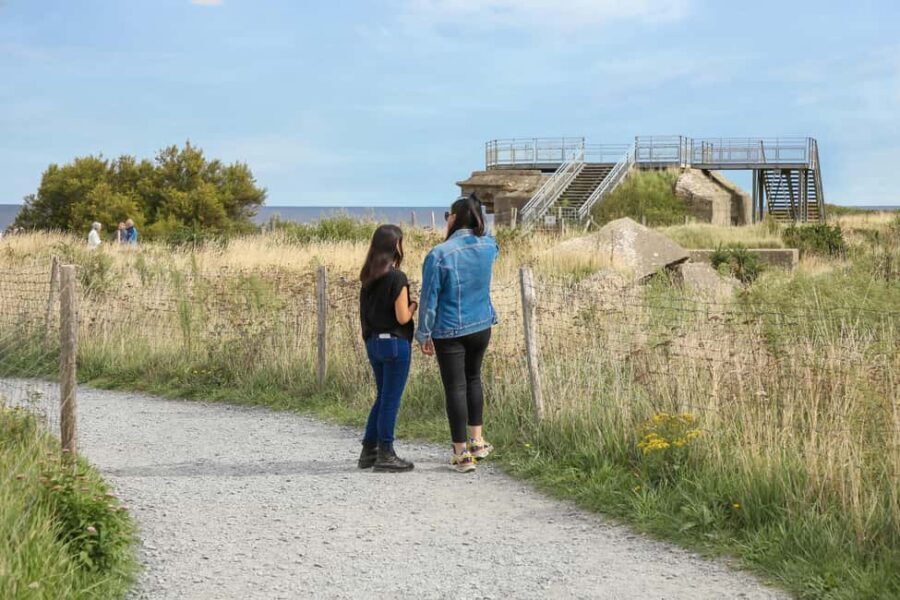
The day starts with round-trip transportation by air-conditioned bus from central Paris. Your pickup is at one of two starting options: Pullman Paris Tour Eiffel (near the Frame Brasserie at the Hotel Pullman) or the Frame Brasserie location itself, depending on what you book.
Once you’re on the road, you’re in “countryside to battlefield” mode—time to settle in, watch the scenery shift, and let the guide prime you for what’s coming. Long days in Paris can be tiring, so I appreciate having this built-in reset: you get seats, rest breaks along the way, and you don’t have to manage driving or parking in Normandy.
Pointe du Hoc: when the cliff tells the story
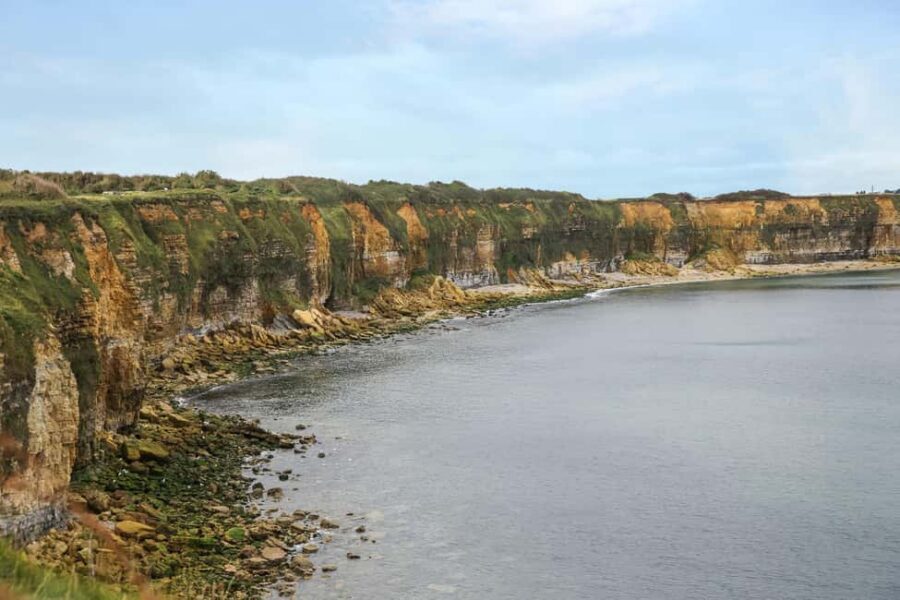
Pointe du Hoc is where this trip earns its emotional weight. The site sits on dramatic cliffs, and Americans (Rangers) carried out one of the D-Day assaults from this position. Standing up here, you can feel why this was hard: elevation, exposure, and a mission that depended on getting the details right.
You’ll have guided time at Pointe du Hoc. That matters, because without explanation, you can still see the place, but you might miss the “why” behind it—what the assault was trying to stop, and why the Germans valued this part of the coast.
Practical note: this is not the kind of stop where you can treat it like a quick photo and walk away. Give yourself enough attention to absorb what the guide is connecting to the rest of the day.
The Normandy American Cemetery at Colleville-sur-Mer: order, scale, and views
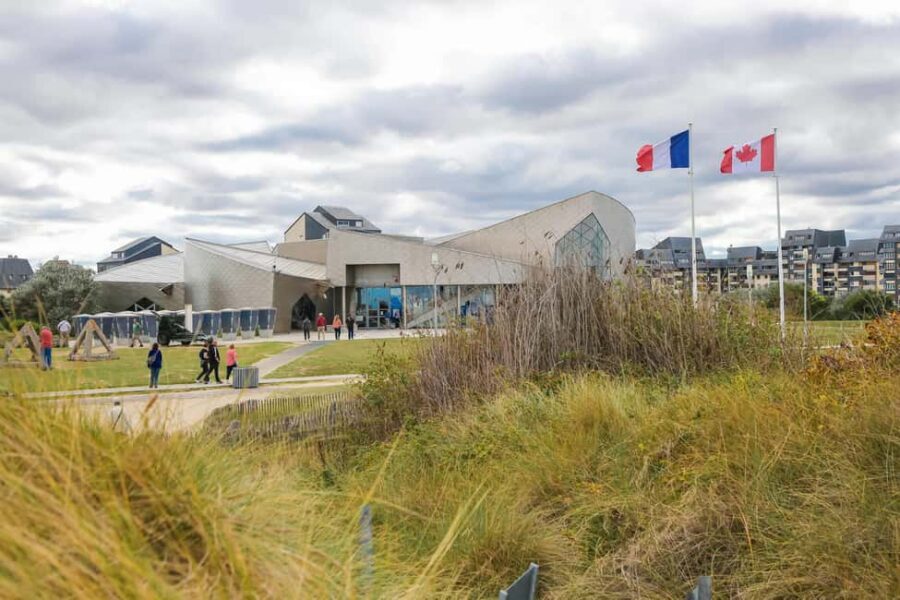
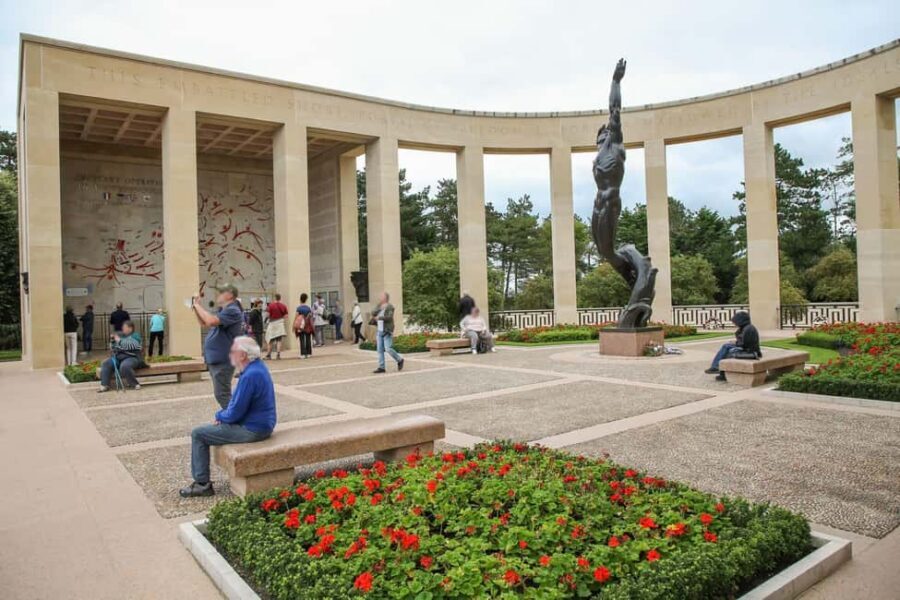
Next comes the Normandy American Cemetery in Colleville-sur-Mer, overlooking Omaha Beach. The grounds cover about 170 acres, and there are 9,387 white marble headstones, plus a memorial, a chapel, and the Garden of the Missing.
This is the stop that often lands hardest, because the cemetery is quiet and structured. The guide can explain the larger battle picture, but the setting does its own work. You walk paths laid out for reflection, and the view toward Omaha Beach makes the coastline feel close in a way that photos can’t.
The time here is also a big part of the value. You’re not just at the gate. You get to walk the grounds and take in details like the memorial areas and the way the cemetery overlooks the landing zone.
Omaha Beach: what you see is simple, what you know makes it heavy
Omaha Beach today can look deceptively calm. Much of what happened happened fast, and much of the wartime infrastructure is gone—so the shore can feel like a big flat stage.
That’s why the photo stop at Omaha Beach works best on a guided day. You’re not relying on the beach alone to tell you what occurred there. The guide connects the beach to the landing under heavy fire and to the surrounding terrain you can still recognize.
One useful mental trick: treat Omaha as the “end of the line” for the information you’ve already absorbed. If Pointe du Hoc explained the assault stakes, and the cemetery explained the human cost and geography, Omaha Beach becomes the place where it all clicks together.
Longues-sur-Mer and the Atlantic Wall battery: seeing the defenses clearly
The day doesn’t just focus on Allied landings. You also stop at Longues-sur-Mer, where you can see a German coastal battery that’s remarkably well preserved. This is a strong counterweight to the American-focused stops, because it gives you a sense of what defenders built along the Atlantic Wall.
In practical terms, it helps you understand why the landings were so dangerous. When you look at fortifications and coastal artillery positions, you get a better sense for how difficult it would have been to move under fire.
This stop is especially good if you like your history factual and spatial. The guide can connect what you’re seeing to broader defense planning—something that turns the structures into more than just old concrete.
Arromanches-les-Bains: lunch, the Mulberry harbor, and the coastline returning
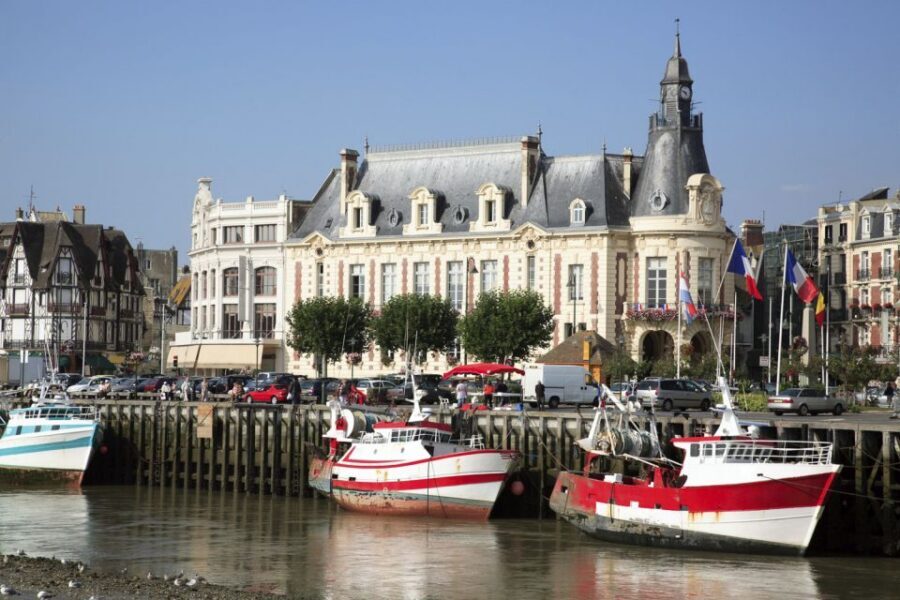
By the time you reach Arromanches-les-Bains, the mood shifts slightly. This is a historic seaside town tied to one of the clever engineering solutions of the Normandy landings.
You’ll have time for lunch, usually with the option for local Normandy specialties such as crêpes and cider, depending on the option you choose. If you skip a pre-planned lunch, you typically still get free time to explore and eat on your own.
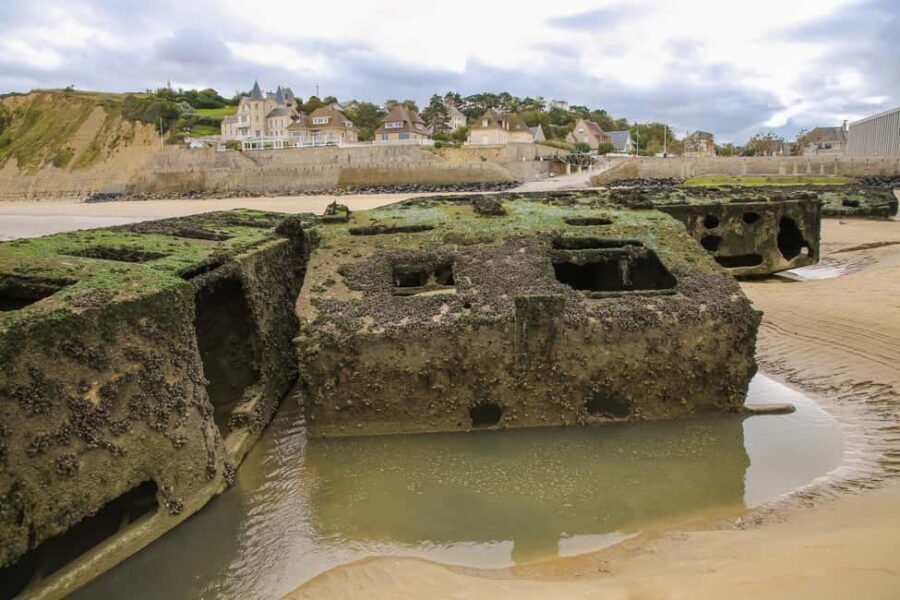
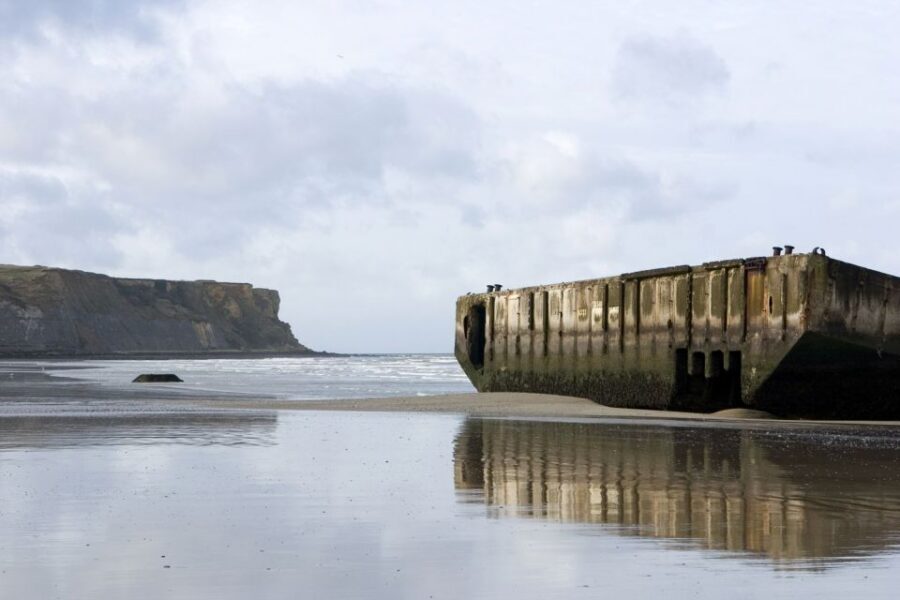
What makes Arromanches special is the Mulberry artificial harbor. Parts of reinforced concrete Phoenix caissons can still be seen floating in the water. It’s one of those “you’re standing near an idea” moments—an important reminder that D-Day wasn’t only about bravery. It was also about logistics.
Even if you’re not a big “ruins and remnants” person, this stop helps you see how the battle extended beyond the beaches. The harbor was how supplies kept moving after the initial landings.
Optional add-ons: Juno Beach and a museum stop (timing dependent)
Depending on the day’s schedule and site availability, the trip may include a short stop near Juno Beach and its cemetery, tied to Canadian troops. It’s a helpful addition if you want a broader Allied picture beyond just American landing zones.
There may also be an opportunity to visit a museum. The type of exhibits described include everyday objects from life under occupation, military maps and vehicle models, and film screenings that help recreate the emotions and scale of the campaign.
The key thing to know is that these extras are not guaranteed in every run. Traffic and site schedules can affect timing, and the operator may adjust what fits comfortably into the day.
Price and value: what $199 buys you on a single-day Normandy mission
At $199 per person for a full day, the value comes less from any one site and more from the combination: round-trip transportation plus a live English guide plus guided access where it matters.
Here’s what you’re paying for in practical terms:
- You don’t have to navigate the French countryside, parking, and routing on your own.
- You get context at the hardest-to-understand stops (Pointe du Hoc and the cemetery) rather than only visuals.
- The schedule is built to make a one-day timeline possible from Paris—about 14 hours total.
Lunch is the one clear extra. It’s not included, and you’ll either have a lunch option at Arromanches or free time to dine independently. Based on what you get for the rest of the day, it’s smart to plan lunch as a separate line item and decide based on your appetite for organized meal time versus roaming.
If you’re comparing costs, remember what’s included here: air-conditioned coach, guided visits at major sites, and the time buffer that comes with having a professional guide manage transitions.
What to expect with the pace: long day, real time, minimal lingering
This is where you have to be honest with yourself. You’ll see a lot, and you won’t linger for long at every stop. Some parts of the day are tight by design, especially between sites.
That can be great if you want a strong overview and you trust the guide to help you focus. It can feel rushed if you’re the type who wants to sit in one cemetery corner for an hour with no movement.
The good news is that the guided stops are paired with actual access, not just drive-bys. And Arromanches gives you a chunk of time to regroup and eat.
Also worth knowing: the bus is described as comfortable, with rest breaks along the way. In some groups, there’s also mention of a bathroom on the coach, but it’s not intended for constant use—rest areas are part of the rhythm.
How to get the most out of your guide time
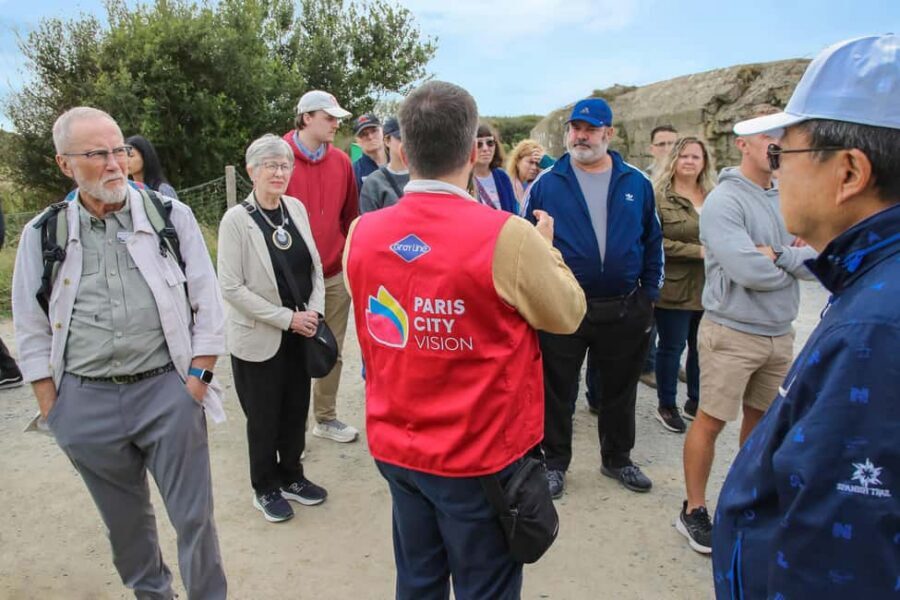
This tour is one of those experiences where the guide shapes everything. In past groups, guides like Zoltan, Steve, Amelia, Camille, Ann, and Brigitte/Brigette have been praised for being engaging and for giving clear explanations in English.
That comes across in the way the day is structured. You get facts tied to what you’re physically seeing, and you’re not left piecing together a map in your head while you stand on the coast.
If you’re the sort of person who likes questions, bring them. Some guides also handle group dynamics well—staying focused on WWII history rather than letting the tour drift.
Who this Normandy day trip is best for
This tour fits best if you:
- Want a one-day sampler of the major D-Day sites from Paris
- Prefer a guide to connect locations to the larger story
- Like structured time in the cemetery and at key military points
It’s also a strong choice for families. The day has a clear sequence, and the stops are concrete and visual.
Who might want a different plan
This is not suitable for people with mobility impairments. The stops involve walking, terrain, and access constraints typical of coastal and commemorative sites.
Also, if you hate long coach days, this one may feel like too much. The route is designed for efficiency. If you want slower travel with more time per location, you’ll likely enjoy a multi-day Normandy base more.
Practical tips before you go
- Bring comfortable shoes. You’ll be walking at the cemetery and moving between sites.
- Pack light. Luggage or large bags aren’t allowed, so plan for a small day bag.
- No pets and no smoking.
- Expect timing to shift a bit due to traffic or site availability. If something optional is added or removed, it’s usually a timing issue rather than a tour-change surprise.
And if you’re someone who gets hungry between meals, I’d plan for snacks and water before you leave the city. You’re doing a full day, and Arromanches lunch (included in the time, not always in what you buy) won’t carry you through the whole day if you’re a heavy eater.
Should you book this D-Day beaches day trip?
I’d book it if you want the classic Normandy D-Day hits in one day, with a guide who turns coordinates into a story you can feel. The Pointe du Hoc + American Cemetery pairing is the core payoff, and Arromanches adds a smart “how this was sustained” angle through the Mulberry harbor remnants.
Skip it (or consider a different style of trip) if you need lots of quiet time at each site. This is powerful, but it’s also paced. You’ll leave with a strong overview, not with the kind of deep, unhurried time you might want at the places that move you most.
If you’re on the fence, trust the simplest question: do you have only one day from Paris? If yes, this is a solid way to make it count.