
REVIEW · PARIS
Paris Baking Insider Experience near Eiffel Tower
Book on Viator →Operated by ExperienceFirst · Bookable on Viator
Paris smells like butter during this class.
This small-group French baking workshop is all about doing the work: you’ll learn dough handling, baguette shaping, and the key ideas behind lamination and puff pastry, then taste along the way to connect technique with flavor. It’s set in a real working bakery near the Eiffel Tower area, so the lesson feels grounded, not staged.
Two things I like a lot: you get hands-on practice (not just watching), and you also learn the why—things like how bread flours behave, the difference between yeast and sourdough, and how shaping affects the final loaf. If you’re lucky with your instructor, names like Priya, Nisha, Jess, Candice, Pierre, and Rachel come up often for clear coaching and a warm, no-stress vibe.
One possible drawback to plan for: the space is tight and the workflow can feel like a small obstacle course, plus the class may use some prepped ingredients to keep you focused on shaping and technique (so it won’t feel like every step is fully from scratch).
In This Review
- Key takeaways before you go
- Why this Paris baking class feels more local than a typical tour
- What you’ll learn to make: baguettes, laminate dough, puff croissants
- Baguettes: more than rolling dough
- Laminated dough: the logic behind puff
- Flours, yeast, and sourdough basics
- The hands-on rhythm: what you do versus what you might finish
- Why the tastings are part of the lesson, not a snack break
- Small group (max 8) changes how you learn
- Meeting point near the Eiffel Tower: the 15 steps detail is real
- Taking home bread and pastries: plan luggage and dinner
- Price check: is $108.84 worth it for 2 hours?
- Who should book this class (and who should skip)
- My take: should you book this Paris Baking Insider Experience?
- FAQ
- What is the duration of the Paris Baking Insider Experience?
- Where is the meeting point?
- Is the tour offered in English?
- How big is the group?
- Are children allowed?
- Do I need to be able to stand for a while?
- What’s included?
- Can I cancel for a full refund?
Key takeaways before you go

- Small group (up to 8 people) means your instructor can actually spot what your hands are doing.
- You practice baguettes and laminated dough, not just roll something and move on.
- You’ll learn dough science basics: flours, yeast vs sourdough, and what impacts texture and flavor.
- Tastings are built in, so you can taste your way through the lesson instead of guessing.
- Take-home pastries happen often enough to plan luggage space (and appetite).
- No elevator to the bakery: you’ll climb 15 steps and you should be able to stand for a while.
Why this Paris baking class feels more local than a typical tour
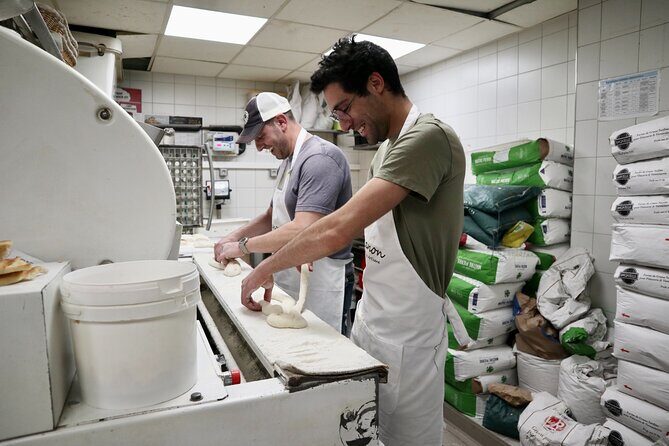
The best part of this experience is the setting. You’re not learning baking in a studio. You’re learning in a working boulangerie, where you can see how busy production life actually works. That matters, because bread is not just a recipe—it’s timing, handling, and a baker’s instincts built over countless batches.
In a 2-hour format, it would be easy to turn this into a demo. Instead, the structure leans practical: you’ll form dough, shape items, and get guidance that connects directly to what you’re making. The result is that you leave with new skills you can actually reuse, even if you’re not moving to France to become the next legendary boulanger.
You can also read our reviews of more tours and experiences in Paris.



What you’ll learn to make: baguettes, laminate dough, puff croissants
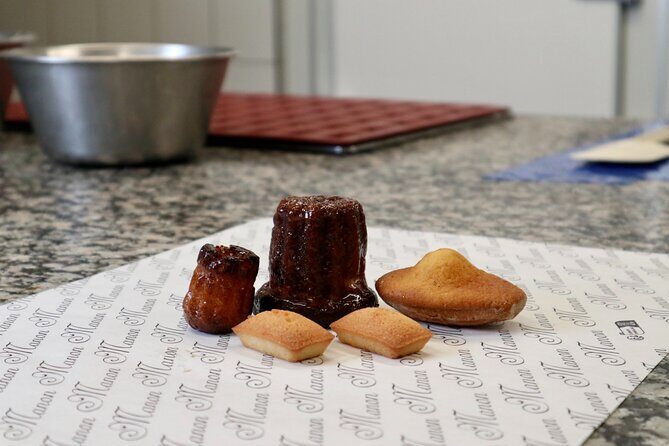
This workshop centers on bread and classic French pastry techniques. You’ll work on things like laminated dough and baguette shaping, plus puff croissants and additional pastries (financier-style treats are mentioned in the broader set of what gets made).
Here’s what the learning goals feel like in real life:
Baguettes: more than rolling dough
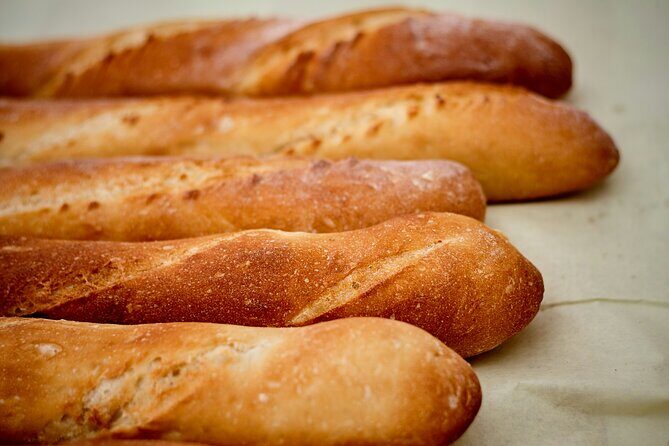
You’ll learn how to differentiate baguette styles and what makes them different. Expect shaping technique coaching—how to portion, handle without deflating, and form loaves so they bake with the right structure. The point isn’t to memorize a single move; it’s to understand what shaping is doing to the dough as it bakes.
Laminated dough: the logic behind puff
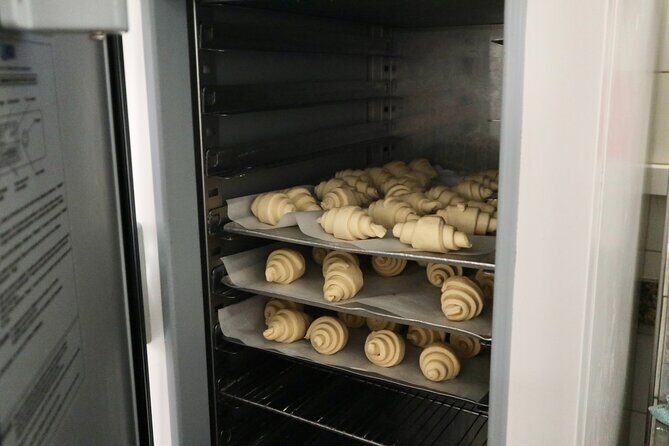
Laminate dough is the key skill behind the flaky layers you want in croissants and many puff pastries. During the lesson, you should come away with an explanation of what lamination changes and why it matters. Even if you’re not a trained baker, this part gives you the mental model to stop treating lamination as magic.
Flours, yeast, and sourdough basics
You’ll also learn the difference between bread flours, yeast, and sourdough. That’s useful because the final result comes down to more than ingredients—you’re learning how they behave. If you’ve ever wondered why one loaf tastes earthy while another tastes mild, or why one dough feels springy and another feels slack, this is the kind of explanation that makes future baking less guesswork.



The hands-on rhythm: what you do versus what you might finish
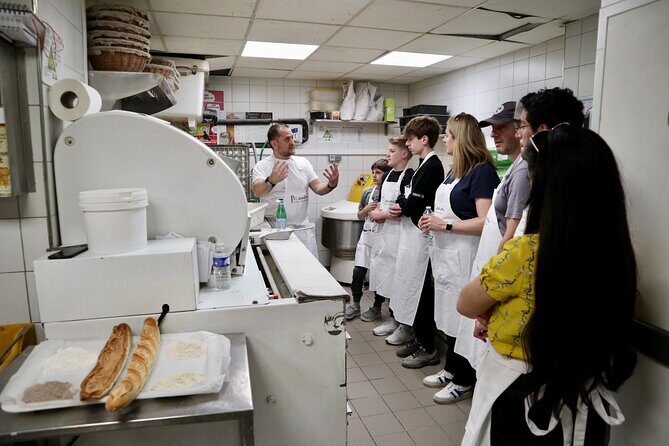
This is a workshop, but it’s not always a start-from-scratch marathon. Some instruction formats in this setting use dough that’s already prepared so you don’t spend the entire session on the slowest parts of dough development.
So expect a mix:
- You’ll do core tasks like rolling, shaping, and assembling.
- You’ll get coaching on technique so you can improve what you’re doing.
- You may not do every single step from raw ingredients to final bake, depending on timing and what the bakery has ready.
One review-style complaint you should take seriously: at least one participant felt the croissant portion was more about rolling dough than learning the full, long lamination process. That doesn’t mean the class is useless—it means you should go in knowing the focus is on practical technique and shaping, not a full day-long bread science lab.
If you’re aiming for the most active “do everything” experience possible, ask your instructor on arrival what parts are prepared ahead of time versus handled in class. That quick question can help you set expectations and get the most out of the time.
Why the tastings are part of the lesson, not a snack break
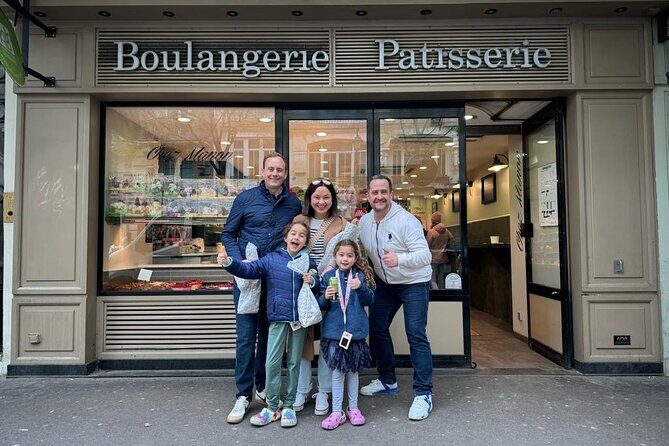
You’ll have tastings along the way, and they’re tied to the lesson goals. That’s the real trick: baking lessons without tasting turn into a hand workout where you never confirm what matters.
Because you’ll taste the results while you’re still learning, you can connect flavors and textures to the choices you made. And since snacks are included, you’ll have something to keep your energy steady during the standing and shaping portion of the workshop.
Also, this is the kind of class where you should bring your appetite. Multiple accounts mention taking home plenty of items—so you may eat breakfast lightly and end up turning the session into dinner plans later.
Small group (max 8) changes how you learn
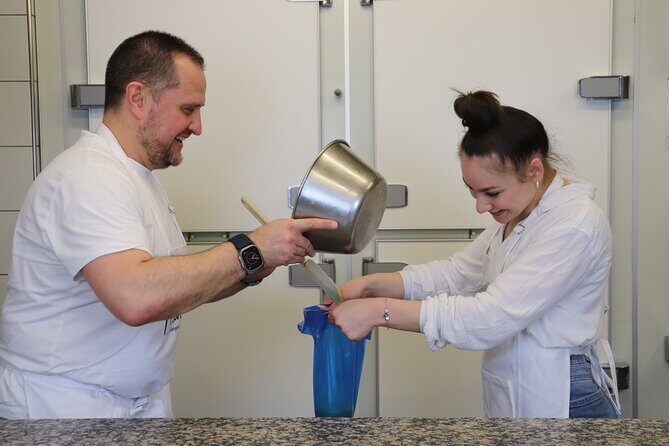
With a maximum group size of 8 people, the instructor can correct posture, hand pressure, and shaping issues while still moving the class forward.
That said, the room can feel tight. The bakery setup is compact, and when the group fills up, it can get crowded in the work area. I’d plan for that physically: wear shoes you can stand in comfortably, and don’t expect wide spacing between stations.
If you’re traveling with kids, this small size can be a win because the instructor can keep the group moving without losing everyone. Just note the rules: kids are allowed, but they need an adult with them. Children under 5 can join for free but won’t participate in the hands-on baking due to safety concerns.
Meeting point near the Eiffel Tower: the 15 steps detail is real
The meeting point is at 31 Rue de l’Annonciation, 75016 Paris. The activity ends back at the meeting point.
Here’s what you should plan for right away:
- The bakery you enter is on the 2nd floor
- There are 15 steps and no elevator
- The experience requires you to stand for an extended period of time
If stairs or long standing are difficult for you, this is the one issue that could change your day. Otherwise, the location is convenient because it’s near public transportation, which is helpful if you’re pairing this with Eiffel Tower sightseeing or a broader 16th arrondissement route.
Taking home bread and pastries: plan luggage and dinner
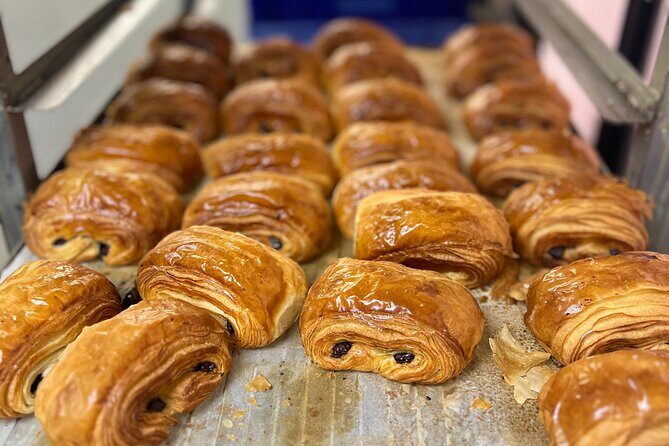
One of the most practical perks is what you leave with. The experience is built so you don’t just get a bite during class—you should expect to take home baked goods you helped make, like baguettes and croissants, plus sweet items such as financiers.
Practical advice:
- Bring space for pastries. If you’re traveling with soft-sided luggage, you’ll usually have an easier time reshaping your packing for the last day.
- Treat it like a food mission. Keep bags secure so you don’t crush flaky layers on the walk back to the Metro.
- Think about storage on the day of baking. You’re leaving with warm-baked goodness and it can go fast if you’re not careful.
Price check: is $108.84 worth it for 2 hours?
At $108.84 per person for about 2 hours, this isn’t a cheap “taste and learn” add-on. The value comes from what’s included and what you actually get out of it.
Here’s the value math that makes sense:
- You get an expert guide plus hands-on instruction.
- You get snacks and tastings during the lesson.
- You learn technique steps tied to real French pastry outcomes.
- You often leave with more baked goods than you can eat on the spot.
Also, the satisfaction signal is strong: the activity has a very high rating and a 97% recommendation rate. That’s not a guarantee, but it suggests the teaching approach lands well for a lot of people.
If you’re the type who learns better by doing, not watching, the price starts to feel fair. If you only want a quick tasting tour, this may feel like you’d rather spend your money elsewhere.
Who should book this class (and who should skip)
This workshop is a great fit if:
- You want to learn real bread and pastry technique, not just eat pastries.
- You enjoy working with your hands and getting instant feedback.
- You like the idea of seeing a working bakery behind the scenes.
- You’re planning a “one day, one skill” activity in Paris instead of another photo stop.
It may be less ideal if:
- You struggle with stairs or standing for an extended period (15 steps, no elevator).
- You expect every croissant and baguette step to be done from start to finish with no prepped components.
- Tight indoor space makes you anxious about moving around.
Good news for families: this can work well with kids because kids are allowed, and many lessons tend to be structured so younger participants can still have fun and learn through the process (with the safety rule that under-5 kids won’t handle dough).
My take: should you book this Paris Baking Insider Experience?
Yes—if you want something genuinely Parisian that goes beyond eating. This class gives you practical skills: shaping baguettes, understanding lamination, and learning what flours and fermentation choices do to your final bake. And because it’s a small group in a real boulangerie setting, you’ll feel the craft up close.
Book it with one expectation check: some parts may use prepped ingredients to keep the session on time, so you’re learning the techniques that matter most during the window you have. If you go in ready to work, ask questions, and protect your appetite for tastings and take-home pastries, you’ll likely come away smiling (and baking-plan-ing your next weekend).
FAQ
What is the duration of the Paris Baking Insider Experience?
It runs for about 2 hours.
Where is the meeting point?
You meet at 31 Rue de l’Annonciation, 75016 Paris, France, and the activity ends back at the meeting point.
Is the tour offered in English?
Yes, the experience is offered in English.
How big is the group?
The workshop has a maximum of 8 people.
Are children allowed?
Yes. Children can join with an adult. Kids under age 5 can join for free, but they cannot participate in the hands-on baking due to safety.
Do I need to be able to stand for a while?
Yes. You should be able to stand for an extended period. There are 15 steps to reach the bakery on the 2nd floor and there is no elevator.
What’s included?
You’ll get an expert guide, snacks, and a hands-on baking lesson, along with tastings during the experience.
Can I cancel for a full refund?
Free cancellation is available up to 24 hours in advance of the experience start time. If you cancel less than 24 hours before, the amount paid isn’t refunded.