REVIEW · FONTAINEBLEAU
Half-Day Bouldering in Fontainebleau
Book on Viator →Operated by Explore-Share · Bookable on Viator
Ropes are optional here. In Fontainebleau Forest, about 60 km from Paris, you get a half-day group bouldering session where you climb short rock problems without a harness. It is outdoor exercise with a skills focus, not a big scenic tour.
I especially like the safety-first coaching and how quickly guides can read your level and help you progress. In small groups (up to four), you can actually work problems, not just stand around, and guides such as Olivier, Ivan, and Anabelle are known for keeping the session controlled and encouraging.
One consideration: climbing shoes are not included, so you’ll want your own pair (or plan to rent locally). Also, bouldering is physical. Even if you are a first-timer, you will still be moving, stretching, and falling onto crash pads.
In This Review
- Key Things You’ll Notice in This Fontainebleau Bouldering Session
- Fontainebleau Forest: Why Bouldering Here Feels Like Real Climbing
- What You’re Actually Doing: Bouldering Without Harnesses or Ropes
- The Coaching Style: How Guides Like Olivier, Ivan, and Anabelle Teach Fast
- The Half-Day Flow: From Bois-le-Roi to Your First Problems
- Start at Bois-le-Roi: gear check and quick orientation
- Warm-up and basic movement coaching
- First boulder problems: build confidence with the right difficulty
- Technique progression: safety maneuvers and smarter tries
- Optional deeper spots if you’re ready
- Wrap-up and return
- Included Gear vs What You Need to Bring (So You Don’t Lose Time)
- Price and Value: Is $57 Worth It for 3 Hours in Fontainebleau?
- Who Should Book This (And Who Might Want to Adjust Expectations)
- Weather, Timing, and Staying Safe on Bare Rock
- Should You Book This Fontainebleau Bouldering Session?
- FAQ
- Where is the meeting point for this bouldering session?
- What time does the session begin?
- How long is the half-day bouldering?
- Do I need previous climbing experience?
- Do you use a harness or ropes?
- What gear is included, and what should I bring?
- Are the guides available in English and French?
- How big is the group?
- Is public transportation nearby?
- What happens if the weather is bad?
- What is the cancellation refund timeline?
Key Things You’ll Notice in This Fontainebleau Bouldering Session
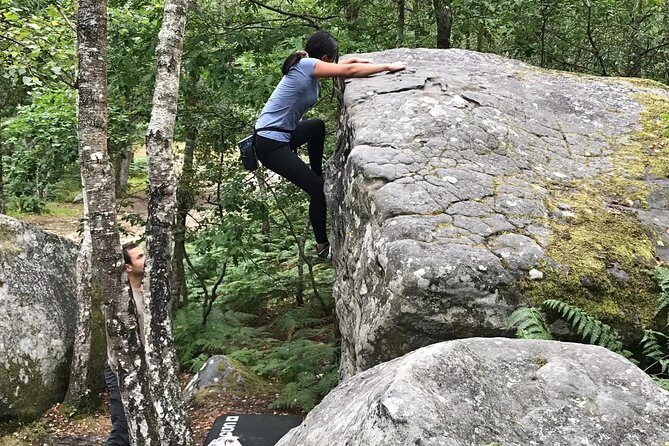
- No harness, no ropes: you focus on short boulder problems and safe landings
- Crash pads included: built for bouldering comfort and reduced impact
- Up to 4 people: more time climbing, less time waiting
- Coaching on progression: guidance on how to move better, not just what to do
- English and French: choose the language that helps you learn fast
- 3 hours total: a half-day that fits a tight Paris itinerary
Fontainebleau Forest: Why Bouldering Here Feels Like Real Climbing
Fontainebleau is one of those places where bouldering is not a niche hobby. It is the main event. You trade city pace for forest air and rock formations that make climbing feel immediate. The setting is close enough to Paris to work as a day trip, but once you are in the trees, the whole mood changes.
The big idea is simple: you climb on small rock formations using your strength and technique, not ropes. That means you learn how to grip, balance, and move your body efficiently. It is a great way to build climbing basics fast, without the mental weight of rigging or rope systems.
If you like the outdoors, you also get a change of scenery. Fontainebleau is about short routes in nature. You are not driving from attraction to attraction. You are in one area long enough to really practice.
You can also read our reviews of more tours and experiences in Fontainebleau.



What You’re Actually Doing: Bouldering Without Harnesses or Ropes
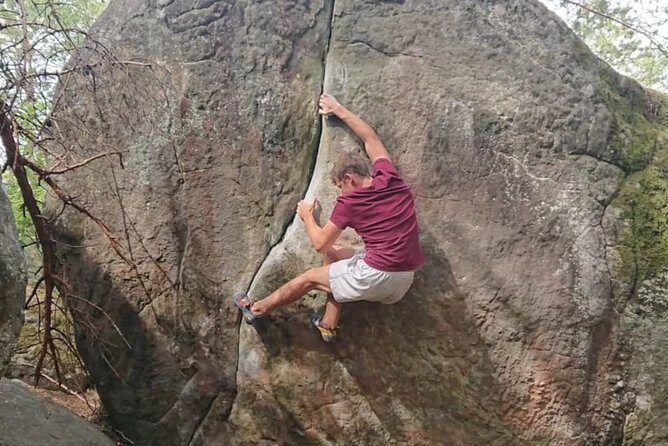
This is classic bouldering. You climb without a harness and without ropes. That setup changes everything in a good way.
First, you stay more focused. Your attention goes to body position, foot placement, and safe movement between holds. Second, the session is shaped around short problems. You work, you rest, and you try again with better technique. That repetition is how you improve.
You are also climbing on rock problems where crash pads are part of the system. Crash pads are included, and they matter because bouldering means controlled falls. You will be taught safety maneuvers, so you land more intentionally instead of hoping for the best.
The program is designed for both beginners and experienced climbers. If you are new, you start with easier problems to build confidence. If you already climb well, there is room to go deeper into the forest and discover additional spots. That gives you a session that can stay relevant, even after you get your first successes.
The Coaching Style: How Guides Like Olivier, Ivan, and Anabelle Teach Fast
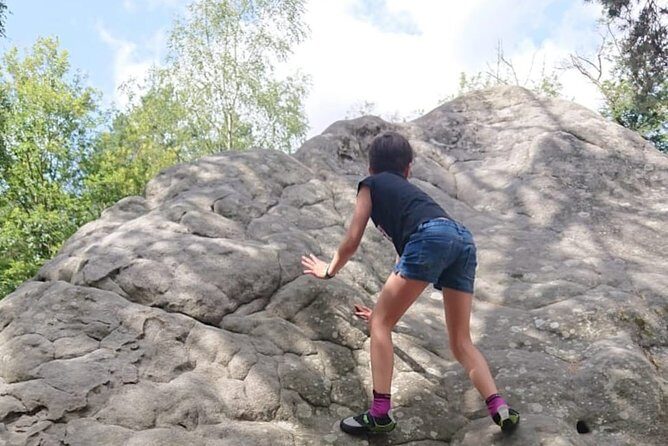
The coaching is where this experience earns its top rating. The guides are focused on two things: learning the right technique early and staying safe while you do it.
Olivier, for example, is described as able to quickly assess a climber’s level and coach you to exceed what you think you can do. The key detail there is pace. A good coach does not just watch you struggle. They adjust fast and give you the right next step, so you improve during the session, not later as a vague lesson.
Ivan is noted for being mindful with different personalities in the group. That matters more than people think. Climbing is mental as well as physical. Some people need reassurance and structure. Others need freedom to push harder. A guide who can manage that balance keeps the energy positive and the session productive.
Anabelle is praised for choosing the right introduction spot and teaching bouldering knowledge clearly. That is exactly what you want on your first day: a place and a plan that match your skill, so the learning curve is steep in a manageable way.
Across these guides, the repeating theme is safety focus plus practical technique. You learn how to progress, how to handle tougher moves, and how to move with control. You also get advice that you can apply beyond this one outing.
The Half-Day Flow: From Bois-le-Roi to Your First Problems
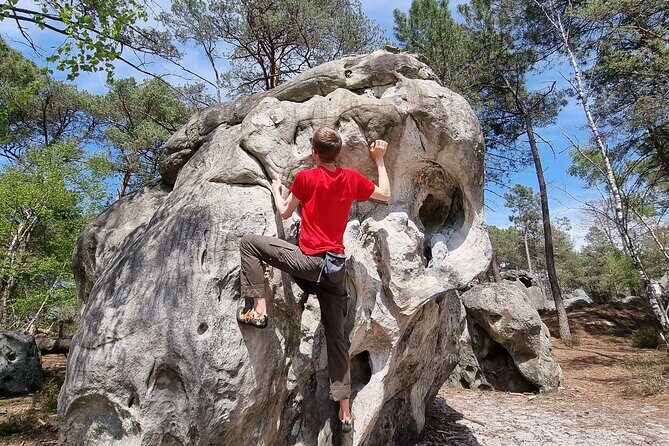
This is a group session of around 3 hours. It starts at 10:00 am at 77590 Bois-le-Roi, France, and it ends back at the meeting point.
Here is what the timing usually feels like in practice, and why it works:
Start at Bois-le-Roi: gear check and quick orientation
You will meet at the designated point and connect with your guide and the small group. Since crash pads and group equipment are included, the early part of the session is likely about setup: getting you positioned, checking what you need, and aligning expectations for bouldering safety.

Warm-up and basic movement coaching
Before you jump into harder problems, expect instruction on the fundamentals. For many first-timers, this is where your whole day changes. You learn how to use your feet, how to keep balance, and how to plan your moves so you are not just yanking on holds.
First boulder problems: build confidence with the right difficulty
You start on rock formations suited to beginners. This is the stage where you practice controlled effort. You do not need prior experience. What you do need is willingness to try, rest, and try again with coaching.
Technique progression: safety maneuvers and smarter tries
Then the session shifts into progression. You’ll get guidance on how to handle movement challenges. The point is not to push you until you fail. It is to help you fail safely, adjust, and improve.
Optional deeper spots if you’re ready
If you’re confident, you can head further into the forest to explore more climbing areas. This keeps the half-day from feeling too easy for experienced climbers while still staying beginner-friendly overall.
Wrap-up and return
At the end, you return to the meeting point. It is a tidy half-day format: enough time to feel like you did something real, without eating your whole day.
Included Gear vs What You Need to Bring (So You Don’t Lose Time)
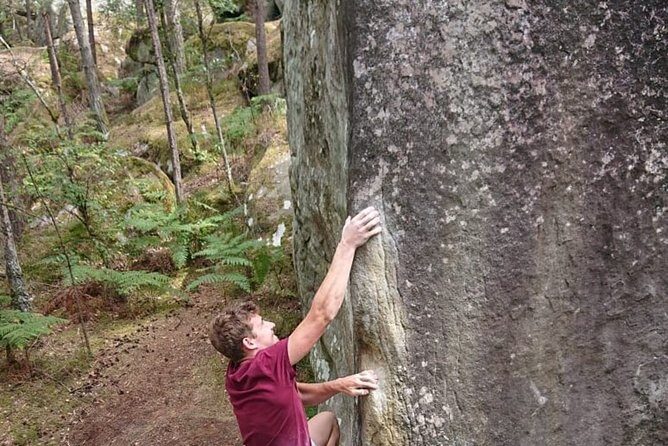
Included:
- Group equipment
- Crash pads
Not included:
- Climbing shoes
That last point is the one to plan for. Bouldering shoes are where grip and comfort come together. If you show up in the wrong footwear, you will feel it quickly. Tight, supportive shoes help you place your feet confidently on small holds.
If you do not have shoes yet, you can still enjoy the day, but you should arrange shoes beforehand. Wear comfortable clothes that let you move your legs and arms without restrictions. Bring a water bottle too. Fontainebleau is outdoors, and bouldering is work.
Also consider your approach to falling. Even though crash pads reduce impact, you should expect a physical session. You will be climbing, stepping up and down, and learning safe landing habits.
Price and Value: Is $57 Worth It for 3 Hours in Fontainebleau?
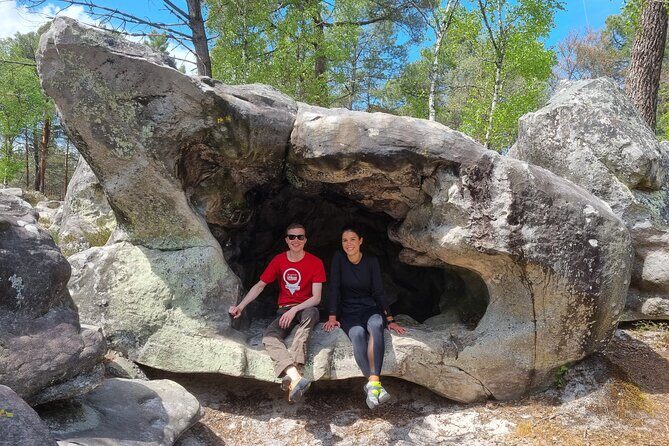
At $57 for about 3 hours, this is priced like an activity that understands what matters: guidance, small-group attention, and equipment coverage.
Here is the value math that makes sense for most people:
- You get coaching during the climbing, which shortens the time between beginner confusion and real progress.
- You get crash pads included, which are essential for bouldering comfort and safety.
- You get a small group (maximum four), so your guide can pay attention instead of managing a large crowd.
The one cost you still own is climbing shoes. If you already have them, your extra expense is basically minimal. If you need shoes, factor that in, because the session is better when you can trust your foot placement.
Overall, this is a solid deal if you want a structured first bouldering day without renting random gear and wandering around on your own.
Who Should Book This (And Who Might Want to Adjust Expectations)
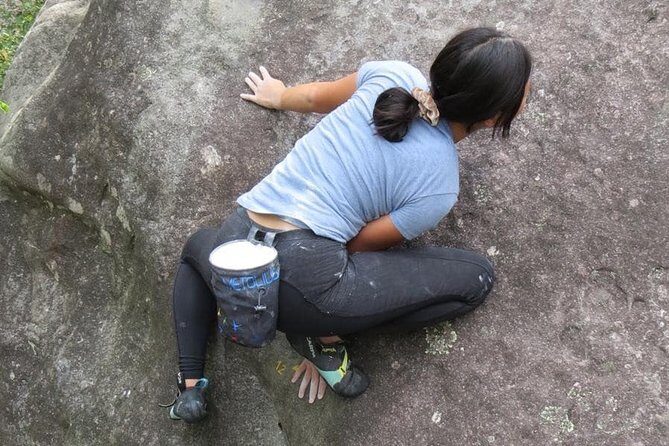
This fits well if:
- You are a beginner who wants instruction on safe technique and how to progress
- You are an experienced climber and want fresh spots and focused practice without ropes
- You want to get out of Paris and spend a few hours in a forest climbing environment
- You like small-group sessions where you can actually work problems
Adjust expectations if:
- You dislike physical activity. Bouldering is demanding, even when the climbing blocks are short.
- You cannot access climbing shoes in advance.
- You want a long sightseeing day. This is about climbing time, not museum time.
It is not a half-day for watching. It is for doing.
Weather, Timing, and Staying Safe on Bare Rock
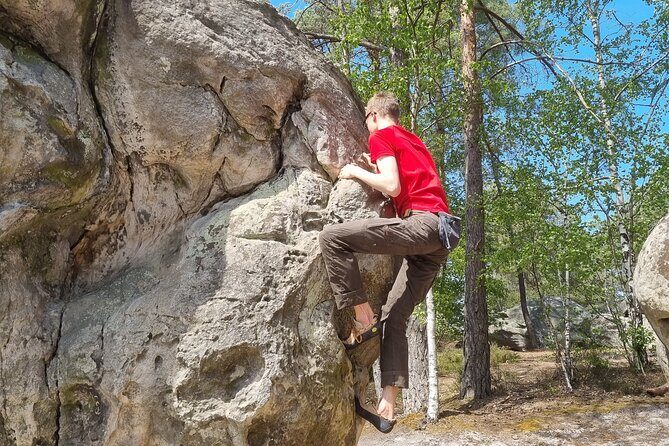
This activity depends on good weather. Since it is outdoors on rock, bad conditions can affect safety and comfort. If conditions are poor, you should expect a different date or a full refund.
Because there are no ropes or harnesses, safety instruction matters. Your guide will show safety maneuvers and progression techniques. Listen closely at the start. Your body will learn faster when the basics are clear.
Also, with a small group, the guide can manage pacing and ensure everyone gets enough time on the wall. That is a big deal for safety and for enjoyment.
Should You Book This Fontainebleau Bouldering Session?
If you want your first bouldering experience (or a well-guided refresher) near Paris, I think this is a strong choice. The biggest reasons are practical: short session length, crash pads included, and coaching that targets your level quickly.
The guides named in feedback—Olivier, Ivan, and Anabelle—are repeatedly linked with safety, clear teaching, and adapting to the group. That is what you want when you are stepping onto rock without ropes.
Book it if you can bring or arrange climbing shoes and you are ready for a physical half-day outdoors. If that all lines up, you will likely walk away with more than sore muscles. You will also have useful technique and a safer way to keep practicing on your own.
FAQ
Where is the meeting point for this bouldering session?
The activity starts at 77590 Bois-le-Roi, France, and it ends back at the same meeting point.
What time does the session begin?
The start time is 10:00 am.
How long is the half-day bouldering?
It is about 3 hours of bouldering.
Do I need previous climbing experience?
No. The program is suitable for beginners, and it also works for more experienced climbers.
Do you use a harness or ropes?
No. Bouldering here is done without a harness and without ropes.
What gear is included, and what should I bring?
The tour includes group equipment and crash pads. Climbing shoes are not included.
Are the guides available in English and French?
Yes, the experience is offered in English and French.
How big is the group?
The tour has a maximum of 4 travelers.
Is public transportation nearby?
Yes, the meeting point is near public transportation.
What happens if the weather is bad?
The experience requires good weather. If it is canceled due to poor weather, you will be offered a different date or a full refund.
What is the cancellation refund timeline?
You can cancel for free up to 24 hours in advance for a full refund. If you cancel less than 24 hours before the start time, the amount paid is not refunded.