
REVIEW · GUIDED
Louvre Museum & Mona Lisa Semi-Private Guided Tour (Max 6 People)
Book on Viator →Operated by The Tour Guy · Bookable on Viator
The Louvre can feel like sensory overload. This small-group tour turns the museum into a clear, guided walk starting at the Glass Pyramid, with guaranteed entry and an art-focused plan you can actually follow.
Two things I really like: the group stays small (max 6), so you get real attention, and the art historian-style explanations make famous works click fast. One consideration: the Mona Lisa area is packed, so if you get claustrophobic in crowds, you may want to plan your comfort level.
I also like that the meeting point is easy to find by landmarks—Cour Napoléon and the Pyramid—and you get a mobile ticket. Expect a highlight route that covers major eras (Greece/Rome, French art, and royal power), ending after about 2 hours 30 minutes with you oriented for whatever you want to see next on your own.
In This Review
- Key highlights at a glance
- Why the Glass Pyramid start matters (and how it saves your day)
- Guaranteed entry and a manageable flow inside the museum
- Stop-by-stop: what you’ll see, and why each piece earns its fame
- Starting your route with the Louvre’s big signals
- Mona Lisa: the famous crowd moment (and how to handle it)
- Venus de Milo and the pull of ancient Greece and Rome
- Winged Victory of Samothrace: why it feels like motion
- French crown jewels and the message of royal display
- Raft of the Medusa: a political storm in paint
- Liberty Leading the People: propaganda energy and modern myth
- The Coronation of Napoleon: grandeur with a point
- What the small-group size changes (max 6 people)
- How long this should feel: 2 hours 30 minutes with a purpose
- Guides and communication: what to expect from the way they teach
- Price and value: what your $102.12 is really buying
- Who should book this Louvre tour
- Should you book this Louvre Museum & Mona Lisa semi-private tour?
- FAQ
- How many people are in the group?
- How long is the Louvre Museum tour?
- Is the tour in English?
- Does the price include the Louvre entrance ticket?
- Where does the tour start?
- Where does the tour end?
- Do I need a printed ticket?
- Is hotel pick-up or drop-off included?
- Are food and drinks included?
- Who is this tour for?
- What is the cancellation window?
Key highlights at a glance
- Max 6 people: small enough for questions, not a noisy herd
- Guaranteed entry from the Glass Pyramid area: fewer time-wasters before you even start
- English-speaking art-focused guide: stories that help you see more than just the label
- Iconic lineup: Mona Lisa, Venus de Milo, Winged Victory of Samothrace, and more
- Efficient highlight route: you leave feeling like you covered the right parts of the Louvre
- Group-friendly logistics: includes skip-the-line style access and restroom access with less crowding (based on past experiences)
Why the Glass Pyramid start matters (and how it saves your day)
Starting at the Glass Pyramid matters because it gives you a sense of direction right away. The Louvre is huge, and your first 20 minutes can decide whether the day feels fun or frantic. With a structured start, you get your bearings fast and spend your energy on the art.
I also like that the tour begins at a famous, obvious landmark in Cour Napoléon et Pyramide du Louvre. That means less wandering, especially if you arrive a little stressed or jet-lagged. It’s an easy win when you’re trying to make a tight Paris schedule work.
Guaranteed entry and a manageable flow inside the museum
The big value here is simple: you’re not trying to piece together a strategy while everyone else is sprinting. With admission included and guided direction, you spend less time figuring out where to go and more time looking.
In a museum like the Louvre, time is everything. Even if you love art, standing in the wrong place for 30 minutes can turn a highlight day into a blur. This tour is built around a smooth, guided flow—so you’re not just waiting, you’re moving with purpose.
Also, the tour ends with you still in the Louvre area (it concludes at the Louvre), which gives you a natural handoff. After the guide finishes, you can choose to linger near a section you liked or move on to something else in Paris.
Stop-by-stop: what you’ll see, and why each piece earns its fame
This is a guided highlight route across multiple periods, not an attempt to cover every room. That’s exactly why it works. In the Louvre, the goal is focus: you want to see the works that teach you how to read the rest.
Starting your route with the Louvre’s big signals
You begin with a guided introduction that quickly orients you to what the Louvre is really doing. It’s not only paintings and statues—it’s also power, politics, religion, and the shift in taste across centuries.
This matters because the Louvre can feel random if you don’t have a framework. The guide gives you that framework early, so later you understand why one sculpture style or painting theme shows up next.
Mona Lisa: the famous crowd moment (and how to handle it)
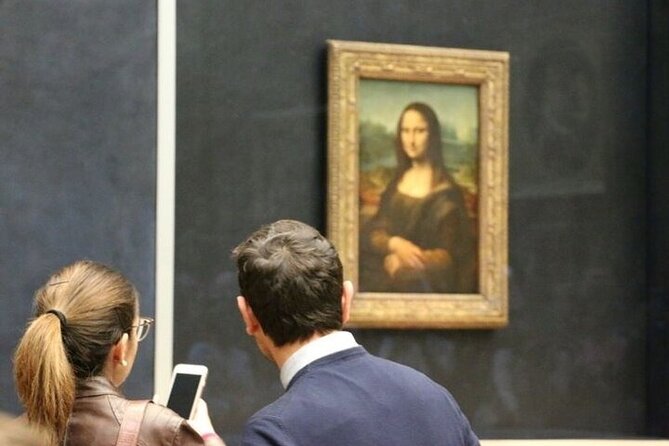
You’ll get to Leonardo da Vinci’s Mona Lisa as one of the tour anchors. The bad news: the viewing space is one of the most intense crowd experiences in the museum. If you hate tight spaces, you’ll feel it.
The good news: having the guide manage the timing and movement helps you stay calmer than trying to fight for positioning on your own. Even if you don’t linger as long as others do, the context you get around it can change what you notice.
Venus de Milo and the pull of ancient Greece and Rome
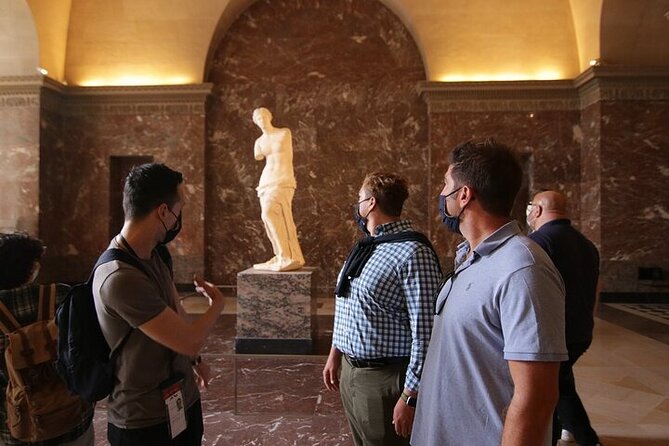
You’ll also see Venus de Milo, a centerpiece for understanding how Greek sculpture influenced later eras. This is one of those works where having even a little context makes a difference, because you start seeing choices in pose, proportion, and expression—not just a famous statue.
The tour also walks you through the broader ancient Greece and Rome thread, so you’re not stuck thinking of antiquity as one room. You learn to recognize what the museum is showing you about ideals, myth, and style.
Winged Victory of Samothrace: why it feels like motion
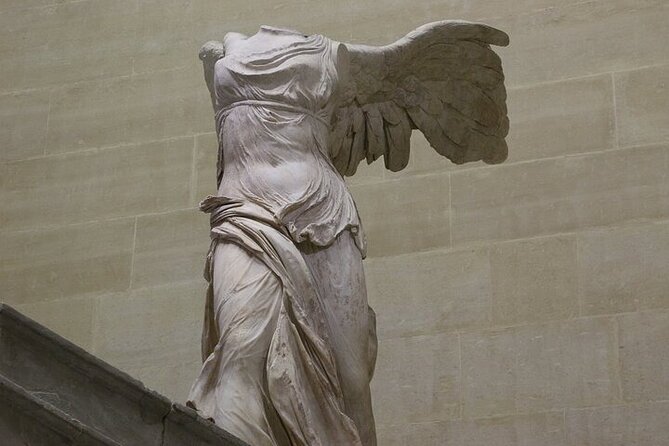
Another core stop is the Winged Victory of Samothrace. The tour helps you appreciate why this sculpture works so well in real space. It’s not only a body and wings—it’s the illusion of movement, like the wind is still pushing.
This is one of the moments where the guide’s commentary can steer you away from just staring. You start looking for the mechanics of the pose and the drama of the composition.
French crown jewels and the message of royal display
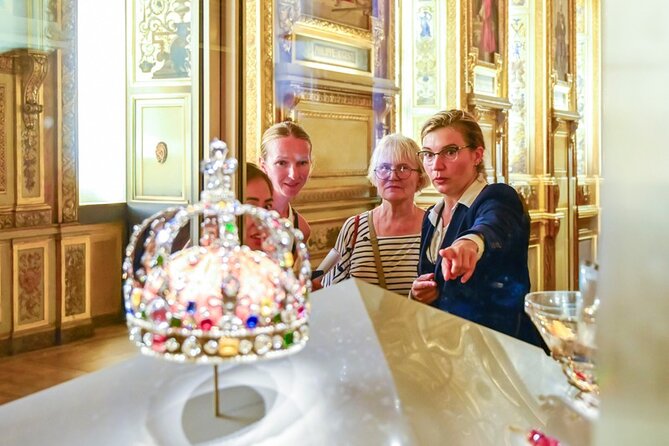
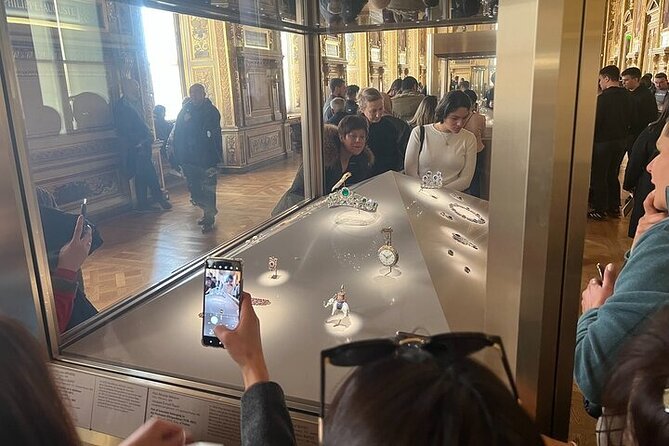
From there, the tour moves into French themes, including the French crown jewels. This section is useful even if you’re not a jewelry person, because it shows how objects were used to project authority.
If you like museum storytelling, this is a strong pivot point. You go from ancient ideals to the political language of monarchy—same museum, totally different kind of meaning.
Raft of the Medusa: a political storm in paint
You’ll see the Raft of the Medusa, a work that’s famous for more than its dramatic subject. The guide’s role here is to connect the painting to the real shock of the event and the way art can carry public emotion.
This is a good stop for anyone who wants art to feel like it matters beyond the frame. You leave with a clearer sense of why people still argue, study, and reference this kind of work.
Liberty Leading the People: propaganda energy and modern myth
Next comes Liberty Leading the People. This painting sits at the intersection of art and political identity, and the guide helps you read it as more than a dramatic scene.
You’ll likely notice how the composition guides your eye and why certain symbols stick in popular culture. It’s one of those works where, after hearing the context, you suddenly see the painting’s structure.
The Coronation of Napoleon: grandeur with a point
The tour ends with The Coronation of Napoleon. This is a great closing act because it ties together themes of authority, ceremony, and image-making.
Even if you’ve seen reproductions before, you’ll get more out of seeing it in person with guidance. A painting like this can feel like pageantry until someone points out the choices that make it propaganda-like in its effect.
What the small-group size changes (max 6 people)
Max 6 is the heart of the experience. When the group is that small, you’re not stuck at the mercy of a one-size-fits-all pace. The guide can slow down where attention is needed and keep momentum where crowds or bottlenecks would otherwise swallow your time.
It also changes how you feel in the Louvre. You’re still in a big museum, but it feels less chaotic because the group stays together. That’s a big deal at the Mona Lisa area, where spacing and movement can turn stressful fast.
The guide approach shows up clearly in past experiences led by people like Deli, Will, Joanna, Carmina, Nadia, and Jack. You can sense a consistent style: hit the major works, explain what you’re seeing, and keep the day moving at a pace that feels realistic rather than exhausting.
One practical bonus: you don’t just get a route—you get help making sense of what you’re looking at. That’s what keeps a famous museum from turning into a checklist.
How long this should feel: 2 hours 30 minutes with a purpose
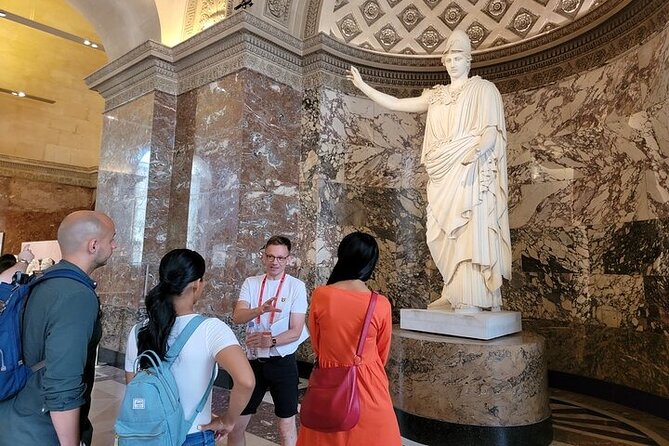
About 2 hours 30 minutes is enough time to hit major icons without turning the day into a full-on marathon. I like this time window because it fits into a normal Paris schedule. You still have energy after, and you don’t feel like you were “stuck” in a museum for the rest of the day.
That said, pace is something to consider. One past experience noted feeling a bit rushed, so if you need slow, unstructured time, you may want to treat this as the highlights portion of your Louvre day. Then plan extra solo time later where you can linger.
Guides and communication: what to expect from the way they teach
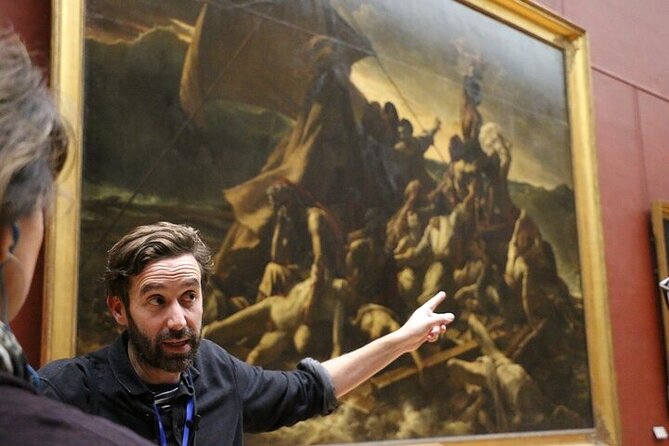
This tour is designed for an English-speaking audience with a guide who can explain art history in a way that stays useful while you’re walking. In past experiences, guides were praised for being fun, clear, and efficient, with commentary that helps you appreciate details without needing a textbook.
It’s also worth knowing that some guides won’t rely on headphones. One experience specifically mentioned that Joanna spoke clearly enough without them. If you’re someone who likes audio support, I’d still go with the assumption that communication is primarily verbal and in-person.
Also, I like the small personal touches that can happen in a group this size. For example, one guide (Deli) took family photos during the visit, which is a nice souvenir when you’re focused on the art and forget to ask someone to snap pictures.
Price and value: what your $102.12 is really buying
At $102.12 per person, it’s not the cheapest way to enter the Louvre. But you are paying for three things that matter inside a museum like this: time, direction, and interpretation.
First, the tour includes €22 entrance ticket for adults. So part of what you pay is simply getting you in without the admin headache.
Second, the rest is the guided experience—small-group management, a route built around major highlights, and an art-focused explanation that helps you see more than the obvious.
Third, the small group reduces wasted time. In a museum as crowded as the Louvre, saving even 20 to 30 minutes of confusion can be worth real money, especially if your trip has tight days.
What you should bring to make the price feel worth it:
- comfy shoes (you’ll walk)
- a plan for meals (food and beverages are not included)
- a short patience buffer for how crowded this museum can be
Also note: there’s no hotel pick-up or drop-off, so you’ll handle getting to the start point yourself.
Who should book this Louvre tour
This is a strong fit if you:
- are short on time in Paris and want the core icons covered
- want an art story while you walk, not just a guidebook afterward
- enjoy hearing how famous works connect to history and politics
- prefer a small-group experience over a large bus-style shuffle
It’s also a good choice if you’ve seen some of these works in art class and want to connect the memory to the real thing—standing in front of Winged Victory or Liberty Leading the People is a different experience than photos.
If you’re the type who wants to wander room-by-room for hours with no structure, you might find this feels a bit like guided homework. For that style, the Louvre works best when you have half a day (or more) to roam freely in addition to any tour.
Should you book this Louvre Museum & Mona Lisa semi-private tour?
Yes—if you want a smart, time-saving Louvre day with guidance, clear storytelling, and a small group.
Book it if:
- you care about seeing the major masterpieces like Mona Lisa, Venus de Milo, Winged Victory, Raft of the Medusa, Liberty Leading the People, and Napoleon’s coronation scene
- you want guaranteed entry and a route that reduces wandering
- you’d rather pay for direction than spend your limited vacation hours stuck in confusion
Skip it (or add extra planning) if:
- you’re sensitive to crowds, especially around the Mona Lisa
- you need a slow, unstructured pace and don’t like feeling guided
FAQ
How many people are in the group?
The tour is limited to a maximum of 6 travelers.
How long is the Louvre Museum tour?
It runs for about 2 hours 30 minutes.
Is the tour in English?
Yes, it’s offered in English.
Does the price include the Louvre entrance ticket?
Yes. The museum admission ticket for adults (listed as €22) is included.
Where does the tour start?
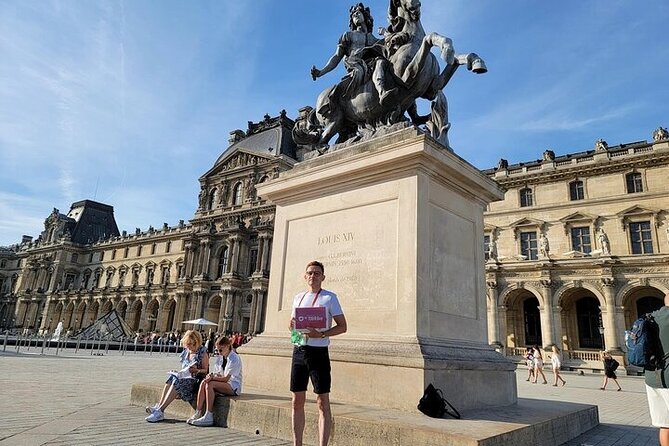
The meeting point is Louis XIV sous les traits de Marcus Curtius (copie) in Cour Napoléon et Pyramide du Louvre, 75001 Paris.
Where does the tour end?
The tour concludes inside the Louvre Museum at 75001.
Do I need a printed ticket?
No. You receive a mobile ticket.
Is hotel pick-up or drop-off included?
No, hotel pick-up and drop-off are not included.
Are food and drinks included?
No, food and beverages are not included.
Who is this tour for?
Most people can participate. Free admission applies to visitors under 18 and EEA residents under 26 (with valid ID and proof of residency).
What is the cancellation window?
You can cancel up to 24 hours in advance for a full refund. If you cancel less than 24 hours before the start time, the amount you paid is not refunded.