REVIEW · CRUISES & BOAT TOURS
Paris: Cruise on The Canal Saint Martin and The Seine River
Book on Viator →Operated by France Tourisme · Bookable on Viator
Paris has a surprise under your feet. This cruise strings together two very different parts of the city, with Canal Saint-Martin showing daily life and engineering, then a classic Seine run where the guide’s stories line up with the big sights.
I love the big, hands-on moment of the locks, where you can actually see the water level change around the boat. I also love the photo-and-story flow on the Seine, from Notre-Dame and the Louvre to the Eiffel Tower, with narration that’s paired to what you’re seeing (some guides, like Lea, get praise for being friendly and clear, while captains like Pasquale are noted for smooth handling). The main drawback to weigh: the first half includes a long underground tunnel, so if you want open-air views the whole time, that quieter stretch can feel like a drag, and hearing the English narration can depend on crowd noise.
In This Review
- Key Things to Know Before You Go
- Why This Canal-to-Seine Route Beats Doing Only the Seine
- Start at Quai de Valmy: Canal Saint-Martin, Iron Bridges, and Café Life
- The Locks and Swing Bridge: The Moment Everyone Talks About
- Under the Streets: The Bastille Tunnel Switches Off the City Noise
- Port de l’Arsenal to the Seine: Houseboats, Marina Views, and a New Horizon
- Île Saint-Louis and Île de la Cité: Where the River Turns into Postcards
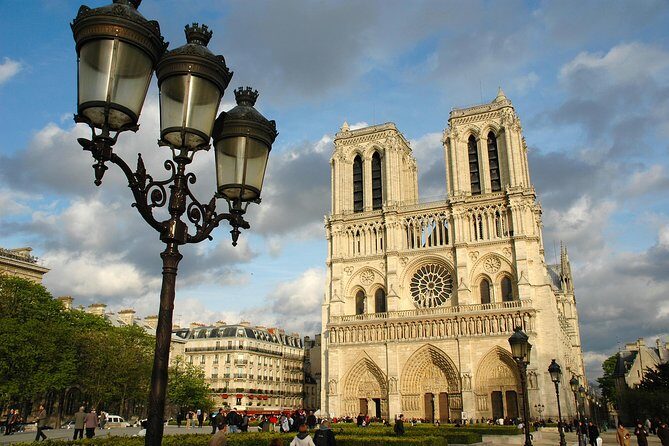
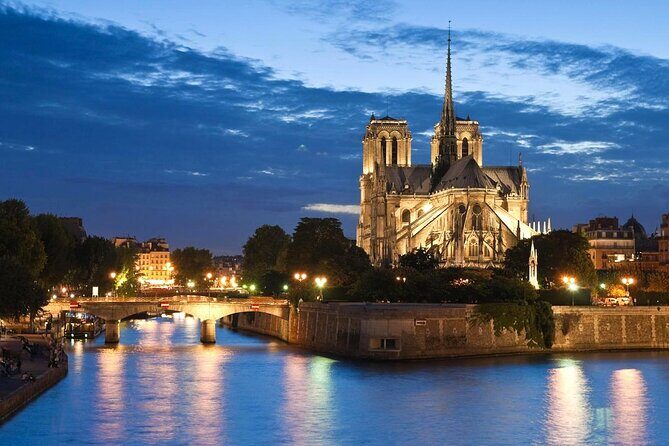
- UNESCO Seine Banks: Notre-Dame, Louvre, Tuileries, Orsay, and More
- Louvre Facing Institut de France: Pont des Arts for the Three-Sight Glance
- Pont Alexandre III, Grand Palais, Les Invalides: Golden Details, Big Names
- The Eiffel Tower Full View: Lit Up, Sparkling, and Very Camera-Ready
- Ending at Quai de l’Horloge by Pont Neuf: A Smart Built-In Walking Plan
- Price and Timing: What You’re Really Paying for at $42.05
- Small Comfort Tips That Make Hearing and Photos Easier
- Who This Cruise Suits Best (and Who Might Be Happier Elsewhere)
- FAQ
- How long is the Canal Saint-Martin and Seine River cruise?
- Is there live narration, and is it available in English?
- Where does the tour start and end?
- Does the route include locks and a tunnel?
- Is the cruise dependent on weather?
- What’s the cancellation window?
- Should You Book This Canal Saint-Martin and Seine Cruise?
Key Things to Know Before You Go
- Canal + tunnel + Seine in one outing, so you don’t have to stitch together separate tours
- Live commentary that connects the city’s past and present as you pass iron bridges, cafés, and major monuments
- Locks are the show: watch the water rise and fall as gates open and close
- Bastille-area tunnel turns down the noise and gives you an unusual Paris perspective
- Seine highlights are tightly timed around UNESCO-listed banks and iconic bridges
- End at Pont Neuf so you can keep walking right after the cruise
Why This Canal-to-Seine Route Beats Doing Only the Seine
The smart move here is the order: you start in the canal world, with trees, iron footbridges, and waterside cafés. Then you hit the engineering part—locks and even a long underground tunnel beneath the Bastille area—before switching gears to the wide, postcard-famous Seine.
That mix matters because it changes your brain’s view of Paris. The canal section shows how the city works in a practical, everyday way. The Seine section shows how Paris performs on the big stage: bridges, museums, and cathedral views.
At about 2 hours, it’s also a good “useful time” choice. You get enough time to take photos of major sights without spending all afternoon crisscrossing by foot or waiting for multiple transfers. For a first-time visit, it’s efficient. For a return trip, it still feels fresh because most boat rides skip the canal locks and that tunnel stretch.
Start at Quai de Valmy: Canal Saint-Martin, Iron Bridges, and Café Life
Your journey begins at 73 Quai de Valmy (75010). From there, you cruise along Canal Saint-Martin, a historic waterway lined with trees and distinctive iron footbridges. This is the part of the trip that feels most like modern Paris life running beside the water.
You’ll pass places like Hôtel du Nord and see how the canal district went from industrial use to trendier waterside living—today’s cafés and terraces sit right where the canal serves the neighborhood. The guide’s narration is the point: they connect the canal’s creation (fresh-water delivery to the city) with how the area developed into one of the local hangout zones.
What to watch for:
- Iron footbridges: they repeat often, so your camera gets a rhythm.
- Riverside terraces: this is where the canal vibe is most obvious.
- The guide’s pacing: because this section is scenic, it’s also where narration is easiest to follow if the deck is calm.
If you’re hoping for “only sights, no engineering,” this opening won’t disappoint. It’s visually pleasant and story-driven.
The Locks and Swing Bridge: The Moment Everyone Talks About
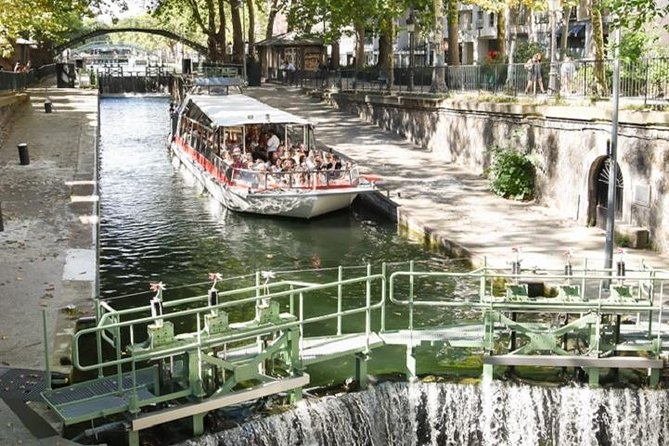
The cruise gets its real wow-factor when you enter the lock sequence on Canal Saint-Martin. This is the segment where the boat slows down and the city’s logistics become visible.
You’ll go through multiple locks, watching the water level rise and fall and seeing the gates slowly open and close. One review noted the locks drop by around 6 metres, which helps you understand how real the change is, not just symbolic.
This is also the best time to notice everyday canal life:
- people on the quays
- walkers crossing the iron footbridges
- the contrast between older industrial-looking buildings and newer cafés and boutiques
After the locks, the cruise continues toward the swing bridge, another distinctive feature. You’ll briefly see road traffic stop while the boat passes. That tiny pause is part of the charm, because it’s not a tourist-only set piece—it’s how the canal still operates.
Practical note: if you want to see lock action clearly, don’t assume you’ll automatically have the best sightline just by being at the front. On some boats, the front area can get crowded, and it can be harder to follow the exact gate movement depending on where people stand.
Under the Streets: The Bastille Tunnel Switches Off the City Noise
Then comes the surprise: you enter the long underground tunnel beneath the Bastille area. This is the segment that turns heads, mostly because it feels like you’re sailing in a different Paris entirely.
The atmosphere changes fast. City noise drops away, and you move through a vaulted passage with shafts of daylight filtering in from above. It’s one of those moments that’s hard to recreate on land because you usually don’t get this kind of view inside the city’s hidden water infrastructure.
Why this part is worth it:
- It breaks the usual “same-old riverboat” pattern.
- It adds a sense of engineering history to what would otherwise be mostly sightseeing.
- It gives you a quiet, cinematic feeling right in the middle of a major city.
Why it can be a drawback: if you’re expecting a steady stream of open-air landmarks for the entire cruise, the tunnel can feel slow. Some people also find the first half of the trip harder to enjoy than the later Seine portion. If you fall into that camp, you may want to think carefully about the trade-off: you’re paying for variety, and the variety includes that enclosed stretch.
Port de l’Arsenal to the Seine: Houseboats, Marina Views, and a New Horizon
After the tunnel, the boat reaches Port de l’Arsenal, a marina area that links Canal Saint-Martin to the Seine. This is where the atmosphere softens again into open water.
You can look out over houseboats and pleasure craft moored in the basin. The guide also explains how this former commercial port has been transformed into a more relaxed harbor-and-garden atmosphere. It’s a nice mid-journey reset: less “engineering moment,” more “Paris water lifestyle.”
Then the cruise meets the Seine River, and the scenery opens up. The city’s scale becomes more obvious because you’re seeing larger banks and wider river curves.
Île Saint-Louis and Île de la Cité: Where the River Turns into Postcards
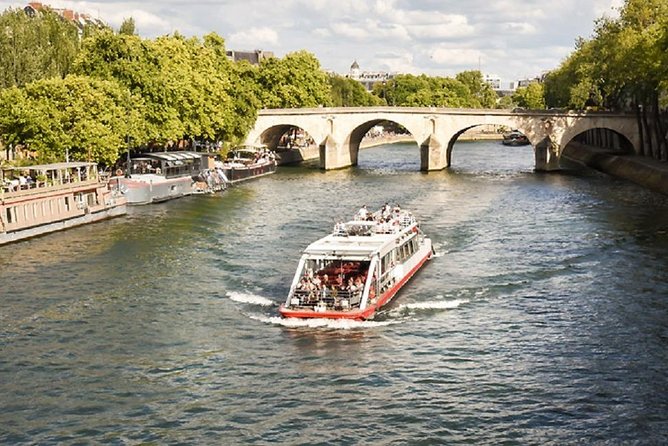
On the Seine side, you’ll sail alongside Île Saint-Louis, known for its elegant 17th-century façades. It’s one of the easier islands to appreciate from the water because the river frames the buildings.
Next you’ll get your first real look at Île de la Cité, the historic heart of Paris. From the boat, the river curve and the bridge lines feel more dramatic than they do from street level.
This section also sets you up for what comes next: the big monuments start arriving in a sequence where the guide can point, explain, and then move on before you get overwhelmed.
UNESCO Seine Banks: Notre-Dame, Louvre, Tuileries, Orsay, and More
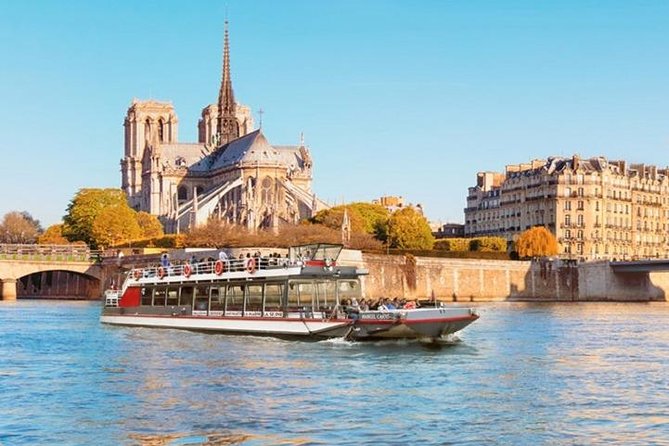
As you continue along the UNESCO-listed riverbanks, the narration turns into a practical history lesson. You’ll pass iconic sights such as:
- Notre-Dame Cathedral
- the Conciergerie
- the Louvre Museum
- the Tuileries Gardens
- the Orsay Museum
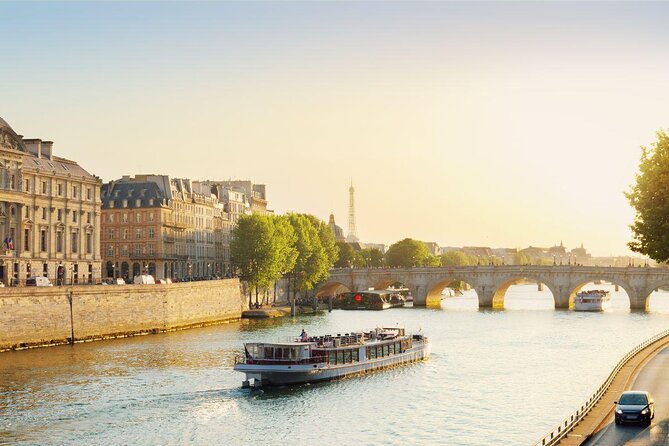
- the Eiffel Tower (in the broader sense that it keeps working into the view as you move)
The big advantage of doing this by boat is perspective. From the deck, you can often take unobstructed photos of these buildings and structures without fighting crowds on the sidewalks.
It also helps that the guide keeps the timing connected. Even when you don’t catch every sentence, you generally know what you’re looking at because the narration matches the landmarks as they slide into view.
The flip side: hearing matters. Some people mention that loud crowds can make it harder to hear the guide clearly, especially during English narration segments where you’re also trying to listen while taking photos.
Louvre Facing Institut de France: Pont des Arts for the Three-Sight Glance
One of the photo-friendly stretches comes when you’re near the Louvre’s long façade stretching along the river. Across the way, you’ll see the domed Institut de France on the Left Bank.
And then there’s the Pont des Arts area, often described as one of the best viewpoints because you can see the river composition in a single glance from the boat—Louvre, domed building, and that bridge geometry all in one frame.
If you like your Paris photos to look like they belong in a travel guide, this part helps you get there fast.
Pont Alexandre III, Grand Palais, Les Invalides: Golden Details, Big Names
As you keep moving west, you pass under Pont Alexandre III, widely considered one of the prettiest bridges in Paris thanks to its golden statues and Art Nouveau lamps.
Nearby, you’ll also see:
- the glass roof of the Grand Palais
- the golden dome of Les Invalides, where Napoleon is buried
This is another stretch where the guide’s narration really pays off. These buildings look gorgeous, but you’ll get more meaning from knowing what each one is and why it matters.
The Eiffel Tower Full View: Lit Up, Sparkling, and Very Camera-Ready
Eventually, the Eiffel Tower comes into full view, towering above the Trocadéro and the Champ de Mars area.
On evening departures, the tower is lit up, and the itinerary mentions that if timing lines up, you’ll see her sparkle. That’s typically the moment everyone waits for, with cameras ready and sometimes champagne glasses raised.
Even if you’ve seen Eiffel Tower photos a thousand times, this still works because the river angle gives it height and drama without the crush of people at the base. You’re also moving, so the view evolves instead of staying frozen.
Ending at Quai de l’Horloge by Pont Neuf: A Smart Built-In Walking Plan
The cruise ends at 19 Quai de l’Horloge (75001) on Île de la Cité, near Pont Neuf, the oldest bridge in Paris.
This is a practical ending point because it’s central. From here, you can continue by foot to areas like:
- the Latin Quarter
- the Right Bank
- Sainte-Chapelle
- or a terrace drink nearby, before heading back to your hotel
One caution: some people flag that the drop-off area may involve steps up to the road, which could be tricky if you use a walker. If that’s you, it’s smart to plan for slower movement at the end.
Price and Timing: What You’re Really Paying for at $42.05
The price is $42.05 per person, and the cruise runs about 2 hours. For Paris, that’s not just a scenic boat ride. You’re paying for three things that are hard to get together any other way:
- Canal Saint-Martin scenery and local neighborhood feel
- Locks and the tunnel, which are specific experiences, not just views
- Seine monuments lined up in a guided sequence
Also, this cruise is typically booked about 23 days in advance on average. That’s a hint that popular departure times can fill up. If you have a tight schedule, booking ahead makes your life easier.
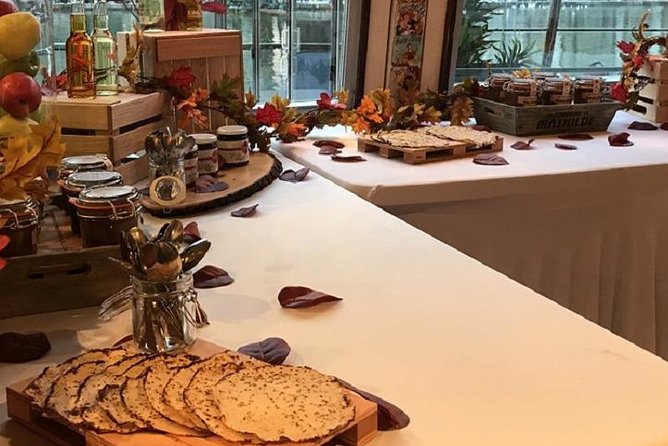
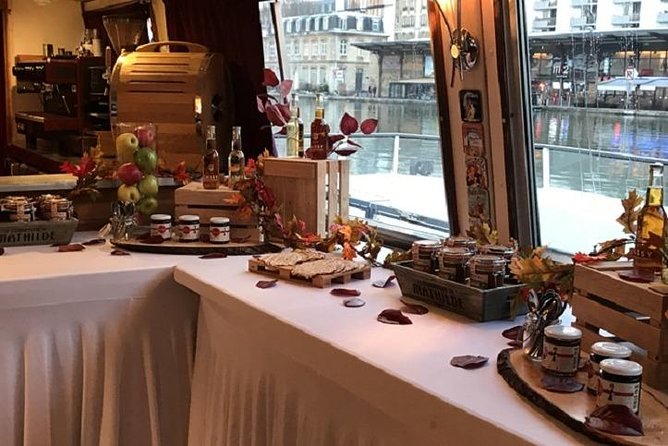
Value also shows up in the extras: there’s a concession stand where you can buy drinks like soda, wine, beer, and juices. And some boats include snacks such as crepes, which helps if your timing lands between meals.
Small Comfort Tips That Make Hearing and Photos Easier
A boat ride lives or dies on comfort. Here’s how to stack the odds in your favor.
- Get to the meeting point early: one review recommends arriving about 30 minutes early to board and claim a good seat.
- Choose your deck with the locks in mind: the upper deck can get hot, and it can be crowded near the front. If your priority is seeing lock movement, position yourself so the gate area stays in your line of sight.
- Plan for heat: if you go in summer, the upper deck can feel very hot. Bring a hat and water if you can.
- Don’t rely on quiet for narration: multiple reviews mention that loud talking on the deck can make the English narration harder to hear. Pick a spot where you’re less stuck beside a loud group.
- Bring something to sit with if needed: one note says there wasn’t much dry seating up top. A small, portable cushion can help you tolerate the ride if you end up on open deck.
Who This Cruise Suits Best (and Who Might Be Happier Elsewhere)
This is a great fit if you want:
- a history + engineering mix, not just a sightseeing loop
- strong landmark coverage along the Seine, especially if you like clear photo angles
- a change of pace, from canal cafés to a tunnel to UNESCO riverbanks
It might be less ideal if:
- you want open-air views the whole time and the tunnel feels like too much time in the enclosed section
- you’re sensitive to audio issues and crowd noise, since hearing the narration can vary depending on the mix of languages and how loud people are
If your number one goal is simply iconic Seine monuments with no canal/tunnel contrast, a simpler Seine-only option could match your style better. But if you want something that feels more like Paris itself—working water routes plus grand architecture—this one earns its place.
FAQ
How long is the Canal Saint-Martin and Seine River cruise?
It runs for about 2 hours.
Is there live narration, and is it available in English?
Yes. The tour includes live commentary and is offered in English.
Where does the tour start and end?
It starts at 73 Quai de Valmy, 75010 Paris, and ends at 19 Quai de l’Horloge, 75001 Paris, near Pont Neuf.
Does the route include locks and a tunnel?
Yes. You pass through several locks on Canal Saint-Martin and also go through a long underground tunnel beneath the Bastille area.
Is the cruise dependent on weather?
Yes. It requires good weather, and if it’s canceled due to poor weather you’ll be offered a different date or a full refund.
What’s the cancellation window?
Free cancellation is available if you cancel up to 24 hours in advance for a full refund.
Should You Book This Canal Saint-Martin and Seine Cruise?
Yes, if you want a single outing that teaches you how Paris functions on the water and gives you the big-picture Seine views. The locks and the Bastille tunnel are the kind of experience you can’t easily swap for a standard river cruise, and the guide-led sequence helps you see Notre-Dame, the Louvre area, Orsay, Pont Alexandre III, and Eiffel Tower in a way that feels organized instead of chaotic.
Book it if you’re the type who likes variety over pure consistency. Skip it only if the idea of a long tunnel time in the first half sounds like a deal-breaker for you. If you do book, arrive early for a decent seat, and aim for a spot where you can actually hear the narration during the louder moments.