REVIEW · PARIS
Paris Entrance Ticket to the Aura Invalides Immersive Show
Book on Viator →Operated by Cultival · Bookable on Viator
Paris at night gets cinematic here.
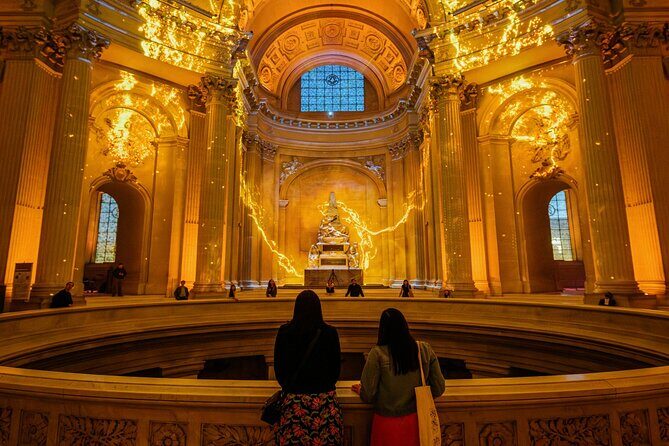
The AURA show turns the Dôme des Invalides into a giant light-and-sound stage, and the effect is genuinely moving. I like how the visuals trace the building’s shapes, and how the music syncs with the architecture so you feel like the monument is alive. One big consideration: the show uses flickering lights and a lot of sound, so if you’re sensitive (or you’re bringing little kids), plan carefully.
Logistics are mostly straightforward, but strict. You enter through Place Vauban, you go through security checks at your timed arrival window, and there’s no late entry once the session starts. The format is also a walk with stairs both outside and inside the Dome, and the site has no toilets or dining space, so go prepared before you line up.
If you want a nighttime version of Invalides that feels more like modern art than a museum visit, this ticket delivers. If you want lots of background on Napoleon before you get cold and stand around, you may end up wishing you’d paired it with a daytime visit too.
In This Review
- Key things to know before you go
- AURA at Les Invalides: what you’re stepping into
- Le Dome des Invalides at night: the architecture is the main character
- Finding Place Vauban and the security cut-off
- The walk-through format: stairs, standing time, and cold air
- Sound, light flicker, and comfort tips you can act on
- What’s included, and why the price can make sense
- How to plan your timing and what to bring
- Who should book the AURA show ticket?
- Should you book this Paris AURA at Invalides ticket?
- FAQ
- How long is the AURA show at Les Invalides?
- Where do I enter the show at Les Invalides?
- What time should I arrive?
- Is the show suitable for children?
- Is food or drink allowed inside?
- Are strollers or luggage allowed?
Key things to know before you go
- Timed entry at Place Vauban: your ticket time is when you must arrive for security, with queues outside.
- Walk-through experience: expect stairs both outside and inside the Dome.
- Sound and flashing lights: bring noise-cancelling headphones if you’re sensitive, especially for kids.
- No on-site comfort stops: the site has no toilets, changing rooms, or places to buy food.
- Watch your bags: strollers, scooters, luggage, and bulky items aren’t allowed for security reasons.
AURA at Les Invalides: what you’re stepping into
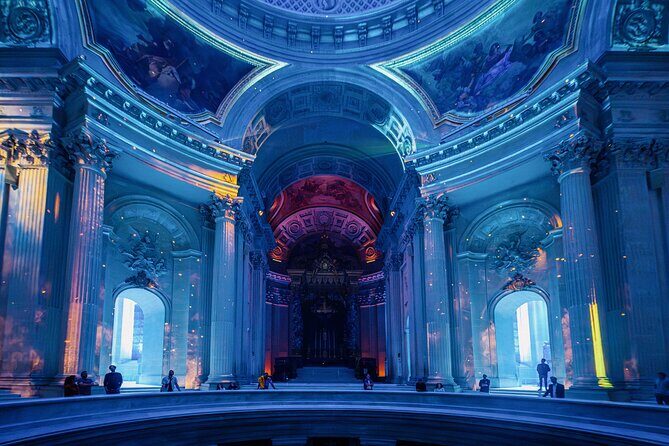
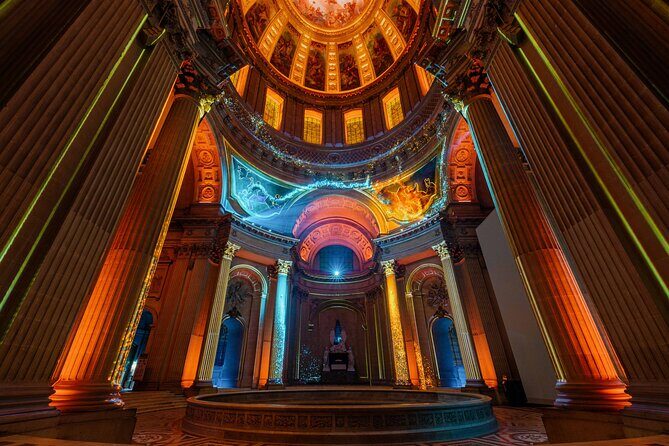
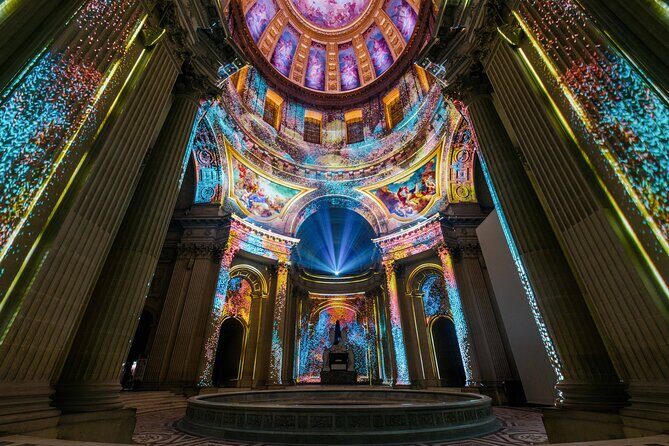
This isn’t a sit-down show. You experience AURA as a walk inside the Dome area, and you’ll spend most of the time standing and moving through the designed path. The whole point is the building itself: light outlines details you might miss in daylight, and the music guides you through the visual story.
The program is tightly tied to sound and projection. One of the most praised parts is how the light and music feel synchronized, giving that goosebump factor people talk about after. The Dome also gives you an immediate sense of scale: you’re not looking at a screen; you’re looking at a monumental space being animated.
Just know the vibe is closer to performance art than a guided history lecture. Some people feel the storytelling and context land well, while others leave thinking it could have explained more about key historical figures in such a significant setting. A fair expectation is: you’ll get a dramatic, place-driven narrative, but you may still want a separate museum visit if you want deeper facts in your own time.
You can also read our reviews of more tours and experiences in Paris

Le Dome des Invalides at night: the architecture is the main character
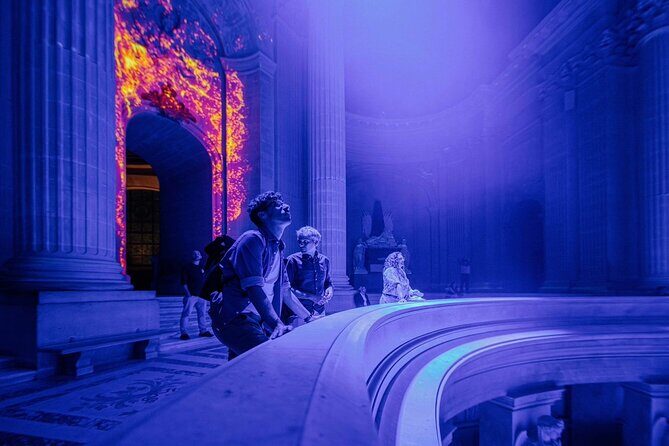
Even if you already know Invalides for Napoleon’s tomb, AURA reframes what you notice. At night, the Dome’s curves and surfaces become easier to read because the projections emphasize edges and structure. Several people specifically liked how the lighting brought out parts of the building they usually wouldn’t pay attention to.
You also get the feeling of being inside a “living monument” rather than just touring a site. The strongest reviews describe it as spectacular and moving, with the building effectively taking on a cinematic role while the soundscape fills the space.
There is also at least one “Paris moment” in the visuals. One review mentions an unexpected segment featuring the Eiffel Tower imagery, and that person felt it didn’t fit the theme. If you’re the kind of visitor who wants strict historical continuity, you might want to expect some artistic liberties.
Finding Place Vauban and the security cut-off
Where most people succeed or get stressed is the front door. You have to enter via Place Vauban, not some other side entrance. The most common metro connections listed are Métro Military School and Métro Saint François Xavier, which makes it fairly easy to plug into the city.
Your ticket includes a time you must be there to pass security checks. Plan for queues outside. The rules are firm: no latecomers get admitted after the session begins, so don’t show up right at the minute on your phone. If you’re even slightly slow with crowds, build in buffer time.
One more practical note: the venue requires silence nearby because Invalides also includes a military hospital. The show is obviously loud inside, but outside the Dome area you’re expected to respect the residents’ quiet. That means keep your voice down while you’re waiting and moving through the space.
The walk-through format: stairs, standing time, and cold air
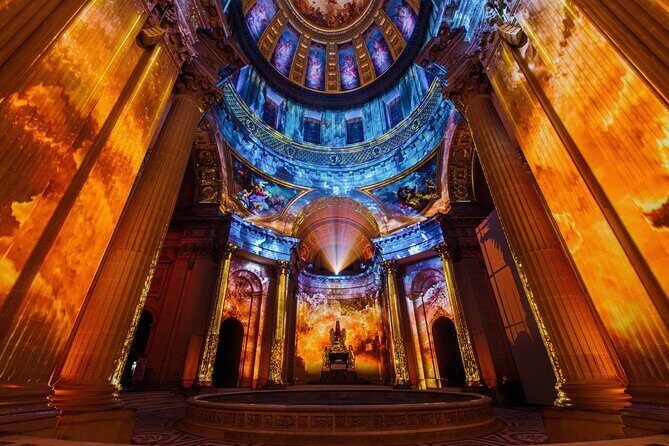
The experience is lived in the form of a walk, and the reality is that you’ll deal with stairs both outside and inside the Dome. That’s not a dealbreaker for many people, but it matters if you have mobility issues or you’re traveling with someone who gets tired on stairs.
You should also expect to stand. Even when the time feels “about 50 minutes,” the posture is mostly upright, and the reviews repeatedly mention standing during the show. That’s part of the design. The views you get depend on where you stop, not on finding a seat.
Cold is real here. One big tip repeated in the feedback is to bring a light jacket: the Dome is a major historical monument, and the air can be chilly. Even in a warm Paris day, your body may cool quickly during waiting and standing. Wear layers so you can stay comfortable without overheating.
Sound, light flicker, and comfort tips you can act on
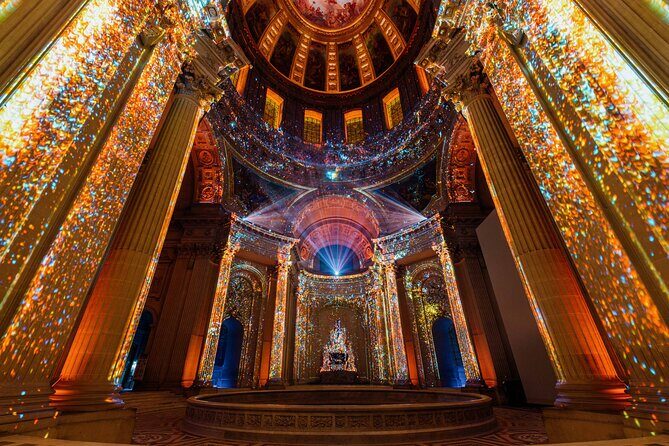
This is a place where your comfort choices matter. The show includes a large volume of sound and flickering lights, and the site specifically flags that sensitive people should take precautions. If you’re bringing children under 5, the experience is not recommended. For older kids—or adults who get overwhelmed easily—prepare.
The venue also encourages visitors to bring what they need for hypersensitivity, like noise-cancelling headphones. If you know loud sound stresses you, don’t try to “tough it out.” Bring the headphones. They can turn a tough night into a tolerable one.
One more sensory detail: you might not want to eat right before you go. Food and beverages are prohibited throughout the site, including cigarettes and even electronic cigarettes. Since there’s also no dining space on site, the practical move is to eat beforehand and then travel light.
If you’re planning around timing, aim to keep your stress low before you arrive. Once you’re in the Dome route, it’s mostly standing and watching, not fixing comfort problems.
You can also read our reviews of more tours and experiences in Paris





What’s included, and why the price can make sense
At $33.64 per person, you’re paying for admission to the AURA show at Les Invalides. The show is about 50 minutes (approx.), and it’s delivered as a timed, ticketed event with mobile entry. In other words, you’re not paying for transportation or a custom private guide; you’re buying access to the performance itself.
So does it feel worth it? I think it’s a good value when you want a night activity that uses an iconic building as the screen. Several people describe it as a highlight—goosebumps, mind-blowing visuals, and the kind of atmosphere you can’t replicate anywhere else.
But it’s not the best ticket if you’re trying to replace a full museum visit. One viewpoint is that it’s mostly lighting and music with limited informational content, even in a place tied to Napoleon and French history. If your priority is learning facts, you might want to pair AURA with a daytime visit so you get both: context in daylight, drama at night.
A practical way to think about the money: you’re paying for the wow factor and the setting, not for a long lecture. If that’s what you want, the price feels reasonable. If you want quiet, long-form history, this may feel a bit short and more artsy than educational.
How to plan your timing and what to bring
Because the time on your ticket is your security arrival window, your best strategy is simple: arrive early, then relax. Don’t rely on being able to slip in later. The rules are clear about late entry after the session begins.
Bring:
- A light jacket or warmer layers
- Noise-cancelling headphones if you’re sound-sensitive
- A phone for your mobile ticket
Leave behind:
- Strollers, scooters, luggage, and bulky items (not allowed for security reasons)
Also expect no amenities for mid-show needs. There are no toilets, changing rooms, or dining space on site. If that would stress you, plan a restroom stop before you head over.
Finally, keep your visit quiet near the military hospital areas. It’s a small rule that makes a big difference in how respectful—and comfortable—your whole outing feels.
Who should book the AURA show ticket?
I’d book this if you want:
- A nighttime activity at a top Paris landmark
- A performance built around light-and-music rather than a standard walking tour
- A short event that fits well into an evening schedule
I’d skip—or at least reconsider—if:
- You can’t handle loud sound or flickering lights
- Your group needs lots of seating, restrooms, or easy comfort breaks
- You’re traveling with very young kids (the experience is not recommended under 5)
It also fits well for solo visitors and couples, because the format doesn’t require a big group or a conversation-heavy guide. And several reviews mention the atmosphere doesn’t feel like a giant crush, which helps you focus on the Dome and the show rather than on bumping into people.
If you’re a history-first visitor, do this as a companion to a daytime Invalides visit. Think of AURA as the emotional, artistic layer. Daytime gives you the facts and the chance to linger longer.
Should you book this Paris AURA at Invalides ticket?
Yes, book it if you want a memorable night at Les Invalides and you’re comfortable with standing, stairs, cold air, and loud sound. The lighting effects and music synchronization are the strongest reasons to go, and the Dome at night is a rare kind of sight.
Don’t book if you need a quieter, more family-friendly atmosphere or if you’re sensitive to flicker and heavy audio. In that case, you may enjoy Invalides more at a calmer hour, where you can move at your own pace and take breaks.
FAQ
How long is the AURA show at Les Invalides?
It lasts about 50 minutes (approx.).
Where do I enter the show at Les Invalides?
Entry is via Place Vauban, near Métro Military School or Métro Saint François Xavier.
What time should I arrive?
The time on your ticket is the time you must present yourself for security checks. Queues are outside, and latecomers are not admitted after the session begins.
Is the show suitable for children?
It is not recommended for children under 5. The show includes flickering lights and a large volume of sound, so take that into account.
Is food or drink allowed inside?
No. Beverages, food, and cigarettes (including electronic) are prohibited throughout the site.
Are strollers or luggage allowed?
No. For security reasons, strollers, scooters, luggage, and bulky items are not allowed on site.