
REVIEW · PARIS
Paris: Louvre Museum Timed-Entrance Ticket
Book on GetYourGuide →Operated by Distributor: GetYourGuide Tours & Tickets GmbH · Bookable on GetYourGuide
Louvre lines are a sport. This timed-entrance ticket helps you win by giving skip-the-ticket-line access with a promise that you’ll get in within 30 minutes. You choose an entry time window, then after a fast path to the museum you can wander the collection at your own pace—Ancient Egypt to the Renaissance, and beyond.
I love the clear value here: for $26 per person, you’re not buying a guide or an audio gadget, you’re buying time at the front door. And once inside, you control the day—stay 1 hour or turn it into a long museum marathon if you want. One real drawback to know up front: it does not skip the security line, and the museum is so big and popular that you’ll still spend time waiting in key areas once you’re inside.
In This Review
- Key Points Before You Go
- Timed Entrance: What It Really Changes About the Louvre
- Where You Enter: Priority Access at the Pyramid, Porte des Lions, or Carrousel
- Security Still Takes Time (So Plan Like It’s Part of the Visit)
- Museum Hours and Timing: When to Book and When to Go
- Inside the Louvre: The Layout That Helps (and the Parts That Fight Back)
- Renaissance and Beyond: What You Can Actually See in a Day
- Mona Lisa: The Salle des États Door Trick and Crowd Reality
- Venus de Milo and the Ancient World: Worth a Stop Beyond the Headlines
- The Louvre’s Big Backstory: Why the Museum Feels Like a Time Machine
- What You Pay For: Value vs Extras (No Guide, No Audio Included)
- What to Bring and What Not to Bring
- Crowd Management: Small Moves That Make the Day Better
- Who This Ticket Works Best For
- Should You Book This Louvre Timed-Entrance Ticket?
- FAQ
- What is included with the Louvre timed-entrance ticket?
- Does this ticket skip the security line?
- How fast will I be able to enter?
- Where do I show my ticket?
- What should I bring with me?
- Are large bags allowed?
- Can my entry time change from what I select?
- What are the Louvre opening hours?
- When is the last entry to the museum?
- Is this ticket refundable?
Key Points Before You Go

- Guaranteed entry timing: entry within 30 minutes of your selected slot
- Skip the ticket line: you go through the dedicated Priority Access flow
- Security check still required: expect an airport-style line after your ticket is verified
- You plan your own route: works across 8 departments, from Egyptian Antiquities to Paintings
- Mona Lisa has its own flow: Salle des États has separate entry/exit doors
- Huge day requires strategy: timed tickets help you arrive faster, not see everything faster
Timed Entrance: What It Really Changes About the Louvre

A timed entrance ticket mostly fixes one headache: the outdoor ticket line at the Pyramid. Instead of guessing when you’ll get through, you pick a time and use the Priority Access path. The important detail is the guarantee: your entry is arranged so you should be in within 30 minutes of your timed slot. That matters in Paris, where crowds can turn a “quick stop” into a half-day delay.
But I want you to hold one expectation steady. A timed ticket doesn’t magically empty the Louvre. You still have the inside crowd around the most famous works, and the building’s layout means your day can feel like moving through a maze. The best approach is simple: use your time wisely at the start, then accept that the museum itself is a busy place.
You can also read our reviews of more tours and experiences in Paris



Where You Enter: Priority Access at the Pyramid, Porte des Lions, or Carrousel
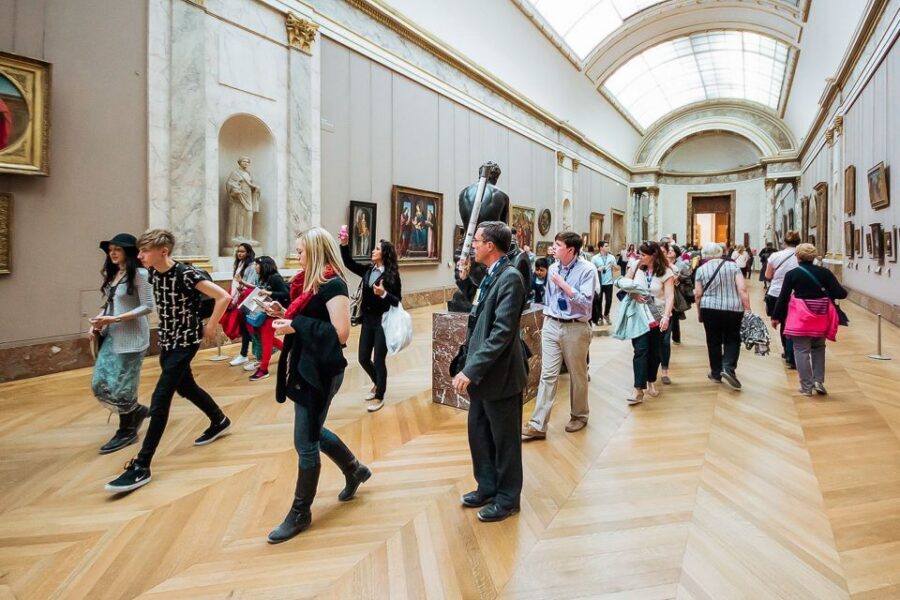
Your ticket gets you to the correct entrance lane. Show your ticket to the security staff at the dedicated Priority Access line at one of these spots:
- the Pyramid main entrance
- Porte des Lions
- Carrousel entrance
Once you’re checked there, you still go through an airport-style security check. After security, you can access the museum directly with your ticket. This is why the ticket-line skip matters: it routes you into the building flow faster, even though you still get the standard security screen.
Practical tip: if you’re trying to arrive with less stress, come prepared to show your ID or passport quickly, since that’s required.
Security Still Takes Time (So Plan Like It’s Part of the Visit)

This ticket skips the ticket line, not the screening process. You will wait in the security line. In real life, that’s the part that can vary most day to day.
So here’s a smart strategy: treat your “arrival time” as a separate clock from your “entry time.” Aim to get there with enough buffer that you aren’t rushing while you’re in the security queue. One of the most common on-the-ground lessons from people who’ve done this is that arriving a bit early helps, because the line for each time slot can be long even when the ticket process is organized.
Museum Hours and Timing: When to Book and When to Go
Knowing Louvre hours is half the battle, because the museum’s closing rules affect your last big sights.
- Monday, Wednesday, Thursday, Saturday, Sunday: 9:00 AM to 6:00 PM
- Friday: 9:00 AM to 9:45 PM
- Tuesday: closed
Two more rules are easy to miss:
- Last entry is one hour before closing.
- You’ll be asked to vacate 30 minutes before closing.
That means if you book a late slot, you can see a lot more—especially if you want to avoid some of the crush. Friday evening hours can be a good option for people who like a calmer pace later in the day (as long as you still respect that last-entry cutoff).
Also, your entry time can shift slightly. If you select 2:00 PM, your actual entry may be 30 minutes before or after (1:30, 2:00, or 2:30). This flexibility is normal for timed-entry systems, so don’t build a tight connection or another timed plan immediately after your slot.
Inside the Louvre: The Layout That Helps (and the Parts That Fight Back)
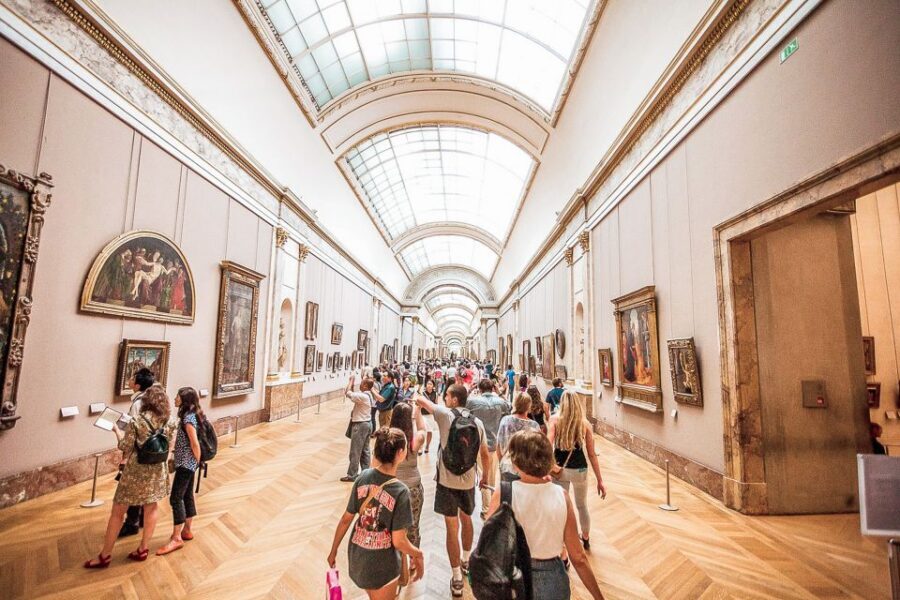
The Louvre isn’t one loop. It’s a whole city of art. The collection is organized into 8 departments:
- Egyptian Antiquities
- Near Eastern Antiquities
- Greek, Etruscan, and Roman Antiquities
- Islamic Art
- Sculpture
- Decorative Arts
- Paintings
- Prints and Drawings
That structure is useful for you because it’s easier to plan by theme than by hallway. Want ancient stuff? Jump toward Egyptian and Greek/Roman areas early. Are you here for masterpieces? Plan around Paintings and Sculpture first, then branch out.
One drawback of this size is emotional, not logistical: it can feel overwhelming fast. Even with timed entry, you might find it hard to decide where to start once you’re surrounded by priceless objects. My advice is to choose a “first mission” before you even arrive—just 2 or 3 must-sees—then give yourself permission to wander without guilt afterward.
You can also read our reviews of more museum experiences in Paris






Renaissance and Beyond: What You Can Actually See in a Day
With the full permanent collection access, you can build a day in any style. The Louvre covers works from the 13th to the 20th centuries, plus ancient relics and major sculptures. That range is part of the magic: you’re not just seeing one era—you’re walking through big shifts in art across time.
A simple way to pace yourself:
- Start with your top “I can’t miss this” piece(s) while your energy is high.
- Then spend time in one department that interests you most (Paintings, Sculpture, or Egyptian Antiquities are popular choices).
- Finish with a slower wander through what you didn’t plan.
This ticket lets you stay as long as you want inside the museum, but the Louvre is so large that most people run into the same reality: a first visit can feel like a preview, not a full survey. If you truly want to see more than the highlights, a longer day or returning on another visit can make the difference. You might start loving the Louvre more once your expectations shift from seeing everything to soaking up the parts you love.
Mona Lisa: The Salle des États Door Trick and Crowd Reality
Yes, you’ll want to see Mona Lisa. This ticket gets you inside fast, which helps with the overall day. But there’s an important detail you should plan for: Salle des États (where the Mona Lisa is displayed) has separate doors for entry and exit. That changes how your flow feels in that room.
Also, the Mona Lisa area tends to be crowded. Even when you reach it efficiently, you may still face a wait around the piece itself because of the sheer number of people stopping for photos and a close look. So the best move is to treat it like a quick pilgrimage, not a “stand and study for an hour” moment.
Practical tip: if you care about seeing it calmly, go early in your day or later when crowds shift. Then once you’ve seen it, move on—there’s plenty of other great work that can be more enjoyable when you’re not stuck in the center of the attention.
Venus de Milo and the Ancient World: Worth a Stop Beyond the Headlines

Mona Lisa is the headline, but you’ll get more satisfaction if you balance the famous with the foundational. Venus de Milo is specifically mentioned as one of the iconic works you can see, and the Louvre’s ancient collections are built to reward time.
The advantage of hitting ancient sculpture and related departments earlier is that you’re still fresh enough to notice details—different materials, different styles, and the way the Louvre connects Greek/Roman art with other regions and periods in its collections.
The Louvre’s Big Backstory: Why the Museum Feels Like a Time Machine

Here’s a cool piece of context that can make your visit feel more meaningful. The Louvre first opened on August 10, 1793, starting with 537 paintings. It closed in 1796 due to structural problems, then reopened in 1801 as the Musée Napoléon with a larger collection. Since then, the collection has grown by 20,000 works.
That history helps explain why the building and the collection feel layered. You’re not just walking through rooms; you’re inside a museum that has been repurposed and expanded across centuries.
What You Pay For: Value vs Extras (No Guide, No Audio Included)
Let’s talk money like adults.
At $26 per person, you’re buying:
- skip-the-ticket-line timed entrance
- full access to the permanent collection and temporary exhibitions
- a booking fee
You are not buying:
- skip-the-security-line entry
- a guide
- an audio guide
So if you’re hoping for a narration-led visit, you’ll need to plan that separately. That said, once you’re at the Louvre, you may find paid audio options (one review specifically mentions an audio guide available on a Nintendo 3DS). Even without an included audio option, the ticket still gives you everything you need for a self-guided day.
Is it worth it? Usually yes, because the Louvre’s ticket lines can eat time you could spend actually looking at art. If you’re a solo planner or you prefer to wander, a self-guided timed ticket is one of the best ways to control your schedule.
What to Bring and What Not to Bring
Keep your packing simple. You’ll need:
- a passport or ID card
You cannot bring:
- luggage or large bags
- oversize luggage
This matters because bag rules can slow you down during security and inside logistics. If you’re arriving from another part of your trip, plan to travel light. Some visitors also note the availability of lockers, including free lockers, which can be helpful if your bag situation is manageable.
Crowd Management: Small Moves That Make the Day Better
Even with timed entry, the Louvre can feel packed. The winning tactic is to reduce friction at each step:
- Use the timed entrance so you’re not stuck at the front door.
- Expect security and line-ups at major “gravity wells,” like the Mona Lisa area.
- Have a quick plan for where you want to go first so you don’t waste energy deciding on the spot.
One more crowd lesson: people report the museum can feel like a maze, but help is available when you ask. So don’t pretend you’ll instantly master the layout. Ask, orient, and keep moving.
Who This Ticket Works Best For
This timed ticket is a great fit if:
- you want maximum art time and minimal time in lines
- you prefer a self-guided visit
- you’re visiting for must-see works like the Mona Lisa and major sculptures
- you’re comfortable planning your own route across the Louvre’s many departments
It’s less ideal if you want someone to guide every choice and explain the art step by step—because a guide is not included.
Should You Book This Louvre Timed-Entrance Ticket?
If you’re coming to the Louvre only once, I think this is the easiest high-value decision. You pay for less waiting at the start, and that makes the whole day feel more under control. The museum is huge, the crowds are real, and the ticket-line skip is the practical way to protect your time.
Book it if you can handle a self-guided day and you’re ready for the reality that you’ll still encounter lines inside, especially near the most famous works. Skip it only if you’re traveling at a time when you’re certain you won’t lose much time waiting for tickets, or if you specifically want a guided, narrated experience.
FAQ
What is included with the Louvre timed-entrance ticket?
You get skip-the-ticket-line timed entrance, full access to the permanent collection and temporary exhibitions, plus a booking fee.
Does this ticket skip the security line?
No. It does not skip security. You’ll still go through an airport-style security check and wait in the security line.
How fast will I be able to enter?
Entry is guaranteed within 30 minutes of your timed slot.
Where do I show my ticket?
Show your ticket to security staff in the dedicated Priority Access line at the Pyramid main entrance, Porte des Lions, or Carrousel entrance.
What should I bring with me?
Bring your passport or ID card.
Are large bags allowed?
No. Luggage or large/oversize bags are not allowed.
Can my entry time change from what I select?
Yes. Your entrance time may be 30 minutes before or after the time you request.
What are the Louvre opening hours?
- Mon, Wed, Thu, Sat, Sun: 9:00 AM to 6:00 PM
- Fri: 9:00 AM to 9:45 PM
- Tue: closed
When is the last entry to the museum?
Last entry is one hour before closing.
Is this ticket refundable?
No. This activity is non-refundable. Cancellation is not refundable.