REVIEW · GUIDED
Paris: Guided Side Car Tour on the Left Bank
Book on Viator →Operated by Wild Side Tour · Bookable on Viator
Paris hits different from a sidecar.
This one-hour, private Left Bank ride lets you set the pace while you watch major landmarks slide past without the stress of lining up or navigating traffic on your own. I love the mix of famous sights and quick “gotcha” photo angles, especially with the Eiffel Tower stops and the Seine bridges. I also like that the guide can shape the experience for real needs, like filming a travel vlog. The only real catch is that the tour depends on good weather, so plan for a possible reschedule if conditions are rough.
The route is built for momentum: glide by big icons, then turn your head for another view, all in an air-conditioned vehicle setup designed for comfort. You’ll also get an English-speaking guide (Raphaël, in particular) who adds context as you go, from cathedral details to what you’re seeing near the river. One consideration: this is mostly a ride-by experience, so if you want museum time or indoor cathedral time, you’ll need to plan those separately.
In This Review
- Key points you’ll feel right away
- Riding the Left Bank the fast-and-fun way
- Meeting at Le Petit Plateau and what to expect
- Your guide: Raphaël keeps it informative and easy to follow
- Stop-by-stop: how each landmark works from the road
- Notre-Dame de Paris: gothic details in a quick sweep
- Arc de Triomphe: a French symbol you can actually feel
- Louvre Museum area: the glass pyramid moment
- Eiffel Tower: the star of the show
- Champs-Élysées: luxury streets, cafes, and people-watching
- Les Invalides: the golden dome from the ride
- Musée d’Orsay: former train station to 19th-century art
- Trocadéro esplanade: the Eiffel Tower photo angle
- Palais-Bourbon: parliament architecture without the lecture
- Conciergerie: medieval building, Marie Antoinette connection
- Institut de France: academic domes and institutions
- Pont des Arts: the Love Lock bridge idea, now without locks
- Pont Alexandre III: one of the most beautiful bridge approaches
- Pont Neuf: the oldest bridge moment
- Back to Pont Alexandre III: angels and mythological figures
- Why this route feels like value, not just sightseeing
- Weather, comfort, and practical tips so you enjoy it
- Who should book this sidecar tour?
- Should you book it?
- FAQ
- How long is the Paris Left Bank sidecar tour?
- How much does the tour cost?
- Is the tour private?
- What language is the tour offered in?
- How do I get my ticket?
- Where does the tour start?
- What sights are included on the route?
- Do I need admission tickets to stop at these landmarks?
- What happens if the weather is bad?
Key points you’ll feel right away
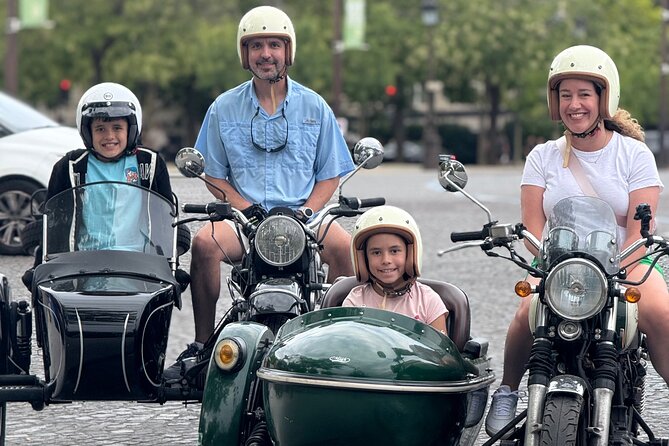
- Private ride: only your group, paced to you, not a fixed cattle-line schedule
- Two seats in the sidecar: up to two passengers plus the driver for shared, easy sightseeing
- Left Bank focus: Notre-Dame, Louvre area, Eiffel Tower region, plus multiple Seine bridge viewpoints
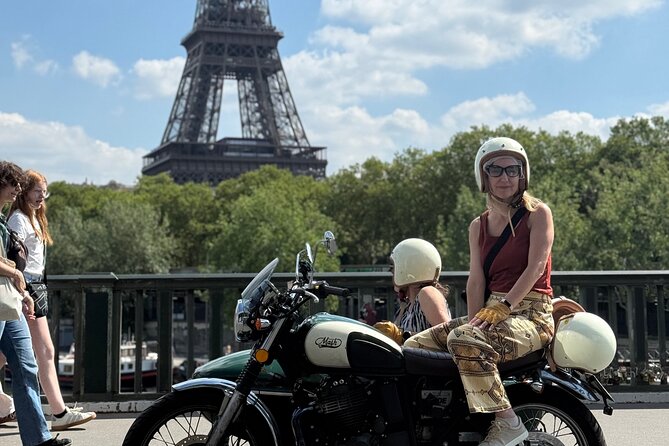
- Photo-friendly stops: especially Trocadéro for Eiffel Tower framing and the river bridges for classic angles
- English guide support: Raphaël brings practical local context and can help with filming questions
Riding the Left Bank the fast-and-fun way
A sidecar tour is a smart move in Paris if you want iconic landmarks without burning half your day walking back and forth. You get that “street-level view” feeling, but with someone else doing the driving. The pace is intentionally flexible, too, which matters when you’re jet-lagged, traveling with different energy levels, or just don’t want to sprint between stops.
At $99 per person for about an hour, this isn’t trying to be a cheap replacement for museums. It’s paying for something different: a guided, comfortable route that strings together several top Paris moments in one go. If you’re trying to build an efficient itinerary, that value adds up quickly.
You’ll also like the vibe if you enjoy motion. Instead of standing still for long stretches, you get quick glances, then another famous scene, and then another. It’s a “see it, remember it, move on” format that fits well with the rest of a Paris week.
Meeting at Le Petit Plateau and what to expect
The tour starts at Le Petit Plateau, 1 Quai aux Fleurs, 75004 Paris, and it ends back at the same meeting point. It’s also near public transportation, which helps if you’re combining it with other plans before or after.
You’ll receive a mobile ticket, and confirmation comes at booking. That’s useful because it cuts down on last-minute coordination. For the ride itself, the vehicle is air-conditioned, which is a practical detail you’ll appreciate on hot days or when weather shifts.
Finally, this is a private activity. Only your group rides, so you don’t have to worry about being stuck behind someone who moves slower than you do or feeling rushed by strangers.
Your guide: Raphaël keeps it informative and easy to follow
One of the standout reasons to book is the style of the guide. Raphaël comes across as friendly, funny, and genuinely engaged—good traits when you’re moving quickly from landmark to landmark. He doesn’t just list names; he helps you make sense of what you’re seeing.
If you’re filming, this can matter more than you’d think. A vlogger-style traveler received helpful support and Q&A for explaining Paris culture to their audience, and they even got dropped off at a different location to continue their day your way. That flexibility is the kind of small upgrade that turns a standard sightseeing ride into something more personal.
Stop-by-stop: how each landmark works from the road
This route is a greatest-hits circuit, but each stop has a specific payoff. You won’t be lingering for long ticket lines—think short, focused glimpses with a guide narrating the key context.
Notre-Dame de Paris: gothic details in a quick sweep
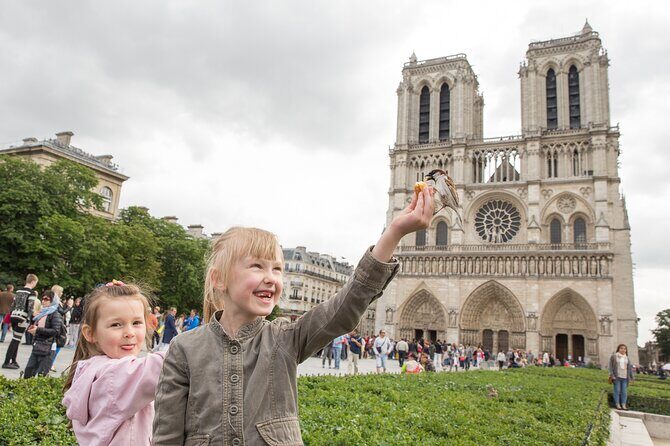
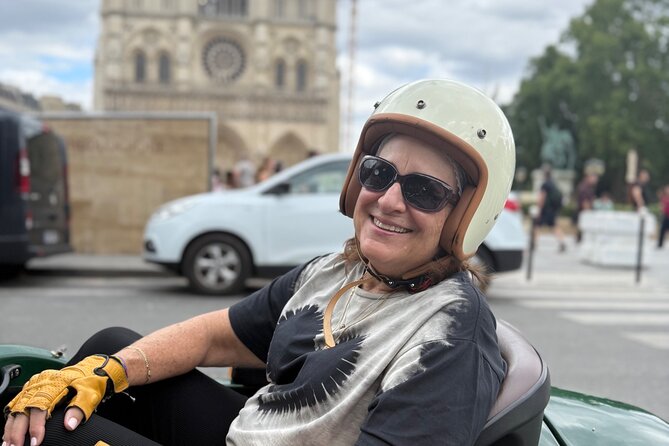
You’ll glide by Cathedrale Notre-Dame de Paris, with the guide pointing your attention toward the cathedral’s gothic architecture and the layers of time you’re looking at. Even if you’re not going inside, the outside works well as an opening “wow.” It’s a visual anchor for everything that follows on the Left Bank.
A drawback here is also obvious: two minutes is short. If you’re the type who likes to slow down and study facades like an art book page-by-page, you might want extra time elsewhere later.
Arc de Triomphe: a French symbol you can actually feel
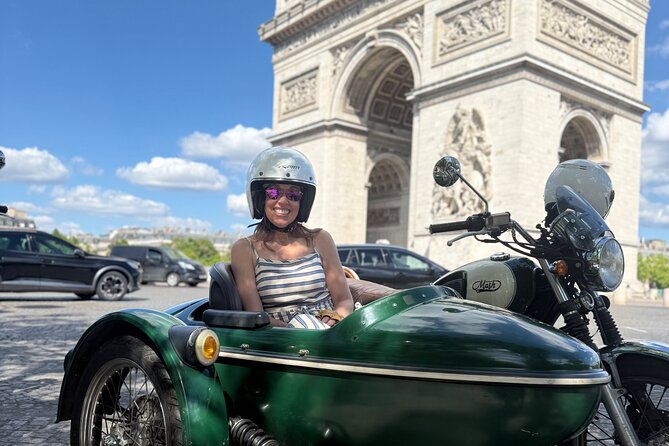
Next is Arc de Triomphe. From the sidecar, you’ll ride beneath it and get that sense of monument scale. The guide frames it as a symbol tied to French heritage and victory—context that helps you look past the postcard view and understand why this arch is so important in Paris identity.
Louvre Museum area: the glass pyramid moment
You’ll roll past the Louvre Museum, including the glass pyramid and the fact that this palace has housed major masterpieces for centuries. Even without entering, the outside view lets you place the Louvre in modern Paris instantly.
If you love museums, this stop will likely make you want more time. That’s not a problem—it just means you should plan an additional Louvre visit if you want the full experience.
Eiffel Tower: the star of the show
Then comes Eiffel Tower—whizz by the area where it feels like the whole city is orbiting. The goal of this stop isn’t to pretend you’re in the gardens or at the top. It’s to let the monument hit you from the street with motion, brightness, and that unmistakable Paris excitement.
When you’re short on time, these “see it quickly” moments can be perfect. They give you the feeling, then you decide later if you want a longer look at night or with paid views.
Champs-Élysées: luxury streets, cafes, and people-watching
Zoom down the Champs-Élysées, where the guide’s narration helps you connect the luxury boutiques and cafes with the street’s real role as a Paris showpiece. You’ll get a sense of why this avenue is such a classic walking route, even if you’re not walking it today.
Les Invalides: the golden dome from the ride
You’ll pass Les Invalides, focusing on the golden dome and the site’s military past. This is one of those landmarks that benefits from a moving viewpoint—you can catch the dome presence without it turning into a long stop.
If you’re a history person, you’ll probably want follow-up time. But as a ride-by introduction, it’s strong.
Musée d’Orsay: former train station to 19th-century art
At Musee d’Orsay, the guide explains the key transformation: it was once a train station and is now dedicated to 19th-century art. The building’s Beaux-Arts style is also part of what you’re seeing, and that architecture makes the exterior feel like more than just a boxy museum facade.
This is a good stop if you like art, architecture, or both. Still, like the Louvre, the ride-by view won’t replace an indoor visit if that’s your priority.
Trocadéro esplanade: the Eiffel Tower photo angle
At Le Trocadéro et son esplanade, you get a big payoff: a vantage point for Eiffel Tower photos. This is exactly the kind of stop that helps you walk away with a picture that looks like Paris, not like a generic city skyline.
If you care about photography, this is the moment to take a breath. Quick movement is fun, but for a good Eiffel frame, you’ll want to line up your shot and actually pause for the view.
Palais-Bourbon: parliament architecture without the lecture
You’ll pass the 7th Arr. – Palais-Bourbon, on the Quai d’Orsay. The guide connects what you’re seeing to France’s National Assembly—the lower house of Parliament. It’s a neoclassical building, and from the road you can still appreciate the formal design language.
This stop is less about awe and more about understanding how government space lives inside the city’s grand architecture.
Conciergerie: medieval building, Marie Antoinette connection
Then you’ll go by the Conciergerie, a former royal palace and prison on Île de la Cité. The guide highlights medieval architecture and the fact that it was known for detaining Marie Antoinette before her execution.
Even if you’re only seeing it briefly, this detail can make the building feel heavier. It’s the kind of context that turns a quick “we passed it” moment into something memorable.
Institut de France: academic domes and institutions
Next is Palais de l’institut de France, described as a dome-topped building for the French Academy and other academic institutions. This stop shifts the mood a bit from monuments to the idea of Paris as a city of learning.
If you’re into how Paris “runs,” these institutional landmarks help complete the picture beyond just sightseeing icons.
Pont des Arts: the Love Lock bridge idea, now without locks
You’ll pass Pont des Arts, known as the Love Lock Bridge. The padlocks are gone now, but you still get a pedestrian bridge experience with great views over the Seine. This is a good stop if you like river views and want to feel the city’s relationship to the water.
Two-minute stops can’t create time on foot, but they can set you up to choose a walking bridge later.
Pont Alexandre III: one of the most beautiful bridge approaches
You’ll ride by Pont Alexandre III, widely considered one of Paris’s most beautiful bridges, with its golden statues, ornate lampposts, and Art Nouveau style. This is one of those places where even a quick glance looks like a postcard because the design is so detailed.
Pont Neuf: the oldest bridge moment
Then it’s Pont Neuf, despite the name meaning new bridge—it’s actually the oldest bridge in Paris. You’ll appreciate that it connects both banks and passes by the Île de la Cité.
This stop is a reminder that Paris’s most famous modern monuments still sit on top of older routes. It’s a nice historical perspective shift without needing you to read a wall plaque.
Back to Pont Alexandre III: angels and mythological figures
Finally, you get another look around Pont Alexandre III, including the angel and mythological figure statuary that shines in gold. Because the route includes this bridge twice, you’ll likely notice different angles and details between the two passes, which is a smart use of limited time.
Why this route feels like value, not just sightseeing
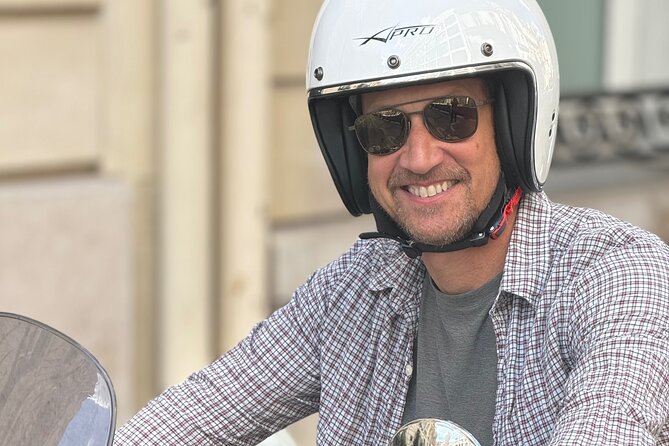
What you’re paying for is not only the sights. You’re paying for how the experience is delivered: guided pace, comfort, and the ability to cover several high-demand landmarks in one hour.
This is especially valuable if:
- You only have a day and you want the Left Bank’s big hitters covered fast
- You’d rather be driven while you focus on photography and stories
- You don’t want to plan museum entries around opening times
It’s less ideal if:
- You’re hoping for extended time inside major museums or historic interiors
- You want a slow, deep walking tour with long stops
Also, the stops are described as admission ticket free, which reinforces the ride-by focus. In other words, you’re not buying museum access here—you’re buying perspective, routing, and narration.
Weather, comfort, and practical tips so you enjoy it

Since the experience requires good weather, keep an eye on forecasts and build flexibility into your day. If conditions are poor, the tour can be canceled and you’ll be offered a different date or a full refund, depending on the outcome.
For comfort, dress for Paris conditions. Even when the vehicle is air-conditioned, you’ll still be outdoors for quick boarding moments and for the sensory experience of being in motion. If you’re bringing a camera or phone setup, be ready to move fast between angles at multiple points.
And because the ride is private and paced to you, you can ask for small adjustments—like a moment to get a specific shot—without the pressure of a large group schedule.
Who should book this sidecar tour?
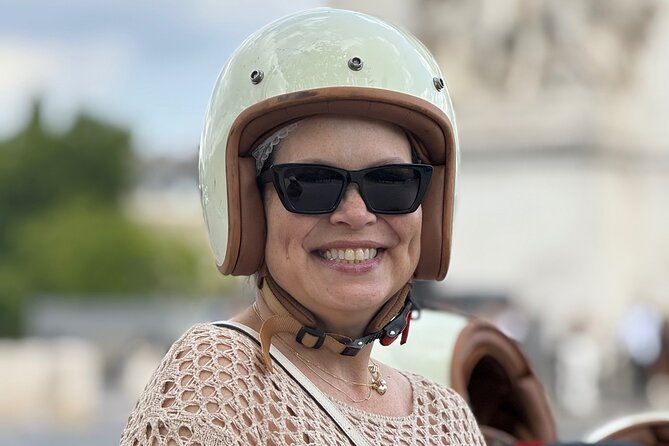
I’d book this if you want:
- A fun, efficient Left Bank introduction
- Guided context in English without a heavy itinerary
- A memorable photo plan for Eiffel Tower and the Seine bridges
- A guide like Raphaël who brings humor and practical explanations, and can adapt if you’re filming
Should you book it?
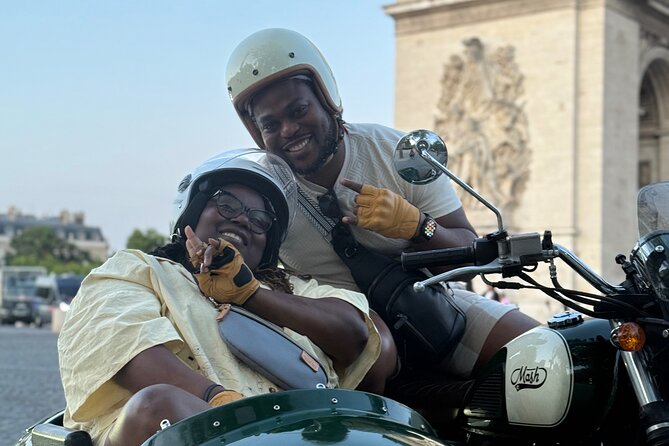
Yes, if your priority is a high-impact overview in about an hour with a guide-driven story and quick photo moments. The $99 price makes sense when you think about how many major landmarks you cover without paying attention to ticket lines or spending your whole day in transit.
I’d think twice only if you need long indoor visits or you know you hate short stops. Also, if weather is looking questionable, treat it as a flexible day. When Paris cooperates, this sidecar tour is the kind of experience you’ll remember for the way it makes the city feel kinetic and personal.
FAQ
How long is the Paris Left Bank sidecar tour?
The tour is approximately 1 hour.
How much does the tour cost?
It costs $99.00 per person.
Is the tour private?
Yes. It’s a private tour/activity, and only your group participates.
What language is the tour offered in?
It’s offered in English.
How do I get my ticket?
You’ll receive a mobile ticket.
Where does the tour start?
It starts at Le Petit Plateau, 1 Quai aux Fleurs, 75004 Paris, France.
What sights are included on the route?
You’ll glide by places including Notre-Dame de Paris, Arc de Triomphe, the Louvre area, the Eiffel Tower, Champs-Élysées, Les Invalides, Musée d’Orsay, Trocadéro, Palais-Bourbon, Conciergerie, Institut de France, Pont des Arts, Pont Alexandre III, Pont Neuf, and another pass near Pont Alexandre III.
Do I need admission tickets to stop at these landmarks?
The stops listed are admission ticket free.
What happens if the weather is bad?
This experience requires good weather. If it’s canceled due to poor weather, you’ll be offered a different date or a full refund.