REVIEW · PARIS
Paris: Roland-Garros Stadium Guided Backstage Tour
Book on GetYourGuide →Operated by Cultival · Bookable on GetYourGuide
Walk where the French Open stars walk. This Roland-Garros guided backstage tour is a neat way to get inside one of Paris’s most iconic sports venues and learn what makes it tick, from the Philippe Chatrier court to the player corridor. I like that it focuses on the big set pieces (the retractable-roof showpiece and the on-court walk), not just a quick look around. One thing to keep in mind: some backstage areas may be limited on the day due to stadium activity and renovations.
What makes this tour especially fun is the mix of architecture and storytelling. You’ll hear about champions tied to Roland-Garros—Rafael Nadal and Steffi Graf are part of the spotlight—plus legends like Björn Borg and Chris Evert, and French tennis icons from the Four Musketeers era. You also get a guide-led walk with access to spaces fans usually only see on TV, including areas like the presidential tribune and media-focused rooms.
At $24 per person for about 90 minutes, it’s priced like an activity, not like a match ticket. If you’re even a little tennis-curious, you’ll leave with a clear sense of why Roland-Garros feels different from other Grand Slam venues—and where the action actually happens behind the scenes.
In This Review
- Quick hits
- Roland-Garros in 90 minutes: what this tour is built to do
- Finding your way: Grande Boutique meeting point at Gate 36
- Philippe Chatrier court and the retractable roof views
- The player corridor: walking the route champions used
- Presidential tribune and the backstage access that feels real
- Press rooms, media spaces, and the fun factor
- French Open legends: Nadal, Graf, Borg, Evert, and the Four Musketeers
- Price and value: is $24 a smart use of Paris time?
- Guide quality, languages, and hearing the details
- Who should book this, and who might want a different plan?
- Should you book this Roland-Garros backstage tour?
- FAQ
- Where is the meeting point for the tour?
- How long is the Roland-Garros guided backstage tour?
- What is included in the ticket price?
- What languages are available for the live guide?
- Is the tour wheelchair accessible?
- Are all stadium areas guaranteed to be accessible?
- What parts of Roland-Garros do you visit?
- Can I visit the stadium shop during my visit?
- Is free cancellation available?
- Is there an option to reserve without paying today?
Quick hits
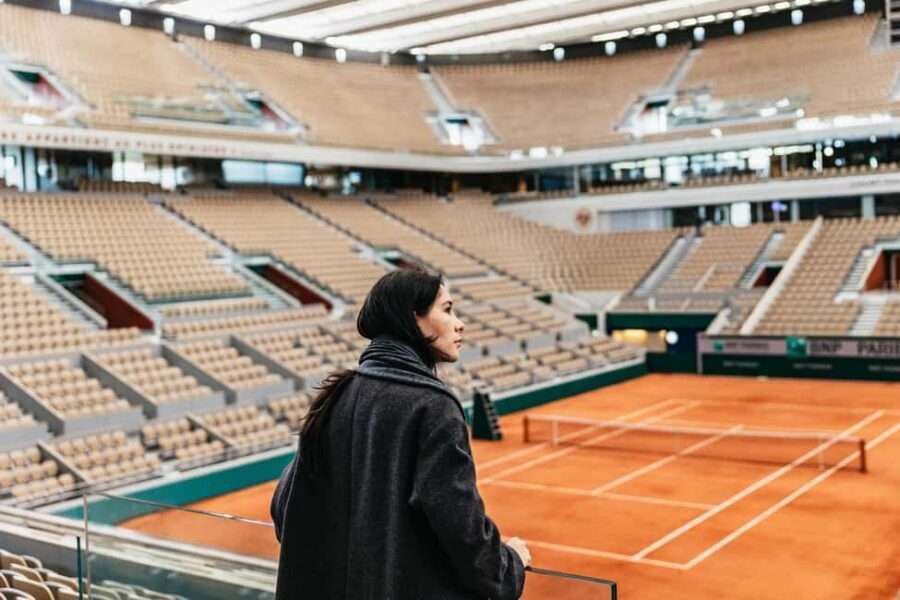
- Retractable roof + unobstructed views: you get a clean look at the clay court setting and the city beyond
- Walk-in-the-footsteps feel: you move through the corridor players use to reach the clay
- French Open legend stories: Nadal, Graf, Borg, Evert, plus the Four Musketeers names
- Presidential tribune and on-stadium access: you see parts of Roland-Garros most visitors don’t
- Media-room moments: some tours include mock interview-style fun
Roland-Garros in 90 minutes: what this tour is built to do

This isn’t a long museum slog. It’s a tight, guided route that takes you through the places that help explain why the French Open feels so theatrical on TV and so real in person. In practice, the experience works best as a “tennis primer with backstage access.” You start thinking of the stadium as a building and a system, not just a backdrop for matches.
You’ll also get the kind of context that makes the stadium easier to enjoy even if you don’t follow every player. The tour ties the architecture to the moments tennis fans care about: where players enter, where media operates, and what kind of crowd energy surrounds the Philippe Chatrier court.
The duration matters. Ninety minutes is long enough to feel like a guided journey, but short enough that you can still pair it with classic Paris sights that day.
You can also read our reviews of more guided tours in Paris



Finding your way: Grande Boutique meeting point at Gate 36
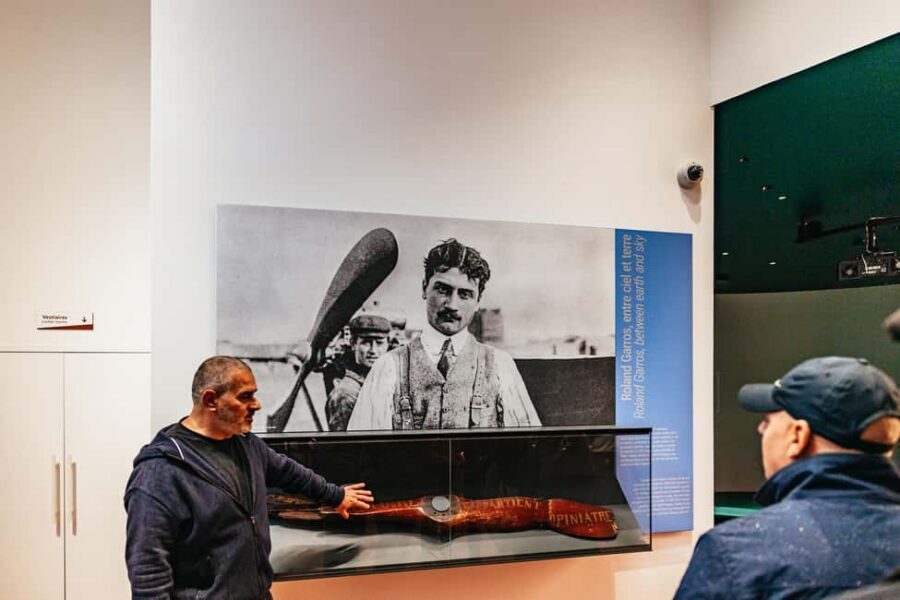
Plan to arrive a bit early, because the meeting instructions are specific. You meet inside the Grande Boutique on Avenue Gordon-Bennett, at Gate 36. That small detail can save you stress—especially if you’re matching directions from your phone.
Also, build in a quick pause before the tour if you like browsing. The stadium shop is open from 9:30 AM to 6:30 PM, and you can visit it before or after. If you’re the type who likes a souvenir that isn’t just a generic magnet, this shop is where you’ll find Roland-Garros-style keepsakes while everything is fresh in your mind.
Tip: if you’re coming with accessibility needs, the tour is listed as wheelchair accessible, and your guide can usually help with how to navigate the route on the day.
Philippe Chatrier court and the retractable roof views
The Philippe Chatrier court is the headline, and the tour delivers on that. You’ll see the court design up close, including the retractable roof structure that’s a major part of how Roland-Garros operates in different weather. Even if you’ve only seen the stadium on screen, the roof changes how you perceive the space—suddenly it feels like a live indoor-outdoor hybrid, not just an open arena.
One of the most rewarding parts is the sense of scale and sightlines. The tour emphasizes unobstructed views of the clay courts and the surrounding Paris cityscape. That contrast helps you understand why Roland-Garros can feel both enclosed and very “in Paris.”
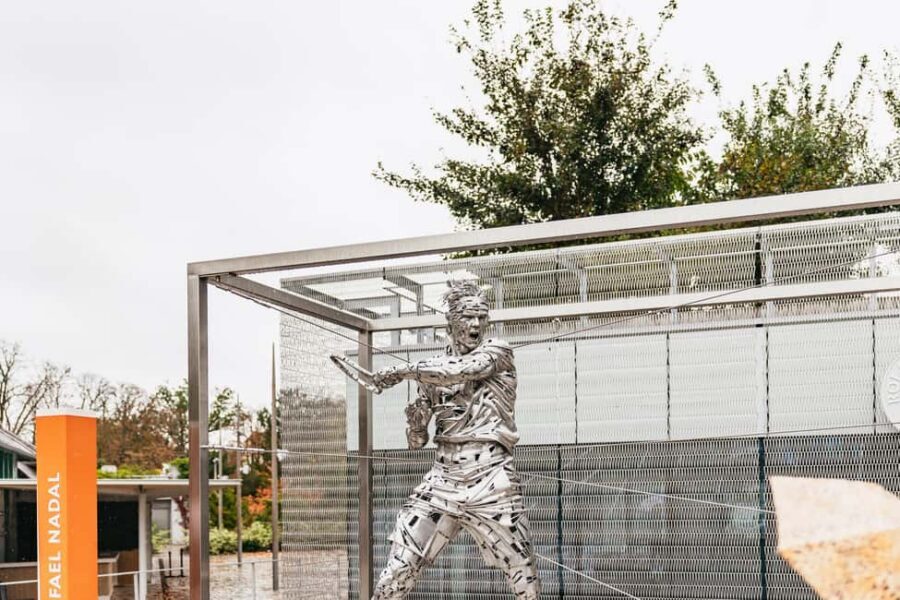
I’d also keep your camera handy. People tend to remember the center-court views, especially the spots tied to famous winners. The tour includes references to major champions, and you might spot features like a Rafael Nadal plaque on the court area, along with an exhibition-style nod to him that shows up in the experience people talk about.
A small practical note: the condition of the court can vary. At least once, some guests reported that there wasn’t clay on the main court during their visit. That doesn’t ruin the tour, but it’s worth knowing so you’re not expecting a perfectly primed playing surface every time.
The player corridor: walking the route champions used
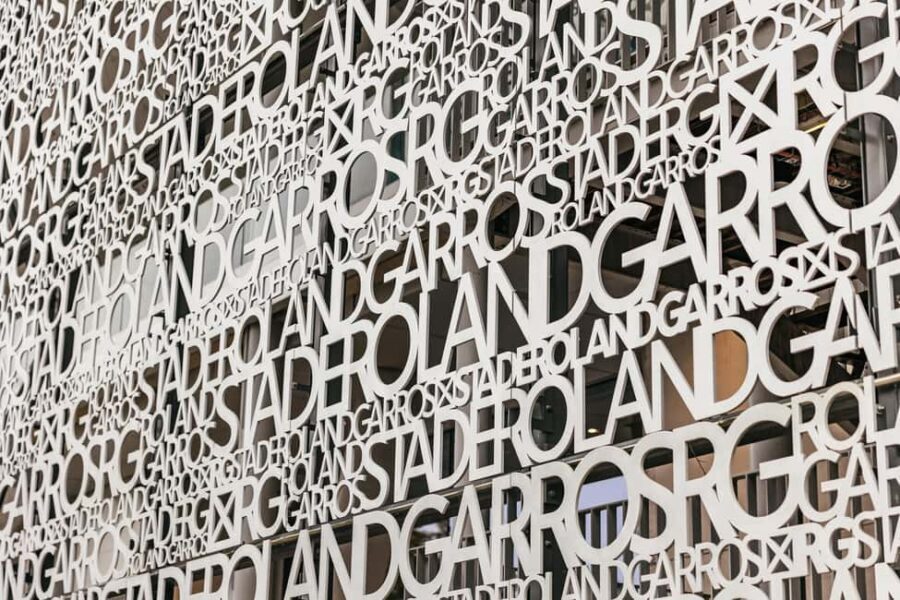
The best “movie moment” in this tour is the movement through the corridor that leads players to the clay court. You’re not just looking at tennis history—you’re walking the path that turns history into movement. The guide frames what you’re seeing, and suddenly the stadium feels built around one thing: the journey from tunnel to challenge.
This stop also helps you picture how match day flows. Players don’t arrive at the clay magically; they come through a controlled sequence of spaces where the focus sharpens. When you walk that corridor with a guide telling the story, it clicks fast.
If you love photos, this is also where you’ll naturally pause. It gives you context for composition: you’re capturing the court view, but you’re also capturing the sense of approach—what players see before they step into the point-by-point reality.
Presidential tribune and the backstage access that feels real
The tour includes access to exclusive-feeling stadium zones, including the presidential tribune. That matters because it changes your mental map of Roland-Garros. You stop treating it as a single bowl of seats and start seeing it as a set of roles—officials, media, players, and the space where each one operates.
This is also where you should expect a bit of “stadium reality.” Because Roland-Garros is an active sports site, some areas may not be accessible on your specific day. In real-world terms, that can mean you might not get every room people dream about when they book, especially spaces like locker areas if renovations or operational needs are in play.
Still, even when certain rooms are limited, the core route usually keeps the experience satisfying: you still get center-court sightlines, key backstage corridors, and the media-facing parts that explain how professional tennis runs.





Press rooms, media spaces, and the fun factor
Roland-Garros isn’t only about the athletes. It’s about the whole tennis ecosystem—press, stats, and the machinery of coverage. This tour leans into that side, too.
You may get time in the media room and press areas, and some guides add a playful twist like mock interviews in those spaces. That’s not just silly fun. It helps you understand what those rooms are for, and it gives you a memory that’s more than just a photo of a chair.
You can also come across trophy-related displays behind glass, which is exactly the kind of detail that lands well in a guided setting. A plaque or a trophy wall is easy to miss if you’re walking on your own. With a guide, you get the quick why-behind-the-what, so the moment lands.
One practical comfort tip: the tour can involve groups moving through tight areas. If your goal is to hear every detail, try to stay toward the front half of your group during commentary.
French Open legends: Nadal, Graf, Borg, Evert, and the Four Musketeers
The stories are a big reason this tour works for more than just hardcore tennis fans. You’ll learn about French Open winners like Steffi Graf and Rafael Nadal, and you’ll hear about other major champions such as Björn Borg and Chris Evert. That lineup helps you connect players you recognize to the specific place where they became part of Roland-Garros lore.
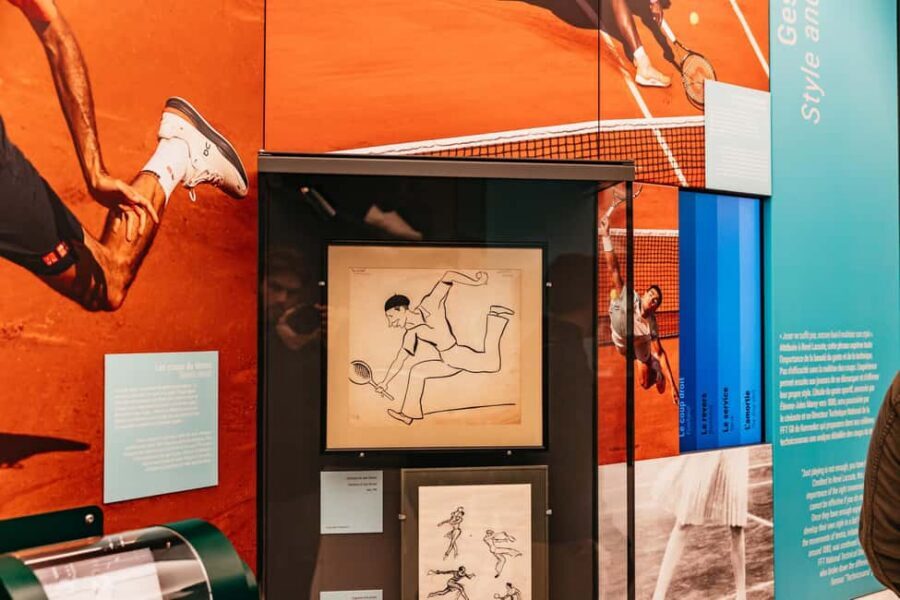
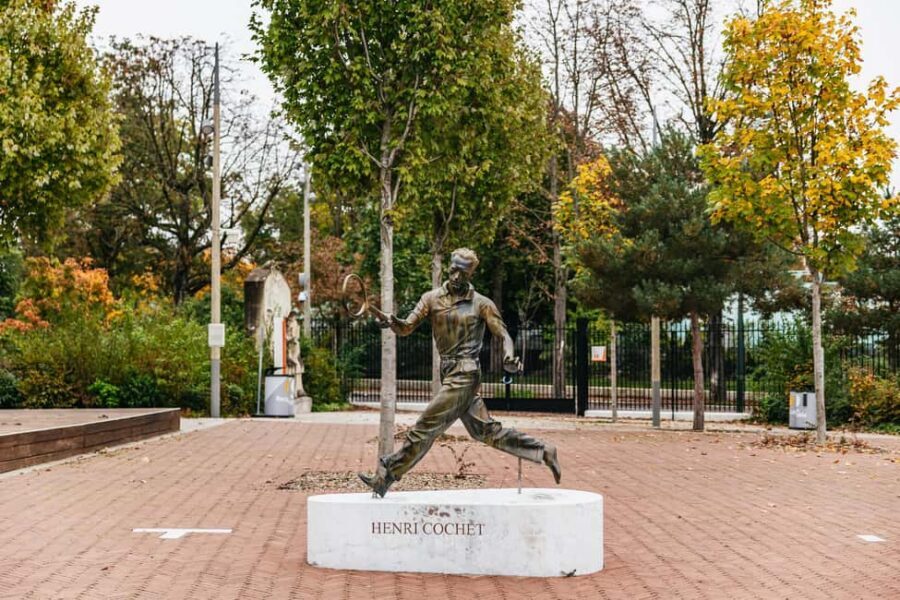
Then comes a second layer that makes it extra “French tennis” in feel: the tour includes the Four Musketeers—Jean Borotra, Jacques Brugnon, Henri Cochet, and René Lacoste. If you’ve never heard the phrase before, this is where you suddenly get the big picture. It’s not just about modern stars; it’s about a tradition that shaped the identity of the tournament.
If you’re traveling with someone who’s a tennis superfan, this part can really boost satisfaction. And if your tennis knowledge is rusty, the guide’s storytelling structure tends to give you a path to follow without making you feel lost.
Price and value: is $24 a smart use of Paris time?
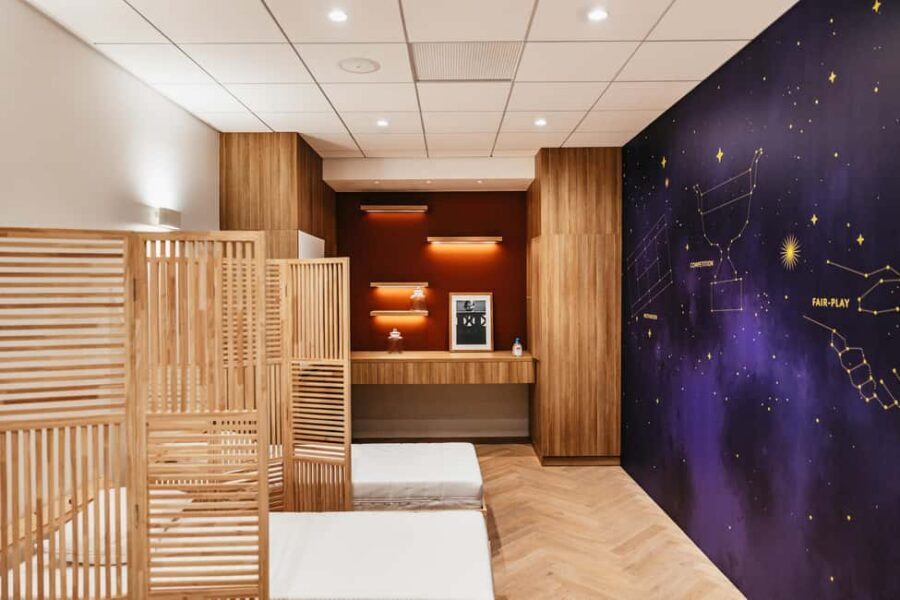
For $24 per person and about 90 minutes, the value is strong if you want a structured look inside Roland-Garros without waiting for the French Open itself. You’re paying for access plus a guide to connect the dots: architecture, player experience, media operations, and tennis legends.
The proof is in the consistency of satisfaction signals. The tour is rated 4.7 out of 5 with over 1,000 reviews, which suggests this isn’t a hit-or-miss attraction. Most guests describe it as well organized, with access to areas that feel off-limits during match days.
Here’s how I’d judge value for your situation:
- If you want a “Paris on a tight schedule” activity that’s still meaningful, this fits.
- If you’re a tennis fan who loves history and wants the center-court feeling, the price is a bargain versus a full tournament day.
- If you’re not a tennis person at all, you’ll still likely enjoy the stadium design and the general sports-storytelling angle, but you might want to mentally prepare for a tour that speaks tennis first.
Guide quality, languages, and hearing the details

The tour is run by a live guide in Spanish, French, or English. That’s a huge plus for comfort. In the real world, language can still affect how much you catch—one guest noted that English could be harder depending on the guide’s style, but the guide was patient about repeating when asked.
Group size can also affect your hearing. Some guests mention the group feeling large at times, making it harder to hear commentary. My advice is simple: pick a position where you can see the guide’s body language and stay close enough that you’re not relying on perfect acoustics.
You might also notice strong personality in the guide. Names that have come up include Amir, Lionel, Mathieu, and Matt, plus hosts like Fatah. That range suggests guides can be engaging, not just read-off-a-script.
Who should book this, and who might want a different plan?
This tour is a great match for:
- tennis fans who don’t get to the French Open in person
- people who enjoy backstage access and sports infrastructure
- travelers who like learning about famous athletes but also want the physical place where the stories happened
It might be less perfect for:
- visitors who want a long, quiet self-paced museum-style visit and lots of reading time
- people who are uncomfortable with crowds or need very clear audio at all times
- anyone who feels strongly about seeing every single backstage room, because access can vary by day due to operations and renovations
If you’re planning extra time nearby, it helps that Roland-Garros sits in a broader tennis pocket. One guest specifically suggested looking at the Simonne Mathieu court in the gardens across the way for a second tennis stop.
Should you book this Roland-Garros backstage tour?
Yes—if you want a well-paced, guide-led way to experience one of tennis’s most famous places. The tour’s strongest points are practical: center court access, the player corridor walk, and the mix of tennis legends with real stadium operations like media spaces and press-room energy. At $24 for about 90 minutes, it’s an easy add to a Paris plan without demanding a full day.
Book it especially if:
- you care about Roland-Garros history and want names tied to specific spaces
- you like architectural details, especially the retractable roof and how the court is presented
- you want a memorable “I was there” experience that feels different from a standard sightseeing stop
Skip it or consider pairing it with other activities if you’re mostly hunting for quiet galleries and long pauses, since this is structured and moving.
FAQ
Where is the meeting point for the tour?
Meet inside the Grande Boutique on Avenue Gordon-Bennett at Gate 36.
How long is the Roland-Garros guided backstage tour?
The tour lasts about 90 minutes.
What is included in the ticket price?
It includes a tour guide and the entrance fee.
What languages are available for the live guide?
The guide is available in Spanish, French, and English.
Is the tour wheelchair accessible?
Yes, the tour is listed as wheelchair accessible.
Are all stadium areas guaranteed to be accessible?
Some areas may not be accessible on the day due to stadium activities and possible renovations.
What parts of Roland-Garros do you visit?
You visit areas including the stadium backstage areas, the presidential tribune, and the corridor that leads players to the clay court, plus access to the Philippe-Chatrier court.
Can I visit the stadium shop during my visit?
Yes. The stadium shop can be visited before or after the tour, and it is open from 9:30 AM to 6:30 PM.
Is free cancellation available?
Yes, you can cancel up to 24 hours in advance for a full refund.
Is there an option to reserve without paying today?
Yes. You can reserve now and pay later.