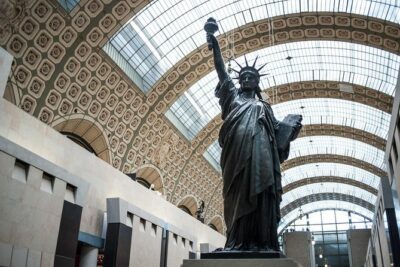
Two hours at Orsay can teach you a lot. This Paris Musée d’Orsay Fully Guided Tour pairs prebooked entry with an English-speaking guide who pulls you straight toward the most important Impressionist works, with context that actually clicks (think guides like Amelie or Antoine). I love the time-saving prebooked admission—it keeps your day from turning into a line-stand. I also love the focus on the big names and big moments, from Van Gogh and Manet to Monet and Gauguin, so you leave with a real sense of the movement.
One watch-out: the meeting point area can be crowded, and you should plan a little buffer. The museum can also be affected by strike closures, so it is worth having a flexible mindset even with a confirmed booking.
In This Review
- Key highlights to know before you go
- Why Orsay’s Impressionism feels different when you plan it right
- The prebooked ticket value: what $71.35 is really buying you
- Two hours inside Musée d’Orsay: the tour flow you should expect
- Gallery highlights: how the tour makes Van Gogh, Monet, Manet, and Gauguin click
- Van Gogh: emotion and recognition fast
- Manet: modern shock, explained clearly
- Monet: what changes when light becomes the subject
- Gauguin: travel, identity, and interpretation
- What the guides are best at (and why that matters more than you think)
- Meeting point and practical timing: keep your day smooth
- Who this tour suits best (and who might want a different format)
- Price and logistics: simple, but pay attention to the basics
- Should you book this Musée d’Orsay guided tour?
- FAQ
- How long is the Musée d’Orsay fully guided tour?
- Is admission to the Musée d’Orsay included?
- What language is the tour offered in?
- Where do I meet for the tour?
- Does the tour include hotel pick-up or drop-off?
- Is this a walking tour?
- How big is the group?
- What if the museum is closed due to strikes?
- How do I cancel for a refund?
- Will I get confirmation after booking?
Key highlights to know before you go
- Prebooked museum entry so you can skip the stress of finding the right line
- English local guide who ties paintings to the bigger Impressionist story
- Hit-the-best-first route that gets you to major works like Manet and Monet fast
- Impressionism-focused viewing, including Cézanne, Gauguin, and more
- Small group size (up to 20) which usually helps questions and pacing
- About 2 hours inside with admission included in the price
Why Orsay’s Impressionism feels different when you plan it right
The Musée d’Orsay is where Impressionism becomes more than a style label. You get the paintings and the artists—plus the why behind them—without needing to master art history first.
What makes this tour practical is that it is built for results. In about two hours, you are not wandering. You are moving toward the artworks that define the conversation: Van Gogh’s Self Portrait and Starry Night Over the Rhône, Manet’s Olympia and Luncheon on the Grass, Monet’s Houses of Parliament, and Gauguin’s Tahitian Women on the Beach.
This is also a good length if you want something substantial but not exhausting. Two hours is long enough for real context, but short enough that you still have energy left for the rest of your Paris day.
The prebooked ticket value: what $71.35 is really buying you
Yes, the price is $71.35 per person. But the value is not just admission—it is your use of time.
Museums in Paris can be a timing trap. You either spend your best daylight waiting or you plan to reduce friction. With this tour, your ticket is prebooked and guided, and the guide helps you head to the highlights so the visit has momentum.
Also, admission being included matters. You do not have to juggle a separate ticket purchase, worry about sold-out entries, or rearrange your day at the last minute. If your schedule is tight—or if you simply hate logistical chores—this arrangement is a win.
And because it is capped at 20 travelers, you get a guided experience without the feeling of being swept along by a crowd the whole time.
Two hours inside Musée d’Orsay: the tour flow you should expect
This experience is a walking tour at a moderate pace, with your main stop at the museum itself. There is one core stop: the Musée d’Orsay, where the guide leads you through a curated set of galleries and masterpieces.
Here is what that usually means for how you experience the museum:
- You start with an orientation to the Impressionist world, so the paintings do not feel like random names.
- You then move from work to work with commentary that explains what you are looking at.
- You finish with enough context to keep appreciating what you see afterward, even if you go off-script on your own.
Even though the itinerary list is simple, the experience is not. The tour is built to help you see the museum the way an art-history timeline works—especially the transitions between artists and ideas.
Gallery highlights: how the tour makes Van Gogh, Monet, Manet, and Gauguin click
What I like about the approach is that it treats the paintings like evidence. You are not just admiring brushwork; you are connecting choices artists made, and the world they responded to.
Van Gogh: emotion and recognition fast
If you want a quick boost of impact, Van Gogh is the place to start. The tour specifically points you toward works like Self Portrait and Starry Night Over the Rhône.
The best part of having a guide here is not that you get facts. It is that you get a way to look. You learn what to notice in the composition and what the painting is trying to communicate—so the work hits harder in a short visit.
Manet: modern shock, explained clearly
Manet can feel tricky at first glance. The tour counters that by placing Olympia and Luncheon on the Grass in context, so you understand why these paintings mattered when they appeared.
One reason this guided format helps: the guide commentary gives you a framework to process what can otherwise be uncomfortable or confusing. Instead of just seeing the famous titles, you get a sense of the reaction and the artistic stakes.
Monet: what changes when light becomes the subject
Monet is where the tour becomes very satisfying for first-timers. You are directed toward Houses of Parliament, which is a great example of how Monet’s attention shifts what you think the “main subject” even is.
A guide also helps you connect Monet’s choices to the bigger Impressionist movement rather than treating each painting as a standalone masterpiece.
Gauguin: travel, identity, and interpretation
Gauguin’s Tahitian Women on the Beach can open a big conversation quickly. With a guide, you get more than a caption; you get context that helps you understand how the artist framed the scene and why that framing matters.
This is a good stop if you like when art becomes a question—not just an image.
What the guides are best at (and why that matters more than you think)
This tour lives or dies on the guide. The good news is that the pattern across guides is strong: clear explanations, strong structure, and commentary that makes connections instead of dumping dates.
Names you may run into include:
- Amelie, praised for connecting concepts and historical eras in an engaging, witty way
- Antoine, praised for chronologically structured explanations that stay easy to follow
- Avi, praised for a logical path through galleries and crowd flow, plus a warm, approachable style
- Hugo, praised for entertaining context that builds understanding of Impressionism
- Laurence, praised for making the tour fun while sharing plenty of history and artist background
- Violet, praised for making art history relevant to today
- Manuel and Carolina, praised for engaging delivery and clear evolution of ideas
Even if you do not know the guide in advance, the important part for your decision is this: the tour is designed so you do not just wander among masterpieces. You get an “artist-to-movement” story arc.
And small group size helps. When you can hear your guide and ask a question, the time feels more personal and less like a lecture you are trying to survive.
Meeting point and practical timing: keep your day smooth
Your start point is 2 Rue de la Légion d’Honneur, 75007 Paris. The tour ends back at the meeting point.
There is no hotel pick-up or drop-off. So you will want to plan to arrive on your own via public transportation. The good news: the meeting area is described as near public transportation, which makes it easier to slot into a normal sightseeing day.
Now the real-world tip: build a small buffer for the start. A few negative experiences in the provided feedback focus on difficulty locating the meeting point in busy areas. That is easy to prevent with a little time cushion and a quick plan for where you are standing when you arrive.
If Orsay has closures due to strikes, you may be contacted before the tour if there is time to do so. For last-minute changes, updates may be communicated at the meeting point. Keep your phone handy, even if you do not love doing that on vacation.
Who this tour suits best (and who might want a different format)
This is a solid pick if you:
- Want an Impressionism-focused route with major artists and key works
- Prefer structured context over trying to figure everything out solo in two hours
- Like asking questions and hearing explanations in English
- Are okay with moderate walking and moving at a group pace
It might be less ideal if you:
- Want a long, slow museum session where you can linger at one painting for ages
- Need a fully unhurried experience with no group timing
- Are very sensitive to start-point confusion and prefer a tour that includes clearer wayfinding support
If you want, you can also use this tour as your kickoff. One smart strategy is to book a slot earlier in your day. That way, you have energy left to return to the paintings you loved and see them at your own pace after the guided portion ends.
Price and logistics: simple, but pay attention to the basics
Let’s keep it real: the tour is priced at $71.35 for about two hours, with admission included. You are paying for three things: the prebooked ticket, the guide’s time, and the streamlined route through the highlights.
So you will get your best value if you:
- Actually show up on time
- Come with curiosity, not a checklist of 50 works
- Treat it as a “greatest hits with explanations” experience
The biggest practical factors to consider are the same ones that affect any guided museum tour: walking comfort, start point clarity, and potential same-day closures if strikes hit.
Should you book this Musée d’Orsay guided tour?
Book it if you want your Orsay visit to feel like a guided story—fast access to the masterpieces, plus explanations that help you see what you are looking at. This is a strong choice for first-timers who want Impressionism to make sense quickly, and for repeat visitors who still appreciate a well-structured route.
Consider a different option if you hate walking with a group, want a longer deep solo session, or know you have trouble with meeting points in busy central areas. In that case, the risk is not the art—it is the logistics.
My take: if you want the best works plus context in a tight window, this tour is a practical way to get there. Then you can spend the rest of your day doing what Paris does best: wandering with purpose.
FAQ
How long is the Musée d’Orsay fully guided tour?
It is about 2 hours.
Is admission to the Musée d’Orsay included?
Yes. The admission ticket is included, and your entry is prebooked.
What language is the tour offered in?
The tour is offered in English.
Where do I meet for the tour?
You meet at 2 Rue de la Légion d’Honneur, 75007 Paris, France.
Does the tour include hotel pick-up or drop-off?
No. Hotel pick-up and drop-off are not included.
Is this a walking tour?
Yes. It is a walking tour at a moderate pace, and most travelers can participate.
How big is the group?
The maximum group size is 20 travelers.
What if the museum is closed due to strikes?
The museum is subject to closures due to strikes. If time permits, you may be reached out to before the tour, and for last-minute closures, communication may happen at the meeting point.
How do I cancel for a refund?
You can cancel up to 24 hours in advance for a full refund.
Will I get confirmation after booking?
Yes. Confirmation is received at the time of booking.