REVIEW · PARIS
Paris: Walking Tour of Montmartre
Book on GetYourGuide →Operated by HelpTourists · Bookable on GetYourGuide
Montmartre hits you fast.
This 2-hour small-group walk takes you from the glitzy legend of Moulin Rouge up toward the quiet majesty of Sacré-Cœur, with stops that explain why these places matter in everyday Parisian life. I especially like the mix of big-name sights and off-the-main-path moments that help the neighborhood feel human, not like a movie set.
My other favorite part is the storytelling. Guides such as Vera, Solene, Nadine, and Christin are repeatedly praised for lively anecdotes and a steady, comfortable pace on the hill. One thing to consider: the meeting point can be tricky near Moulin Rouge, and on some days the language match can be uneven if the planned guide isn’t available.
Key things you will notice on this walk
- Moulin Rouge meets local Montmartre: you get the icon first, then the quieter streets that explain the myth
- Photo stops with a purpose: each stop ties to artists, neighborhoods, and how people used to live (and still do)
- Place du Tertre with real atmosphere: you’ll see where artists paint under the open sky
- Sacré-Cœur at the right moment: you arrive for the view when you’ve already been walking the hill
- Guides who keep it moving: many guides are praised for pacing and staying with the group
In This Review
- Getting Started at Moulin Rouge: Find the HelpTourists Guide Quickly
- Moulin Rouge Stop: The Legend, Explained in Street-Level Terms
- Up the Hill to Moulin de la Galette: Photo Stop With Local Texture
- La Maison Rose: A Picture You Understand After the Story
- Place du Tertre: Artists Under the Open Sky
- Sacré-Cœur Basilica: The View and the Calm Finish
- What Makes the Tour Worth $34 for 2 Hours
- Language and Timing: Choose Your Day Like a Local
- Who This Tour Suits Best (and Who Might Want a Different Plan)
- Practical Tips Before You Go
- Should You Book This Montmartre Walk?
- FAQ
- How long is the Paris: Walking Tour of Montmartre?
- Where do I meet the guide?
- What are the main stops on the walk?
- What language options are available?
- Is food included in the price?
- Is the tour wheelchair-friendly?
Getting Started at Moulin Rouge: Find the HelpTourists Guide Quickly
You start outside the Blanche metro station, at the traffic island in front of Moulin Rouge. The guide should be easy to spot if you know what to look for: a HelpTourists bag and a pink base cap.
This matters more than you’d think. The Moulin Rouge area has more than one nearby roundabout/traffic island, and if you’re just drifting around without a plan, you can lose time fast. Show up a few minutes early, and take a moment to orient yourself by the metro sign and Moulin Rouge frontage before you start scanning for the pink cap.
The tour is sold as small-group. On regular days, that usually means you can actually hear the guide and ask questions. On public/national holidays, group size may be larger, so expect a bit less flexibility.
Moulin Rouge Stop: The Legend, Explained in Street-Level Terms
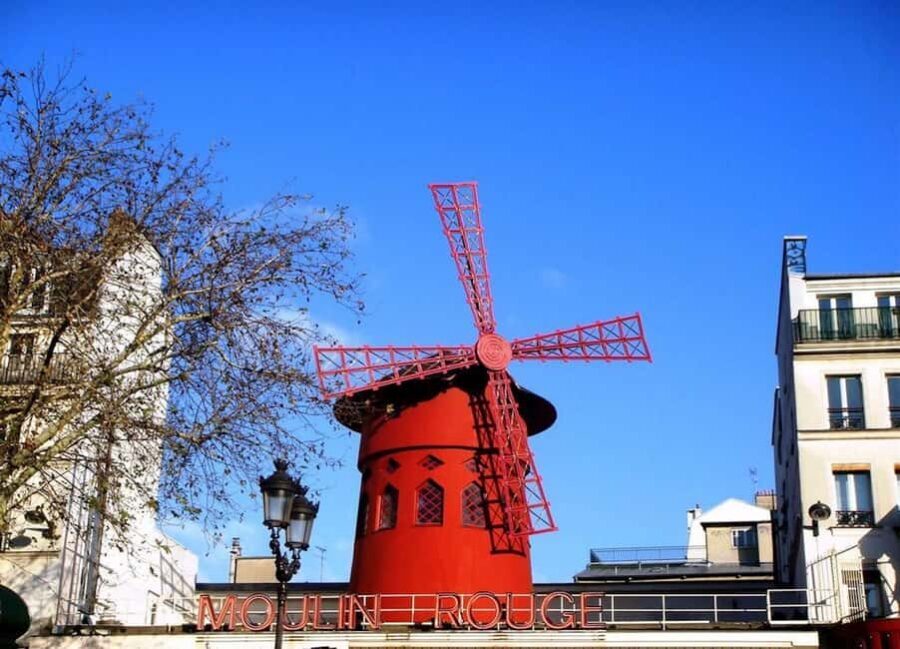
The first big landmark is Moulin Rouge. You’ll get a photo stop and a short walk around the area.
What I like about starting here is the contrast. Moulin Rouge is famous for performance and spectacle, but Montmartre is also about artists, neighborhoods, and everyday life. A good guide uses that first sight to set expectations: this is a district where creativity isn’t confined to a single stage.
Even if you’re not into cabaret, you’ll get something practical from the stop: it gives you a visual anchor. Later, when you’re walking the hill and passing quieter corners, you’ll understand where you are and why Montmartre earned its reputation.
You can also read our reviews of more walking tours in Paris



Up the Hill to Moulin de la Galette: Photo Stop With Local Texture
Next comes Moulin de la Galette for another photo stop and sightseeing walk.
This is the point where Montmartre stops feeling like a checklist and starts feeling like a place. The streets are cobbled, the angles change, and the hill does what it always does in Montmartre: it slows you down just enough to look around.
You’ll often hear a story or two here that ties the view and the setting to how people once spent time in the neighborhood. That’s one reason a guided walk is worth it: you don’t just get the look—you get the why behind it.
In the reviews, the pacing is repeatedly praised, including a gradual uphill walk that helps everyone keep up. If you’re the kind of person who worries about steep streets, you’ll likely appreciate that the tour is described as staying with the group and keeping things safe.
La Maison Rose: A Picture You Understand After the Story
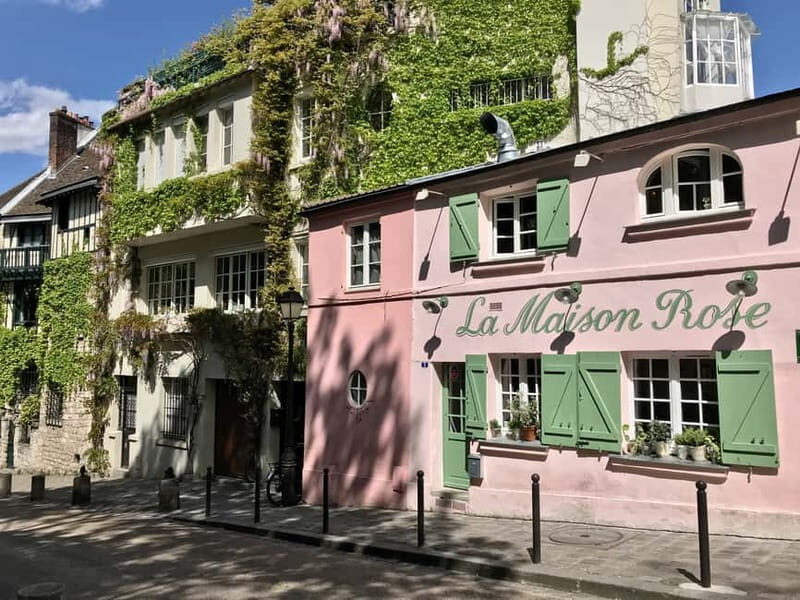
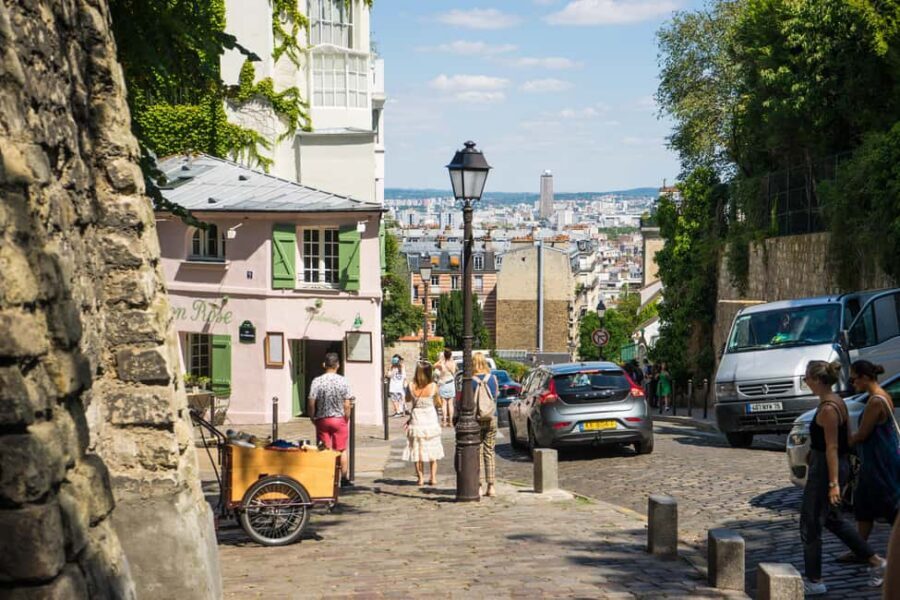
La Maison Rose is next, again with a photo stop and walk.
This is one of those spots that many people photograph quickly, then move past. With a guide, you spend a little longer looking, because you’re not just taking a pretty picture—you’re placing it in the neighborhood’s artist-driven world.
The practical benefit: by the time you’re here, you already have context from Moulin Rouge and the earlier hill storytelling. So La Maison Rose reads like part of a larger pattern, not a random postcard.
Place du Tertre: Artists Under the Open Sky
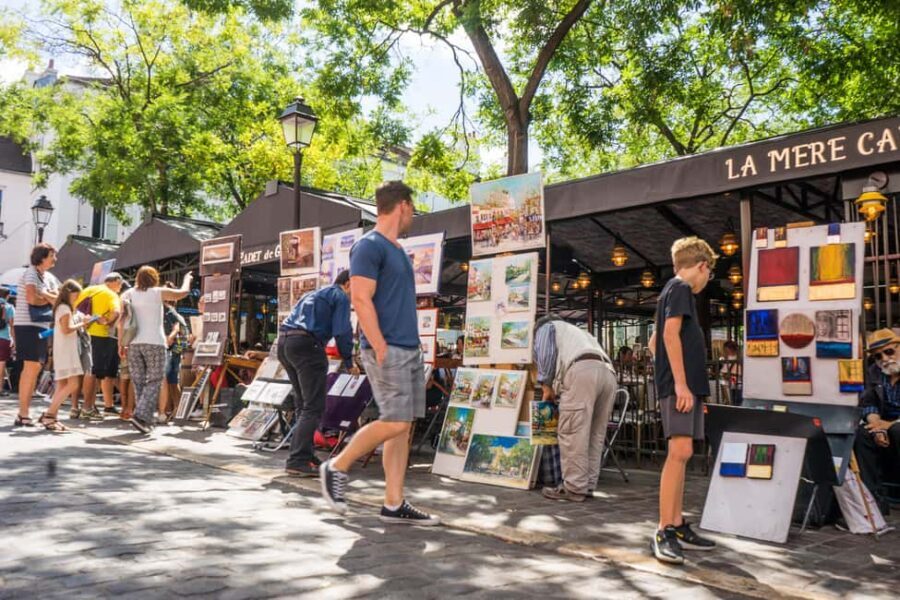
Place du Tertre is where Montmartre turns lively and creative in a more immediate way. You’ll have a photo stop, a visit, and sightseeing here.
This is a key stop for atmosphere. The square is known for the artists who work there, and the tour’s description specifically highlights that feeling of artists painting beneath open sky. Even if you don’t plan to buy anything, it’s a chance to slow down and watch how the neighborhood’s art culture works day to day.
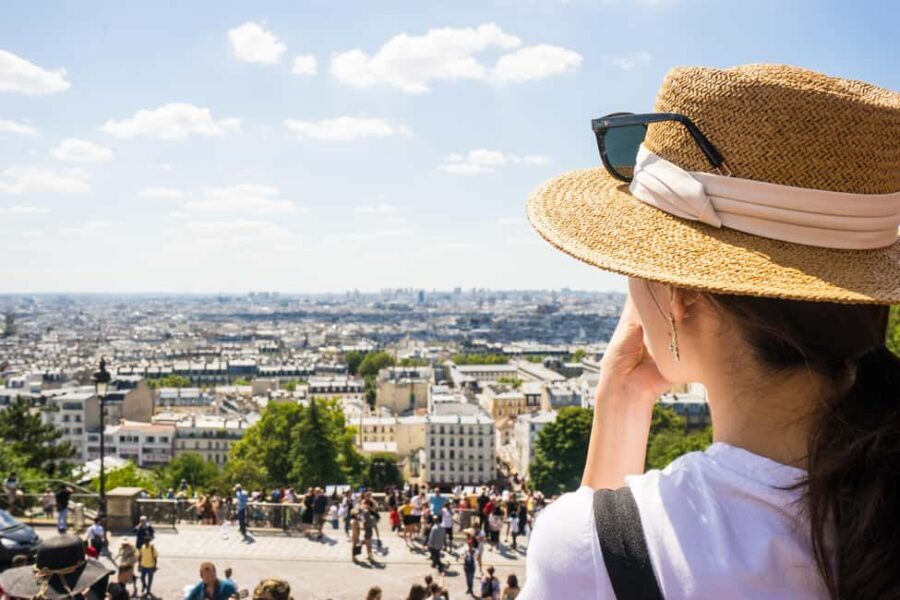
Also, this is a useful place for orientation. After a couple of sights and street turns, you finally get a broad view of the scene. The guide can help you connect what you’re seeing with the earlier history and anecdotes.
Sacré-Cœur Basilica: The View and the Calm Finish

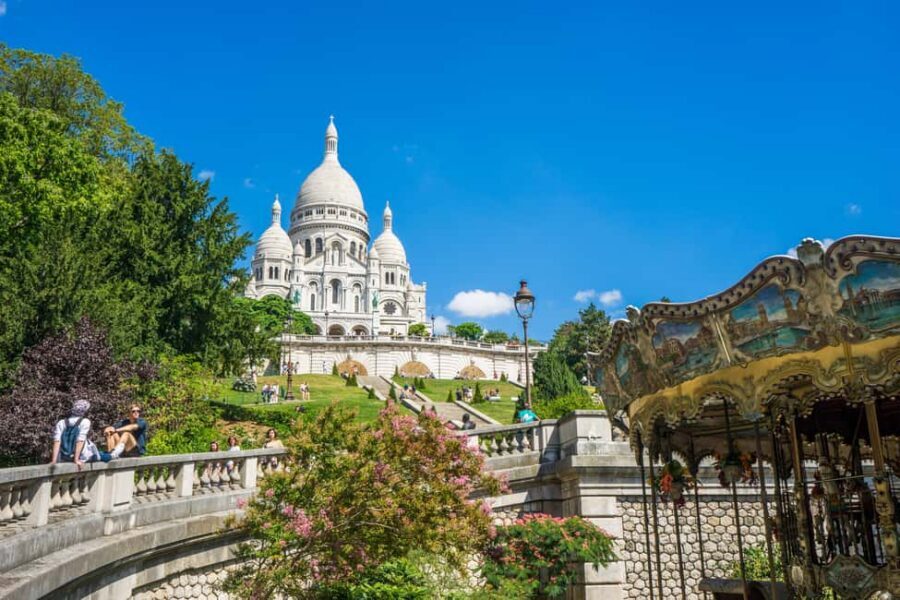
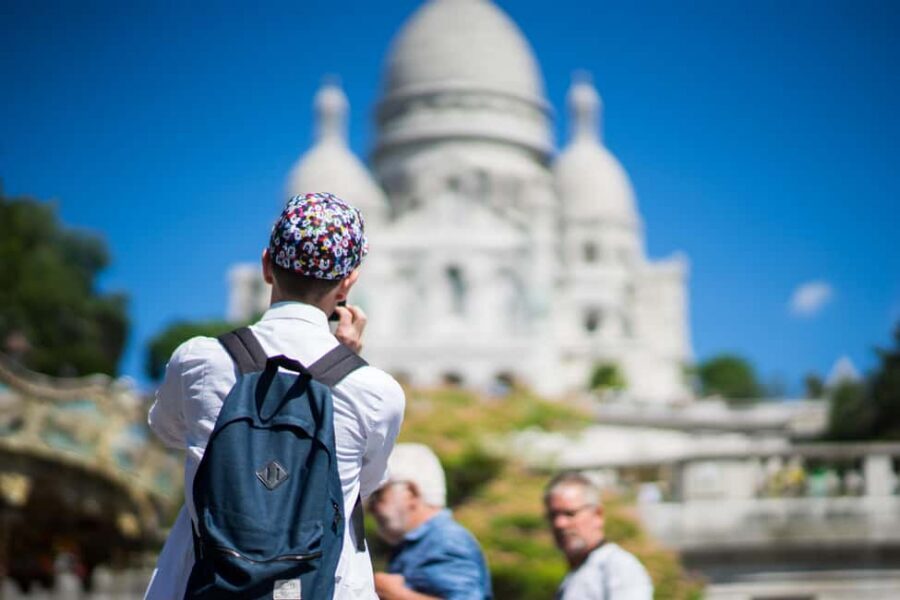
The final stop is Sacré-Cœur Basilica, with photo stop, visit, and sightseeing.
This is where Montmartre pays off. After walking the neighborhood, the basilica feels earned. The tour design puts you here after you’ve already climbed and absorbed the art-and-stories vibe of the district, so the serene beauty lands harder.
If you like to take photos, this is your moment. If you like quiet, it’s also a reset point: you’re not hustling through the next corner; you’re pausing at a landmark that brings light, space, and a feeling of being above the city’s noise.
One small note to be aware of: the activity info includes both a finish at Sacré-Cœur and a statement that the activity ends back at the meeting point. Your confirmation details should clarify exactly how the endpoint is handled for your specific departure, so it’s smart to check before you go.






What Makes the Tour Worth $34 for 2 Hours
At $34 per person for about two hours with a guide, this is a solid value if your goal is to learn fast without spending time piecing together a DIY route.
You’re paying for three things:
- Local interpretation: stories and anecdotes that explain what you’re seeing
- Efficient coverage: major icons plus meaningful stops in a short window
- Guided pacing: help staying together on steep, cobbled streets
It also helps that the tour includes the main sights that most people want—Moulin Rouge and Sacré-Cœur—while adding intermediate stops like Moulin de la Galette and La Maison Rose so you get more than just two photos.
Just know what’s not included. Food and drinks are not part of the tour. If you want a snack or a proper sit-down break, plan it before or after you walk.
Language and Timing: Choose Your Day Like a Local
This tour runs at set times and in two languages. English tours run Monday and Wednesday at 3:00 pm, plus Saturday at 5:00 pm. German tours run Tuesday and Thursday at 4:00 pm, Saturday at 3:00 pm, and Sunday at 2:00 pm.
If you’re choosing based on comfort, don’t underestimate the language factor. In at least one case, the tour happened mostly in German because an English-language guide didn’t show up, with a brief recap for the English-speaking portion of the group. That’s not something you can control, but it’s a reasonable consideration if English is critical to your enjoyment.
If you’re comfortable switching to German or you just want the walk plus general story context, the German departures can be a great way to go.
Who This Tour Suits Best (and Who Might Want a Different Plan)
This is a strong fit if you want:
- a short, structured Montmartre experience
- a guide who tells stories instead of handing you a map
- photo stops that feel connected, not random
It’s less ideal if:
- you’re a wheelchair user (it’s listed as not suitable for wheelchair users)
- you want a long, slow wander with lots of free time to linger in cafés
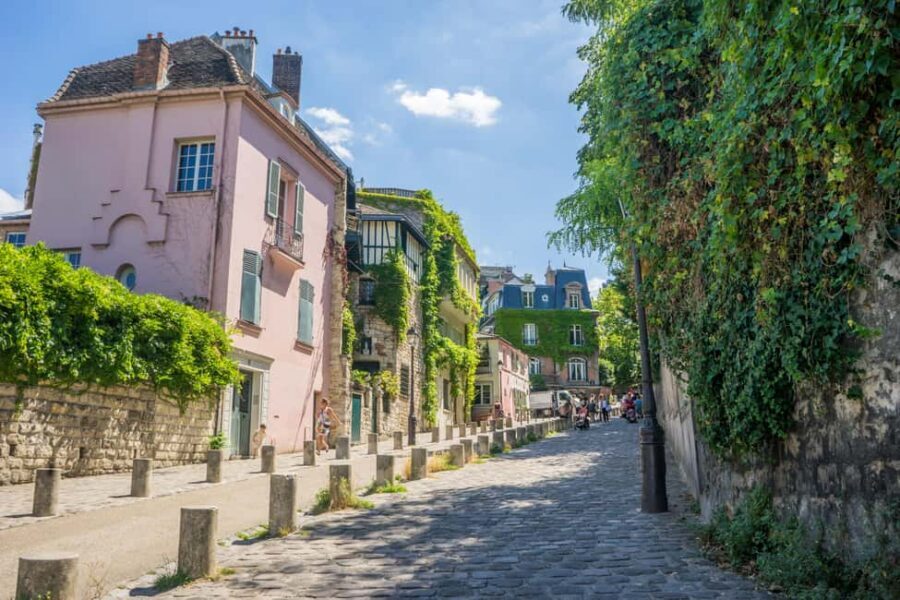
The route includes cobbled streets and uphill walking. Even with a gradual pace, it’s still Montmartre, which means you should wear shoes that handle uneven ground and a bit of climbing.
Practical Tips Before You Go
- Wear grippy shoes for cobblestones and stairs around the hill.
- Arrive early at the meeting point and check that you’ve got the right traffic island in front of Moulin Rouge.
- Bring your camera battery and a light layer. The hill can feel cooler near open squares.
- Plan your food outside the tour since meals and drinks aren’t included.
Should You Book This Montmartre Walk?
If you’re visiting Paris and want a compact Montmartre experience that combines the headline sights with the stories that make them click, I think this is an easy yes. The guides are repeatedly praised for being engaging and funny, and for keeping a pace that works on the hill.
Skip it only if you already know Montmartre well and just want total freedom, or if you need wheelchair-friendly access. Otherwise, two hours is about the right amount of time to feel Montmartre’s vibe without turning your day into a stamina test.
FAQ
How long is the Paris: Walking Tour of Montmartre?
The tour lasts about 2 hours.
Where do I meet the guide?
You meet outside the Blanche metro station, at the traffic island in front of Moulin Rouge. Look for a guide with a HelpTourists bag and a pink base cap.
What are the main stops on the walk?
You’ll pass key sights along the way including Moulin Rouge, Moulin de la Galette, La Maison Rose, Place du Tertre, and Sacré-Cœur Basilica.
What language options are available?
Tours are offered in English and German. English tours run Monday and Wednesday at 3:00 pm, and Saturday at 5:00 pm. German tours run Tuesday and Thursday at 4:00 pm, Saturday at 3:00 pm, and Sunday at 2:00 pm.
Is food included in the price?
No. Food and drinks are not included.
Is the tour wheelchair-friendly?
No, the tour is not suitable for wheelchair users.