REVIEW · PRIVATE
Private Battlefields Tour in Argonne from Paris in Van (2/7 travelers)
Book on Viator →Operated by ADRIAN ROADS · Bookable on Viator
WWI trenches, just a van ride from Paris. This private Argonne battlefields day trip turns the First World War from textbook dates into real places you can stand on, with the comfort of an air-conditioned minivan and a guide who keeps the story moving. I like that you go as a small group with Régis handling the driving and the interpretation, so you’re not stuck listening at a distance.
What I really like is the mix of sights you can feel in your legs and your head: walking in the trench-world of La Main de Massiges, then ending at the Meuse-Argonne American Cemetery where the scale hits hard and clear. One possible drawback: this is a long day (about 13 to 14 hours) with major sites, including stair climbing at Montfaucon, so comfortable shoes and a realistic pace matter.
In This Review
- Key highlights you should know before you go
- A long WWI day trip: the 6:00am start and what fits
- La Main de Massiges: walking among shell holes where lines shifted
- Montfaucon Monument: the 234-step view tied to the American offensive
- Meuse-Argonne American Cemetery in Romagne: 14,246 graves and real silence
- Romagne 14-18 museum: Jean-Paul de Vries and objects with stories
- Varennes-en-Argonne: Louis XVI, American liberation, and a Pennsylvania monument
- Butte de Vauquois: artillery observatory turned mine battlefield
- How the private van format changes the experience
- Price and value: what $462.73 per person buys
- Who this Argonne WWI tour suits best
- Should you book this private Argonne battlefield tour?
- FAQ
- What time does the tour start?
- How long is the Argonne battlefields tour?
- What group size is allowed for the private van?
- Is pickup available from Paris?
- Is this a private tour?
- What admissions are included?
- Do I need to buy lunch?
- Is there a mobile ticket?
- Is the tour weather-dependent?
- Can I cancel for free?
Key highlights you should know before you go
- Small-group format (up to 6) with private van transport from Paris
- Régis focuses on the human story, not just military jargon, including niche details like wartime pigeon signaling
- La Main de Massiges trench walk with shell-hole scenery that feels unreal
- Montfaucon American Monument and its big view from the 234-step column stair
- Romagne 14-18 museum built around objects found within about a 4-kilometer radius
- Vauquois hill: a destroyed village turned artillery observatory and underground mine battlefield
A long WWI day trip: the 6:00am start and what fits
This tour is built for a full day in the Argonne, with a 6:00am start from Paris. You’ll ride in a comfortable, air-conditioned minivan with your driver/guide, and you’re traveling privately as a small group (maximum 6 travelers).
That early start is the trade-off. You’re getting enough time to hit the major First World War locations spread across the area, and still return in one day. If you prefer slow mornings and multiple short stops at a relaxed pace, this one may feel intense. If you’re happy to make a big, meaningful day out of it, it’s a strong fit.
La Main de Massiges: walking among shell holes where lines shifted
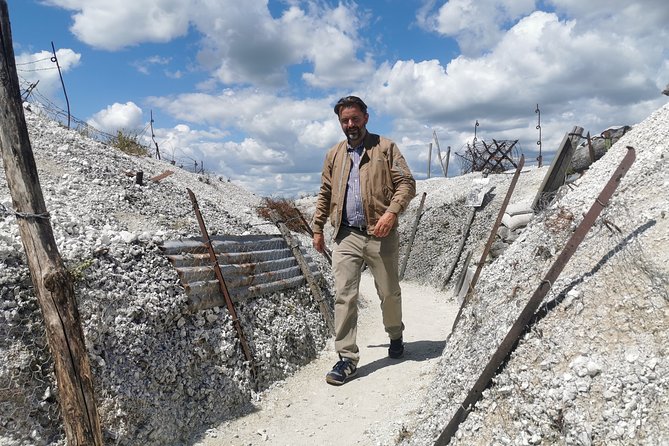
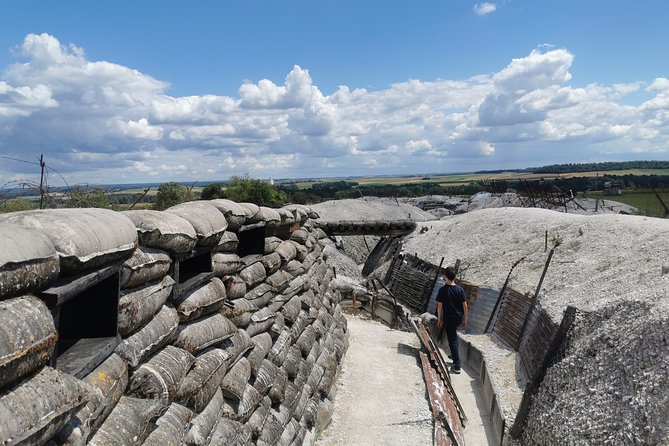
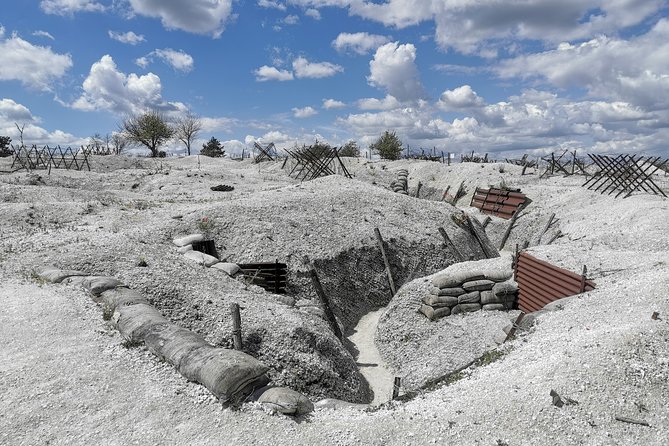
One of the most memorable parts is La Main de Massiges, a strategic natural height the Germans used after retreating early September 1914. The area works like a fortress: each finger of the position functioned like a bastion, so it was hard to dislodge and dangerous to attack.
What you do here is practical and moving. You walk in the trench area, surrounded by hundreds of shell holes that create a lunar, apocalyptic-feeling scene. The ground tells the story of how this location stayed active between 1914 and 1918, not as a single day of fighting but as a long, grinding reality.
You also get the bigger picture from the guide: the estimates for French casualties in the Massiges sector are around 25,000 killed, wounded, or missing, with certainly comparable losses on the German side. That casualty framing matters because it puts the walk into context. This isn’t a photo stop; it’s a place designed to make you slow down.
Time on site is about 1 hour, and it’s exactly the kind of stop where you’ll want your phone charged for reference photos, even if you mostly keep it away to take the site in.
Montfaucon Monument: the 234-step view tied to the American offensive
Next comes the Montfaucon American Monument, faced toward the front line of the 1st American Army on the morning of September 26, 1918, when the attack began. This is a key date in the Meuse-Argonne offensive, and the monument is built to commemorate that moment and the momentum that pushed the enemy back until the Armistice.
The structure is striking even before you climb: a Doric column made of solid granite, topped with a statue symbolizing Liberty. There’s also an engraved map and story in the foyer area, plus tribute details for the American troops who served there. Even if you don’t get the full view from above, this stop gives you a “read the terrain” lesson.
Here’s the practical point: the observation platform is reached at certain times by a staircase of 234 steps. If stairs are a concern for you, treat this as a choice. The monument still works as a meaningful stop even without climbing, because the message is designed into the structure and the engraved operations material.
Site time is about 40 minutes, which is enough to connect the monument to what you’ll see later around Romagne and the cemetery.
Meuse-Argonne American Cemetery in Romagne: 14,246 graves and real silence
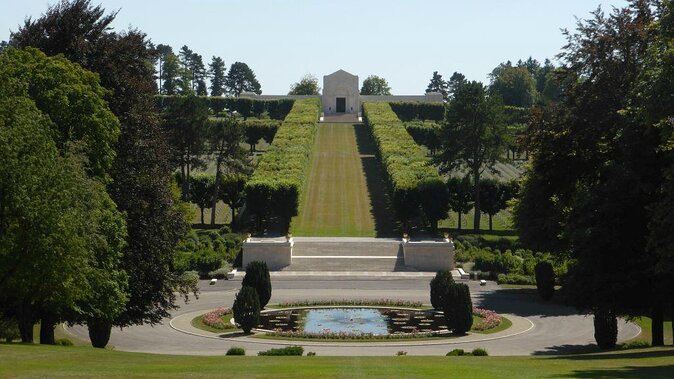
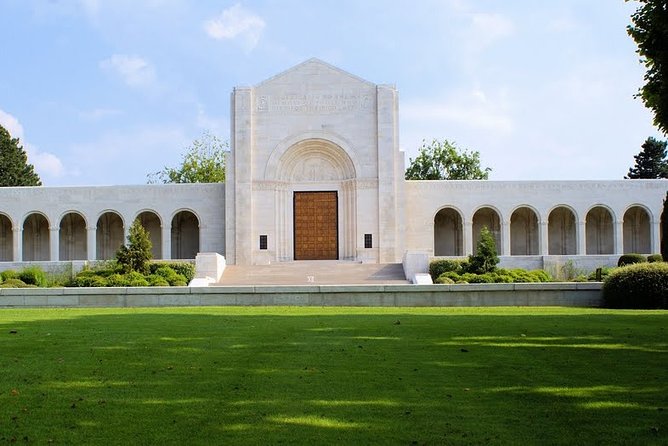
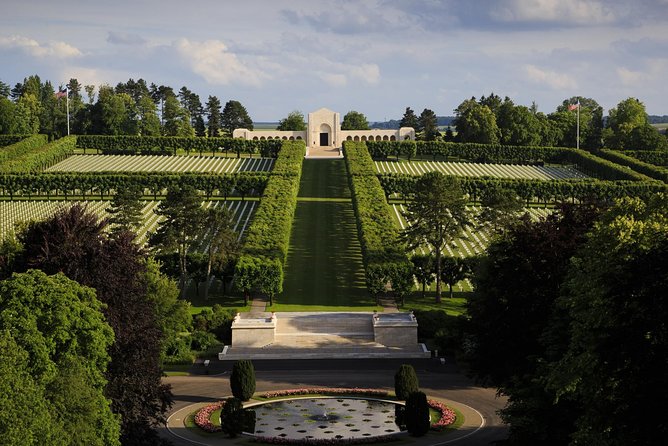
If you’re trying to understand what the Americans mean by duty to remember, this cemetery does the job fast. The Meuse-Argonne American Cemetery in Romagne-sous-Montfaucon is a large 52-hectare necropolis, and it’s the largest American burial ground in Europe.
It was inaugurated in 1937 and contains 14,246 graves of American soldiers who died during the Meuse-Argonne offensive from September 26 to November 11, 1918. That date range covers the run-up to the Armistice, so the cemetery isn’t just about early fighting—it’s about the long push that finally helped force the end.
There’s more than open space and headstones. A Romanesque memorial and chapel overlook the cemetery, and on the loggia walls you’ll find engraved explanations, including a map of the offensive and names of 954 American soldiers. The guide’s role becomes really useful here, because the cemetery can feel abstract if you don’t know where to look.
One of the best ways to make this stop personal is to bring any family details you have. For example, the tour’s Régis has a knack for helping people locate a specific grave if they bring the right information (like a name or reference points). It turns the visit from general commemoration into something far more human.
Time here is about 1 hour, and I’d plan to treat it as slow time, not a rushed walk-through.
Romagne 14-18 museum: Jean-Paul de Vries and objects with stories
After the cemetery’s scale, the Romagne 14-18 museum shifts you to the everyday side of the war. This is an informal museum run by Jean-Paul de Vries, built around thousands of objects from the Great War and centered on the lives of soldiers in the trenches.
The museum’s key idea is simple: behind each object is a personal story, and the objects you see were found within a radius of about 4 kilometers around Romagne sous Montfaucon. So you aren’t just looking at artifacts imported from elsewhere—you’re seeing things tied to a specific area where fighting happened.
Expect the types of items that feel almost too normal for the setting: helmets, weapons, combs, coins, cutlery, pocket watches. The power is in how the guide connects these objects to routines, fear, waiting, and survival—small items that help you imagine what a trench day actually looked like.
This stop is about 40 minutes, and admission to the museum is included. It’s also a great counterbalance if you’re tired of ruins and want something indoor and story-driven.
Varennes-en-Argonne: Louis XVI, American liberation, and a Pennsylvania monument
Then you move to Varennes-en-Argonne, a village with multiple layers of history. In the First World War era it sat on or near the front line for much of the conflict, and early on it was occupied by German troops.
But Varennes also links back to the French monarchy. The village is known for the arrest of Louis XVI and the royal family during their attempt to join loyal troops based in Montmédy. Even if your main interest is WWI, that earlier chapter makes the place feel like more than a military map.
The WWI story continues: Varennes-en-Argonne was the first city liberated by American troops during the Meuse-Argonne offensive launched September 26, 1918. That makes this stop feel like a turning-point village, not just a battlefield location.
You’ll also have time for the Pennsylvania Monument, erected and funded in 1928 by the State of Pennsylvania in memory of soldiers connected to the effort here. It’s a tangible example of how American involvement is remembered on the French ground where it happened.
Time on site is about 30 minutes. That’s enough to understand the layers and notice details without rushing, especially if Régis adds context as you move.
Butte de Vauquois: artillery observatory turned mine battlefield
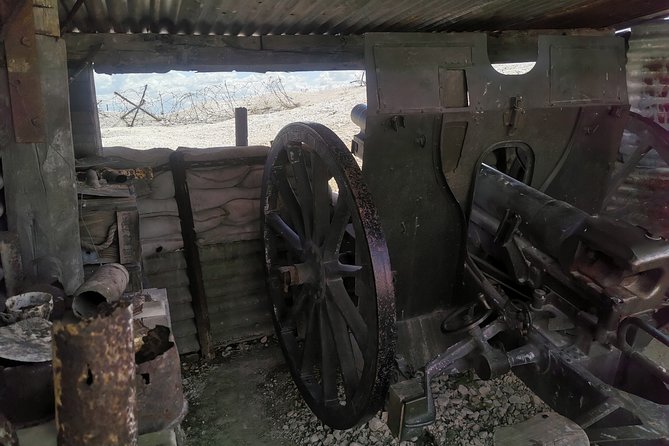
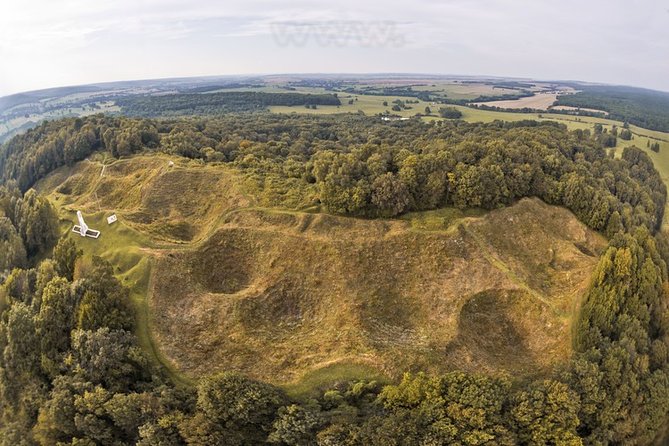
Finally, you reach Butte de Vauquois, a hill that acted as an observatory for regulating artillery fire during the First World War thanks to its altitude (around 290 meters) and visibility over the surrounding plain.
In autumn 1914, the Germans transformed the village into something closer to a fortress. The French and Germans dug in at the top, and the hill took repeated punishment. The village was destroyed after more than 500 explosions, and from February to March 1915 the ruins became hotly contested.
What makes this stop special is the subterranean layer. Kilometers of galleries (about 23) were dug across multiple levels, reaching depths up to 100 meters, with the goal of penetrating under enemy positions. In plain terms: this wasn’t only trench warfare above ground—it was also an underground war of approach and destruction.
Time here is about 1 hour, and you’ll likely want to pause and look out across the terrain while the guide explains why this spot mattered. The hill works best when you can mentally line up “what they could see” with “what they tried to blow apart.”
How the private van format changes the experience
Because it’s private and small-group (max 6), you’re not just being transported. You’re essentially getting a moving classroom, tuned to your pace.
A guide can do more than recite facts. Régis, for example, brings in specific details like the existence of wartime pigeon signaling units, which helps you see that communication wasn’t only about radios and telephones—it was also about methods used under siege and fire. That kind of specificity makes the overall story feel real rather than generic.
There’s also more flexibility in how you spend your time between stops. If you’re the type who wants an extra minute to read an engraved map or understand the layout of an area, the private format makes that easier.
The minivan also helps because the day is long. You’ll be riding between locations in comfort, and the driver and guide share duties so you can keep your attention on the content instead of logistics.
Price and value: what $462.73 per person buys
At $462.73 per person, you’re paying for a private day: transportation from Paris in an air-conditioned minivan, a driver/guide team (Régis included), and admission to the Romagne 14-18 museum. Other stops are marked free in the schedule (for example, La Main de Massiges, Montfaucon’s foyer areas, the American cemetery, the Pennsylvania monument timing, and Vauquois).
So the value isn’t just the price tag—it’s what’s bundled into that van day. You’re not coordinating buses, you’re not figuring out how to line up the sites spread through the Argonne, and you’re getting guided context that ties each location to the larger Meuse-Argonne story.
If you’re going as a couple, the per-person cost can feel steep for a one-day outing. If you have a small group of friends (up to the minivan limit), this becomes easier to justify because you share the private transport and guide time across more seats.
What’s not included is lunch, so you’ll want to plan for food on your own during breaks or bring something simple so you don’t lose energy during the long day.
Who this Argonne WWI tour suits best
This tour fits best if you:
- want First World War sites tied to the American role in the Meuse-Argonne offensive
- like your history grounded in places you can stand in and see
- prefer a small-group format where a guide can answer questions
- enjoy respectful memorial stops as part of learning, not as a quick photo
It may feel less ideal if you:
- hate early mornings and long travel days
- need very low walking and minimal stairs, since Montfaucon includes a 234-step ascent route to its observation platform at certain times
On the positive side, the tour notes that most people can participate, so it’s not framed as an extreme hiking expedition. It’s more about endurance over distance: a full day of sitting, walking, and absorbing.
Should you book this private Argonne battlefield tour?
I’d book it if your priority is a guided, coherent WWI day that connects trenches, monuments, and the American cemetery into one story you can actually remember. The combination of La Main de Massiges trench scenery, the Montfaucon monument views, and the Meuse-Argonne American Cemetery is a strong emotional arc, and Régis’s ability to bring in detailed, human-scaled explanations makes the day feel more than a list of stops.
I’d pause before booking if you know you struggle with long days or stairs, since the itinerary includes a major stair climb option at Montfaucon and multiple sites spread across the region. Also, plan around the fact that lunch isn’t included.
If you’re ready for a focused, respectful, all-day WWI field lesson from Paris, this is a solid choice.
FAQ
What time does the tour start?
The tour starts at 6:00 am.
How long is the Argonne battlefields tour?
It runs about 13 to 14 hours.
What group size is allowed for the private van?
The minivan is set up for a maximum of 6 travelers.
Is pickup available from Paris?
Yes. Pickup and support are offered in Paris and the Paris region.
Is this a private tour?
Yes. It’s a private tour/activity, and only your group participates.
What admissions are included?
Admission to the Romagne 14-18 museum is included. The schedule also shows free admission for other major stops.
Do I need to buy lunch?
Lunch is not included.
Is there a mobile ticket?
Yes, the tour includes a mobile ticket.
Is the tour weather-dependent?
Yes, it requires good weather. If it’s canceled due to poor weather, you’ll be offered a different date or a full refund.
Can I cancel for free?
You can cancel for a full refund if you cancel up to 24 hours in advance of the experience start time.