REVIEW · PARIS
Private Tour: Discover Paris with Local, 3 hours on a Segway
Book on Viator →Bookable on Viator
Paris on a Segway feels fast.
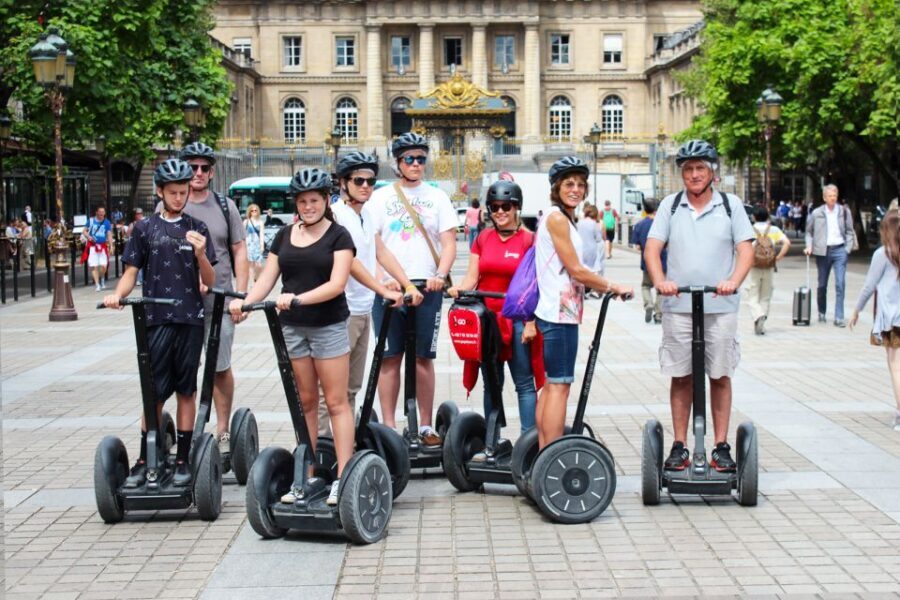
This private 3-hour ride strings together the key sights in central Paris with plenty of photo stops and an easy pace, so you get real orientation plus stories that make the streets click. I like the undivided attention of a private guide (people like Eli, Boris, Sebastian, and Ziggy have been praised for tailoring the route and keeping the ride safe and smooth). One possible drawback: you’ll spend most of the time outdoors doing quick stops, so if you want long museum time, this isn’t the format.
You also get practical help for the weather. Raincoats, gloves, and warm layers are provided when conditions call for it, which matters because Paris can change its mind fast. I also like the mix of classics here—from Napoleon’s world at Les Invalides to major bridges and grand 1900-era architecture—without the stress of hopping between too many transit connections. The main consideration is Segway comfort: you should be steady on your feet and ready to follow safety instructions.
In This Review
- Key Things I’d Pay Attention To
- A Segway Is a Smart Way to See Paris in 3 Hours
- Starting at Les Invalides: Napoleon’s Backdrop
- Pont Alexandre III: Eiffel Tower Views Without the Wait
- Grand Palais and Petit Palais: 1900-Era Grandeur on Wheels
- Place de la Concorde: Paris’ Big Square, Big Stories
- Louvre Exterior and Musée d’Orsay: Two Big Cultural Stops (Without Ticket Pressure)
- Champs-Élysées and Arc de Triomphe: The Grand Boulevard Finish Line
- Eiffel Tower Time: A Classic View With Symbolic Context
- What Your Private Guide Adds (And Why It Feels Personal)
- Segway Comfort, Safety Gear, and the Real Rules
- Price and Value: Is $138.78 a Smart Spend?
- How to Time This Tour in Your Trip
- Should You Book a Private Paris Segway Tour Like This?
- FAQ
- How long is the Segway tour?
- Is this a private tour?
- What languages are offered?
- Where does the tour start?
- Is museum admission included?
- Is the Eiffel Tower admission included?
- What’s included in the price?
- What departures are available?
- What’s the cancellation rule?
Key Things I’d Pay Attention To
- Private guide, not a crowd: you can ask questions and adjust what you focus on.
- Photo-friendly route: short pauses at major spots like Pont Alexandre III and Place de la Concorde.
- Perfect for day one orientation: it helps you understand where everything sits before you go deeper later.
- Covers both riverside views and grand boulevards: Eiffel Tower area plus monuments along the Champs-Élysées corridor.
- Weather gear included: raincoats and warm items help the ride stay pleasant.
A Segway Is a Smart Way to See Paris in 3 Hours
In a city like Paris, time disappears the second you start lining up for tickets, finding entrances, or crisscrossing neighborhoods. A Segway tour flips that around. You keep moving, stop often for photos, and get a guided path through the parts of town where most first-timers feel a bit lost.
I also like how the 3-hour length matches the reality of a first day. You’re not committing to an all-day schedule, but you’re getting enough stops that your mental map starts forming. And if you’re visiting during periods when city streets get complicated (big events, closures, the usual chaos), a Segway can keep your route practical and efficient while still giving you great views.
Starting at Les Invalides: Napoleon’s Backdrop
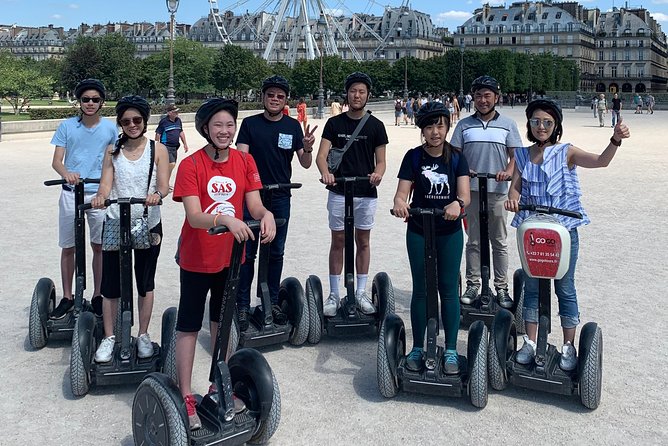
Your tour begins at 101 Av. de la Bourdonnais in the 7th arrondissement, then heads toward Musée de l’Armee des Invalides, also known as Les Invalides. This is the Military Museum complex and the resting place tied to Napoleon’s story.
Stop time is brief (about 10 minutes), but that’s long enough to do two useful things: get photos with the right backdrop, and understand why the site matters. The Hôtel des Invalides was commissioned in 1670 by Louis XIV to house and care for wounded soldiers, which gives you a strong historical anchor before you glide into the more glamorous central monuments.
Practical note: this is a good spot to orient yourself toward the river area and the grand sights ahead. If you tend to remember cities by “corridors” and “spines,” this first stop sets the pattern.
Pont Alexandre III: Eiffel Tower Views Without the Wait
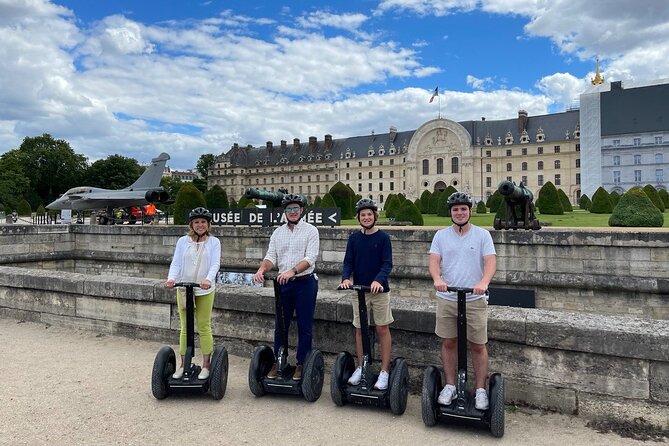
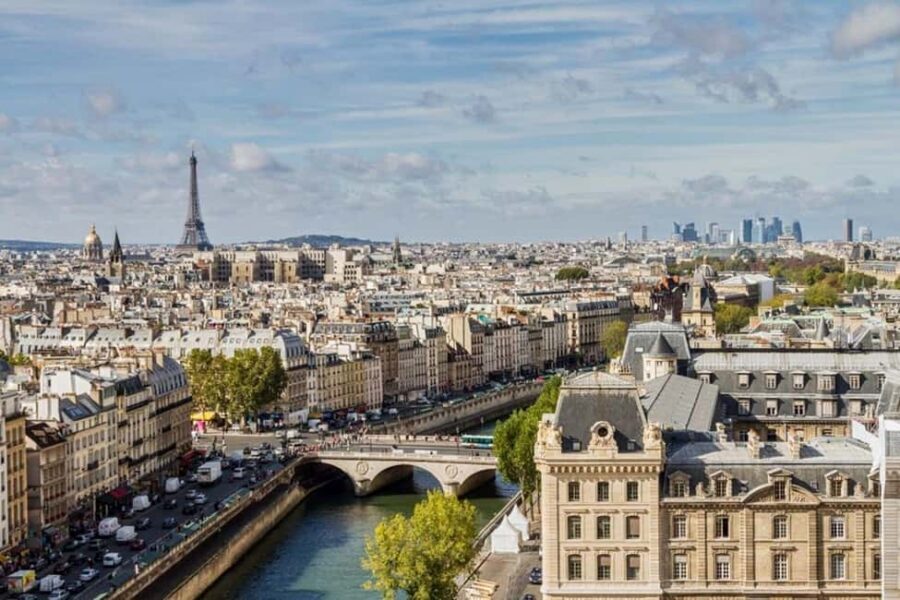
Next up is Pont Alexandre III, one of the most photogenic bridges in central Paris. You’ll get an outside view of the Eiffel Tower from here and a quick explanation of what you’re seeing.
This stop works because it saves you from doing an Eiffel Tower line-and-linger day right away. You get the iconic visual connection—Eiffel Tower in the background—without having to spend your time inside. For many people, that’s the right tradeoff for a 3-hour tour: fast, high payoff, and you can decide later how much Eiffel time you want.
Also, bridges in Paris teach you scale. Seeing the Eiffel Tower framed by the bridge helps you understand distances and where future walks will feel easy versus long.
Grand Palais and Petit Palais: 1900-Era Grandeur on Wheels
Then you roll past two 1900 showpiece buildings: Grand Palais and Petit Palais.
- At Grand Palais, the key idea is that it was built for the Universal Exhibition in 1900. You get the quick history so it doesn’t just look like an impressive façade.
- Petit Palais also traces back to the same 1900 moment, later becoming a museum in 1902.
Why I like this pair on a Segway tour: both buildings are “big statement Paris.” They’re the kind of architecture you can recognize even if you don’t know their names yet. A short stop here makes future visits make sense, since you’ll know why they look the way they do.
Stop time is around 10 minutes for each, so manage your expectations. This isn’t a slow architecture tour where you read every detail. It’s more like a guided “spotter pass” that teaches you what to notice.
Place de la Concorde: Paris’ Big Square, Big Stories
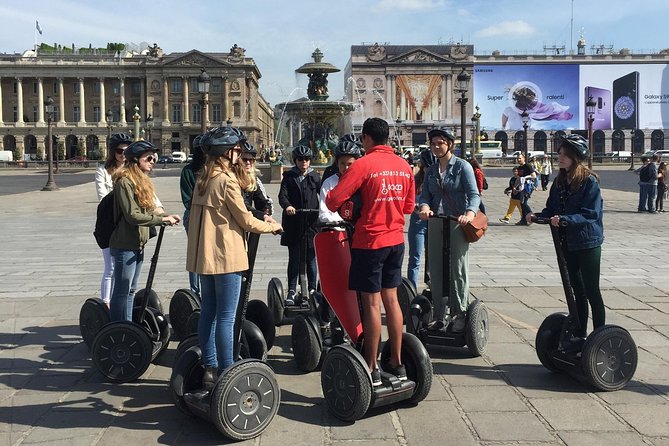
After the 1900 grandeur, you hit Place de la Concorde, located between the Champs-Élysées and the Tuileries Gardens. This is one of Paris’ most evocative public spaces, and it has a heavy, dramatic historical vibe that’s easy to miss if you just walk through.
The stop is brief (about 10 minutes), but it’s enough to grab a classic photo with the right sightlines and get context for why the square feels so important. If you’ve seen photos of Concorde in movies or in old prints, this is where your brain starts matching images to real space.
For me, squares like this are the payoff of a short, private format. You don’t have to choose between “monuments” and “places.” You get both, quickly, with a guide explaining what makes each one matter.
Louvre Exterior and Musée d’Orsay: Two Big Cultural Stops (Without Ticket Pressure)
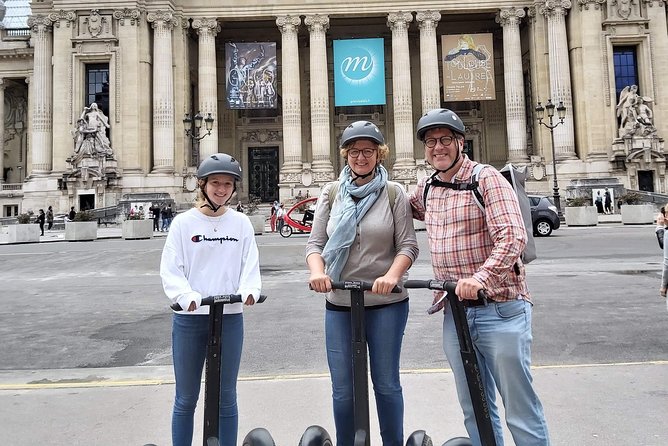
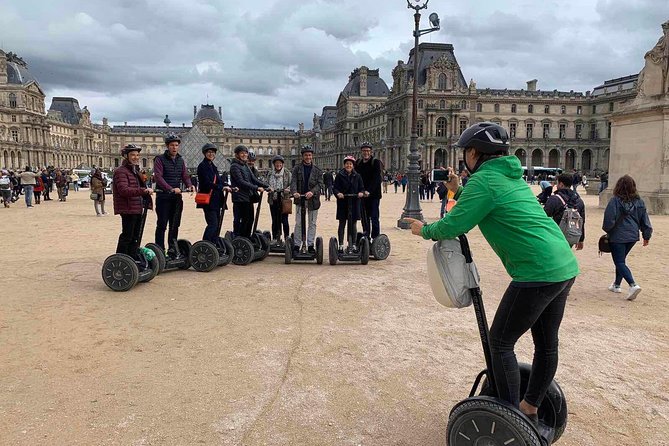
From Concorde, you get a stop at the Louvre Museum area. The quick context here is that the Louvre started as a fortress in 1190 and was reconstructed into a royal palace later on. Over centuries, it kept being built and rebuilt, which is a helpful way to look at it if you feel overwhelmed when you finally go inside.
Just a heads-up: admission isn’t included for the Louvre on this Segway itinerary. That’s actually a benefit. It lets you keep your 3 hours focused on orientation and storytelling, instead of spending it buying entry and negotiating museum crowds.
Next comes Musée d’Orsay, which has a different kind of history. It was originally built as a train station for the 1900 World’s Fair, designed by Victor Laloux with a modern feel for its time. You’re here for photos and explanation (about 10 minutes), not a full interior visit, but the station story helps you see the building as more than a museum block.
This Louvre-and-Orsay pairing is smart. You learn that Paris’ “culture buildings” often started as something else entirely—fortresses and stations—so your mental map of the city stays flexible.
Champs-Élysées and Arc de Triomphe: The Grand Boulevard Finish Line
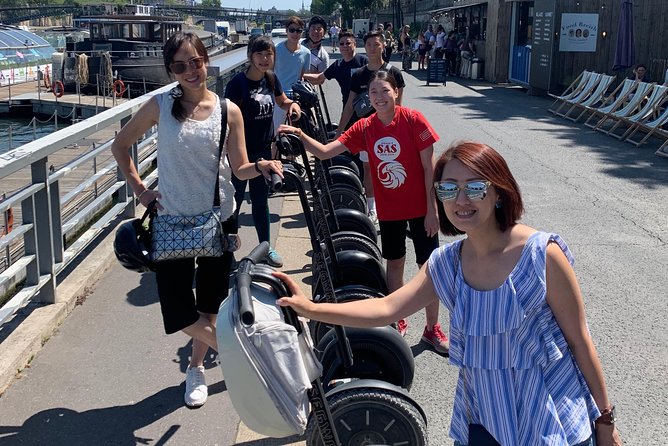
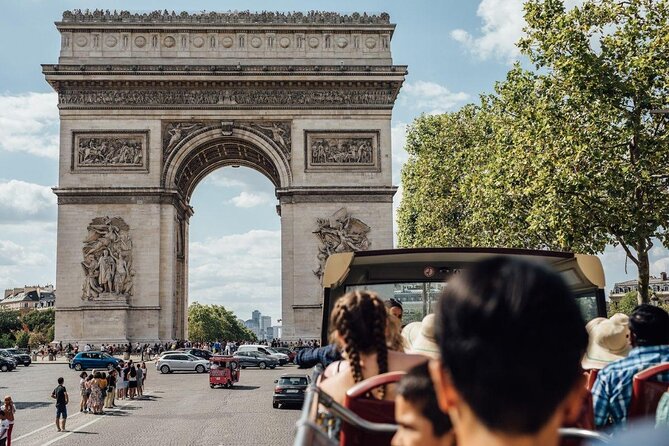
Then you glide onto Champs-Élysées, the famous avenue tied to major rulers and turning points in French history. The tour frames it from its Louis XIV-era origin and Napoleon-era additions, including the idea behind the Arc de Triomphe when his armies advanced across Europe.
After that, you reach Arc de Triomphe. The monument’s purpose is explained as a memorial to French army victories. Construction milestones are part of the story too: first stone laid in 1806, finished roughly 30 years later.
Why these stops work on a Segway: you get the “big boulevard” feeling without needing to pace a long walk between sights. In about 20 minutes total across these two key moments, you get the visual peak of the central Paris axis.
One caution: these areas are busy. The guide’s job is to keep your group safe and to choose good moment-to-moment timing for photos.
Eiffel Tower Time: A Classic View With Symbolic Context
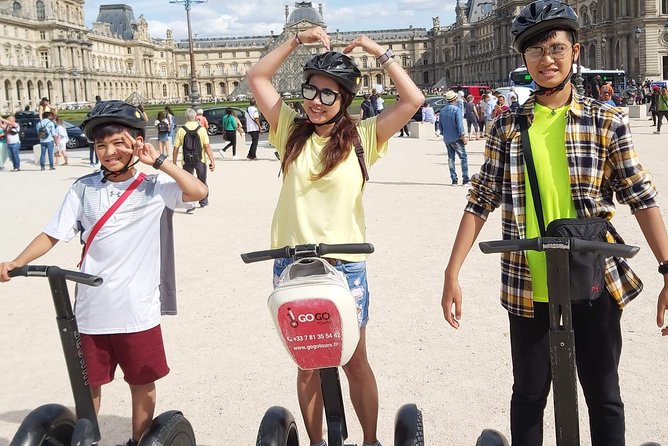
You finish with time around the Eiffel Tower / Invalides side. The Eiffel Tower stop is marked as free for admission, and the tour gives you the story behind the symbol—how Gustave Eiffel’s tower (completed for 1889) was originally meant as temporary in the Paris landscape and not instantly loved by Parisians.
This matters because most people think of the Eiffel Tower as timeless. The explanation gives it a personality: it was a bold project at the time, and acceptance came later. That little shift makes your photos feel less like postcards and more like snapshots of a turning point.
Also, finishing near major landmarks like the Invalides area helps you reconnect the route to your earlier start. Your brain gets a clean loop: you know where you began, where you turned, and where you ended.
What Your Private Guide Adds (And Why It Feels Personal)
This is the kind of tour where the guide can change your experience more than the vehicle does. Since it’s private, you don’t have to “fit in” with a group’s pace. The guide can check in and steer the stops based on what you care about.
In past tours, guides like Boris have been noted for staying flexible—asking what you want to see and keeping the conversation going about Parisian life. Eli has also been praised for customizing a private tour to the couple’s interests. Ziggy was specifically highlighted for helping people see a lot quickly and for adjusting the route based on what guests had already seen.
What that means for you: if you’re the type who likes photos but also likes meaning, you’ll get both. If you prefer pure sights and don’t want much talk, you can still ask for the highlights and keep it light.
Segway Comfort, Safety Gear, and the Real Rules
This tour includes Segway use and helmets. It also includes raincoats, gloves, and warm clothes if weather shifts. That’s not just “nice to have.” Paris weather can turn a pleasant morning into a shiver-fast walk-and-rush day, so prepared clothing keeps your energy for sightseeing.
There are also clear participation limits: it’s not allowed for drunk people or people under drugs. Most travelers can participate, and it’s near public transportation, which helps you get there smoothly.
What I’d advise you to do before you go:
- Wear shoes with solid grip.
- Plan for short stops on foot when you dismount for photos.
- Listen carefully during the first moments of riding, since you’ll want confidence before the route becomes fast-moving.
Price and Value: Is $138.78 a Smart Spend?
At $138.78 per person for about 3 hours, this is not a budget activity. But it doesn’t try to be. You’re paying for three main things: a private guide, Segway transportation, and a route that concentrates many top sights into one smooth session.
Here’s the value math that usually matters in Paris:
- If you’re spending the first day trying to cover too much on foot, you’ll burn time and energy.
- If you’re stuck in transit lines or ticket lines, you’ll trade money for frustration.
- If you do a Segway route with frequent photo stops and local context, you buy back energy and get a better sense of direction.
Also, this tour tends to book ahead. The average booking timing is about 56 days in advance, which is a clue that prime slots go quickly. If your dates are firm, don’t wait until the last week.
How to Time This Tour in Your Trip
This is ideal early in your visit—when you want to map Paris. One of the strongest reasons people like this style of tour is that it helps you understand where you’ll want to walk later.
If you have a packed itinerary, do this near the start. Then use your remaining days for longer museum time, riverside strolls, and neighborhood wandering. You’ll feel less like you’re “checking boxes” and more like you’re exploring with purpose.
For families and mixed-age groups, private Segway time can work well because the guide can watch pacing and help keep things fun. If you’re older or nervous about balancing, treat that as a decision point and be honest with yourself before booking.
Should You Book a Private Paris Segway Tour Like This?
I think you should book it if you want:
- a fast, high-impact introduction to central Paris,
- a private guide who can tailor attention,
- lots of landmark photos in one session,
- and a low-stress way to cover distance without feeling stuck on a bus or in lines.
I’d skip it if:
- you’re hoping for long museum visits inside the Louvre or other major institutions,
- you dislike outdoor activities,
- or you know you won’t feel comfortable on a Segway.
If you land in the first group, this tour is a solid way to get your bearings fast and still leave with stories you’ll remember later.
FAQ
How long is the Segway tour?
It’s about 3 hours.
Is this a private tour?
Yes. Only your group participates.
What languages are offered?
The tour is offered in English.
Where does the tour start?
The meeting point is 101 Av. de la Bourdonnais, 75007 Paris, France.
Is museum admission included?
No. Admission tickets are not included for stops like Les Invalides, the Louvre, and Musée d’Orsay.
Is the Eiffel Tower admission included?
The Eiffel Tower/Invalides stop is marked as admission free.
What’s included in the price?
Included: use of the Segway, a helmet, a private guide, and raincoats plus gloves/warm clothes if needed.
What departures are available?
There are multiple morning and afternoon departure times.
What’s the cancellation rule?
You can cancel for a full refund up to 24 hours before the experience starts.