REVIEW · VERSAILLES
Versailles: Path of the Heroes on original electrics 2 wheels
Book on Viator →Operated by TRIP IN TROTT · Bookable on Viator
War, legends, and e-scooters in Versailles. This is the Path of the Heroes route, a guided loop that links World War I memorials and famous names to real places around Versailles, without making you trek on foot the whole time. You’ll get an English guide, a small-group ride, and the chance to see sites most people rush past—on purpose and at a human pace.
Two things I really like: first, you can cover a lot of ground (think more than 25 km) thanks to the original electric scooters/bikes. Second, JB ties each stop to who these people were and why Versailles mattered—so the route feels like a story, not a list.
One consideration: it’s still an outdoor ride for about 4 hours, and Versailles can be cold or wet. The good news is you’re not left hanging—there are gloves/windbreakers and warm-up snacks if the weather turns.
In This Review
- Key highlights
- Versailles on original electric wheels: the Path of the Heroes, made practical
- JB and the safety setup: scooters, helmets, gloves, and walkie-talkies
- Your 4-hour loop: the Heroes Route stop by stop
- Stop 1: Memorial de L’Escadrille La Fayette (WWI American volunteer pilots)
- Stop 2: Monuments Pershing – Lafayette (face-to-face on the heights)
- Stop 3: Place d’Armes (Versailles as a WWI staging ground)
- Stop 4: Waldorf Astoria Versailles – Trianon Palace (Clemenceau and treaty conditions)
- Stop 5: Versailles (near the town hall and war memorial areas)
- Stop 6: Haras de Jardy (refreshment break in an exceptional setting)
- What you’re actually learning about Pershing, Lafayette, and the treaty era
- Price and value: what you get for $177.52 per person
- Weather reality: how this ride holds up when it’s cold or rainy
- Who should book this tour (and who should skip it)
- Should you book the Versailles Path of the Heroes?
- FAQ
- FAQ
- How long is the Path of the Heroes tour in Versailles?
- Is the tour guided, and is it offered in English?
- What’s included in the price?
- Do I need to know how to ride a bike or scooter?
- What are the age and weight limits?
- Where do we meet, and where does the tour end?
Key highlights
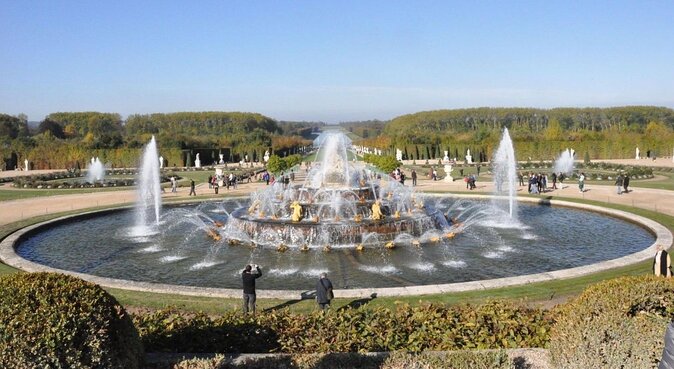
- E-scooter movement for big coverage around Versailles with minimal foot slog
- Lafayette Escadrille memorial focus, including the American volunteer pilots story
- WWI face-to-face memorials featuring Pershing and Lafayette on the heights
- Included ride essentials like helmets, gloves, walkie-talkies, snacks, and a camera
- Small group size (max 6) for easier guidance and flow
Versailles on original electric wheels: the Path of the Heroes, made practical
If you like Versailles but don’t want to spend your day inching through crowds at the palace, this is a smart alternative. The Path of the Heroes route moves you through Versailles’ war connections, from the American volunteer pilots to the men whose names still anchor the story. And you do it on two wheels, not on a slow, stop-and-go walking schedule.
The experience is designed for motion. You get a safety-first setup—helmet, gloves, and a short guide routine—then you roll. That matters because Versailles is spread out, and the best way to see several locations is to have some kind of wheels. Here, you’re not borrowing chaos from the street; you’re riding with a plan.
The tour is also paced for real viewing. You’re not just passing each stop. You’ll get time to look, plus context from the guide so you know what you’re seeing (and why it’s here).
You can also read our reviews of more tours and experiences in Versailles.



JB and the safety setup: scooters, helmets, gloves, and walkie-talkies
The guide is JB, and he runs this like someone who wants you comfortable, not just “on time.” In one cold, snow-and-rain scenario, JB was friendly and accommodating—and you could feel the planning. When weather gets nasty, it’s not enough to say bring a jacket. He actually provides windbreakers and gloves, plus warm-up food (hot chocolate).
Before you start, you’ll be outfitted with helmets and gloves, and you’ll also get walkie-talkies. That’s a small detail, but it helps the group stay together without the frantic stop-start that ruins momentum. With walkie-talkies, the ride feels coordinated, not scattered.
There’s also some hand-holding for people who are unsure about scooters. One review described feeling intimidated at first, then doing a test run after JB explained how to use it. The takeaway for you: if you can ride a bike and follow instructions, you’re set. If you’re anxious about balance, ask for that practice moment.
Your 4-hour loop: the Heroes Route stop by stop
This is about a half-day—around 4 hours—and it ends back at the meeting point. The schedule starts at 2:00 pm. The group stays small (max 6), so you’re not fighting for attention.
Below is what you’ll experience as the route unfolds. I’ll also point out the practical “what to watch for” parts, because these memorial locations are easier to understand when you know what the guide is steering you toward.
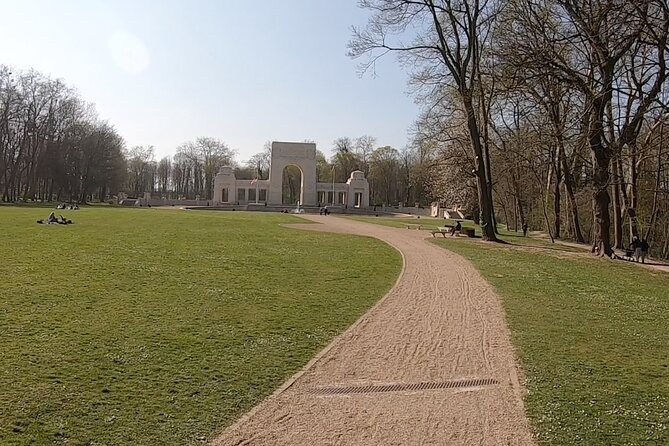
Stop 1: Memorial de L’Escadrille La Fayette (WWI American volunteer pilots)
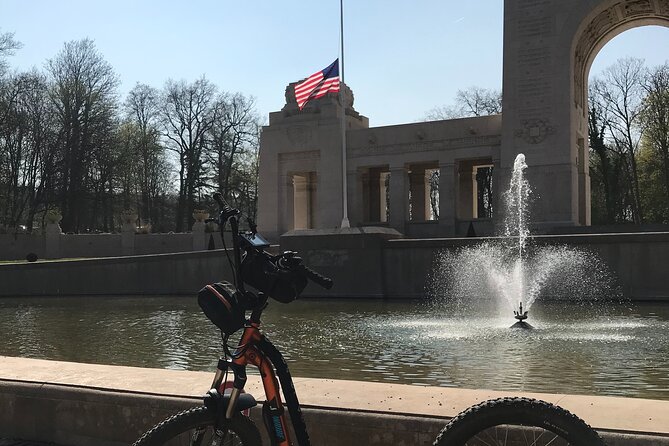
Your first major stop is the Memorial de L’Escadrille La Fayette. It honors American volunteer pilots who served during the First World War under French uniform—before the United States officially entered the conflict.
This is the kind of site that makes the whole route click. You start with a clear human story: these were volunteers, and they paid the ultimate price. You’ll also hear the Pershing connection—there’s a quote about glory not being tarnished by time, attributed to General John Pershing.
Practical side: this stop includes admission (ticket included). You’ll have about 1 hour here, which is enough time to read, look, and still feel like you’re moving forward rather than stuck in one place.
Small tip: if you’re photographing, give yourself a few minutes for wide shots first, then come back for details. Memorials like this look good at different distances.
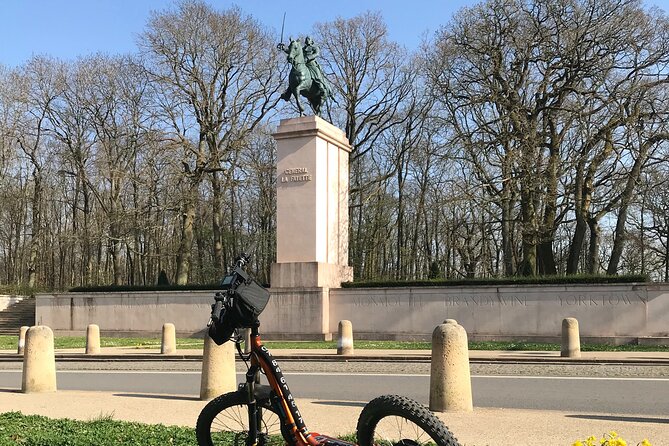
Stop 2: Monuments Pershing – Lafayette (face-to-face on the heights)
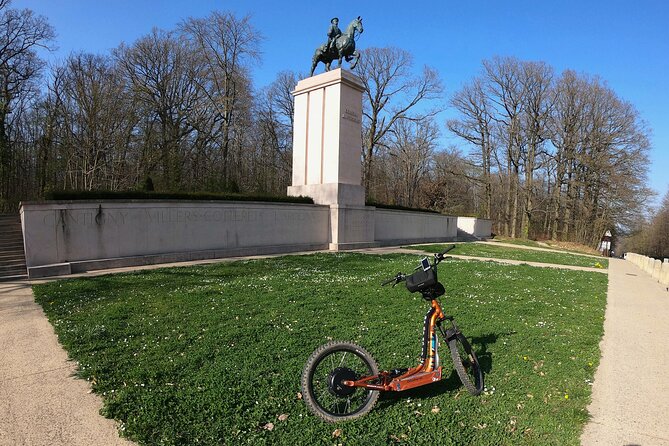
Next you’ll head to the heights of Versailles, where you’ll find a memorial set at the end of a forest path. The key image is two famous men facing each other: General Pershing and General Lafayette.
This is brief on the clock—about 5 minutes—but it’s powerful. Even if you don’t read every plaque, you’ll feel the symbolism right away. The placement matters: you’re not just stopping by some random statue. This is staged to make the two names feel connected.
Admission here is free, and the “fast stop” format actually works. It gives your brain a clean beat to absorb one idea before you move on.





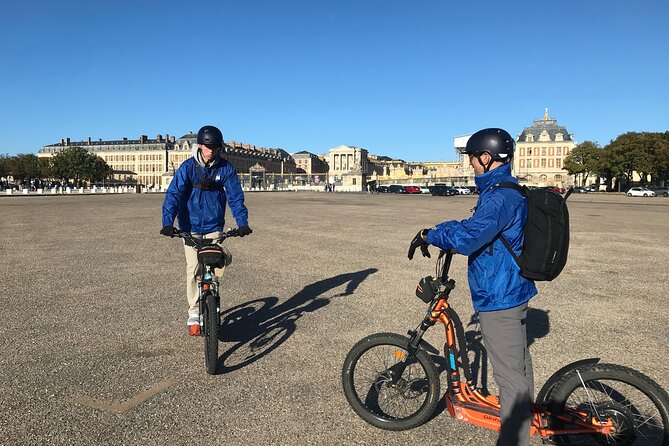
Stop 3: Place d’Armes (Versailles as a WWI staging ground)
Before you look at the Chateau area, you’ll make a quick mental shift. Place d’Armes is tied to the war effort: after France entered the war against Germany, Versailles became a collection point for thousands of soldiers, horses, and equipment before they went to the front.
The guide approach here is important. Without context, you’d see an open space and think it’s just part of the palace grounds. With context, you understand it as a logistics hub—turning Versailles from a royal stage into a wartime departure point.
You get about 15 minutes, and admission is free.
Stop 4: Waldorf Astoria Versailles – Trianon Palace (Clemenceau and treaty conditions)
You’ll pause at the Waldorf Astoria Versailles – Trianon Palace area, right at the entrance of the park. It’s a luxury hotel today, but it’s linked to one of the key political moments of the era.
One of the details you’ll hear: Georges Clemenceau dictated conditions connected to the Treaty of Versailles, which was signed a few days later at the Château de Versailles.
This is a great stop for helping you connect past and present. The place looks like a modern landmark, but the story under it is big and very European: diplomacy shaped by the end of the war.
You’ll spend about 5 minutes and there’s no admission charge for this segment.
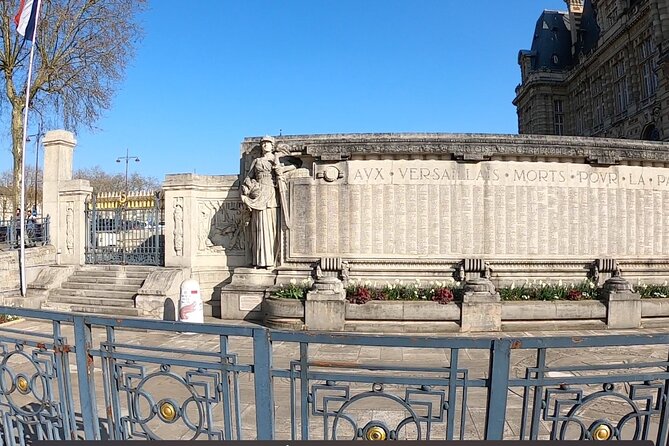
Stop 5: Versailles (near the town hall and war memorial areas)
Next, you’ll explore around the town side near the town hall area. This is where the route expands beyond one single monument and starts stitching together different locations tied to the Treaty of Versailles period.
You’ll see a war memorial and also other spots connected to what happened during the signing period—including the hotel that housed Germans before the treaty was finalized.
This segment is about 30 minutes with free admission. It’s longer than some stops because it helps you understand the “Versailles beyond the palace” angle. If you only know Versailles for Louis XIV and the big spectacle, this stop widens your lens.
Stop 6: Haras de Jardy (refreshment break in an exceptional setting)
After the memorial-focused first half, you get a break at Haras de Jardy. This is more than a bathroom/coffee moment. It’s a change of pace—still outdoors, but calmer, so your ride and your thinking reset.
You’ll have about 15 minutes here, and the segment includes admission for the break. The tour also includes snacks, and on colder days there’s hot chocolate to help you warm up.
A small practical point: use this break to check your photos and recharge your phone. You’ll likely want pictures from multiple stops, and you don’t want your battery to die mid-route.
What you’re actually learning about Pershing, Lafayette, and the treaty era
The Path of the Heroes route isn’t just scenic. It’s built around a small set of names and a specific historical thread:
- The Lafayette Escadrille starts the story with American volunteers in French uniforms before the U.S. entered the war.
- Pershing and Lafayette show how these friendships and alliances were remembered—physically, in stone, on the heights.
- Versailles as a wartime hub shows up in the Place d’Armes staging story.
- Diplomacy and the treaty come in through the Clemenceau connection and the treaty context around the château period.
What I like about how the route is put together is that it helps you understand why people still build memorials in Versailles. It’s not only about royalty or architecture. Versailles became a key place where wartime decisions, movement, and remembrance intersect.
And JB’s style seems built around clarity. One review highlighted that JB explained the history behind each stop while keeping things fun. That’s exactly what you want here: enough storytelling to make the memorials meaningful, without making it feel like a lecture.
Price and value: what you get for $177.52 per person
At $177.52 per person for about 4 hours, the value comes from bundling several things that add up fast if you handle them on your own:
You’re not just buying transportation. You’re getting:
- a guided route with context
- e-scooters/helmets/gloves (equipment provided)
- walkie-talkies (organized group control)
- snacks (and hot chocolate on cold days, as seen in the field)
- a camera with a memory card given at the end
- also a Kway provided
That last bit matters when you’re outdoors. Versailles can throw wind and rain at you at any time, and having a Kway can save your mood and your electronics.
Plus, the small group (max 6) is a value multiplier. It usually means less waiting and more attention from the guide, especially if you need help with scooter technique.
If your plan is to see multiple WWI-related locations around Versailles without turning the day into a long walking marathon, this price starts to look reasonable.
Weather reality: how this ride holds up when it’s cold or rainy
This tour is outdoors, so weather is part of the package whether you like it or not. I wouldn’t pretend it’s a fully indoor experience.
But the practical advantage is that the operator clearly plans for bad weather. One review described snow and rain the whole time, and JB still made the experience work by providing windbreakers and gloves. There was also hot chocolate as a warm-up after the first memorial visit.
So if you’re choosing between “maybe we’ll cancel” and “go anyway,” you’ll feel better here because you’re not walking in cold with nothing. Still, dress for it like you’ll actually be outside on a moving ride: layers, water-resistant outerwear, and gloves if you normally run cold.
Who should book this tour (and who should skip it)
This works best if you:
- can ride a bike and are comfortable learning scooter basics
- want a guided Versailles experience that focuses on WWI remembrance
- like moving between stops without wasting half your day in transit
- prefer a smaller group format (max 6)
There are also clear limits:
- it’s for ages 14+ (children under 14 aren’t allowed)
- you must meet the maximum weight of 130 Kg / 285 lbs
- you should be comfortable outdoors for about 4 hours
If you dislike any kind of scooter riding, or if balance feels like a constant worry, you may find this stressful even with instruction. But if you can follow directions and you’re curious about the story behind the memorials, you’re in the right place.
Should you book the Versailles Path of the Heroes?

I’d book it if you want Versailles with a purpose. Not just pretty buildings and photo stops—actual remembrance tied to names you’ll recognize from WWI and treaty-era history. The electric wheels help you see multiple sites in one outing without turning it into a hike.
I wouldn’t book it as your only Versailles plan if you’re mainly palace-focused. This route is about the Heroes trail and surrounding memorial sites. If you dream of spending most of your day inside the château complex, you’ll still want to pair this with something palace-related.
Here’s the decision rule I’d use: if you can handle cold/wet conditions and you like getting around under your own control (with training), this tour is a strong use of your half-day.
FAQ
FAQ
How long is the Path of the Heroes tour in Versailles?
The tour is about 4 hours (approx.).
Is the tour guided, and is it offered in English?
Yes. It includes an accompanying guide and is offered in English.
What’s included in the price?
The tour includes mobile ticket access, an admission ticket for the Memorial de L’Escadrille La Fayette and for Haras de Jardy, e-scooters (with helmets and gloves), snacks, a camera with memory card given at the end, Kway, and walkie-talkies.
Do I need to know how to ride a bike or scooter?
Yes. The experience notes that you should know how to ride a bike. It also provides the equipment and guidance during the tour.
What are the age and weight limits?
It’s for ages 14 and up (forbidden under 14). There’s also a maximum weight of 130 Kg / 285 lbs per participant.
Where do we meet, and where does the tour end?
The tour starts at R43G+86 Versailles (plus-code format). It ends back at the same meeting point.