REVIEW · VERSAILLES
Accrobranches course in the middle of the forest in Saint-Germain-en-Laye
Book on Viator →Operated by AccroCamp · Bookable on Viator
A forest course that gets your pulse moving fast. Accrobranches at AccroCamp Saint-Germain-en-Laye places you in the trees for about 2 hours, starting with safety basics and then turning into a choose-your-own-adventure climbing circuit.
What I like most is the continuous lifeline system philosophy: you’re clipped in, and that changes the whole tone from nervous to focused. I also love that the session is built for variety, from rope bridges and zip lines to tarzan liana and the moment people really remember—the jump in the void.
One thing to plan for: this is outdoor adrenaline, so if the weather isn’t good, your session may be moved or refunded.
In This Review
- Key things that make this Accrobranches course worth it
- Accrobranches in the forest near Versailles: what the setting really gives you
- The 2-hour timeline: from first gear to last zip line
- 1) Arrive and get your bearings at AccroCamp
- 2) Fundamentals and safety briefing
- 3) Equipment and harness setup
- 4) Start the courses
- Safety that feels built-in, not bolted on
- What to consider if you’re nervous
- The obstacle menu: what each challenge feels like in plain terms
- Rope bridges and climbing walls
- Stirrups and tarzan liana
- Zip lines
- Flea jumps and the jump in the void
- The best part after you climb: the bar in the trees (15 meters up)
- Small group dynamics: why max 10 travelers matters
- Who this experience fits best (and who should think twice)
- Practical logistics that actually help your day
- Timing: plan for a full 2-hour block
- Weather matters
- Getting there: public transportation is nearby
- Tickets: go mobile
- Value check: is $42.06 worth it for 2 hours?
- Should you book Accrobranches at AccroCamp Saint-Germain-en-Laye?
- FAQ
- How long does the Accrobranches course take?
- What do I need to bring?
- Is the experience offered in English?
- What’s the meeting point for AccroCamp Saint-Germain-en-Laye?
- How big are the groups?
- What safety system is used on the courses?
- What happens if the weather is bad?
Key things that make this Accrobranches course worth it
- Safety training first: basics, equipment, and safety rules before you start the courses
- Continuous lifeline system: designed to keep you connected across the obstacles
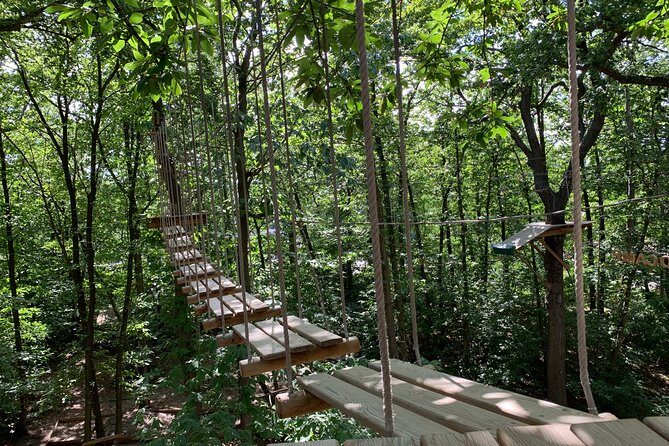
- A mix of challenges: rope bridges, climbing walls, zip lines, stirrups, and more
- High, satisfying reward: the bar in the trees at about 15 meters
- Small group feel: maximum of 10 travelers, so you’re not lost in a crowd
- Family-friendly energy: kids can join and instructors guide you through the fun
Accrobranches in the forest near Versailles: what the setting really gives you
This isn’t a manicured theme-park climb where everything feels scripted. You’re in the Parc Forestier de la Charmeraie area in Saint-Germain-en-Laye, which matters more than you’d think. The forest background makes the whole experience feel less like an activity and more like play you can’t quite control.
You’re also close enough to Versailles that you can pair this with other sightseeing days, but you don’t need to. The course itself gives you that day’s story: learning knots and movements, crossing rope elements, and ending with a drink high in the trees.
And yes, the pitch is adrenaline. But the better way to think about it is skill-building. The session starts with fundamentals and safety instructions, then guides you into progressively more intense obstacles.
You can also read our reviews of more tours and experiences in Versailles.



The 2-hour timeline: from first gear to last zip line
You should expect the experience to run about 2 hours from start to finish. It’s paced so you don’t waste time standing around, but you also don’t get thrown into the deep end.
Here’s the flow you can plan around:
1) Arrive and get your bearings at AccroCamp
Your meeting point is AccroCamp Saint-Germain-en-Laye | Accrobranche 7848, in the Parc Forestier de la Charmeraie (Rue Albert Priolet, 78100 Saint-Germain-en-Laye). In a big park, finding the entrance can be the only annoying part of your day.
Practical tip: give yourself extra time and be ready to ask staff for directions once you’re inside the park gates. One family experience highlighted that the entrance can be tricky to locate, but once they found it, the rest of the day ran smoothly.
2) Fundamentals and safety briefing
Before you climb, you’ll spend time covering the fundamentals and safety instructions. This is the part that makes the later obstacles feel doable instead of chaotic. You’ll also learn how to move on course elements so you don’t fight your gear.
3) Equipment and harness setup
You’re provided a harness as part of the included gear. Expect staff to help you get fitted correctly and show you how to use the system safely. Even if you’re comfortable with climbing, the goal here is consistency—everyone doing the same correct steps before anyone goes onto the platforms.






4) Start the courses
Then the main event: you begin your climbing routes. The course set includes things like:
- Flea jumps
- Stirrups
- Rope bridges
- Climbing walls
- Zip lines
- Tarzan liana
- Jumping in the void
Not every obstacle will feel identical, but that’s the point. You’ll get a mix of balance moves, hand-over-hand moments, and fast rides through the zip line sections.
Safety that feels built-in, not bolted on
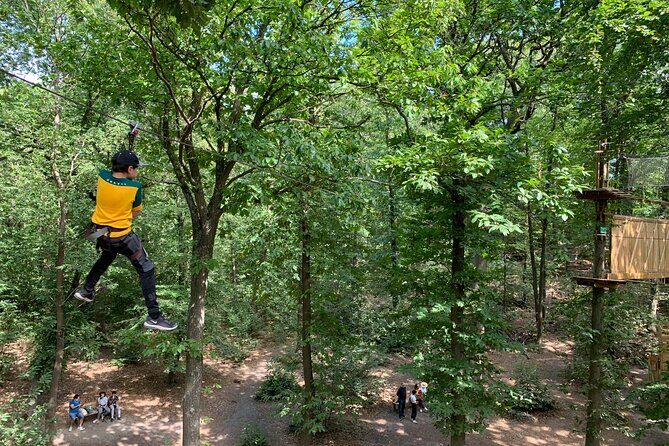
Tree climbing lives or dies on safety, and this course is explicit about its approach. Your routes are secured with a continuous lifeline system, which means the setup is designed so you remain connected while you move through the course.
That continuous structure changes the way your brain handles the height. Instead of constant fear-management, you can focus on the physical tasks: stepping, gripping, and timing your crossings.
Also, the instructors are there for the practical stuff. One family noted that the instructors were very helpful, and that guidance is a big deal if you’re bringing kids or if it’s your first time with this kind of equipment.
What to consider if you’re nervous
If you’re afraid of heights, this still might be okay—because you’ll have training and staff support—but you should be honest with yourself. The obstacles include a void jump, which is mentally intense even when safety systems are solid.
The best move is to treat the course like a learning ladder:
- Take the first elements calmly.
- Build confidence on rope bridges and platform sections.
- Then decide how far you want to push.
The obstacle menu: what each challenge feels like in plain terms
Accrobranches courses can blur together in brochures. Here’s the “what you’ll actually do” version, based on the specific elements listed for this course.
Rope bridges and climbing walls
These are your technique anchors. Rope bridges teach balance and rhythm; climbing walls push grip and body positioning. If you’ve ever climbed indoor routes, this will feel familiar. If not, don’t worry—this is why the session starts with training.
Stirrups and tarzan liana
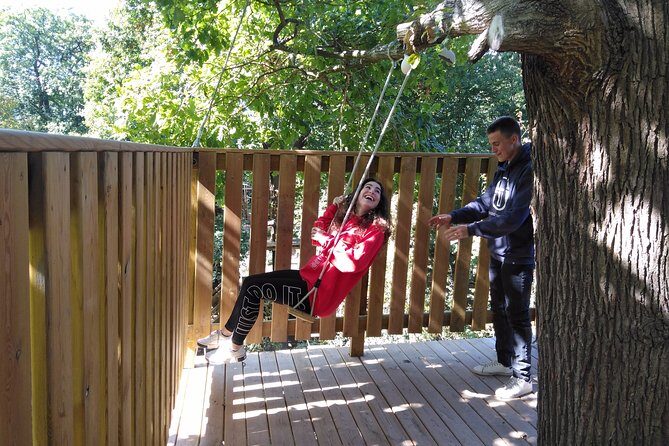
Stirrups add a steady foothold rhythm. Tarzan liana is more dynamic and can feel a bit like a swing/handhold combination, so expect quick movements rather than slow, careful climbing.
Zip lines
Zip lines are the relief valve. You’ll still be strapped in, but the pace is different—smoother, faster, and usually a good way to reset after slower obstacles.
Flea jumps and the jump in the void
This is the adrenaline category. Flea jumps are quick commitments—short, fast movements where you can’t overthink your step. The jumping in the void is the headline moment: you’ll feel it in your stomach even with safety systems doing their job.
My practical take: if you want one big memory from the day, aim for the void jump. If you’re not ready, you can still have an amazing course without chasing the scariest option first.
The best part after you climb: the bar in the trees (15 meters up)
After the effort, you get something that doesn’t happen often enough: a high-up place to cool down. The bar in the trees sits at about 15 meters, and it’s timed like a reward instead of an afterthought.
This is where the day clicks into place. You’ve been concentrating on movement and safety; now you can actually breathe, talk, and compare routes with whoever climbed near you.
And since you’re still in the forest setting, it feels like part of the experience rather than a separate restaurant stop.
Small group dynamics: why max 10 travelers matters
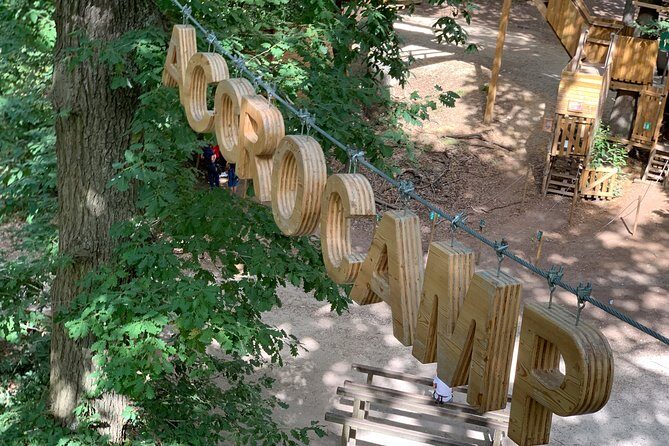
The group size is limited to 10 travelers. That’s not a huge number, and it changes how the staff can help.
When you’re in a small group:
- You spend less time waiting to get checked or adjusted.
- You’re more likely to get clear instructions when something feels unclear.
- The energy stays personal, not chaotic.
Also, you’ll be doing this in English, which is a huge comfort factor if you want to understand the safety explanations without guessing.
Who this experience fits best (and who should think twice)
This is a good match if you want:
- Adrenaline with structure (training, then obstacles)
- A choose-your-challenge vibe where you’re not just stuck watching others
- A forest day that breaks up a sightseeing itinerary near Versailles
It can also work nicely for families. One family example in the information you provided included kids aged 4, 5, 7, and 10 having an amazing time, with instructors guiding them and the kids being able to choose courses. That’s encouraging if you’re traveling with young adventurers, as long as the site’s own participation requirements for age/height/guidelines are met.
Who should think twice:
- Anyone who strongly dislikes heights or reflexively panics at the edge
- People who can’t handle basic outdoor physical movement for ramps, ladders, or balancing on platforms
Even if you’re not an extreme athlete, the point here isn’t fitness. It’s coordination, attention, and following the course system.
Practical logistics that actually help your day
Here are the details that make the biggest difference when you show up.
Timing: plan for a full 2-hour block
The duration is about 2 hours. Treat it like a real outing, not a quick detour. Wear comfortable clothing you can move in and plan to be outdoors the whole time.
Weather matters
This activity requires good weather. If it’s canceled due to poor conditions, you’ll be offered another date or a full refund.
So build this into a day where you’re okay with a reschedule. If you’re only in town for one day with fixed plans, keep that weather risk in mind.
Getting there: public transportation is nearby
It’s noted as near public transportation, which helps if you’d rather not drive and park in the region.
Tickets: go mobile
You’ll use a mobile ticket, which keeps everything simple and reduces the chances of missing paper paperwork.
Value check: is $42.06 worth it for 2 hours?
At $42.06 per person for roughly two hours, the value comes from the mix of what you’re paying for:
- Professional safety instruction
- A provided harness
- A full course with multiple obstacle types (zip lines, rope bridges, walls, and more)
- The continuous lifeline system approach
- A special payoff moment: the bar in the trees at 15 meters
In other words, this isn’t just paying for a zip line. You’re paying for a managed climbing environment where you get variety, guidance, and a structured progression.
If you love active travel and want a memorable “I did something real” moment in the Versailles area, it’s solid value. If you’re looking for quiet sightseeing, it’ll feel too active for your taste.
Should you book Accrobranches at AccroCamp Saint-Germain-en-Laye?
Yes, if you want a forest adrenaline experience with clear safety systems, small-group guidance, and a day that ends with a drink up in the trees. It’s especially appealing if you like the idea of learning the basics, then immediately testing them across obstacles like rope bridges and zip lines, with the option to go big on the void jump.
Skip it or rethink your expectations if heights make you freeze, or if weather risk would ruin your only available afternoon. Also, arrive with extra buffer time to find the entrance inside the park area.
FAQ
How long does the Accrobranches course take?
It runs for about 2 hours.
What do I need to bring?
The harness is included. For the rest, wear comfortable clothing for an outdoor climbing course. You’ll also want to be ready for good weather.
Is the experience offered in English?
Yes, it’s offered in English.
What’s the meeting point for AccroCamp Saint-Germain-en-Laye?
The start is AccroCamp Saint-Germain-en-Laye | Accrobranche 7848, Parc Forestier de la Charmeraie, Rue Albert Priolet, 78100 Saint-Germain-en-Laye, France. The activity ends back at the meeting point.
How big are the groups?
This activity has a maximum of 10 travelers.
What safety system is used on the courses?
The courses are secured with a continuous lifeline system.
What happens if the weather is bad?
The experience requires good weather. If it’s canceled due to poor weather, you’ll be offered a different date or a full refund.