REVIEW · PARIS
Discover Secret Passages in Paris
Book on GetYourGuide →Operated by Meeting the French · Bookable on GetYourGuide
That first glimpse of an arcade can feel like a secret.
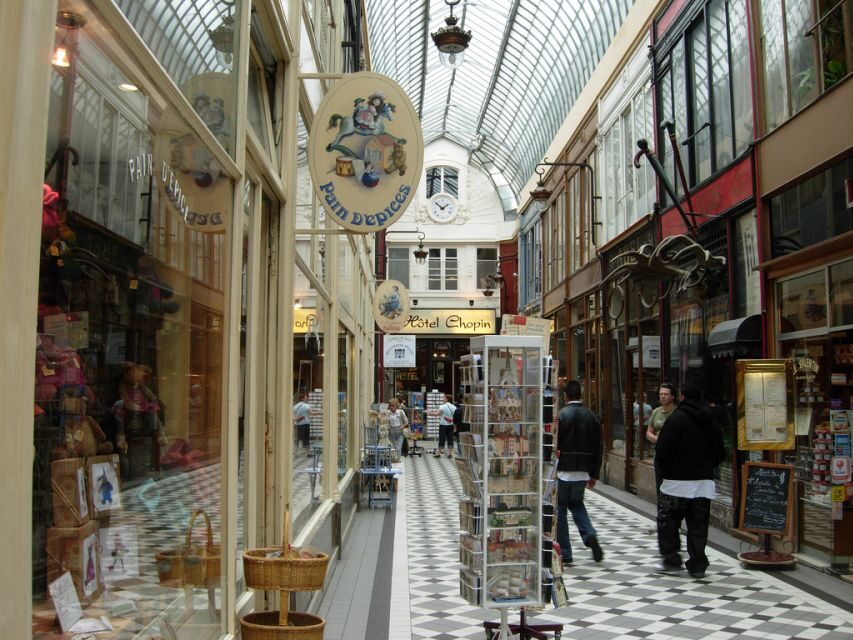
This 3-hour walk takes you behind the great boulevards of Paris to find the covered passages called les passages couverts, especially around the Louvre on the Right Bank. I love that it’s not just wandering for the sake of it: you get a local guide who explains how these spaces formed part of old-school Paris shopping life. You’ll cover five of the passages that still survive from a time when there were roughly 130, with only about 20 left today after many were destroyed.
Two things I especially like are the focus on small-group pacing (limited to 8 people) and the break built into the route. At some point, your guide leads you into a charming historic wine bar tucked inside the passages for a glass of wine, with pastries available too. One drawback to consider: the term secret can set expectations too high. These are real, walkable covered passages and shopping arcades, not sci-fi underground tunnels, so if you’re hunting for truly hidden, non-shopping corridors, you may want to mentally reframe what you’re looking at.
In This Review
- Key things to know before you go
- Entering the world behind the boulevards
- Getting to the meeting point near the Louvre
- How many passages are there really, and why only some survived
- The route: five passages couverts in a focused 3 hours
- Midway break: a historic wine bar and pastry stop
- Optional add-on: the National Library’s oval study room
- Shopping and gallery time: how to make the most of it
- Price: what you’re paying for at $159 per person
- Who should book this passage hunt
- What makes the guides matter here
- Should you book the Secret Passages in Paris tour?
- FAQ
- Where is the meeting point for the tour?
- How long is the tour?
- How many passages does the tour cover?
- What’s included in the price?
- Is the wine bar inside the passages part of the experience?
- What languages are available?
- How big is the group?
- What are the cancellation terms?
- Can I reserve without paying right away?
Key things to know before you go
- Five passages near the Louvre: a tight route that keeps you moving without turning it into a marathon
- Micro-history from your local guide: how les passages couverts went from around 130 to about 20 remaining
- Chic village energy: stylish shops, art galleries, and cafes with a calmer feel than the surrounding boulevards
- Wine bar stop inside the arcades: a true tasting moment, not just a generic break
- Optional detour to the National Library’s oval study room: a neat add-on if it’s included for your group
- Small-group size (max 8): more listening, fewer interruptions, better photo opportunities
Entering the world behind the boulevards
Paris has a way of looking finished from far away. Up close, though, the city is full of in-between spaces. This tour leans hard into that idea by sending you into les passages couverts, the covered arcades tucked behind the main streets.
What makes this experience interesting is the contrast. You start in a classic tourist zone, then step into a cooler, quieter geometry—overhead coverings, shopfronts that feel tucked away, and side-by-side storefronts that make it look like you’re inside a small neighborhood rather than a corridor between destinations. And since many passages were destroyed over time, the surviving ones carry a sense of continuity. The tour emphasizes that while there used to be around 130 passages, only about 20 remain, and some have even been restored while keeping that unmistakable French feel.
I also like how practical this approach is. You’re not being asked to memorize street grids. The guide points out what matters as you go: what you’re seeing, why it exists, and how it fits into Paris as it changed.
You can also read our reviews of more tours and experiences in Paris.



Getting to the meeting point near the Louvre
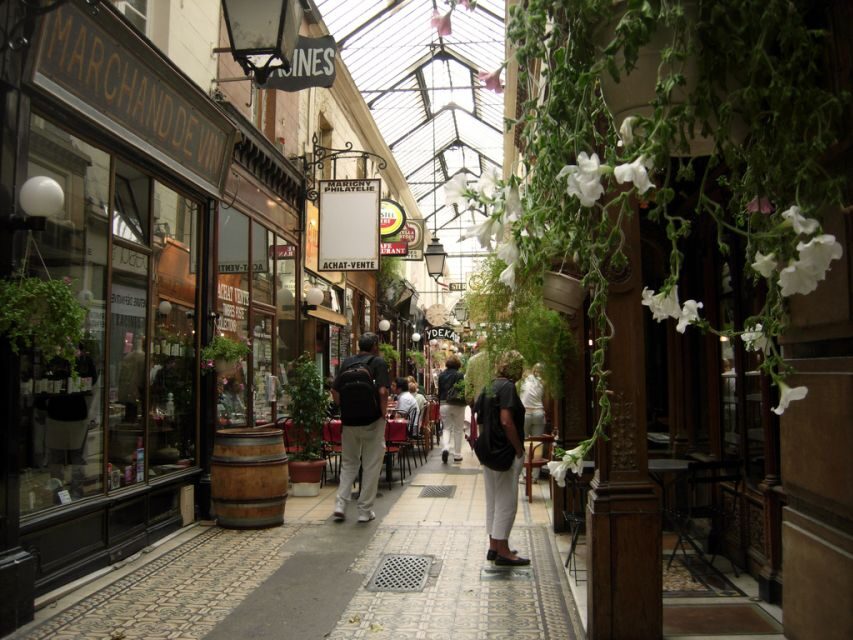
The meeting point is at the exit of the Louvre metro station, in front of 8 rue de l’Amiral de Coligny, 75001 Paris. That location choice is smart if you’re already planning to spend time around the Louvre area, because you won’t lose half your evening figuring out where to start.
From a comfort point of view, the route makes sense too. The passages you visit are near the Louvre on the Right Bank, so you stay in one pocket of central Paris. That matters when you only have 3 hours. You want your time to be spent inside the arcades, not in transit between neighborhoods.
Tip: bring a camera. You’ll pass storefronts, galleries, and passage details where a quick photo is actually worth it—not just a standard souvenir shot.
How many passages are there really, and why only some survived
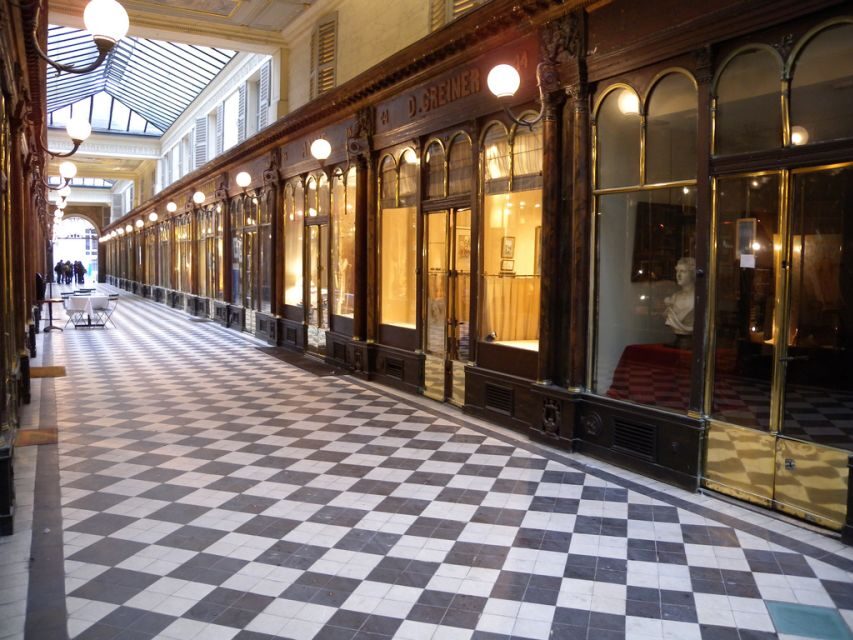
Before you get lost in shop windows, the guide gives the essential backstory. The big takeaway: les passages couverts weren’t always rare. There used to be roughly 130 passages, but a lot were destroyed. Today, about 20 remain, and many have been restored recently.
That number change does something to your perspective. When you step into a surviving arcade, you’re not just seeing a “pretty street.” You’re seeing one of the holdovers from a larger network that once shaped how people strolled and shopped. It’s also why the tour feels like a hunt with a purpose. You’re not collecting random sights; you’re walking through survivors of a whole system.
If you’re the type who likes context, this is one of the tour’s strongest values. You leave understanding why these places exist and why they feel a little different from ordinary Paris streets.
The route: five passages couverts in a focused 3 hours
The tour covers five secret passages near the Louvre. Because the group size is capped at 8, the pace stays conversational rather than rushed. That matters on this kind of walk. If you were in a big group, it would be hard to stop, look closely, and hear the explanation while keeping everyone moving.
Here’s what you can expect as you move between the arcades:
- The entrances can be subtle from the boulevard side. Once you’re inside, the atmosphere shifts.
- You’ll find a mix of stylish shops, art galleries, and cute cafes. Some spaces feel unchanged, like they’ve kept their character for decades.
- The “village” feeling is real. The passages are designed so you’re not stuck in the full noise of central streets.
A smart expectation-setting point: these passages are “secret” in the way an everyday Paris detail can be secret—many visitors breeze past the boulevards without noticing what’s tucked behind them. But they’re still very much shopping and gallery spaces. If you’re hoping for empty corridors or off-limits ruins, you’ll likely be disappointed. If you’re happy to explore storefronts and architecture, you’ll probably love it.
Midway break: a historic wine bar and pastry stop
One of the best parts of this tour is that the tasting isn’t an afterthought. It’s built into the experience, inside the passages themselves.
At your break stop, your guide introduces a charming wine bar tucked away inside the arcades, where you sit and taste a glass of wine. Pastries are also part of the offer, and they’re presented as optional. This is practical travel value: it gives you a reset point in the middle of walking, and it turns the “shop and look” time into a “sit and taste” moment.
I also like the way this stop ties into the theme. The tour frames the tasting as a look at what a 19th-century shopping experience could feel like. Even if you don’t care about the time period, the effect is the same: you slow down and experience the passage as a lived-in space, not just a background for photos.



Optional add-on: the National Library’s oval study room
In at least some versions of the tour, your guide can include a quick visit to an adjacent National Library, specifically to see the oval study room.
This is a nice bonus for two reasons. First, it adds a cultural stop without adding much time. Second, it gives you a change of pace from shopping corridors and lets you look at another kind of historic Paris interior. If you enjoy architecture and interiors, this detour is often the moment that turns a good tour into a standout one.
The one consideration: because it’s described as a quick visit, don’t expect a long museum-style experience. It’s more like a focused cameo.
Shopping and gallery time: how to make the most of it
You’ll have time to browse while you walk the passages. The tour explicitly encourages shopping, and the passages are packed with cool shops and art galleries.
Here’s how to use that time smartly:
- If you spot something you like, don’t overthink it right away. Passage shopping is limited to the time the group has, so you’ll want to act while you’re there.
- If you’re hunting for gifts that feel Parisian rather than generic, look for gallery-style shops and small boutiques rather than the same souvenir items you see on main streets.
- Keep an eye on the vibe. Some spaces feel more like design-led galleries, while others feel more like everyday local shopping.
Also remember: the goal of the tour isn’t to close every shop door behind you. The guide’s value is in pointing out what’s special about the passage itself, not in forcing purchases. So if you’re not a shopper, treat the time as architecture-and-atmosphere browsing.
Price: what you’re paying for at $159 per person
At $159 per person for 3 hours, this isn’t a bargain-basement stroll. But it can be good value if you care about the details.
Why the price can make sense:
- You’re getting a live local guide who explains the history and context of les passages couverts
- You’re also getting a structured route across five passages near the Louvre
- Wine tasting and pastries are included, which matters because it’s part of the experience theme—not tacked on later
Where it might not be worth it for you:
- If you only want a light look at pretty streets and you don’t care about the story or the guided stops
- If 3 hours feels too long for you, especially given that the passages are covered shopping corridors rather than dramatic hidden rooms
Think of it this way: you’re not just paying for walking. You’re paying to understand why these places still exist, plus a built-in tasting stop that turns it into a complete outing.
Who should book this passage hunt
This tour fits best if you like Paris in a specific way: smaller spaces, old-world details, and a guided route that helps you spot what you’d otherwise miss.
I’d especially recommend it for:
- People who enjoy walking tours but want them to feel more specific than a general “Top Paris Sights” loop
- First-time visitors who want something different from the big monuments, but still centered around the Louvre area
- Anyone who loves shopping arcades, galleries, and old interior spaces
It may be less satisfying if:
- You expect truly hidden, secret-from-everyone passageways (these are covered corridors you can walk through)
- You dislike tours with structured stops and photo pauses
- You don’t want any tasting component at all
What makes the guides matter here
Small group tours rise or fall on the guide. This one has strong guide energy in the examples shared.
For instance, Simone is highlighted as charming and passionate, with a route that includes a wine-and-midpoint break and extra suggestions like a quick visit to the adjacent National Library’s oval study room. Another guide example is Anthony M., described as informative and engaging, with a clear love for Parisian history.
Even if you don’t meet those exact guides, the pattern matters: the best version of this tour happens when you enjoy stories and you’re willing to listen while you walk.
Should you book the Secret Passages in Paris tour?
Book it if you want an easier way to experience Paris that’s a step off the main radar. The value is in the blend: five covered passages near the Louvre, historical context about how many survived, and a built-in stop for wine and pastries inside the arcades. The small group size (max 8) helps keep it thoughtful and not chaotic.
Skip it or rethink your expectations if you want dramatic “secret” spaces that feel unreachable. This is a covered shopping-gallery world—cool, historic, and walkable, not hidden dungeon vibes. Also consider the timing: 3 hours is long enough to feel like a real outing, and the route includes stops rather than a pure freestyle browse.
If your ideal Paris day includes quiet detours and a bit of tasting, this is a strong choice.
FAQ
Where is the meeting point for the tour?
Meet at the exit of Louvre metro station, in front of 8 rue de l’Amiral de Coligny, 75001 Paris.
How long is the tour?
The tour lasts 3 hours.
How many passages does the tour cover?
The guide takes you to five of the secret passages near the Louvre on the Right Bank.
What’s included in the price?
Wine tasting and pastries are included.
Is the wine bar inside the passages part of the experience?
Yes. The tour includes a stop at a historic wine bar tucked inside the passages for you to taste a glass of wine.
What languages are available?
The live tour guide is available in English, French, Japanese, Spanish, German, and Italian.
How big is the group?
It’s a small group limited to 8 participants.
What are the cancellation terms?
Free cancellation is available up to 24 hours in advance for a full refund.
Can I reserve without paying right away?
Yes. The offer includes Reserve now & pay later.
If you want, tell me your travel dates and what you like most (shopping vs. architecture vs. history), and I’ll help you decide the best time of day to do this route.