REVIEW · PARIS
Discover the Latin quarter
Book on Viator →Operated by Le Vrai Paris · Bookable on Viator
A great walking tour turns street noise into meaning. This one focuses on the Latin Quarter at an easy pace, with stops that help you connect what you see to how Paris grew over centuries. I like that it is truly private, so you are not stuck listening to the loudest person in the group.
Two things I especially value: the guide’s storytelling style (the kind that points out what most people miss), and the mix of famous landmarks with quieter sites that still have big historical weight. One watch-out: this is weather-dependent, so if it’s pouring, you’ll want a light rain layer and a flexible mindset.
In This Review
- Key highlights at a glance
- A private Latin Quarter walk that makes the neighborhood click
- Price and what you get for the money
- Start in Square Samuel Paty and end at Arènes de Lutèce
- Quartier Latin on foot: the 2-hour backbone of the tour
- Fontaine Saint-Michel: a quick launch point with instant character
- La Sorbonne: universities, street-level history, and how Paris thinks
- Collège de France: research without the museum vibe
- An impressive mausoleum passing by: the quiet shock of Paris history
- Arenes de Lutèce: closing with Roman Paris
- What you can expect from Guillaume’s guiding style
- Who should book this Latin Quarter tour?
- Quick practical tips before you go
- Should you book it? My honest take
- FAQ
- How long is the Latin Quarter tour?
- What does the tour cost?
- Is the tour private?
- What’s included in the price?
- Are there admission tickets to pay at the stops?
- What language is the tour offered in?
Key highlights at a glance
- Private group experience with your own guide and pace
- On-foot orientation through one of Paris’s oldest neighborhoods
- Story-rich stops, from universities to Roman remains
- Mobile ticket and English-language guiding
- Weather-aware flexibility if conditions shift
A private Latin Quarter walk that makes the neighborhood click

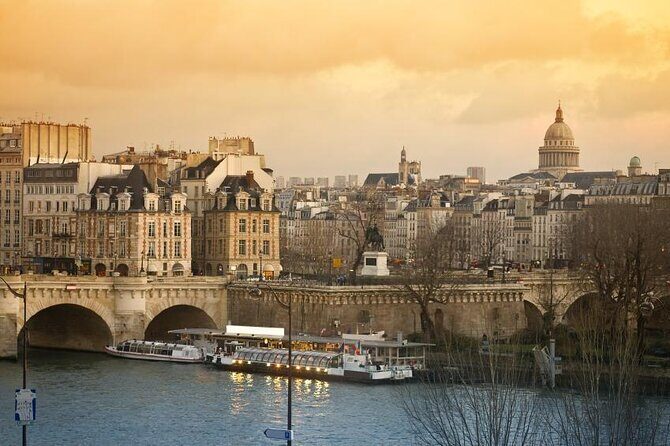
Paris can feel like a list: Eiffel Tower, Louvre, Notre-Dame. This tour takes a different angle. You walk through the Latin Quarter, one of the city’s oldest districts, and the guide ties the streets together so you understand why the area matters—not just what’s there.
The format matters. At roughly 2 to 3 hours, you get time to slow down. You also avoid the common problem of rushing from one photo spot to the next. Instead, you keep moving at walking speed and let the commentary do the work.
And yes, it’s private. That means you’re not competing for the guide’s attention, and it’s easier to ask for clarification when something catches your eye—especially when you’re looking at schools, monuments, or architectural details that can look similar from street level.
From the reviews, one name keeps coming up: Guillaume. The tone is friendly, lightly humorous, and focused. He’s good at balancing context with the details that help you “see” what you’re standing in front of.
You can also read our reviews of more tours and experiences in Paris.



Price and what you get for the money
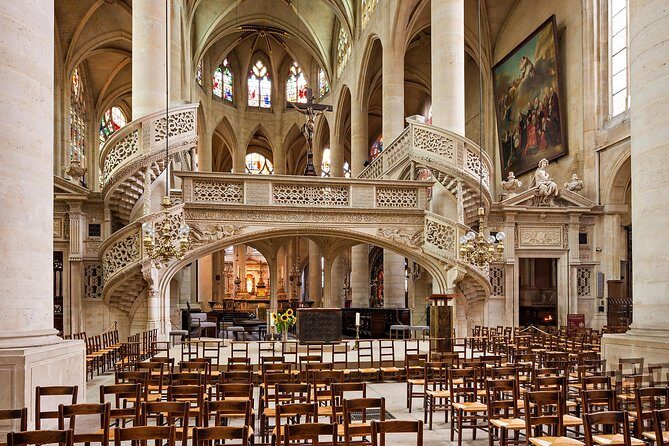
At $321.68 per person, this isn’t the cheapest way to tour Paris. But it does line up well with what you’re paying for: a private walking experience, guided commentary for the full duration, and multiple major stops packed into a coherent route.
Here’s how I’d think about the value:
- You’re paying for guide time and personal attention, not for museum tickets or transportation.
- Most visits at the stops are free admission, so you’re not burning the budget on entry fees.
- You get a guided route from one end of the neighborhood to the other, finishing near the Roman arenas.
If you’re a couple, a small family, or a solo traveler who prefers quality over meeting people at a crowded starting point, the price can feel fair. If you’re price-sensitive and happy following a self-guided itinerary, you may prefer a less expensive option. But if you want history translated into something you can actually notice while walking, this format is a strong match.
Start in Square Samuel Paty and end at Arènes de Lutèce
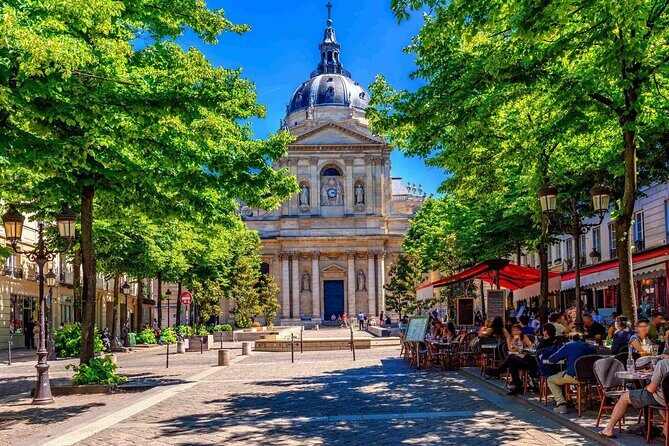
The tour begins at Square Samuel Paty, 2 Pl. Paul Painlevé, 75005 Paris. You’ll finish at Arènes de Lutèce, 49 Rue Monge, 75005 Paris—so you’re not retracing steps at the end.
That matters for two reasons:
- You get a natural walk through the district rather than a “go out and come back” route.
- You end in a place that makes the whole tour feel like it has an arc: from medieval and academic Paris into Roman Paris.
It’s also convenient that you’re near public transportation. Even though the tour is walking-focused, getting to the start point and continuing after you finish is less of a hassle.
Quartier Latin on foot: the 2-hour backbone of the tour
Stop 1 is the Quartier Latin, and it takes about 2 hours. This is where you get your orientation: the neighborhood’s layout, the sense of age in the streets, and the way different eras overlap in the same blocks.
What makes this stop work is that it is not just a glance-and-go loop. The guide’s job is to make you aware of:
- why this area became associated with learning and universities
- how Paris developed around institutions
- what to notice in façades, street corners, and the spacing of buildings
If you’ve been to Paris before, this portion is still useful because it helps you read the neighborhood differently. The Latin Quarter can look like “old streets” until someone shows you the patterns that connect them.
A practical note: you’ll want comfortable walking shoes. The route is designed for a steady stroll, and since it’s private, the pace can adjust, but you still should expect real foot time.
Fontaine Saint-Michel: a quick launch point with instant character
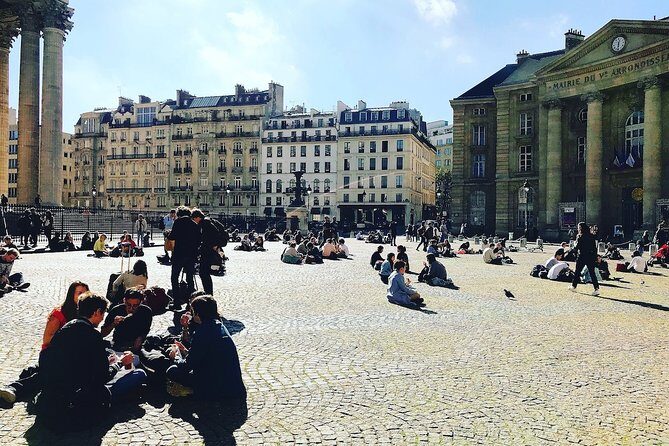
Next comes Fontaine Saint-Michel for about 10 minutes. It’s an easy, photogenic start that sets the mood: the tour is now inside the lived-in Paris that surrounds the big academic names.
This short stop is less about “stopping” and more about getting your bearings. It also gives you a smooth transition into the university zone, where architecture and history start showing up more clearly.
If it’s raining, expect the guide to keep things moving and use shelter when it makes sense.



La Sorbonne: universities, street-level history, and how Paris thinks
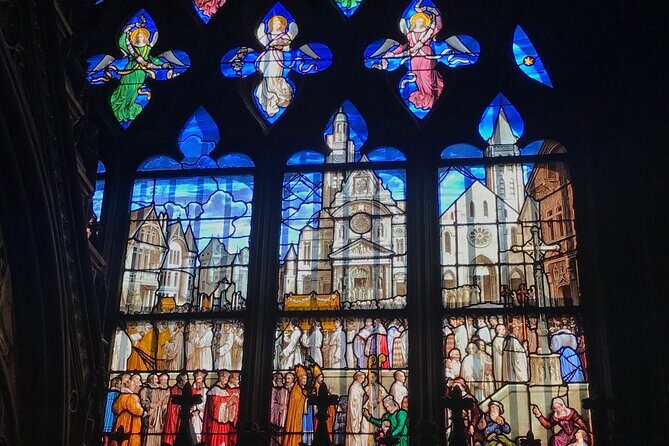
You’ll spend around 30 minutes at La Sorbonne. The key theme here is the universities of the area. From street level, university buildings can feel formal and a bit intimidating, but the guide’s commentary helps you connect those institutions to how Paris has treated ideas—education as part of the city’s identity, not just a campus function.
Why I like this stop for first-timers and return visitors alike:
- First-timers get the context of why the Latin Quarter exists as more than just a pretty neighborhood.
- Return visitors often realize they’ve walked near these buildings without understanding what the institutions represent.
Potential drawback: if you’re not into education history, you might feel like this is more “talk” than “scenery.” Still, the payoff is that you start noticing how many places in this district relate to scholarly life.
Collège de France: research without the museum vibe

After that, you’ll stop at Collège de France for about 15 minutes. This leg is shorter, but it’s a smart pacing choice. It keeps the focus on how the area connects learning to research and innovation.
This is also the kind of stop that can be surprisingly rewarding even when you only have a quarter hour, because the guide can point out the difference between seeing a building and understanding its purpose in the city.
If you’re the kind of traveler who loves when a guide explains why a place exists, this section is likely to land well.
An impressive mausoleum passing by: the quiet shock of Paris history

Between the main academic stops and the Roman finale, you’ll pass through an impressive mausoleum. The exact details aren’t spelled out here, but the point is clear: Paris isn’t only about grand buildings and museums. It also contains memorial spaces that shape the emotional tone of a neighborhood.
This stop tends to work best when you’re paying attention to the shift in atmosphere. A mausoleum has a different kind of weight than a university façade, and it reminds you that the Latin Quarter isn’t only an educational zone—it’s also a place where lives were commemorated.
It’s also an example of why the guided approach helps. Without commentary, you might not realize you’re moving past something significant.
Arenes de Lutèce: closing with Roman Paris
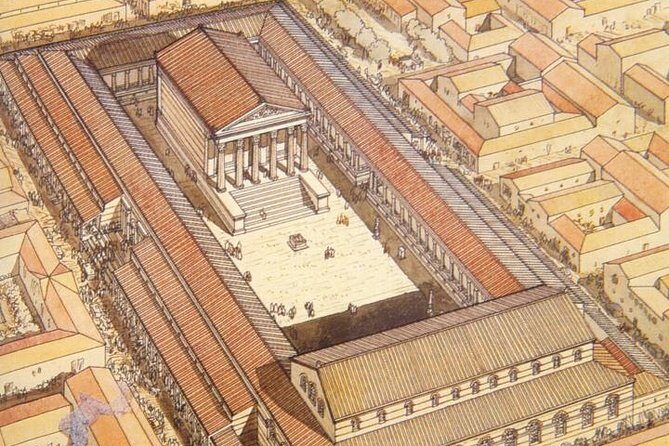
The final stop is Arènes de Lutèce, about 15 minutes, and it’s a strong ending. You’re finishing in the old Roman arenas of Paris, which is a fun contrast to the academic focus earlier.
This is where the tour’s structure pays off. You start with the Latin Quarter’s older neighborhood identity, move through the university world, and then land on Roman history—so you feel how layered Paris is.
If you like history that you can still see in the street environment, this ending is satisfying. It’s not a long museum session. It’s a real location with real atmosphere.
What you can expect from Guillaume’s guiding style
From the feedback, Guillaume’s style is consistent: friendly, engaging, and story-first. He’s especially good with side stories and background that explain why a sight matters, not just what it is.
Two strengths stand out:
- He keeps you interested without drowning you in facts. The information is paced so you don’t feel overloaded.
- He adjusts when weather hits. One review notes that even when rain increased, he shifted time so you could step inside for a church or bar rather than just getting soaked and bored.
That last bit is underrated. A good walking tour is as much about problem-solving as sightseeing.
Also, because it’s private, you’re more likely to get an experience tuned to your attention level—whether you want more narrative, more architecture talk, or more practical “what should I do next” guidance.
Who should book this Latin Quarter tour?
You’ll probably love it if:
- you want a neighborhood tour rather than a checklist
- you like when a guide points out details you would otherwise walk right past
- you’re interested in the Latin Quarter beyond cafés and postcard streets
- you want a private format, especially if you’re traveling solo or with kids who need a flexible pace
You might skip it if you only care about the biggest iconic monuments and prefer a museum-style visit. This tour leans into street history and institutions, not grand single-shot attractions.
Quick practical tips before you go
- Wear comfortable shoes. This is a walking-focused route.
- Bring a light rain layer. The experience needs decent weather, but the guide can adapt if conditions worsen.
- If you’re the type who likes photos, pause occasionally on your own. The guide’s role is to explain what you’re seeing; you can still take your time visually.
- Plan your schedule so you’re not rushing immediately after the ending point at Arènes de Lutèce.
Should you book it? My honest take
I’d book this tour if your goal is to understand the Latin Quarter as a living neighborhood with deep layers—academic, memorial, and even Roman—without spending hours in transit or competing for attention. The price is high enough that it should feel intentional, and the private format helps it deliver.
If you like walking tours with a guide who can turn street corners into stories, this one fits. And if you’ve visited Paris before, you’ll still get value by learning what to notice as you pass the Sorbonne and the surrounding academic buildings.
FAQ
How long is the Latin Quarter tour?
It typically lasts about 2 to 3 hours, depending on how the walk flows.
What does the tour cost?
The price is listed at $321.68 per person.
Is the tour private?
Yes. It’s described as private, meaning only your group participates.
What’s included in the price?
The guide service is included.
Are there admission tickets to pay at the stops?
The itinerary notes admission ticket free for the stops listed.
What language is the tour offered in?
The tour is offered in English.