REVIEW · PARIS
Discover the Marais (:) An Outdoor Detective Adventure
Book on GetYourGuide →Operated by From Paris with Fun · Bookable on GetYourGuide
Solve Paris like a detective.
This hands-on Marais walking tour turns famous landmarks into a clue hunt, mixing street-level sightseeing with puzzle-solving. I especially like the game booklets: they come with history notes plus a riddle page so you get both the story and the challenge. One heads-up: if you want straight, uninterrupted monument gazing, the puzzles can slow your pace, and the activity works best when everyone can read (it’s geared to kids 8+).
Starting near the Métro Saint-Paul area, you move through classic Marais scenery at an easy walking tempo, in a small group. The guide keeps things moving (usually 2 to 2.5 hours) and will help when you’re stuck, but you should still plan for some sideways thinking. Also, no snacks are included, so bring water if you know you get thirsty, and pack light since large bags aren’t allowed.
In This Review
- Key highlights worth your attention
- Why the Marais makes a great detective case
- Where your investigation begins at Saint-Paul Saint-Louis
- Place des Vosges: the square that sets the mood
- Getting the history without drowning in it
- Carnavalet area stop and the Marais layers in walking order
- Rue des Rosiers: free time and a very specific atmosphere
- The Jewish quarter, the Gay district, and how the route feels
- How the clues and booklet system actually works
- Small-group tour length: what 2 to 2.5 hours feels like
- Ending near Georges Pompidou (and nearby options)
- Who should book this Marais detective adventure
- Price value: is $35 worth it for the Marais walk?
- A simple practical checklist before you go
- Should you book this Marais detective walk?
- FAQ
- Where does the tour start?
- How long is the Marais detective tour?
- What is included in the price?
- Are snacks and drinks included?
- What languages are the guides?
- Is it okay for children?
- Is it wheelchair accessible?
- Can I get a refund or pay later?
Key highlights worth your attention

- Escape-game style riddles built into a real-world Marais walk, so you’re always doing something
- History + puzzle booklets so you’re not just solving, you’re learning too
- Small-group pacing adjusted to the slowest team, including families
- Route hits the Marais in layers, from Saint-Paul Saint-Louis to Rue des Rosiers and toward Centre Pompidou
- Guide help when needed, with support during the clues so nobody gets stuck too long
- Kids policy that’s clear: best for readers age 8+; little ones under 6 don’t pay
Why the Marais makes a great detective case
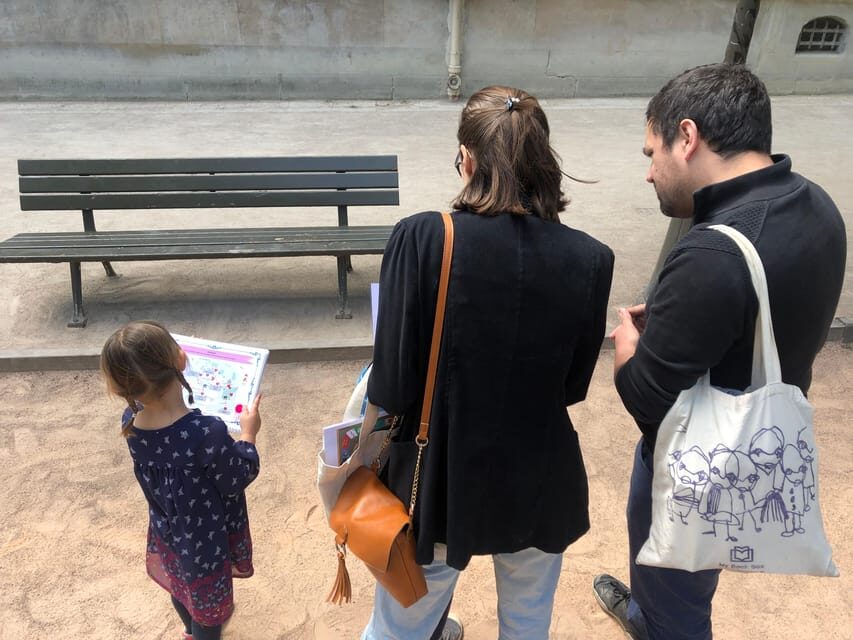
The Marais is one of those Paris neighborhoods where the streets feel like a clue already. You’ve got old walls, changing architecture, and multiple communities packed into a walkable zone. That’s exactly why this format works: the game isn’t trapped in one spot. It’s spread across the neighborhood’s textures.
You also get variety without chaos. You’re not bouncing across the city for one monument shot; you’re moving through a concentrated slice of Paris that includes grand squares, historic streets, and the kind of Paris energy you can actually walk beside. It’s ideal if you like discovery that feels earned, not handed to you in a quick “look here” stop.
You can also read our reviews of more tours and experiences in Paris.



Where your investigation begins at Saint-Paul Saint-Louis
Your start points are listed as near Paroisse Saint-Paul Saint-Louis (at 97 Rue Saint-Antoine is one option). From there, the tour begins with a short orientation around the Métro Saint-Paul area, with the Saint-Paul Saint-Louis Church as the visual anchor.
This is a smart way to start because you’re in the right mindset immediately. The first clue gets you reading instructions, scanning details, and using the booklet like a field tool. If you’re the type who likes to get your bearings fast, you’ll appreciate how quickly you move from “Where are we?” to “What do we do next?”
Practical note: the tour requires comfortable walking shoes. You’re on streets for a couple of hours, and you’ll likely stop often enough that your feet will notice the time.
Place des Vosges: the square that sets the mood
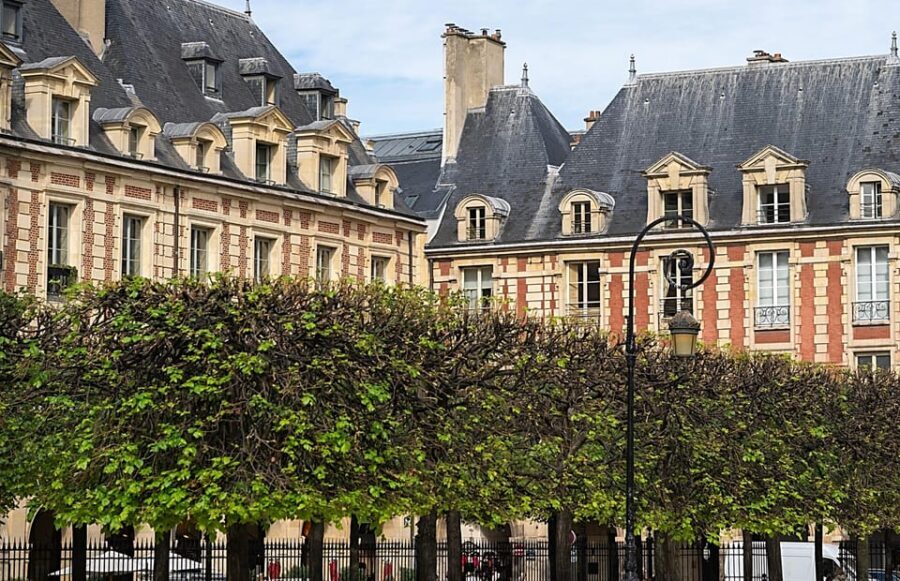
After you begin, the route moves toward Place des Vosges, one of the Marais’s most famous squares. This isn’t just for photos. In a detective-style tour, a big open space matters because it gives you a mental “base camp” to regroup and reset your attention.
You’ll also see the kind of 17th-century private mansion vibe that defines the Marais. The tour’s flow intentionally shifts from square-style Paris to more “narrow street” Paris soon after, so you can compare how the neighborhood changes as you walk.
If your group likes structure, this part helps. You get a landmark you recognize, then you get directed into the rest of the case with less guessing.
Getting the history without drowning in it
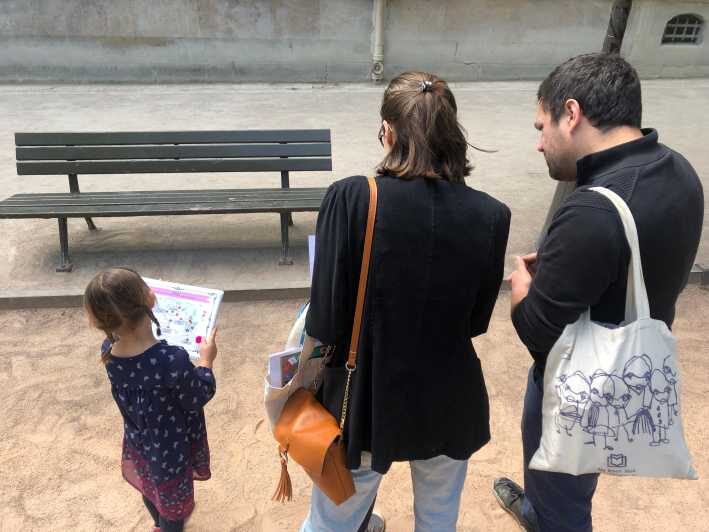
A big reason this tour is fun is that the information is packaged the way your brain can actually use it while you’re moving. You get riddle-driven stops, and the booklet includes a cultural and historical page so you can connect the clues to real context.
There’s even a humorous safety net built in: the booklet is meant to include the main information in case the guide gets caught up in the game and doesn’t hand everything out in the exact order. That’s also a clue about the tone. This is a friendly, game-first walk, not a formal lecture.
One thing to keep in mind: the provider notes they are not professional guides. That doesn’t mean the experience is bare-bones. It just means you might hear more practical storytelling and puzzle logic than ultra-academic precision. For most visitors, that’s a plus.
Carnavalet area stop and the Marais layers in walking order
You’ll pass by Carnavalet Museum early in the route. You’re not necessarily going inside on this format (it’s listed as a pass-by), but the stop sets a “you’re in the story” feeling. Carnavalet is tied to Paris history, and placing it on the path makes the neighborhood’s timeline feel close.
Then the tour includes a short stop described as a lesser-known spot (listed as a hidden gem). This type of pause is useful on a puzzle hunt. It’s a chance to slow down, look carefully, and solve without the pressure of a huge crowd or a constant flow of traffic.
If you’re traveling with someone who loves both photos and facts, this stop tends to work well because it’s likely where the clue-solving turns from easy into interesting.



Rue des Rosiers: free time and a very specific atmosphere
Next you get to Rue des Rosiers, one of the best-known streets in the Marais for food and cultural life. The itinerary includes time for free wandering here, plus walking and pass-by segments along the street.
In a normal walking tour, Rue des Rosiers can become “look at the street, move on.” In this case, the puzzle format changes your pace. You’ll likely be looking at details you’d otherwise skip because you’re waiting for the next instruction. That makes the street feel interactive, not just scenic.
If you’re hungry, plan your timing. The tour does not include snacks or drinks, so Rue des Rosiers is where you might want to grab something after the game tasks are done for your team.
The Jewish quarter, the Gay district, and how the route feels
The route travels through the historic Jewish quarter and then continues toward the Marais Gay area. Even though you’re mainly outdoors, this kind of neighborhood sequencing helps you understand the Marais as a place that carries more than one identity at the same time.
This matters because the Marais is often described as trendy, and it is. But the deeper truth is that the neighborhood’s vibe comes from its mix of styles and communities. The tour leans into that idea by not staying locked on only the “pretty postcard” sites.
The payoff for you is simple: you get a more lived-in picture of the Marais than a checklist tour usually offers.
How the clues and booklet system actually works
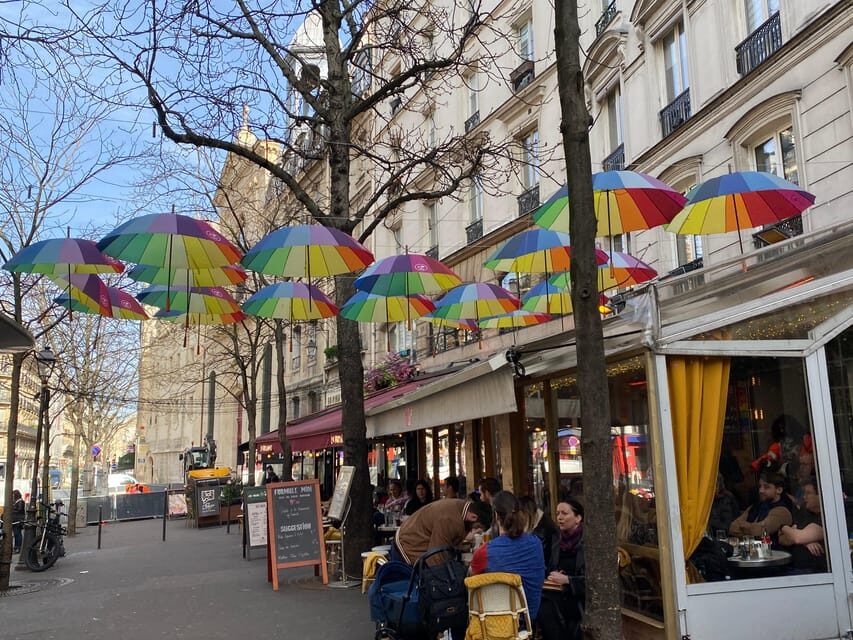
Here’s how the game portion typically feels. You move from stop to stop, and at each point you’re asked to solve something using info from the booklet or your own observations on the street. The tour also includes riddles in front of iconic monuments of the city, which helps keep the experience anchored to real places.
You’re not expected to do everything solo. The guide is available to assist you whenever you need help. That’s important because puzzle tours can frustrate people who hate being stuck. The goal here is fun problem-solving, not suffering.
One detail I like for families: the pace is adjusted to the slowest team. If kids are with you, you’re not pressured into rushing the walking segments. That tends to reduce the “we’re stuck because someone is tired” problem that plagues scavenger-style tours.
Also, you can request a self-guided tour option if that fits your travel style better. That’s useful if you’d rather solve at your own speed while still using the same game booklet logic.
Small-group tour length: what 2 to 2.5 hours feels like
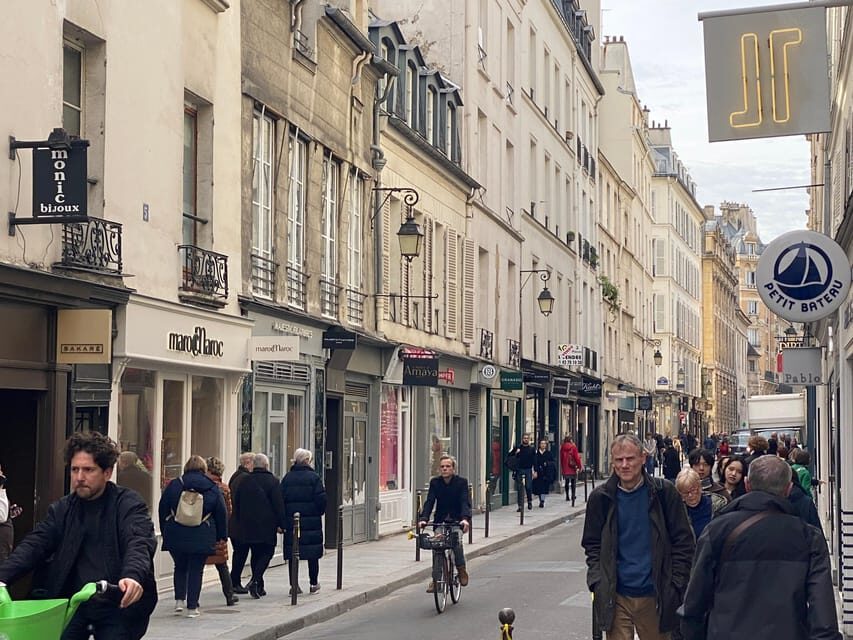
The duration is typically listed as 2 to 2.5 hours, depending on walking speed and how long it takes your team to solve the riddles. Because the pace is designed around the slowest team (especially when families are included), the tour feels more relaxed than many “race through Paris” experiences.
For planning, think of it as a half-morning or half-afternoon activity. It pairs well with museums and café breaks before or after, especially since snacks and drinks aren’t included.
Group size is small. That matters because you’re solving puzzles together. In a big group, people split attention too much. In a small group, the game stays workable and the guide can actually help quickly.
Ending near Georges Pompidou (and nearby options)
The tour concludes near Georges Pompidou Museum. Your itinerary also lists drop-off options at Fontaine Stravinsky (1 Place Igor Stravinsky). Since these are listed as drop-off locations, you can expect to finish in the general Pompidou area, then reposition yourself from there.
This is a good ending for two reasons. First, it keeps you central at the finish. Second, if you want to continue exploring, Pompidou is a natural next stop for art, people-watching, or just taking a breather.
If your day includes another reservation, plan a little buffer here. Finishing times depend on puzzle-solving pace.
Who should book this Marais detective adventure
This tour is a good fit if you like puzzles, walking, and learning in small doses. The best audience is people who enjoy a bit of teamwork and don’t mind pausing a lot to look around and read.
It also suits families, but with a clear requirement: it’s recommended for kids aged 8 or older because they need to read to fully enjoy the roadbook. Younger kids can join, but adults will likely need to help with reading and solving.
Not suitable for children under 8 is listed, so if you’re traveling with younger kids, skip this one and choose a different format.
Wheelchair accessibility is listed. Since this is a walking tour with stop-and-go pacing, you’ll want to consider your comfort level with sidewalk terrain and frequent breaks, but at least the experience is marketed as wheelchair accessible.
Price value: is $35 worth it for the Marais walk?
At $35 per person for about 2 hours, the value is strongest if you’ll actually use the booklet and enjoy the puzzle format. You’re not just paying for a route and a guide talk. You’re paying for a structured activity: the game booklets plus a local guide to keep things moving and help with clues.
Compared with a traditional guided walk, the cost feels justified because the tour includes “interactive labor” for your time. You’ll likely feel like you did more than see sights—you investigated them.
Compared with a typical escape room, the price feels fair because you also get outdoor sightseeing and neighborhood context, not a sealed indoor puzzle only. The trade-off is that you’re outdoors and you’ll need to do some reading.
The only real friction on cost is what’s not included: snacks and drinks. If you tend to get hungry fast, budget for a café stop during or after Rue des Rosiers.
A simple practical checklist before you go
- Bring comfortable shoes because it’s a walk with repeated stops
- Avoid large bags or luggage since it’s not allowed
- Bring water if you know you need it (snacks/drinks aren’t included)
- Have at least one person who reads well for the booklet riddles
- If you travel with kids, plan for extra help on the reading parts
Also, the tour is offered in French and English, so you can pick what’s most comfortable. The guide availability matters too: help is available during the clues, which makes the experience smoother for groups who want to keep the game fun.
Should you book this Marais detective walk?
I’d book it if you want the Marais to feel like a story you solve, not a set of monuments you skim. It’s especially worth it when you enjoy teamwork, puzzles, and short bursts of history that you can connect directly to the street in front of you.
Skip it if your ideal Paris day is fast, quiet sightseeing with no riddles and no reading tasks. And if you’re traveling with children under 8, this isn’t the right fit.
If that sounds like you, this is a smart, good-value way to get a deeper feel for the Marais in a couple of hours. You finish near Pompidou with your brain switched on and your legs pleasantly busy.
FAQ
Where does the tour start?
The tour starts near Métro Saint-Paul, with options listed around Paroisse Saint-Paul Saint-Louis (including 97 Rue Saint-Antoine). The meeting point may vary depending on the option booked.
How long is the Marais detective tour?
It lasts about 2 hours, or between 2 and 2.5 hours depending on walking time and how long it takes your team to solve the riddles.
What is included in the price?
You get the game booklets and a local guide.
Are snacks and drinks included?
No. Snacks and drinks are not included, so plan to buy something nearby if you need it.
What languages are the guides?
The tour is offered with a live guide in French and English.
Is it okay for children?
It’s recommended for kids aged 8 or older because they need to read to enjoy the roadbook. Younger kids can join, but adults may need to help. It is listed as not suitable for children under 8. Kids under 6 don’t pay.
Is it wheelchair accessible?
Yes, wheelchair accessibility is listed.
Can I get a refund or pay later?
Free cancellation is available up to 24 hours in advance for a full refund. There is also a reserve now & pay later option to keep plans flexible.