REVIEW · PARIS
Eiffel Tower Guided Tour by the Stairs up to Second Floor
Book on Viator →Operated by Adventour · Bookable on Viator
Stair-climbing the Eiffel Tower feels different. I love the small-group setup, and I love how the guide builds the story of the tower while you climb toward the second-floor views. The one catch is obvious: it’s stairs, so if you get winded easily, go slow and expect a steady pace.
This tour runs about 1 hour 30 minutes total and uses a mobile ticket. You’ll start and end at the same meeting point near public transportation, and you’ll want good weather since the experience depends on it.
In This Review
- Key things to know before you go
- How the Eiffel Tower Stairs Tour Really Works
- Meeting at Allée Paul Deschanel (and what to expect on arrival)
- The climb: history and ironwork as you ascend
- First level stop: breathe, browse, and reset your legs
- Second level stop: where the city landmarks come into focus
- What the small-group size really buys you
- Price and value: what you’re paying for
- Weather, timing, and who this suits best
- Should you book the Eiffel Tower stairs tour to the second floor?
- FAQ
- How long is the Eiffel Tower guided stairs tour?
- How much does the tour cost?
- Do I need a printed ticket?
- Where is the meeting point?
- Where does the tour end?
- What stops are included?
- How high does the tour go?
- What’s the group size limit?
- Is good weather required?
- What is the cancellation policy?
Key things to know before you go
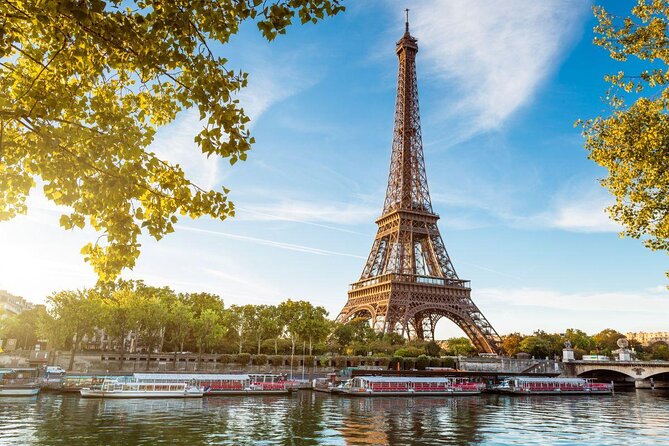
- Small groups (max 35 people): easier questions, less waiting, and a more personal pace.
- Stairs up to the second floor: you’ll trade elevators for a memorable climb and great views.
- Included time at the first level: a chance to pause, browse, and reset your legs.
- Second-floor landmark spotting: the guide points out sights like Sacré-Cœur, Arc de Triomphe, and Notre-Dame.
- Daylight helps a lot: if you can, aim for a non-dark time so buildings and details are easier to see.
How the Eiffel Tower Stairs Tour Really Works
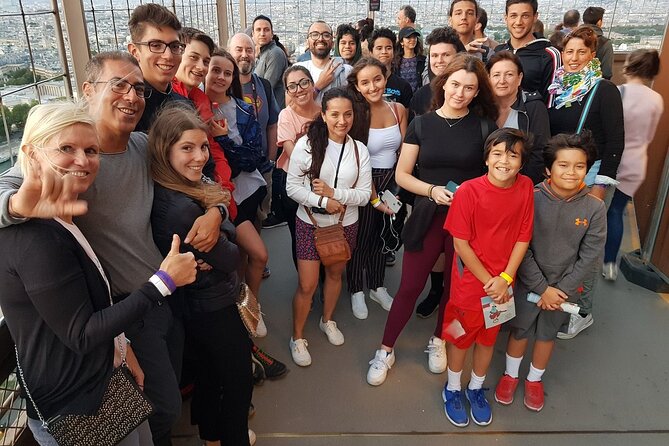
Going up the Eiffel Tower by stairs changes the whole vibe. You’re not just arriving at a view. You’re moving through the iron structure step by step, with the guide pointing out what you’re looking at as you rise.
I like that the schedule is built around actual pauses, not a rushed sprint. You get an organized climb, then a sit-down moment on the first level, then more stair time to the second level, where the skyline gets sharper and wider.
And since it’s a guided experience, you’re not stuck figuring out what to point your camera at. You’ll have the guide’s cues for major landmarks across Paris, including the ones that can be hard to identify from up high without a little help.
You can also read our reviews of more tours and experiences in Paris.



Meeting at Allée Paul Deschanel (and what to expect on arrival)
You meet at 9 All. Paul Deschanel, 75007 Paris, and the tour ends back at the same meeting point. It’s also listed as near public transportation, which matters because the area around the Eiffel Tower can get traffic-heavy and slow on busy days.
Plan to show up with a bit of breathing room. Even with a set start, you’ll still want time to orient yourself, scan your plan, and get to the right spot before the group moves.
Also note the time estimate: the total duration is about 1 hour 30 minutes, and the timing includes the walk/moving around as part of the experience. So don’t schedule yourself too tightly right after.
The climb: history and ironwork as you ascend
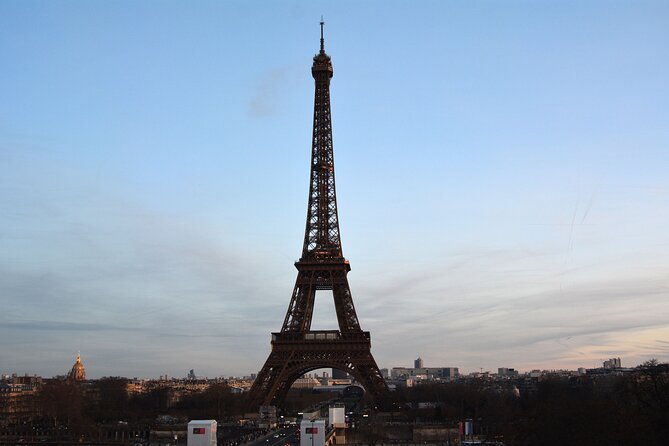
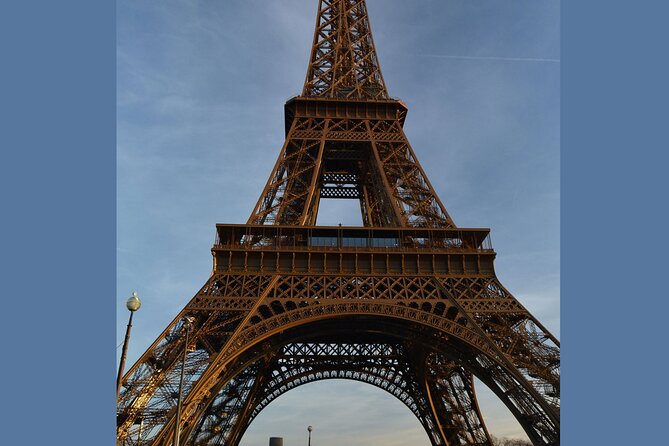
Right at the start, you begin with the Eiffel Tower as your backdrop. The guide provides commentary about the tower’s history and construction while you climb. This is one of the best parts, because it turns what could be just a vertical workout into something you can actually connect to.
As you ascend, you get a close look at the intricate ironwork and how the structure works. Even if you’ve seen Eiffel Tower photos a hundred times, the real building details tend to surprise you once you’re there and moving around it.
A practical tip: wear comfortable shoes and don’t treat this like a cardio race. The experience is timed, but your comfort matters more than speed. If you need a slower rhythm, use it. The group size limit helps here, since it’s not usually everyone getting yanked along at once.
First level stop: breathe, browse, and reset your legs
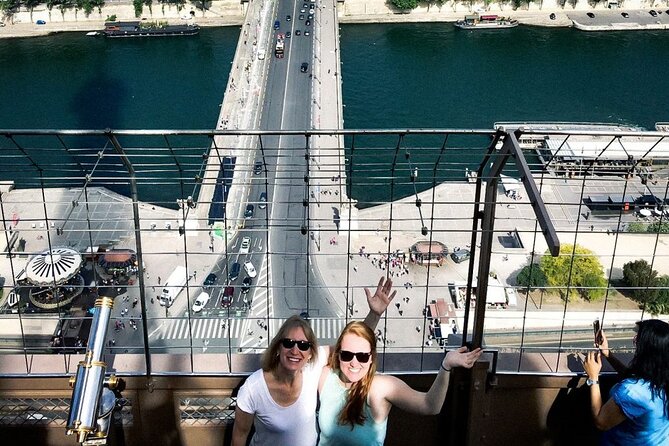
Once you reach the first level, you’re given time to catch your breath and take in panoramic views of Paris. This stop is also your chance to stretch out a bit before the next climb.
You’ll also have time to explore what’s on that level, including shops, cafes, and exhibits. That matters because it turns the climb into a balanced experience: you get the physical part, but you’re not punished for it.
Two things to keep in mind at this stop:
- Take advantage of the pause to slow down your breathing before the stairs to the second level.
- If you want photos, this is often the moment when you can frame the skyline before everyone moves again.
You’ll have about 25 minutes here. Use it. Don’t spend it all in one corridor or only watching from one angle.
Second level stop: where the city landmarks come into focus
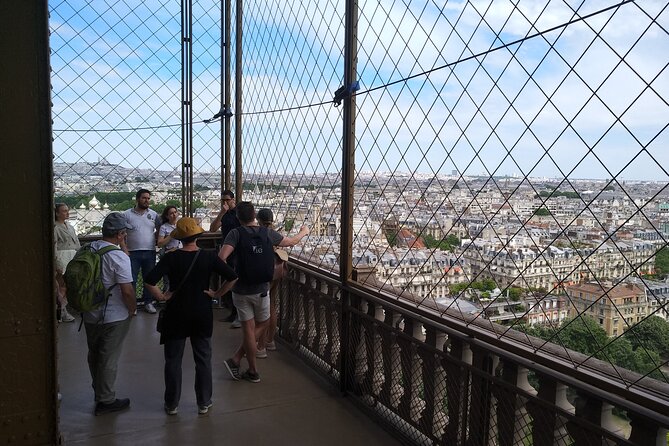
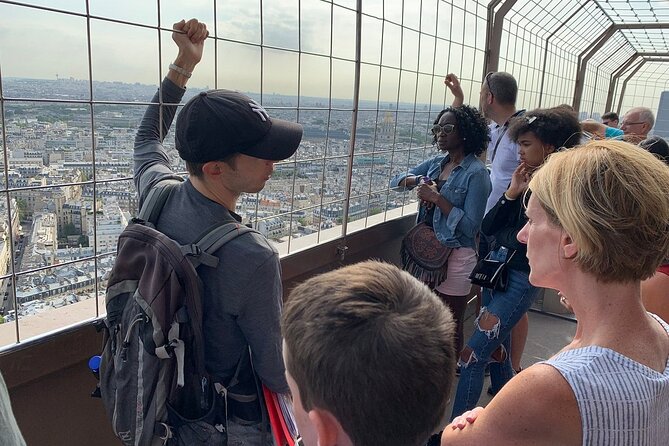
The second level is where the payoff starts to feel bigger. The views open up even more, and the guide helps you connect what you see with real Paris landmarks.
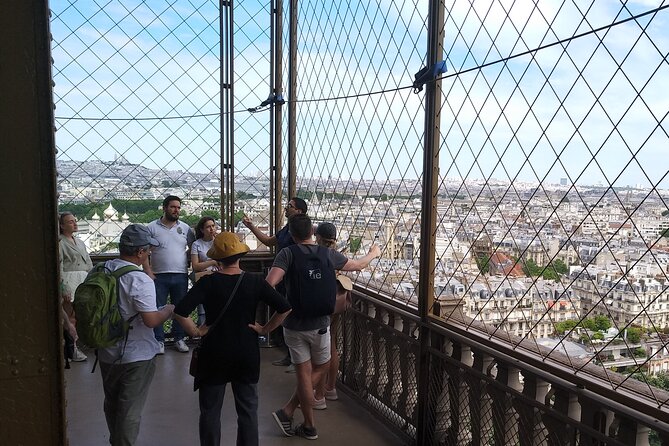
You’ll be guided to identify major sights, including Montmartre and Sacré-Cœur, Arc de Triomphe, Notre Dame, Invalides, La Tour Montparnasse, and La Défense. If you’ve ever looked at Paris from above and thought, I know that’s something, but what, this is the fix.
This stop also leans into the best kind of sightseeing: not just pointing out famous buildings, but helping you understand where they sit in the city. With the guide’s cues, the skyline becomes a map you can actually read.
If you’re choosing when to go, take the hint from the experience’s most positive feedback: daylight helps. Seeing buildings clearly makes it easier to spot landmarks and follow the guide’s explanations without squinting.
You’ll have about 25 minutes on the second level. It’s enough time to get a few solid photos and still enjoy the view without rushing.


What the small-group size really buys you
Small groups are one of those travel details that sounds nice on paper, but you’ll feel it during the climb. With a maximum of 35 people, the guide can manage the pace and respond to questions without the group turning into a single file line.
That matters on stairs. If your group is too large, you can end up waiting around bottlenecks or losing the flow of the guide’s commentary. Here, the smaller cap helps keep the experience more orderly.
It also makes the climbing part feel less stressful. You’re not just trying to keep up. You’re part of a managed walk up, with time built in for viewing and for catching your breath.
For me, that’s the value behind the tour price: not only the stunning views, but also the guidance and organization that keep the experience from feeling chaotic.
Price and value: what you’re paying for
At $51, the big question is whether this feels worth it compared to buying a basic entry ticket. The value here is the guided component plus the structured stops.
You’re getting:
- A guided climb with commentary about the Eiffel Tower’s construction and history.
- Time at the first level with room to explore shops, cafes, and exhibits.
- Time at the second level, including help spotting well-known landmarks across Paris.
- Admission is listed as free with the stops, meaning your cost is centered on the guided experience and the timed access, not extra entry fees you’d have to think about.
So yes, you’re paying for a guide-led experience. But you’re also buying clarity: where to look, what you’re seeing, and how to use your time up there instead of wandering.
Weather, timing, and who this suits best
This experience requires good weather. That’s not a small footnote. On clear days, you’ll get better visibility for identifying landmarks and enjoying the panoramic views.
Most people can participate, but be honest with yourself about stairs. This tour is specifically about climbing up to the second floor by stairs, so it’s not ideal if you have major mobility limitations or you know stairs wipe you out.
This is a great fit if you:
- Want the Eiffel Tower experience with context, not just a quick look.
- Enjoy views with guidance for identifying landmarks.
- Prefer a smaller, more controlled group to keep the climb pleasant.
It’s less ideal if you strongly dislike stairs or need a lot of rest breaks. In that case, you might want to consider an option that matches your pace better.
Should you book the Eiffel Tower stairs tour to the second floor?
Book it if you want the Eiffel Tower to feel like an organized experience with real explanations, plus time to enjoy both the first and second levels. The combination of a stair climb, a structured break, and landmark spotting is exactly the kind of tour that helps you get more out of your visit.
Skip it or reconsider if stairs are a deal-breaker for you, or if you’re traveling during a stretch when weather is unpredictable. Since the tour requires good weather, plan to be flexible with your schedule.
If you can, aim for a non-dark time. Daylight makes the views easier to read, and it helps the guide’s landmark spotting land with full clarity.
FAQ
How long is the Eiffel Tower guided stairs tour?
The duration is approximately 1 hour 30 minutes, and the total time includes time travel.
How much does the tour cost?
The price is $51.
Do I need a printed ticket?
No. It uses a mobile ticket.
Where is the meeting point?
The tour starts at 9 All. Paul Deschanel, 75007 Paris, France.
Where does the tour end?
It ends back at the meeting point.
What stops are included?
You’ll have stops at the Eiffel Tower, including time at the first level and time at the second level.
How high does the tour go?
It goes up by stairs to the second floor.
What’s the group size limit?
The tour has a maximum of 35 travelers.
Is good weather required?
Yes. The experience requires good weather.
What is the cancellation policy?
Free cancellation is available. You can cancel up to 24 hours in advance for a full refund, and cancellations within 24 hours are not refunded.