Paris looks different when you walk its WWII trail. This half-day private WW2 walking tour is fascinating because it turns major Paris streets into a real 1940–1944 story you can follow on foot. I especially like the private pacing (only your group) and the way a WWII specialist guide connects what you see—Gestapo locations, resistance arrests, propaganda façades—to what happened behind the scenes. One consideration: this is not a light, fluffy sightseeing walk. The occupation details can be heavy.
You’ll cover classic landmarks, including the Champs-Élysées area and the Place de la Concorde, and you’ll also pick up on smaller, darker clues that most people blow past. Expect about three hours of walking, with a moderate fitness level requirement, so wear shoes you trust on Paris sidewalks.
A strong example of the guide quality is Vincent Lauferon, noted for keeping each stop clear and moving. If you want WW2 history handled with care and context (not just dates), this tour is built for you.
In This Review
- Key highlights worth your attention
- Why a private WWII walking tour works so well in Paris
- Porte Dauphine start: set your bearings before you hit the story
- Champs-Élysées and avenue Foch: propaganda, Gestapo presence, and Resistance tragedy
- Place de la Concorde: bullet holes as a lasting signal of liberation
- Le Meurice and the Von Choltitz refusal: how one decision shaped a city
- What to pay attention to during the walk (so it clicks fast)
- Price and value: is $366.88 per person worth it
- Who this tour suits best (and who might want a different plan)
- Should you book this Paris WWII walking tour?
- FAQ
- Where does the tour start and end?
- What time does the tour begin?
- How long is the walking tour?
- Is this tour private?
- What language is the tour offered in?
- Are there any admission tickets to buy?
- Is the tour suitable for people with limited mobility?
- Are service animals allowed?
- What is the cancellation policy?
Key highlights worth your attention
- Private tour only for your group, so you can ask questions as you go
- Champs-Élysées through a WWII lens, including Gestapo ties and German-frequented venues
- Place de la Concorde liberation details, including bullet holes you can still spot
- Le Meurice and the Von Choltitz refusal story, where the fate of Paris gets discussed
- Start at Porte Dauphine and finish at Place de la Concorde, making it easy to keep exploring after
Why a private WWII walking tour works so well in Paris
Paris is perfect for walking, but WWII Paris needs a guide. Without one, you’ll see beautiful streets and monuments and still miss what made those same places frightening. With a private format, you get a human thread through the story: who was where, what decisions were made, and why certain locations mattered.
This tour is also a smart use of limited time. About three hours is enough to hit the big names—Champs-Élysées, Place de la Concorde, and the Le Meurice area—without forcing you into museum logistics. And since admission is free for this experience, you’re not paying extra to open a door and sit in a room. You’re paying for the walking narration and the expert connections.
The other big win: you’re not stuck listening to a big group. If something sounds surprising, you can ask. If you want a clearer explanation of a Resistance member or an operation, you can get it while you’re standing on the street where it happened.
You can also read our reviews of more tours and experiences in Paris.


Porte Dauphine start: set your bearings before you hit the story
The tour begins at Porte Dauphine (75016) around 9:30 am, and it ends at Place de la Concorde (75008). That matters because it gives you a natural flow from one part of the city to another, and it helps you build a mental map of occupied Paris as you walk.
Porte Dauphine is a good “launch point” for people who want to understand Paris in layers. You’re starting before the tour heads into the power-symbol districts of the 1940s. Also, since the meeting point is near public transportation and the tour is designed for people with moderate physical fitness, you’re less likely to spend your energy just getting there.
One practical tip: since you’re walking a busy corridor, bring a light layer. Even if the forecast looks fine, Paris weather can shift quickly.
Champs-Élysées and avenue Foch: propaganda, Gestapo presence, and Resistance tragedy
Your main stop focuses on the Champs-Élysées area and the WWII-era story around it. This is where you get the most “oh wow” moments, because the guide turns a famous boulevard into an occupied-space map.
One of the core details you’ll hear is that during the occupation, Parisians called avenue Foch the avenue des Boches. That’s not just wordplay. It reflects how real power and fear were felt on that street. Your guide explains that this is where Gestapo offices were located, tying the modern boulevard to the machinery of repression.
Then the tour moves into the Resistance side of the story. You’ll learn about the arrest of Pierre Brossolette and what happened afterward. This is one of those parts where the guide’s role matters: the facts are the facts, but the pacing and context help you understand why people acted the way they did and why the outcomes were so brutal.
You’ll also get a look at the role of German officials and their ties to Paris. The tour includes where Carl Heinrich von Stulpnagel lived, plus what his involvement in Operation Walkyria meant—and the consequences that followed. Standing near these locations while someone explains the larger plot makes it far easier to remember than a chapter of a book.
Next comes the propaganda angle, and it’s surprisingly concrete. You’ll go down the avenue as it was used for Reich propaganda purposes, and you’ll hear about the kinds of public spaces where Germans spent time. The names mentioned include Fouquets and Maxims, plus other cafes and cinemas. Even if you don’t know the venues well, the point is clear: everyday Paris life was still operating, while occupation power sat on top of it.
What I’d watch for as you walk:
- Look at the boulevard layout and imagine how visibility worked for both occupiers and Resistance networks.
- Pay attention when the guide points out specific building fronts tied to the story. Those “ordinary” façades become evidence.
- If traffic noise makes it hard to hear, don’t struggle—just ask the guide to slow down or repeat a key point.
A small drawback to note: this stretch is wide and busy. It’s a walking tour, not a quiet country lane. If you’re sensitive to crowds or road noise, just plan to lean in when your guide pauses the group.
Place de la Concorde: bullet holes as a lasting signal of liberation
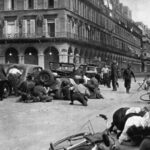
The walk ends at Place de la Concorde, and one of the standout details here is that you can notice bullet holes dating from the liberation. This is the kind of thing that’s hard to understand from photos. Seeing the evidence in the real place where it happened makes the story feel immediate.
Place de la Concorde already has a reputation as a major Paris square. During WWII, it becomes more than a postcard landmark. Your guide ties this location to the moment Paris shifted from fear to recovery, and it helps you understand why people remembered certain places as symbols, not just geography.
This stop also works well as an “emotional landing.” After the heavier Champs-Élysées details, the tour’s final phase gives you a sense of closure. Not a happy closure, but a clear one: occupation gave way to liberation, and the streets carry that change.
If you’re the type who likes to connect history to real-world traces, this part is worth the whole ticket.
Le Meurice and the Von Choltitz refusal: how one decision shaped a city
A little further on from Place de la Concorde, the tour connects to the Le Meurice area and the story behind the question Is Paris burning? Here, you’ll hear about governor Von Choltitz refusing to destroy Paris and not obeying Hitler’s orders.
This segment is valuable because it reframes WWII in a way you can grasp instantly: not just battles and paperwork, but choices by individuals that change what a city becomes after the fighting. For many people, this is the moment the tour stops feeling like a list of grim events and starts feeling like cause-and-effect.
Also, it’s a good reminder that occupation wasn’t just one straight line of control. Even inside that system, decisions and refusals happened—and the consequences echo in what you still see today.


What to pay attention to during the walk (so it clicks fast)
This kind of tour can either feel like “names and dates” or like a story you can hold in your head. You’ll get the second one if you use a few simple habits while walking:
- Ask one follow-up question at each stop. If something sounds confusing (Resistance routes, an operation, a person’s role), one good question helps it stick.
- Watch how the guide frames cause and effect. The best guides don’t just tell you what happened; they show how one decision led to another.
- Keep an eye out for physical clues. Bullet holes at Place de la Concorde are the biggest example mentioned, but the guide will also point out features and context at other locations.
- Use the walking itself as your timeline. When the tour transitions from Champs-Élysées to the Concorde area, you’ll feel the narrative shift. Let that guide your memory.
And yes, light rain usually doesn’t ruin this. Since it’s a short walk with major landmarks along the way, you can keep moving without turning the day into a weather gamble.
Price and value: is $366.88 per person worth it
At $366.88 per person, this is not a budget group tour. You’re paying for a private, English-speaking WWII specialist guide over about three hours. That means your money goes into the quality of interpretation, not into museum tickets or entry fees (admission is free for this experience).
Here’s how I’d judge value:
- If you love WWII history and you want it tied to exact places, the price can feel fair fast. You’re buying expert narration plus a focused route.
- If you want casual sightseeing, you might feel “restricted” by the concentration on occupation and liberation details. In that case, you may prefer a lighter neighborhood walk.
- If you’re traveling with a group, look for the available group discounts. Splitting the private guide cost can make the experience much easier to justify.
In plain terms: this tour is for people who want more than scenery. It’s for people who want meaning.
Who this tour suits best (and who might want a different plan)
This works especially well for you if:
- You’re a WWII enthusiast or you’re studying it and want real Paris anchors.
- You prefer private tours because you like questions, pacing, and a guide who can adapt to your interests.
- You’d like to see major landmarks while learning the 1940s context behind them.
It may be less ideal if:
- You want only upbeat stories and don’t want to sit with occupation tragedy and repression details.
- You’re expecting a museum-style deep dive. This is street-level history, focused on a limited route.
- You have very limited mobility. The tour asks for moderate physical fitness, and you’ll be walking a central Paris route.
Should you book this Paris WWII walking tour?
If you’re going to Paris for the first time and you care about understanding what was underneath the surface, I’d book it. You get a tight route, major landmarks, and specific WWII details that most people would never notice on their own—like the bullet holes at Place de la Concorde and the personal stories connected to the Champs-Élysées corridor.
There’s also a good practical reason to like it: it’s only about three hours, it’s in English, and it’s structured so you finish in a major central area where you can keep exploring afterward.
One final note: since the theme covers the darkest parts of occupation history, bring the mindset for it. This is a history walk with real emotional weight, handled through a guide who can keep you grounded.
FAQ
Where does the tour start and end?
It starts at Porte Dauphine (75016 Paris) and ends at Place de la Concorde (75008 Paris).
What time does the tour begin?
The start time is 9:30 am.
How long is the walking tour?
The duration is about 3 hours.
Is this tour private?
Yes. It’s a private tour/activity, and only your group participates.
What language is the tour offered in?
The tour is offered in English.
Are there any admission tickets to buy?
Admission is listed as ticket free.
Is the tour suitable for people with limited mobility?
The tour is described for travelers with a moderate physical fitness level.
Are service animals allowed?
Yes, service animals are allowed.
What is the cancellation policy?
You can cancel for a full refund up to 24 hours in advance. If you cancel less than 24 hours before the start time, the amount you paid will not be refunded.