REVIEW · PARIS
Half Day Walking Tour to Over 30 of the Top Sights of Paris
Book on Viator →Operated by Top Sights Tours · Bookable on Viator
Paris on foot, lots of it. In a tight 4–5 hours, you get a 30+ stop sweep of the city’s big hitters and neighborhood textures, with an experienced guide telling the stories that explain why these places matter. I like that the route mixes major landmarks (think Eiffel Tower views and Montmartre) with everyday Paris moments like street-level wandering. I also like the practical flow: you’ll hop between areas and learn the “how Paris works” rhythm, including metro rides. One drawback to plan for: you don’t go inside the big-ticket indoor sights like the Louvre or the Eiffel Tower, so this is built for understanding and photos more than for museum time.
This tour is ideal if you’re trying to get your bearings fast on a first visit. It’s capped at 15 travelers, and the meeting point is easy to reach near transit, with the finish near the Louvre entrance in Paris’ central 1st arrondissement.
In This Review
- Key highlights to pay attention to
- What this 30+ stop half-day tour is really good for
- Montmartre start: Sacré-Cœur inside, then the old streets
- Painter square energy: Place du Tertre and Le Bateau-Lavoir
- City Hall, the Arc de Triomphe story, and an Eiffel Tower photo plan
- Moulin Rouge and the Latin Quarter: Paris with a pulse
- Louvre and the “why” stops: seeing without entering
- Notre-Dame area: Île de la Cité and a fire-scar history moment
- Pompidou, department store sighting, and the Fontaines Wallace trick
- Metro rides: the EASY PASS and Mobilis basics you must plan for
- Timing, pace, and what the 4–5 hours feels like
- Who this tour suits best (and who should choose differently)
- Value check: $75.01 and what you’re really paying for
- Quick practical notes before you go
- Should you book this Paris half-day walking tour of 30+ sights?
Key highlights to pay attention to
- 30+ sights in 4–5 hours: a compressed map of Paris you can revisit later with confidence
- Stories tied to the places: you hear the backstory behind Sacré-Cœur, the Louvre, Notre-Dame, and more
- Montmartre time for atmosphere: old streets, painter squares, and viewpoints on the hill
- Outside-first sightseeing: you get landmark photos without committing to long indoor lines
- Metro rides are part of the plan: bring the correct pass so you’re not stuck at the station
- A small group pace: maximum 15 keeps the walk and stops feeling manageable
What this 30+ stop half-day tour is really good for
This is a “see it, understand it, sort it out” tour. You’re not trying to master Paris’ entire history or finish every monument in one morning or afternoon. Instead, you get a guided route that connects neighborhoods to landmarks, so you can make smart choices later.
The best part is how the tour uses storytelling as a navigation tool. When you walk past a place like the Louvre, you don’t just see a famous building—you hear how it evolved over time. When you pause in Montmartre, the guide frames what you’re looking at beyond the postcard view. That turns a collection of stops into a coherent first-time orientation.
You also get variety in the walking. The schedule blends classic monuments with smaller “you’d miss this on your own” photo moments: things like Fontaines Wallace, theatrical spots, and Paris’ classic bridge-and-river angles (with explanations as you go).
You can also read our reviews of more tours and experiences in Paris.



Montmartre start: Sacré-Cœur inside, then the old streets
You begin on Montmartre’s edge and the tour’s tone clicks quickly: big sights, then immediate street-level texture. The first major stop is Basilique du Sacré-Cœur. The plan is to try to go inside, and whether you actually do depends on timing and the queue. That matters because Sacré-Cœur is one of those places where the outside is instantly impressive, but the inside can add a lot if the wait is reasonable.
Next comes Montmartre itself—walking through the old streets where artists once moved through the neighborhood. The tour is built for slow-look moments, not just speed-walking. Expect twists and turns on narrow lanes, plus the kind of commentary that makes you notice details you’d normally glide past.
Two extra Montmartre notes make this stretch feel especially “Paris.” You pass by a still-working old theatre, and later the route includes another theatre-beauty-spot moment as you go deeper into the neighborhood’s artistic history. Even if you’re not there for performance, you’ll feel how alive the area is compared with purely touristy districts.
Painter square energy: Place du Tertre and Le Bateau-Lavoir
As the tour moves through Montmartre’s artist orbit, you’ll reach Place du Tertre, a famous painters’ square. This is where you get that classic, slightly theatrical Paris scene: artists at work, people watching, and the option to pick up a picture if that’s your thing. It’s short on time, but it’s a high-meaning stop for understanding Montmartre’s identity.
Right after, you’ll see Le Bateau-Lavoir, tied to the early modern art story. Even if you’re not an art-history person, it’s useful because it gives context for why so many creators gravitated here. The tour keeps these moments practical too: it’s mostly sightseeing and photos, not museum commitments.
There’s also Eglise Saint-Pierre de Montmartre, described as arguably the oldest church in Paris. Again, you’re not asked to rush through. You get a “pause and look” stop, which is a big deal on a half-day itinerary.
City Hall, the Arc de Triomphe story, and an Eiffel Tower photo plan
Once you leave the steep hill rhythm of Montmartre, the tour pivots toward central Paris landmarks. One quick but meaningful stop is Hotel de Ville, where you’ll hear stories tied to the city’s coat of arms and local history.
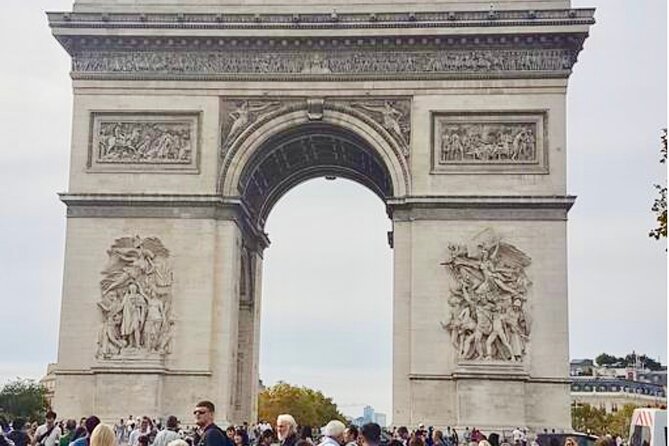
Then you’ll get a pass-by moment for Arc de Triomphe. The guide is clear about what’s happening: you don’t go up, and you don’t go inside. What you do get is a story and great photo opportunities from the outside. That’s a common-sense approach on a walking tour day—more time for the route and less time trapped in ticket lines.
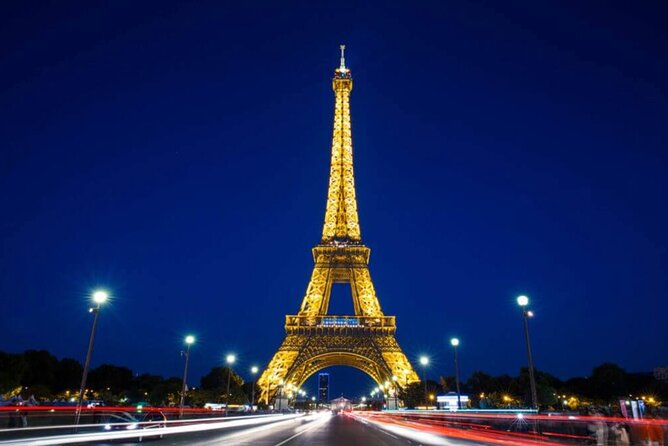
Next comes the Eiffel Tower, handled the same way: you won’t go inside, but you’ll take in the “how did this become the figure of Paris” explanation. The tour doesn’t treat the tower like the end of a checklist. It treats it like a turning point in Paris’ modern identity.
You’ll also get a chance for the best kind of Eiffel photo—angles and viewpoints in the surrounding area—rather than a single photo that everyone takes. If photos are part of why you’re here, this approach helps.
Moulin Rouge and the Latin Quarter: Paris with a pulse
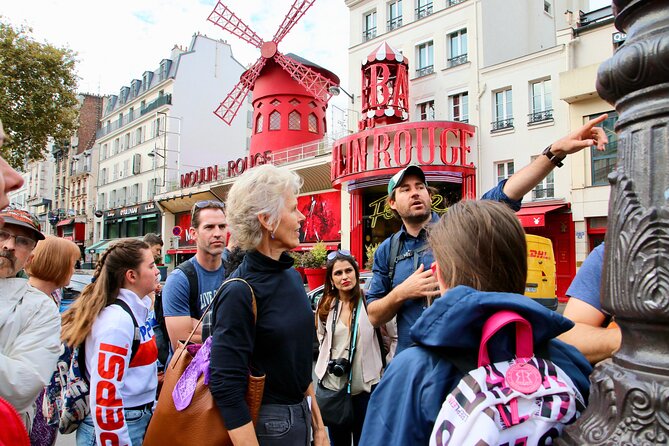
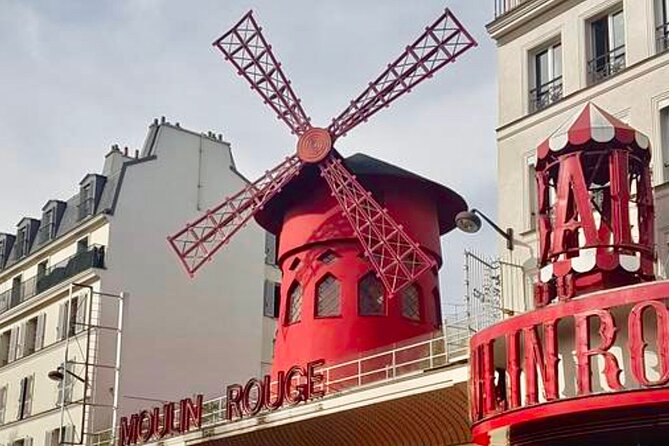
You’ll stop at Moulin Rouge for a quick history and stories segment. It’s not about going in or doing the show here. It’s about understanding the place’s cultural role and how it’s been perceived over time.
Then you head to Quartier Latin, with a focus on history and the neighborhood vibe. This is where Paris starts to feel like more than just monuments. You get street-level context—who lived here, what the district is known for, and how it became a shorthand for student life and nightlife over the years.
The tour also includes Jardin des Tuileries, described with a spicy clue in the setup: commissioned by a French queen (the guide gives the story as you go). You’re not doing a long stroll through the entire garden. You’re getting the “why it exists” and what the site represents, which is perfect for a half-day.
And yes, Champs-Élysées shows up too—briefly, with stories and the sense that the area is changing. You’ll get the overview without turning this into an endless walk along the most famous boulevard in Paris.



Louvre and the “why” stops: seeing without entering
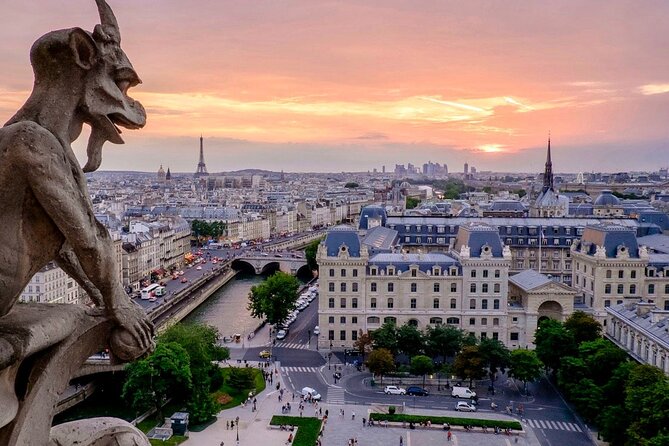
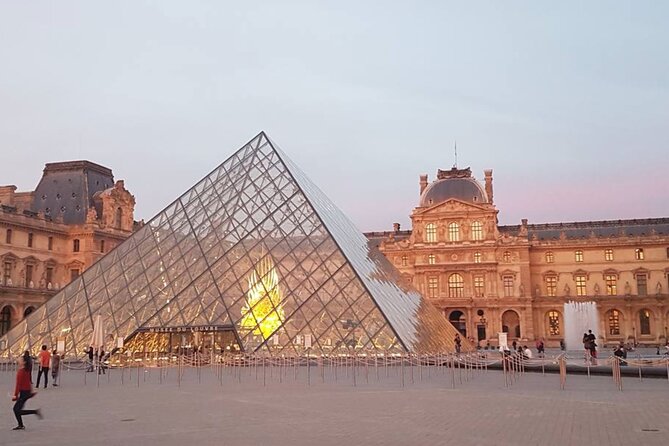
At the center of the route, the tour approaches the big cultural magnets—the Louvre included in the story—yet it stays outside-focused. The guide is clear: you won’t go inside the Louvre, but you will hear how it wasn’t always a museum and why it became what it is today.
This is a smart compromise. If you’re on a tight schedule, trying to do Louvre interior time during a walking tour can easily blow up your day. Instead, you get the context outside, which makes any future museum visit feel more connected. You’ll finish the tour near the Louvre entrance too, which can help if you want to continue on your own after the walk.
There are also a couple of “sightseeing and photos” pauses around the river-and-city center area. The route includes a spot tied to a famous TV reference in France (the Café des Deux Moulins on Rue Lepic) and additional photo points that connect Paris’ landmark shapes to their stories.
Notre-Dame area: Île de la Cité and a fire-scar history moment
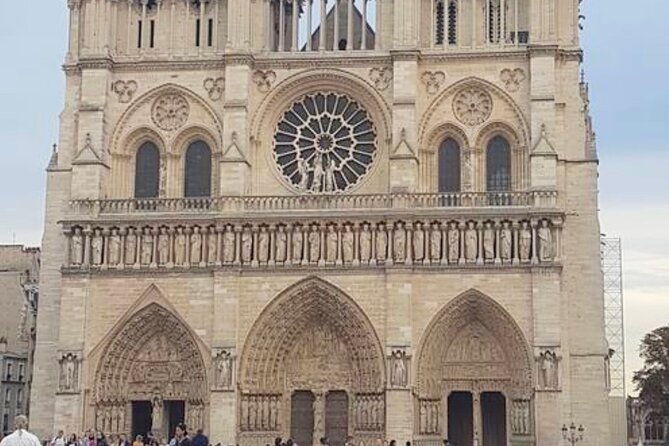
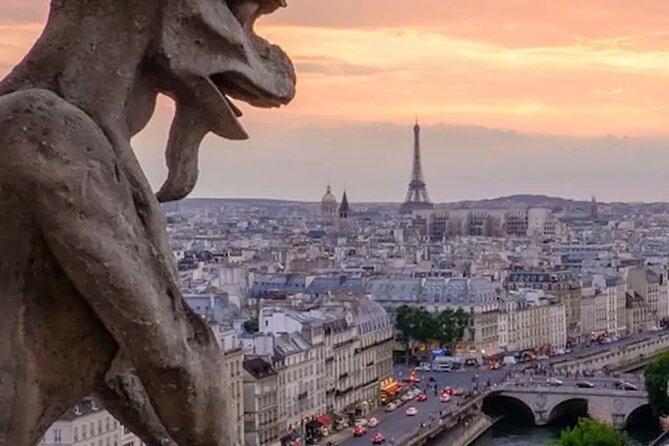
You’ll pass through one of the most powerful parts of central Paris: Cathedrale Notre-Dame de Paris. The tour frames it around the complex structure and the fact that the building was nearly destroyed by fire. Even without going inside, this is a stop that changes how you look at the cathedral from the street.
Then you reach Ile de la Cité, described as the islands at the heart of Paris. A short stop here works because the guide can point out what you’re looking at in terms of layout and importance—why this area became the geographic and symbolic core of the city.
You’ll also hit an oldest bridge in Paris viewpoint (the name is a hint in itself, and the guide explains the story). The value here is the angle: you get the photo and you learn the meaning behind it, instead of just crossing it without context.
Pompidou, department store sighting, and the Fontaines Wallace trick
The route includes Centre Pompidou. The plan is sightseeing and photos, with no mention of entry. That’s a good match for this tour style because Pompidou’s exterior already delivers a visual impact, and the guide provides enough story to connect it to Paris’ design conversations.
You’ll also see the big department store in Paris from the outside. The tour doesn’t turn it into a shopping hour; it uses it as another “sense the city” landmark. If you want to shop, you can return later. If you’re not shopping, you’re not forced into it.
A surprisingly fun recurring detail: Fontaines Wallace. You’ll see them in multiple places, and the guide explains what makes them notable. It’s one of those things that feels invisible until someone points it out. Once you notice them, you start spotting them everywhere.
Metro rides: the EASY PASS and Mobilis basics you must plan for
Walking tour or not, Paris still runs on the metro. This tour includes metro segments, and it’s not included in the price. You need an EASY PASS (12€) card, then top it up with a MOBILIS ticket for Zones 1&2 (listed at €12.00 per person). The tour plan assumes you’ll handle this ahead of time.
Here’s the practical part: don’t wait until the morning of the tour to figure it out. Metro lines can be confusing when you’re also trying to keep up with a group and timing. If you arrive with the pass ready, the tour stays smooth.
Also note: travel is included in the tour duration, but that means the tour uses transportation during the route. It doesn’t mean the metro ticket is magically covered. Plan for that extra cost in your budget.
Timing, pace, and what the 4–5 hours feels like
The advertised duration is 4 to 5 hours. In practice, that’s enough time to cover a lot of ground if you keep your expectations realistic: short stops, a few photo minutes, and enough story to connect the dots.
Some stops have extra variables:
- Sacré-Cœur interior depends on time and queue.
- Most of the big monuments are outside-only, so you’re not losing time inside.
- Certain photo stops include brief “sightseeing and photos” windows, so you’ll want to keep your phone ready and move when the group does.
Group size helps a lot here. With a maximum of 15 travelers, you’re not squeezed into a massive herd. It feels like a guided walk with a lot of stops, not a slow crawl with constant waiting.
Who this tour suits best (and who should choose differently)
This is a great fit if:
- You’re a first-time visitor and want a fast lay of the land
- You like stories that explain landmarks, not just facts
- You want photos at iconic spots without committing to multiple indoor tickets in one day
- You’d rather spend limited time outside, then pick museums later
It’s less ideal if:
- You’re hoping to get inside the Louvre or Eiffel Tower on the same day (you won’t)
- You prefer long, slow exploration of one neighborhood over hopping across the city
- You don’t want to plan for a metro pass (you do need it)
Value check: $75.01 and what you’re really paying for
At $75.01 per person for roughly half a day, you’re paying for an organized route plus an experienced guide and a lot of story-heavy orientation. The value is strongest when you treat this as your foundation tour.
A key detail: several stops are outside or listed as admission free, while big-ticket indoor access is not included (like Eiffel Tower entry). So the price isn’t buying you museum tickets. It’s buying you route design, timing, and context so you can spend your later time wisely.
If you’re already planning separate museum days, that makes this tour a smart investment. You’ll leave knowing where you want to return and what you want to prioritize.
Quick practical notes before you go
Bring layers. Paris weather can shift fast, especially on hillier areas like Montmartre. Wear shoes you don’t mind getting a bit of mileage from. The route is walk-heavy with short pauses.
Also, plan your expectations around inside access. Sacré-Cœur may or may not include interior time depending on the queue, but the Louvre and Eiffel Tower are outside-focused.
Should you book this Paris half-day walking tour of 30+ sights?
Book it if you want a guided “first day in Paris” backbone. You’ll get a tight scan of major areas—Montmartre, Latin Quarter, city center landmarks, and river-island core—with stories that help you understand what you’re seeing and where to go next.
Skip it or pair it differently if your top priority is guaranteed indoor time at the Louvre or Eiffel Tower. This is built for photos and context, not for museum checklists.
One more planning point: the tour requires good weather. If it gets canceled for weather, you’ll be offered another date or a full refund.
If you’re trying to make your next 2–3 days in Paris easier, this one is a strong place to start.