Medieval streets, one sweet stop, and real stories. This Hidden Paris walk takes you through the best-preserved medieval area of the Marais, plus the places that shaped revolutionary Paris—without the usual tourist bottleneck. You’ll start in front of the Centre Pompidou, then move across iconic squares and quieter lanes while your guide ties together art, religion, politics, and neighborhood life.
I like that this tour is built for an afternoon gouter mood: you get a classic French late-day sweet treat, not just “see a church, move on.” I also like the human scale of the experience—small groups (up to 12), with a local English-speaking guide named in multiple past tours (for example Céline, Benoit, Paloma, Linda, and Vivien), so the walk stays personal instead of lecture-like.
One thing to keep your expectations straight: this is not a full-on food tour. The included food is focused on a pastry sweet treat, and while some groups also spend time at specialty shops (like wine and cheese places) that’s not the same as getting lots of tastings.
In This Review
- Key highlights to look forward to
- Why a 3:00 pm Marais walk feels smarter
- From Centre Pompidou to the Marais: a smooth start with landmarks you can see
- Le Marais: best-preserved medieval Paris without the chaos
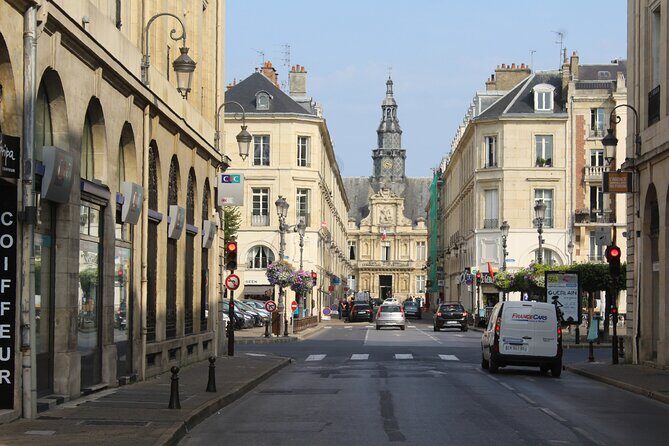
- Stravinsky Fountain and Hôtel de Ville: art and power in the same afternoon
- Saint-Gervais merveilles and the Jewish Quarter around Rue des Rosiers
- Place des Vosges and Bastille: old squares, big ideas
- The French gouter: what’s included (and what to budget for)
- Pace and logistics: why this tour works for most people
- Value check: $55.87 for a focused afternoon with a local guide
- Who should book this Marais medieval walking tour
- Should you book Hidden Paris: Explore Medieval Marais on a Walking Tour?
- FAQ
- Where does the tour start?
- What time does the tour begin?
- How long is the walk?
- How far do you walk?
- How many people are in the group?
- Is the tour offered in English?
- What food is included?
- Are there vegetarian options?
- Is it child-friendly?
- Can I cancel and get a full refund?
- What is the end point?
Key highlights to look forward to
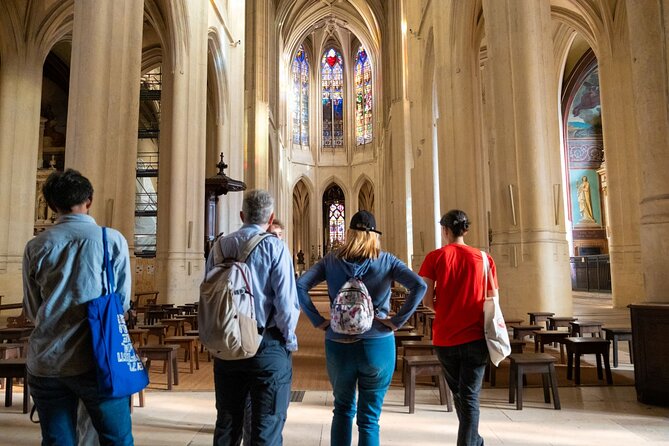
- Medieval Marais lanes beyond the loudest photo spots
- A real French afternoon sweet treat at the right moment
- Hôtel de Ville and Place de la Bastille ties medieval streets to revolution-era events
- Stravinsky Fountain for iconic photo angles and design context
- Stops in areas like Rue des Rosiers that connect Paris to its Jewish heritage
- Small group size (max 12) for questions and slower details
Why a 3:00 pm Marais walk feels smarter
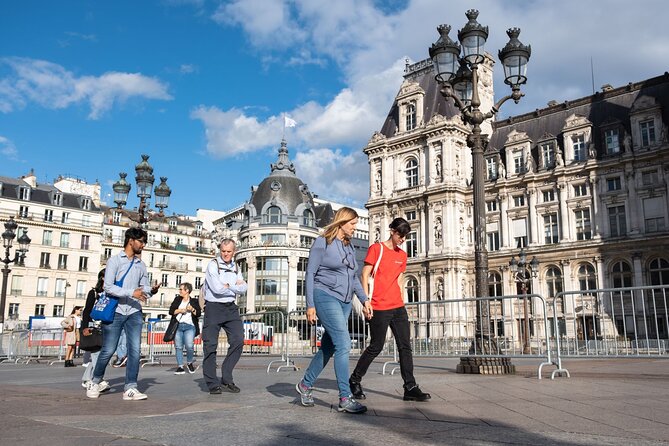
The Marais is famous, but it changes during the day. Going at 3:00 pm gives you a good mix: shops are awake, streets are active, and the neighborhood feels like Paris actually lives here—not just like a museum set. Your guide keeps you moving, yet you’re not sprinting between landmarks.
This timing also helps with the “hidden Paris” promise. Instead of only hitting the big, obvious corners, you’ll walk through the medieval core and pick up the small stuff that makes the neighborhood feel different—street shapes, church details, and the way squares connect different eras.
And since the tour covers about 2 km (1.2 mile) in roughly 2 hours, it’s paced like an afternoon stroll with purpose. You can do it even if you’ve already seen the biggest sights earlier in your trip.
You can also read our reviews of more tours and experiences in Paris.


From Centre Pompidou to the Marais: a smooth start with landmarks you can see
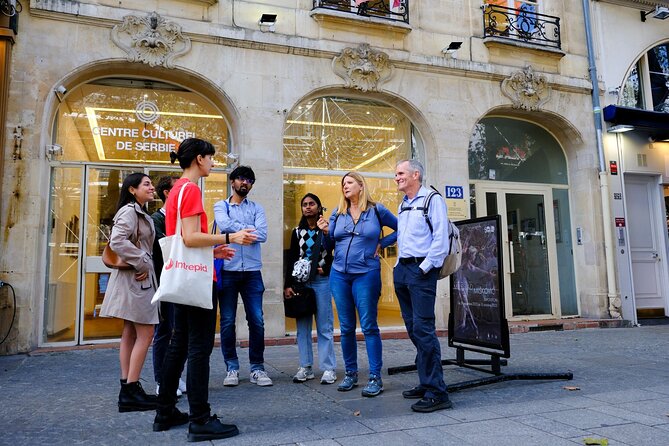
Your tour begins at 123 Rue Saint-Martin (75004). It’s an easy area to reach by public transportation, and you start with a visual anchor: Centre Pompidou. The point here is simple—you’re placed at a modern landmark so the shift into medieval streets feels more dramatic and clear.
You’ll spend a short moment at the Pompidou area (think exterior viewing time), then transition into the Marais. This “modern-to-medieval” rhythm is one of the best ways to understand Paris. The city isn’t one timeline. It’s layers stacked on layers, and the Marais is where that stacking gets especially obvious.
If you’re the type who likes to understand what you’re looking at, you’ll appreciate how the guide sets up the neighborhood before you start walking deeper.
Le Marais: best-preserved medieval Paris without the chaos
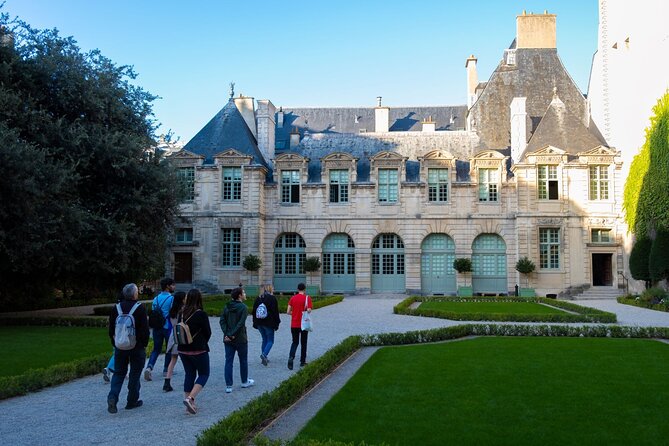
The heart of the tour is Le Marais, described as the best-preserved medieval area in that district. You’ll move through lanes that feel older than the classic tourist map suggests—stonework, street patterns, and building shapes that still carry medieval fingerprints.
This stop works because it’s not just “here are pretty buildings.” Your guide points out what makes the area distinctive: how the neighborhood layout supports community life, how certain streets and squares became stages for power, and how religious architecture sits right alongside everyday shopping streets.
A big plus: you’ll learn to read the Marais as a neighborhood, not a checklist. Once you learn the logic of where you are, you’ll start noticing hidden squares and quieter side streets on your own after the tour.
Stravinsky Fountain and Hôtel de Ville: art and power in the same afternoon
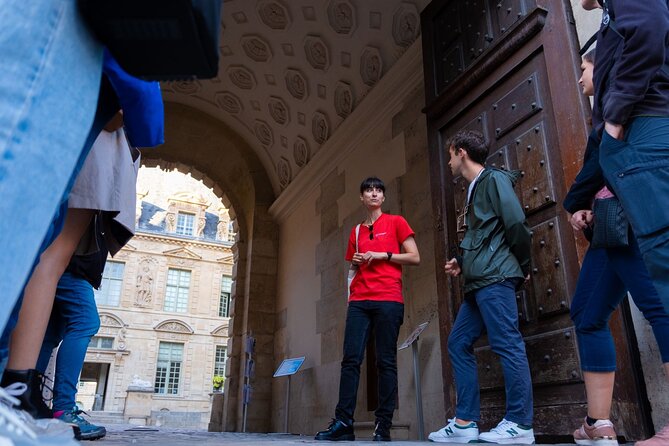
Next up is the Stravinsky Fountain. It’s famous for a reason: the design is playful, the angles are photo-friendly, and your guide gives you context for what you’re looking at. This is one of those stops where you can take pictures, but you’ll also come away understanding how Paris uses modern design in public spaces.
Then you shift gears to Hôtel de Ville (the City Hall). This is a “don’t just look—listen” stop. You’ll hear how the square connected to major events, including medieval executions, and even the first beheading with the guillotine. That detail matters because it changes the feeling of the building. It’s not just architecture now—it’s a reminder that this part of Paris has been a public stage for life-and-death moments.
If you’re curious about how the city got from medieval power to revolution-era change, this pairing is smart. Fountain to revolution in one walk keeps your brain engaged instead of bored.
Saint-Gervais merveilles and the Jewish Quarter around Rue des Rosiers
The tour then moves into a particularly memorable sequence: Church of Saint-Gervais followed by the sweet treat moment.
At Saint-Gervais, you’ll pass by the church just behind the square and get a glimpse of the interior. This isn’t the kind of stop where you get rushed through, because the tour’s rhythm is built around short, focused segments. You’ll see enough to understand the scale and artistry, then move on.
Right after, the guide brings you to the French gouter sweet. The tour’s included treat is a meringue known as a merveilleux. It’s the kind of dessert that feels very Paris, and it hits right when the afternoon starts to drag—sweet, light, and perfect for a walking tour.
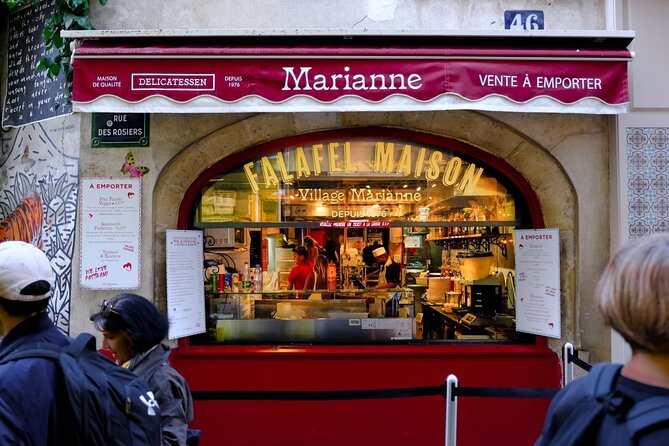
Then it’s time for La Rue des Rosiers, the heart of the Jewish community. You’ll walk this pedestrian street where you’ll see falafel stands and Jewish-influenced delis. Even if you don’t stop to eat there during the tour, you’ll get a sense of why this area has such a strong identity. It’s one of those places that makes the Marais feel lived-in, not staged.



Place des Vosges and Bastille: old squares, big ideas
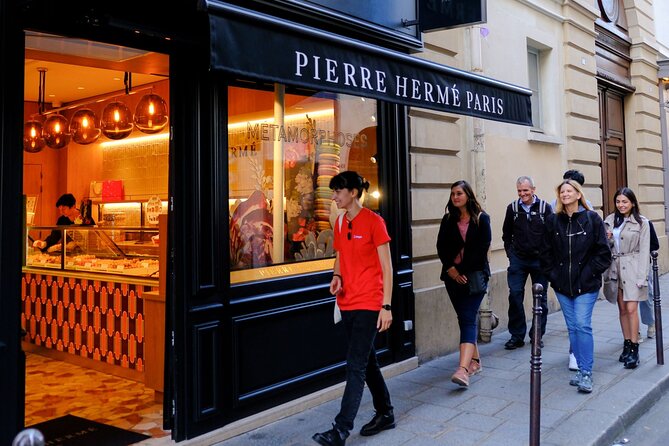
From Rue des Rosiers, you’ll head to Place des Vosges. This is one of Paris’s oldest and best-looking squares, and the guide ties it to the life of Victor Hugo, a key figure in French literature. The square works as a breather: wide open sightlines, clear geometry, and a different pace than narrow medieval lanes.
Finally, you end near Place de la Bastille. The Bastille area is historically loaded, because the tour explains how the prison and its fall connected to July 14, 1789—a trigger point for the French Revolution. Even if you know the broad story already, seeing the area in this sequence makes it feel less like trivia and more like geography.
And because you finish here, you’re set up for the evening. The Bastille area is full of bars and restaurants, so you can keep going for dinner or drinks after the tour ends.
The French gouter: what’s included (and what to budget for)
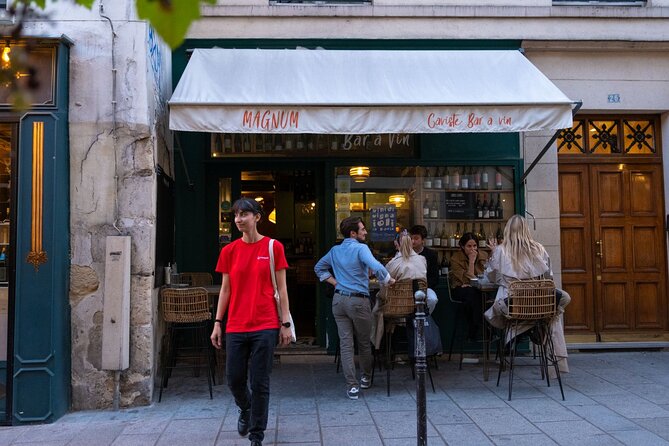
Let’s make this practical. The tour includes a sweet local pastry as your late-afternoon gouter. You’ll be treated to a merveilleux meringue, and the stop is built into the flow of the walk.
What it does not promise is a long chain of multiple food tastings. Even though some past groups describe extra shop stops—like wine and cheese tastings—your safest assumption is: the guaranteed inclusion is the pastry sweet treat, plus the guide’s recommendations and tips.
So if you want more eating, plan to pay for it separately. That also gives you control: you can choose what you’re craving at the moment, instead of being locked into whatever is on the menu that day.
For vegetarians, the tour can cater for vegetarians, which is a strong plus for a walking format where you don’t want to be stuck without options.
Pace and logistics: why this tour works for most people
This walk is short by Paris standards: about 2 km over two hours. That means you’ll still see a lot, but you won’t spend the whole trip with your feet screaming.
The group size is kept small—maximum 12 travelers. In practice, that tends to mean fewer slowdowns from crowd control and more chances to ask questions. You can also get more tailored restaurant and bakery tips.
One more practical point: the tour runs in English, and it’s child-friendly with children under 6 joining free. So it can work for families who want history plus a snack, not just a museum visit.
Weather-wise, it’s an outdoor walking tour, so bring an umbrella you trust. If it’s pouring, you may feel the schedule compress a bit—short stops help, but you still walk between them.
Value check: $55.87 for a focused afternoon with a local guide
At $55.87 per person for about two hours, the value is less about paid admissions (the listed stops are marked as ticket-free) and more about what you’re buying: time with a guide who helps you interpret what you’re seeing.
You’re paying for:
- a structured route through less obvious Marais streets
- context at the major moments (Centre Pompidou to medieval lanes to revolution-era Bastille)
- the included gouter pastry
- guide recommendations for where to eat and what to do next
If you’re the type who enjoys self-guided walking, you could DIY the Marais. But DIY won’t naturally teach you why Hôtel de Ville squares mattered historically, or what to notice in a church interior from just outside the doorway. The guide adds those “oh, that’s why” moments that make the neighborhood feel clearer.
This tour is also a good use of time if your schedule is tight. Doing a focused afternoon guided walk can cut down the trial-and-error that comes with exploring a district as complex as the Marais.
Who should book this Marais medieval walking tour
This is a strong fit if you want:
- history with street-level context (not just facts on a plaque)
- a small-group feel with time for questions
- a dessert break that fits an afternoon walking schedule
- a route that takes you beyond the most obvious Marais corners
It’s also a good choice if you’ve visited Paris before and want to see the city from a new angle. The Marais is famous, but you still can walk it wrong if you only follow the headline attractions.
If you want a long, foodie-heavy experience with many tastings, you might feel this tour is too light on food. Think “history walk with one main sweet moment,” not “eat your way through Paris.”
Should you book Hidden Paris: Explore Medieval Marais on a Walking Tour?
I’d book it if you want a smart afternoon plan in the Marais that balances medieval streets, iconic Paris squares, and a French gouter sweet treat. The small group size and the way the route connects modern art, church spaces, and revolution-era history make it feel more than just a stroll.
Skip it (or pair it with other food plans) if your main goal is lots of tastings. On this tour, your dessert is the headline, and the rest is about seeing and understanding.
FAQ
Where does the tour start?
The tour starts at 123 Rue Saint-Martin, 75004 Paris, France.
What time does the tour begin?
It starts at 3:00 pm.
How long is the walk?
It lasts about 2 hours (approx.).
How far do you walk?
The tour covers about 2 km (1.2 mile).
How many people are in the group?
The group maximum is 12 travelers.
Is the tour offered in English?
Yes, the tour is offered in English.
What food is included?
You’ll taste a sweet local pastry as your late-afternoon gouter.
Are there vegetarian options?
Yes. The tour can cater for vegetarians.
Is it child-friendly?
Yes. Children under 6 are permitted to join free of charge.
Can I cancel and get a full refund?
Yes. You can cancel up to 24 hours in advance for a full refund.
What is the end point?
The tour ends at Place des Vosges (Place des Vosges/Bastille area).