REVIEW · PARIS
Investigation game – Montmarte
Book on Viator →Operated by Quiveutpister · Bookable on Viator
Puzzles in Montmartre feel like a shortcut. This investigation game mixes an outdoor escape vibe with a city stroll, so you’re hunting clues while still seeing the neighborhood on foot. I especially love the team quest format, where you split roles and compare theories as you move through iconic and quieter streets.
You also get guides who keep things clear and funny, with named animators like Clément, Manon, and Marcus showing up in past sessions. That matters, because the best parts of these games are the pacing and the explanations, not just the riddles.
One drawback to note: in public sessions, teams can end up on slightly different timing based on how your group handles the investigation, so arrival can feel a bit uneven.
In This Review
- Key highlights worth knowing
- What this Montmartre investigation game actually feels like
- Timing, formats, and how 2.5 hours plays out
- Meeting at Place Marcel Aymé and getting started smoothly
- Stop-by-stop route: Sacré-Cœur to Abbesses
- Stop 1: Basilique du Sacre-Coeur de Montmartre
- Stop 2: Vigne du Clos Montmartre
- Stop 3: Rue de l’Abreuvoir
- Stop 4: Place des Abbesses
- Public competition vs private treasure hunt: choose your stress level
- What you’re really paying for: value at $60.21
- Guides, humor, and why the animation matters
- Footwear, fitness, and who should do this
- Easy planning tips before you go
- Should you book the Montmartre investigation game?
- FAQ
- How long is the Montmartre investigation game?
- Where is the meeting point?
- When does the activity end?
- How much does it cost?
- Is it offered in English?
- What locations does the route include?
- What’s included in the ticket price?
- What about what I should bring?
- What format can I choose: public or private?
- How many people are in a group?
- Can I cancel for free?
Key highlights worth knowing
- Team-based clue solving across classic Montmartre streets, not just one photo-stop after another
- Sacré-Cœur plus practical local angles, including time at the Vigne du Clos Montmartre
- Two formats: public competition (shared field) or private treasure hunt (your group only)
- Mobile ticket and provided game equipment so you can start without hunting for props
- Humor and patience from the host (Clément, Manon, Marcus have guided past games)
- A small prize for top investigators, which adds a fun finish line
What this Montmartre investigation game actually feels like
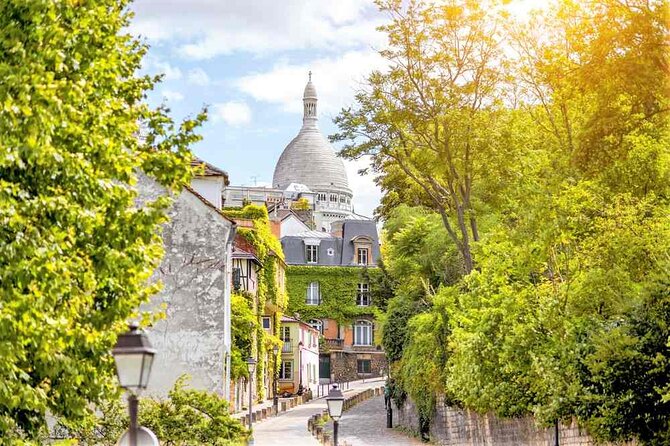
Montmartre can be touristy fast. This game is a clever way to slow you down and get your eyes working. Instead of following a script, you follow clues—then you’re rewarded with mini-stories, street-level details, and the kind of route you’d never pick just by looking at a map.
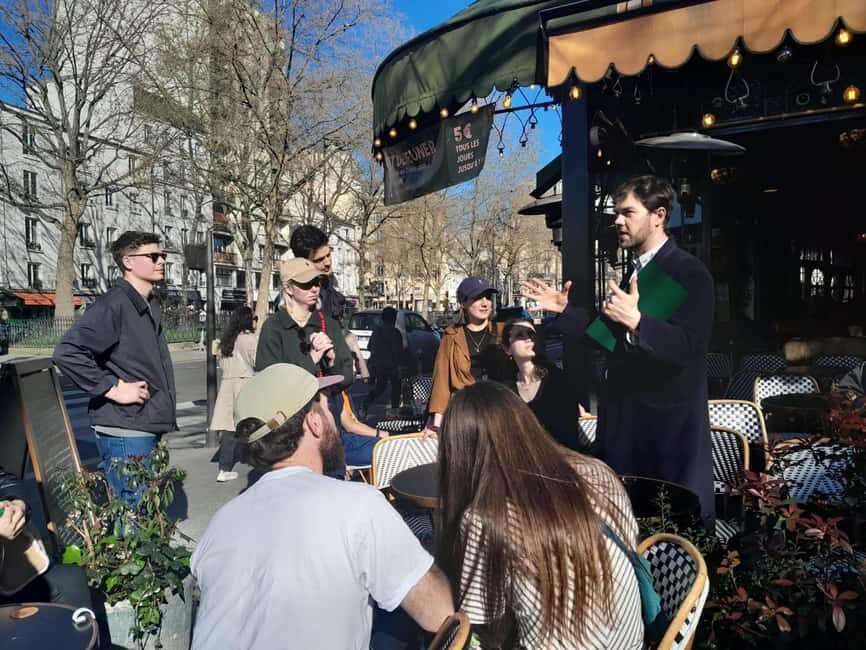
The setup is simple: you’ll form teams, receive instructions, and then work through an investigation. You’re not just “walking with activities.” You’re making decisions together—finding, comparing, and solving.
And yes, it still functions like a proper Montmartre outing. You hit big-name landmarks, but you also get pulled down side streets and lesser-walked lanes where the neighborhood feels more real.
You can also read our reviews of more tours and experiences in Paris.



Timing, formats, and how 2.5 hours plays out
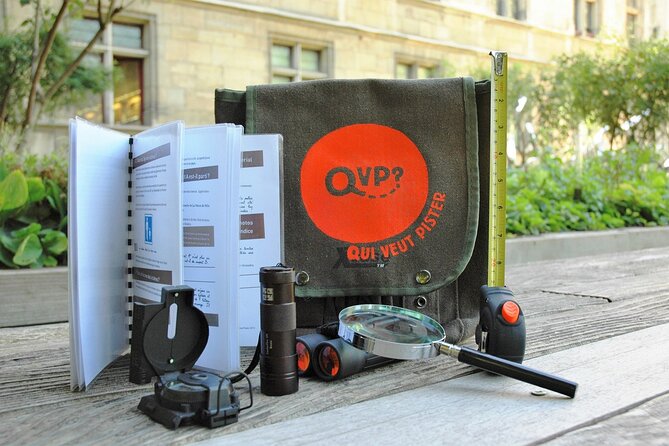
The advertised duration is about 2 hours 30 minutes. In practice, the pace can vary by how quickly teams solve the clues. Some groups finish faster, and some take a bit longer, especially when they choose to stop and think rather than rush.
There are two game formulas:
- Public session (competition): you’re placed in a field with other participants outside your group. A public session runs on Saturdays at 2:30 p.m.
- Privatized treasure hunt (private game): your group is alone on the route, so there’s no competition pressure from other teams in the same game space.
For me, the best part is choosing the vibe. Public feels energetic and social. Private feels calmer and more like a custom team challenge with your own rhythm.
Meeting at Place Marcel Aymé and getting started smoothly
You meet at Place Marcel Aymé (75018 Paris), and the activity ends back at the same spot. That loop matters. You’re not stuck navigating your own way back uphill after a game.
Also, the experience includes all fees and taxes, plus the equipment you need for the game at the departure point. You bring your brain, your team, and your feet.
One small, practical tip: the game is described as requiring moderate physical fitness. You’re in Montmartre, so you’re walking. Plan for uneven pavement and slopes, and wear something comfortable enough to keep you focused on clues instead of foot pain.
Stop-by-stop route: Sacré-Cœur to Abbesses

The route is built around four key locations. Each one is a stage for the investigation, not just a checkpoint.
Stop 1: Basilique du Sacre-Coeur de Montmartre
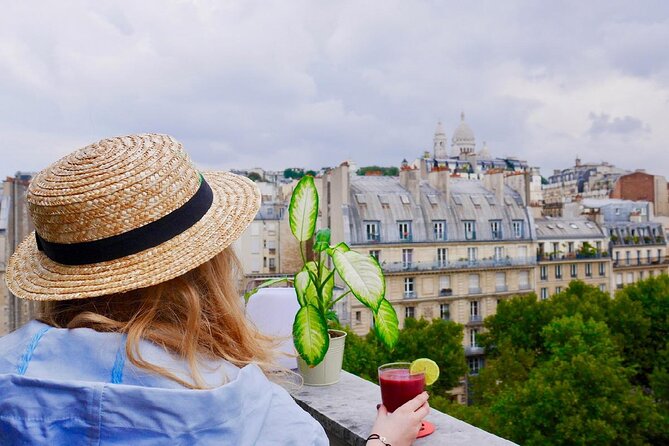
This is your headline landmark. You start with the energy of the basilica area, which helps the game feel instantly “Montmartre.” Even if you’ve seen Sacré-Cœur from viewpoints before, this start point gives you a reason to look closer.
Why this works: the area naturally funnels people through streets and viewpoints, which makes it easier for the game to guide teams through directions without confusion. You also get the satisfying feeling of starting at the most recognizable spot, then turning from spectacle into clues.
Possible downside: crowds can be part of the experience here, especially if you’re in a busy time window. The game helps, but you still may have slower movement.



Stop 2: Vigne du Clos Montmartre
This is the surprise stop. A vineyard in the middle of Montmartre sounds like a trick, but it gives the game a different texture than the usual stone-and-tourist route. It’s a moment where the neighborhood feels more layered—less postcard, more place.
Why this is valuable: it breaks the rhythm. Instead of repeating views, you get a quieter, more local-feeling environment, which is ideal for clue-solving because your team can slow down and read carefully.
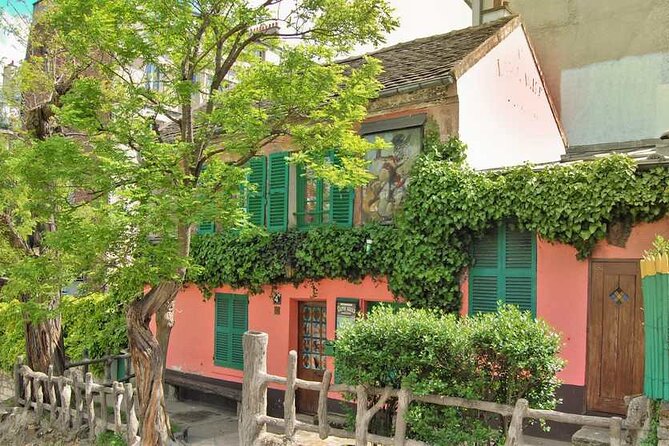
Stop 3: Rue de l’Abreuvoir
This street adds atmosphere and variety. It’s the kind of route section that helps you understand Montmartre beyond the main sights. Streets like this can feel more “lived-in,” and that matters when the game asks you to notice details.
What you’ll notice on this part: your team’s wayfinding becomes part of the puzzle. It’s not only about solving questions—it’s also about orienting yourselves in the neighborhood and staying together.
Stop 4: Place des Abbesses
You finish with a strong neighborhood anchor. Place des Abbesses gives you a sense of arrival, with a lively square energy that feels distinctly Montmartre.
Why this is a smart finish: the end of a game is when you’re most likely to want clear landmarks to regroup. Finishing here helps teams meet back up and wrap the experience without stress.
Also, based on the format and game progress, your final stage may include an additional prompt or conclusion moment for the investigation.
Public competition vs private treasure hunt: choose your stress level
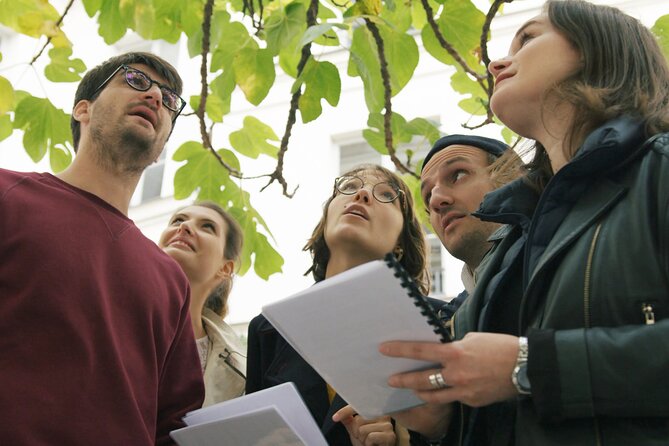
If you like friendly competition, a public session can be a blast. It’s a shared experience, so the atmosphere feels more like a game night outdoors.
If you prefer a smoother flow, choose the private option. The privatized treasure hunt keeps your group alone on the game, which usually means:
- fewer distractions from other teams nearby
- a more controlled pace for your group’s problem-solving style
Keep one reality in mind. In public sessions, your group’s route progress may feel slightly different from others. That’s not a quality issue—it’s just how team puzzle speed works. The upside is that it still makes the finish feel like something you earned.
What you’re really paying for: value at $60.21
At $60.21 per person, you’re not buying a “museum ticket with a guide.” You’re buying time, structure, and game materials built around Montmartre’s streets.
Here’s the value logic that makes sense for most people:
- You get a planned route instead of trying to DIY a clue game in a hilly neighborhood.
- Game equipment is provided, so you’re not paying extra for props or downloads you didn’t ask for.
- All fees and taxes are included, which helps you avoid surprise add-ons at the end.
- The experience is time-efficient: about 2.5 hours, which fits nicely into a Montmartre morning or afternoon slot.
Also, the price feels more reasonable if you’re sharing the fun with a small group. This kind of activity shines when teams can talk, compare, and laugh at their own wrong guesses.
The game includes a reward for top investigators, and that incentive gives the experience a clean finish line.
Guides, humor, and why the animation matters
This isn’t a passive walking tour. A lot depends on the guide’s ability to keep the game moving and explain what you need without turning it into a lecture.
Past sessions highlight named animators such as Clément and Manon, with comments also mentioning Marcus. The consistent theme is patience, good humor, and clear instructions.
That’s important for you because Montmartre can be confusing for first-timers. If the host is sharp at guiding teams back on track, the game stays fun even when someone misreads a clue or the street layout gets tricky.
Footwear, fitness, and who should do this
The activity asks for moderate physical fitness, and walking shoes are listed as not included. That doesn’t mean you need to train for a marathon, but you should plan for real walking and slopes.
You’ll likely enjoy this most if you:
- like puzzles, riddles, and solving clues as a group
- want a more active way to see Montmartre than a standard walking tour
- are traveling with friends, family, or a team challenge mindset
- appreciate learning through discovery, not just listening
You might want a different option if:
- you prefer mostly seated sightseeing
- you’re expecting a fully accessible, low-movement experience (the game includes walking)
- you don’t want any competition at all (then consider privatized)
Easy planning tips before you go
A few practical notes will make this smoother:
- Wear comfortable clothes and sneakers. You’ll be on foot for the full session.
- Bring a team mindset. Even if you’re strong at puzzles, success comes from working together and sharing what you find.
- Choose public vs private based on your group’s tolerance for pace differences.
If you’re doing this as part of a Montmartre day, think of it as your “anchor activity.” It gives the rest of your day a clear structure: you arrive, you play, you leave with a better feel for the neighborhood.
Should you book the Montmartre investigation game?
Book it if you want Montmartre to feel like an interactive experience rather than a checklist. The mix of landmark stops and puzzle-driven street time is the right combo for people who love walking but don’t want to walk aimlessly.
Skip it (or consider private) if your group hates competition or you’re worried about uneven timing. Public sessions can run slightly different based on how quickly teams solve the game.
Overall, at $60.21 with equipment included, a guided route, and a clear two-and-a-half-hour plan, it’s a strong value—especially if you travel in a group that likes to talk, laugh, and solve problems together.
FAQ
How long is the Montmartre investigation game?
It runs about 2 hours 30 minutes (approximately).
Where is the meeting point?
The start point is Place Marcel Aymé, 75018 Paris, France.
When does the activity end?
It ends back at the meeting point.
How much does it cost?
The price is $60.21 per person.
Is it offered in English?
Yes, the experience is offered in English.
What locations does the route include?
The route includes Basilique du Sacre-Coeur de Montmartre, Vigne du Clos Montmartre, Rue de l’Abreuvoir, and Place des Abbesses.
What’s included in the ticket price?
You get all fees and taxes, plus all equipment necessary for the game provided at the departure location.
What about what I should bring?
Walking shoes are not included, so wear something comfortable for walking.
What format can I choose: public or private?
Two options are offered: a public session (competition, Saturdays at 2:30 p.m.) and a privatized treasure hunt where your group is alone on the game.
How many people are in a group?
The experience has a maximum of 40 travelers.
Can I cancel for free?
Yes. You can cancel for a full refund if you cancel up to 24 hours in advance of the experience start time.