REVIEW · PARIS
Live, Laugh, Love Along the Seine: Self-Guided Romantic Tour
Book on Viator →Operated by Questo · Bookable on Viator
Paris gets playful along the Seine.
This self-guided, interactive game turns a stroll into a set of mini challenges across classic sights, and it works offline with no map, GPS, or internet. I especially like the pause-anytime flexibility, so you can linger for photos or duck into a café without losing the flow.
You can also start whenever you want inside the daily window, then keep going at your pace until you finish. The one drawback to watch is that the game depends on you reading directions carefully, and if you rush through clues you can wander the wrong way and waste time.
Key points to know before you play
- Offline by design: no data needed, so you can walk confidently without phone signal stress.
- Short, bite-size stops: each location is a quick look-around moment, not a long guided lecture.
- Romantic pacing: the route flows from iconic bridges into classic Left Bank café life.
- Pause and resume: take breaks for coffee, photos, or just standing there and taking it all in.
- Private game for your group: no human guide, and it’s just you—less crowd friction.
In This Review
- Entering the Seine With a Mobile Puzzle, Not a Lecture
- How the Offline Game Works (No Map, No GPS, No Internet Needed)
- Arc de Triomphe du Carrousel: Start With the Right Stare
- From the New Louvre Pavilions to Pont des Arts: Look for the Details
- Ladurée le Bar and the Classic Café Lineup: History You Can Smell
- Saint-Germain-des-Prés, Procope, and Fontaine Saint-Michel: The Old Paris Trilogy
- Shakespeare and Company to Notre-Dame: When the Seine Feels Literary
- Conciergerie, Pont Neuf, and the Henry IV Statue: Stone With a Story
- Île de la Cité and the Weeping Willow Finish: A Calm Ending Spot
- Price, Time, and Value for a Two-Hour Paris Date
- Who This Seine Romance Game Fits Best
- Should You Book This Seine Romance Game?
- FAQ
- Do I need an internet connection to play?
- Is there a live guide with this tour?
- How long does the experience take?
- What language is the game in?
- Where does the tour start and end?
- Can I pause the game and come back later?
- When can I start?
- Can I cancel for a full refund?
Entering the Seine With a Mobile Puzzle, Not a Lecture
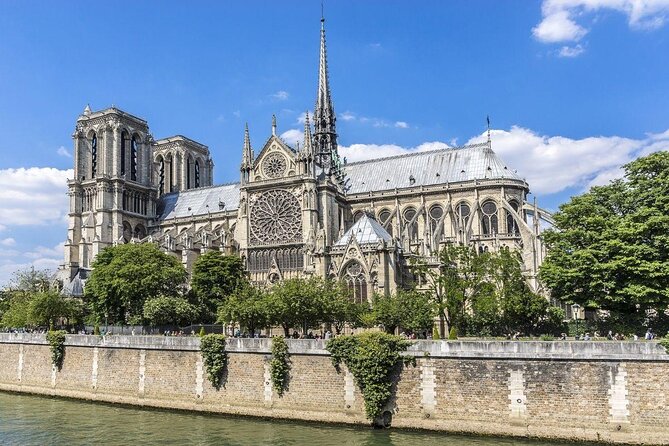
This tour works like a romantic walking game, not a museum circuit. You’re given a set of locations along the river corridor and asked to find answers by looking around, then move on to the next stop.
I like that approach because Paris sightseeing can get passive fast. Here, you stay engaged. You’ll read hints on your phone, notice details you might otherwise walk past, and connect landmarks with the stories behind them.
Also, because it’s private and no human guide is involved, you’re not tied to anyone else’s pace or questions. That’s a real advantage for couples, friends, or anyone who gets tired of being steered.
How the Offline Game Works (No Map, No GPS, No Internet Needed)
The biggest practical win is that you don’t need help from your phone’s data connection. The experience is designed so you can play offline, which means less battery anxiety and fewer moments of staring at a map while you’re in the middle of a great view.
Plan for this: the game expects you to move between specific points. If you treat it like a casual walk where you only glance at hints, you may miss the exact direction for the next clue. One of the best pieces of advice I can give is to take your time at each stop—especially the first one—before you move on.
Duration is listed as about 2 hours, but the route includes more than a dozen meaningful locations. You can finish faster if you’re confident, or slower if you’re photographing a lot and enjoying the café culture.
You can also read our reviews of more tours and experiences in Paris.



Arc de Triomphe du Carrousel: Start With the Right Stare
Your game begins at Arc de Triomphe du Carrousel on Pl. du Carrousel. This is a Napoleonic-era arch built in the early 1800s, meant originally as a grand entrance linked to the Tuileries Palace.
What makes the start work well for the game is that you can actually observe the site and its context without special effort. The Tuileries was destroyed by fire in 1871, and people later decided the arch could stand on its own. You’ll also get an important clue about how the opening of views toward the Champs-Elysées changed how the area feels.
Game-wise, this is where you want to slow down. Your first stop is the moment where most people get their bearings. If you rush, it’s easy to misread where you’re supposed to go next and end up walking in the wrong direction for a while.
From the New Louvre Pavilions to Pont des Arts: Look for the Details
Next, you shift into the riverbank Louvre world. You’ll encounter the southern limb of the New Louvre, with five great pavilions along the Quai François Mitterrand side: Pavillon de la Lesdiguieres, Pavillon des Sessions, Pavillon de la Tremoille, Pavillon des États, and Pavillon de Flore.
This part is useful because it teaches you to read the shoreline architecture as more than a pretty backdrop. You get named pavilions instead of vague landmark blobs, and that helps your photos and your memories later.
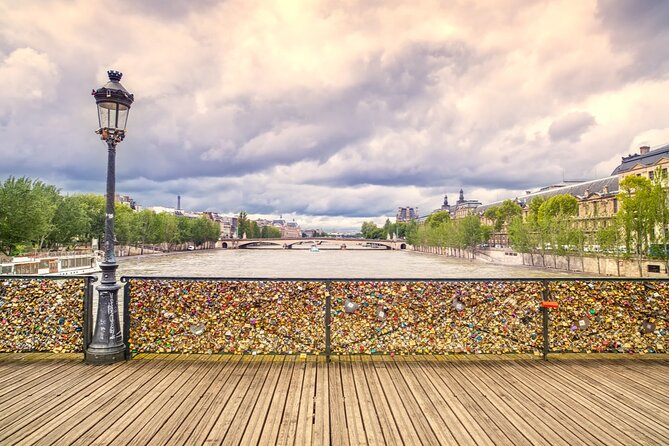
From there, the game guides you to Pont des Arts. This bridge was built between 1802 and 1804 under Napoleon I and links the Institut de France side with the Louvre area. Historically, it ties into what the Louvre meant two centuries ago when it was called the Palais des Arts.
The hint style here matters. You’re not just walking for views—you’re walking to notice what the place is telling you. That’s how the Seine route becomes more than sightseeing.
Ladurée le Bar and the Classic Café Lineup: History You Can Smell
A big part of this game’s charm is that it threads in places where Paris feels lived-in, not staged. After Pont des Arts, you land at Ladurée le Bar, connected to the Ladurée family story that begins in 1862 with Louis Ernest Ladurée opening a bakery at 16 rue Royale.
Then the route keeps moving through café landmarks on the Left Bank side:
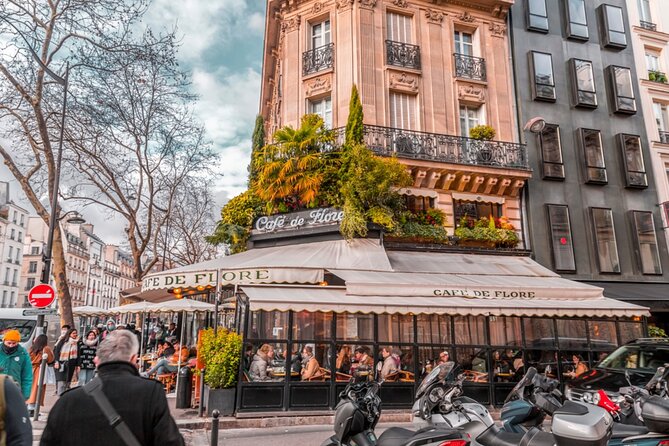
- Café de Flore, founded in 1887 during the Third Republic, named after a sculpture of Flora, the goddess of flowers and spring.
- Les Deux Magots, named for two Chinese figurines linked to a novelty shop that used to occupy the premises, with café statues tracing back to the early 1800s and a move to Place St-Germain-des-Prés in 1873.
Even if you don’t sit down to order anything, this sequence gives you a satisfying rhythm: walk, read, look around, then enjoy the sense of old Paris café culture in your bones. If you do want a drink, this is one of the best parts of the route to do it—because the game pauses work in your favor.
Practical tip: if you plan to stop for snacks or coffee, don’t do it right before a clue. Get the clue done first, then relax. That way you don’t rush your seating time.
Saint-Germain-des-Prés, Procope, and Fontaine Saint-Michel: The Old Paris Trilogy
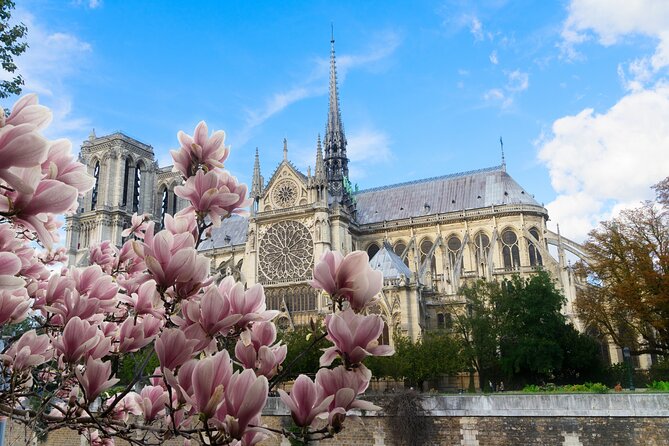
Next you head toward Saint-Germain-des-Prés, focused on the abbey church that remains as Église de Saint-Germain-des-Prés. The story in this section points you to how early medieval events shaped the church’s role in the city.
Then the game takes you to Procope, a restaurant with roots going back to 1686. The founder, Francesco Procopio dei Coltelli, opened a coffee house on Rue des Fosses Saint-Germain, and this location still carries that legacy.
After that, you reach Fontaine Saint-Michel, a monumental fountain in Place Saint-Michel. Built between 1858 and 1860 by architect Gabriel Davioud during the French Second Empire, it’s been a listed monument since 1926.
This cluster is great for two reasons. First, it gives you a sense of continuity: medieval church, early coffee-house culture, then Second Empire public art. Second, it offers real visual cues for the game—fountains, building fronts, street-level details—things you can actually spot while standing still.


Shakespeare and Company to Notre-Dame: When the Seine Feels Literary
The route then shifts into the most romantic and iconic stretch of the riverbank. Shakespeare and Company is an English-language bookshop open to the public imagination since 1951, described here as opposite Notre-Dame and positioned as a meeting place for anglophone writers and readers.
Even if you don’t buy a book, pause and look around. This is the kind of place where the setting itself is part of the story, and it pairs perfectly with a game that asks you to pay attention.
From there, you’re at Notre-Dame de Paris on Île de la Cité. The game framing emphasizes its Gothic identity and its dedication to the Virgin Mary, so you’re not only admiring the structure—you’re also connecting it to why it matters.
A note for pacing: Notre-Dame is visually huge, but the game stop is designed to be short. So focus on what the hint is asking you to find, then enjoy the broader view without turning the stop into an all-day detour.
Conciergerie, Pont Neuf, and the Henry IV Statue: Stone With a Story
After Notre-Dame, the next stop is Conciergerie, a building on the west side of Île de la Cité that used to be a prison and is now used mostly for law courts. It belonged to the wider royal palace complex: Palais de la Cité, including Conciergerie, Palais de Justice, and the Sainte-Chapelle.
This is one of those spots where the history weight is visible even from the outside. The game approach helps because you get a question prompt, so you don’t just feel overwhelmed by significance—you work through it step by step.
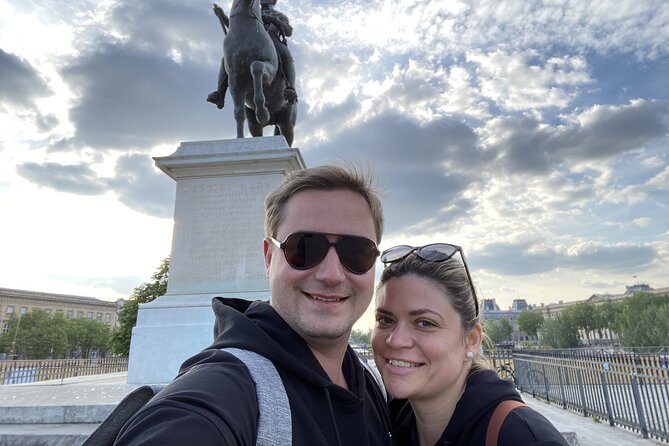
Then you reach Pont Neuf area and a bronze equestrian statue of Henry IV, completed by Pietro Tacca. The statue was indirectly commissioned by Marie de Médicis for her husband, Henry IV, and the game has you look around at the river scene tied to this monument.
This is a nice change from the café-heavy earlier segment. You go from everyday Paris voices to royal-scale symbols, and your route makes that transition feel natural.
Île de la Cité and the Weeping Willow Finish: A Calm Ending Spot
Near the finish, you get to the area connected to Saule Pleureur de la Pointe. The background here connects Île de la Cité to Celtic settlement history, including the Parisii people, which is tied to the city name.
Finishing at 1 Square du Vert Galant makes sense because it’s a natural “exhale point” after a cluster of major sights. You can end the game and still have a beautiful place to linger, take photos, and decide what you want to do next.
Price, Time, and Value for a Two-Hour Paris Date
At $7.21 per person, this is unusually good value for what you’re getting: an organized route, short stops, and an offline interactive format that covers a major chunk of central sights.
Why it feels like value:
- You’re paying less than you would for most guided experiences, but you still get structure.
- The offline game means you’re not burning time on navigation.
- The ability to pause and resume helps you avoid the feeling of being rushed through Paris.
Also, it’s offered in English, and it’s listed as available every day with flexible start times. If you’re planning a trip with uneven sightseeing energy, that matters.
At the same time, you should be honest about what you want. If your dream is an expert guide explaining context in real-time, this is not that. It’s a self-guided game that rewards you for looking closely and reading clues.
Who This Seine Romance Game Fits Best
This is ideal if you want:
- a romantic feel without going too formal
- an easy, low-stress plan for 2 hours
- a way to see famous spots and also move into classic café neighborhoods
It also works well for small groups, since it’s private and you avoid the crowd choreography that comes with group tours. If you’re comfortable walking at a leisurely pace and reading short instructions, you’ll probably enjoy the rhythm.
If you get easily frustrated by direction changes or you hate clue-style tasks, you might find it takes more attention than a traditional walk. The good news: the fix is simple. Slow down at the first stop and follow the game prompts before you start moving faster.
Should You Book This Seine Romance Game?
I’d book it if you want a fun, structured way to fall into Paris without dealing with GPS or a guide schedule. The offline setup, the short stops, and the option to pause make it practical for real travel days.
Skip it only if you strongly prefer a guide’s storytelling or if you know you won’t read the hints closely. In that case, you may spend too much time walking back and forth, and the magic of the route won’t land.
If you like walking with a purpose and you enjoy small discoveries—bridges, cafés, monuments, and the feel of the Left Bank—this is a smart pick.
FAQ
Do I need an internet connection to play?
No. The experience is designed for offline play, so you do not need internet connectivity during the game.
Is there a live guide with this tour?
No. This is a self-guided game, so there is no physical tour guide.
How long does the experience take?
It’s listed as approximately 2 hours.
What language is the game in?
The experience is offered in English.
Where does the tour start and end?
It starts at Arc de Triomphe du Carrousel, Pl. du Carrousel, 75001 Paris, France, and ends at 1 Square du Vert Galant, 75001 Paris, France.
Can I pause the game and come back later?
Yes. You can take a break whenever you’d like and resume later.
When can I start?
The listed daily window is 5:00 AM to 9:00 PM, every day of the week.
Can I cancel for a full refund?
Yes, you can cancel for a full refund if you cancel at least 24 hours in advance of the experience start time.