REVIEW · PARIS
Medieval Paris Private Tour
Book on Viator →Operated by Paris in person · Bookable on Viator
Medieval Paris comes alive on foot. This private walk strings together the Île de la Cité, the Latin Quarter, and other medieval landmarks with a professional art historian guide. I especially like the way you’re taught to read architecture, so Notre-Dame and the Fountain of the Innocents become more than postcard stops.
The main tradeoff is that key places are explained from the outside. From afar views are part of the plan, including Notre-Dame, and the tour also focuses on the Musée de Cluny building without going inside.
That said, you get the best part: time to ask questions. Because it’s private, your guide can pace the walk to your interests and zoom in on the details you care about most.
In This Review
- Key highlights worth planning around
- Medieval Paris on foot: what the 2-hour route is really for
- Private guide logistics: small group comfort and smart pacing
- From the Musée de Cluny building: why you don’t need to enter to learn
- Notre-Dame from afar: how to make restoration years meaningful
- La Sorbonne and medieval scholarship in the Latin Quarter
- Tour Saint-Jacques: pilgrims, astrologers, alchemists, and flamboyant Gothic
- Fountain des Innocents: the cruel side of medieval everyday life
- Centre Pompidou and the medieval influence you might not expect
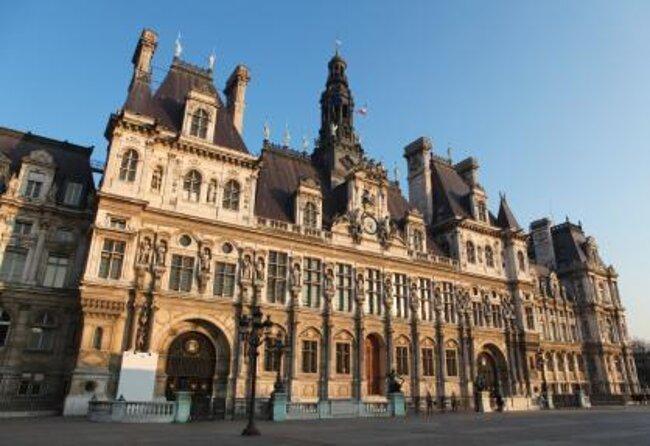
- Hôtel de Ville: the medieval core behind a Renaissance face
- Price and value: $360.48 per group, and what you’re buying
- Tips to get the most from this medieval-focused walk
- Should you book the Medieval Paris Private Tour?
- FAQ
- FAQ
- How long is the Medieval Paris Private Tour?
- Is the tour offered in English?
- Where do we meet and where does the tour end?
- Is this a private tour for just my group?
- What is included in the experience price?
- Are there entrance tickets included for the stops?
- What level of physical fitness is needed?
- Are children allowed?
- How big can the group be?
Key highlights worth planning around
- Art historian-led medieval storytelling focused on what you’re looking at, not just dates
- Notre-Dame and major sites viewed strategically while access is limited
- Latin Quarter landmarks that connect scholarship, faith, and city life
- Tour Saint-Jacques tied to pilgrims, astrologers, and alchemists
- Fountain des Innocents used as a reality check on medieval daily life
Medieval Paris on foot: what the 2-hour route is really for
The Medieval Paris Private Tour is built for people who want context, not a speed-run. In about two hours you walk through parts of Paris where the Middle Ages are still visible in shape, stonework, and city layout. It’s the kind of route that helps you stop staring at buildings like they’re random art—and start seeing them as tools, messages, and institutions.
This is also a guide-first experience. With a professional art historian leading, you’re not left guessing why a particular church looks the way it does or why a civic building carries medieval weight. You’ll get explanations you can carry with you long after the walk ends, especially if you plan to explore central Paris afterward.
The route is moderate on foot. You’ll be moving through central neighborhoods on sidewalks and streets that can feel tight. Bring comfortable shoes so you can listen without constantly adjusting your stride.
You can also read our reviews of more tours and experiences in Paris.



Private guide logistics: small group comfort and smart pacing
The tour is priced per group (up to 6), and the booking cap is up to 10 people. Either way, it’s still a private format, meaning only your group participates. That matters more than you might think in Paris. Small-group or private walking tours let you stop without holding up a crowd, and it’s easier to ask a follow-up question when the guide isn’t multitasking for a larger group.
Language is English, and you’ll use a mobile ticket. You’ll also appreciate the timing: the tour averages being booked about 39 days in advance. If you want a specific day, don’t wait until the last minute.
Meeting is near the Pompidou area—at 98 Bd Saint-Germain (by the Stravinsky fountain). The tour ends at 26 Rue Saint-Merri in the 4th arrondissement. That end point is handy if you want to keep strolling through older streets right after.
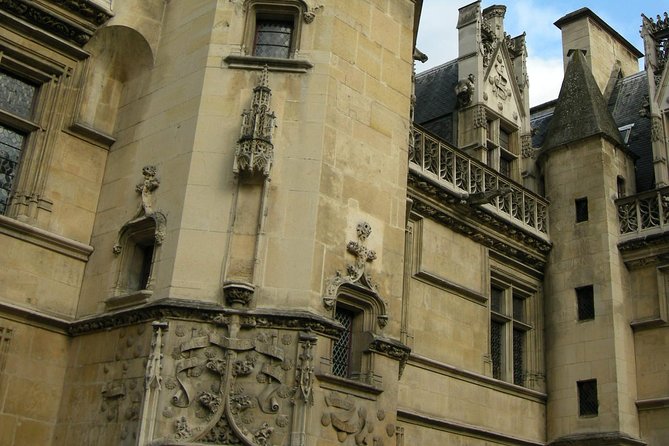
From the Musée de Cluny building: why you don’t need to enter to learn
Your first stop is at the Musée de Cluny area, tied to one of Paris’s best medieval anchors: the building itself. The plan here is not an inside museum visit. Instead, you get guided commentary on how the structure reflects the medieval period in Paris.
That can actually be a good use of time. Museums of the Middle Ages are their own world, and inside access deserves a dedicated visit. Starting with the building gives you a quick education in medieval materials and forms, so later you’ll spot patterns more easily—how styles evolve, what parts were kept, and what’s emphasized.
If you already know you want to see the museum interior, this tour can still help. It sets you up to recognize what you’re looking at later, rather than walking into a room and hoping the labels explain everything.
Notre-Dame from afar: how to make restoration years meaningful
Notre-Dame is the emotional center of the route, but the approach is practical. Because the cathedral suffered a fire and won’t be accessible for a while, you get commentary from outside rather than an interior visit.
This is not a small downgrade if your goal is understanding medieval Paris. Notre-Dame’s Gothic design is meant to be read from outside: the vertical pull, the massing, and the way the cathedral relates to its surroundings on the Île de la Cité. Even when you can’t step inside, you can still learn how the building was positioned and why its style became iconic.
One caution: if you were hoping for an interior moment, you should temper expectations. This tour’s value is in interpretation from the streets, not in checking a must-enter building off a list.
La Sorbonne and medieval scholarship in the Latin Quarter
The Sorbonne stop is short, but it’s designed to change how you picture medieval Paris. You’ll address the importance of the university as an institution and why it mattered in medieval Paris.
This is a useful shift. Many visitors experience the Latin Quarter as a maze of cafés and bookstores. The guide helps you reconnect it to the Middle Ages when universities were engines of learning, authority, and debate—where ideas traveled as much as people did.
You’ll get a better sense of why the area feels academic even today. The buildings and street patterns carry the memory of institutions that shaped who got to study, what counted as knowledge, and how scholarship shaped the city’s identity.



Tour Saint-Jacques: pilgrims, astrologers, alchemists, and flamboyant Gothic
Next comes the Tour Saint-Jacques, and it’s one of those stops where the story makes the architecture make sense. This tower is tied to pilgrims, astrologists, and alchemists—three groups you don’t usually connect to the same place until someone explains the city logic behind it.
You’ll also see a key stylistic point: it’s described as a pinnacle of flamboyant Gothic style. That doesn’t mean you need to memorize architectural terms. It means you’ll learn what to look for—how design choices were used to signal status, devotion, and identity.
This stop is also the kind you can enjoy even if you’re not an architecture nerd. The blend of faith and science-adjacent pursuits (even if you think of alchemy as fantasy) shows how medieval minds actually worked—how people sought meaning across different systems.
Fountain des Innocents: the cruel side of medieval everyday life
The Fountain of the Innocents is where the tour turns from monuments to lived experience. The guide frames it as the best place to understand how life actually was in medieval Paris—beautiful, but also incredibly cruel.
That contrast is powerful because it breaks the usual “medieval = quaint” trap. A fountain can look elegant and still sit next to realities people didn’t escape: harsh conditions, harsh social structures, and the way public spaces carried both comfort and consequence.
You’ll spend enough time here to let the guide connect details you might miss on a quick stop. If you’ve spent time in museums already, this part gives you street-level perspective: how the Middle Ages showed up not just in cathedrals, but in everyday public life.
Centre Pompidou and the medieval influence you might not expect
Then the tour moves to the Centre Pompidou area. This is a funny and smart pivot: the contemporary building was designed as an image of modernity, but it’s described as heavily inspired and influenced by the medieval period.
That’s not just a trivia line. It trains your eye. Once you’ve been taught to look for medieval influences in urban form, you start noticing them everywhere—how cities reuse ideas, how style can be a political statement, and how modern design sometimes borrows the “authority language” of earlier eras.
You’ll also benefit from thinking about why people build the way they do. A modern cultural center is still, in a sense, a civic monument. Understanding its medieval echoes makes the stop feel more like part of one long Paris story, not a detour.
Hôtel de Ville: the medieval core behind a Renaissance face
The last big stop is Hôtel de Ville. You’ll get a specific takeaway: don’t let the Renaissance façade fool you. The site is described as 100% medieval, and the institution held the greatest importance in medieval Paris.
That’s an important lesson for independent exploring. Paris loves to layer time on top of itself. A façade can hide what’s underneath; an iconic look can distract you from the original function. Here, you’re being taught to read the building as an institution—who ran the city, how authority was expressed, and why the medieval administrative core mattered.
This is also a satisfying end to the tour because it reframes what you’ve just seen. Earlier stops introduced religious power and scholarship; this one emphasizes civic power.
Price and value: $360.48 per group, and what you’re buying
At $360.48 per group (up to 6) for around two hours, you’re paying for a specialized, private walking experience with a professional art historian. That price can feel high at first glance—especially if you’re used to low-cost group tours.
Here’s why it can still be good value. You’re not just paying for a map. You’re paying for a guide who can connect the stops into one story: Gothic design and city founding on the Île de la Cité, medieval scholarship around the Sorbonne, and how later Paris keeps borrowing ideas. In a private format, the guide can also answer your questions in real time, instead of sticking to a script.
The tour is also positioned as mobile-ticket friendly and timed for a short, efficient loop. If you’re only in central Paris for a limited number of days, that efficiency can matter.
If you’re traveling as two or three people, private pricing often feels more reasonable because you’re basically splitting the guide cost across your group. If you’re traveling solo or with one companion, you’ll want to be sure you’re the type who will use the guide’s expertise, especially since several sights are discussed from outside.
Tips to get the most from this medieval-focused walk
A few practical moves can make the experience feel more personal.
First, come in with at least one question. Medieval Paris has a lot of moving parts, and the best tours are the ones where the guide follows your curiosity. Questions about why Gothic spread, how universities shaped city life, or why a modern building would borrow medieval inspiration can lead to great answers.
Second, take your time at Fontaine des Innocents. If you’re the type who rushes photos, slow down here. The guide’s whole point is to connect beauty with cruelty, and you’ll get more out of it if you let the details land.
Third, plan your next stop right after the tour ends near Rue Saint-Merri. Ending there makes it easy to keep walking through older streets with your new “medieval lens” turned on.
Finally, if you’re the kind of traveler who loves interior visits, remember that the tour’s Notre-Dame moment and the Musée de Cluny portion are handled without entering those spaces. You might still want to schedule a separate museum or church visit on a different day, so you get the full range.
Should you book the Medieval Paris Private Tour?
Book it if you want a guided interpretation of medieval Paris, not just a checklist of famous sights. It’s especially worth it if you care about architecture, institutions (church, university, city hall), and how medieval ideas show up in later Paris, including in modern landmarks.
Skip it or adjust expectations if your top priority is entering Notre-Dame right now or touring the inside of major museums. This tour is structured around street-level learning, with key sites explained from the outside due to access limits.
Also consider this tour if you want a teacher-like experience. Some past visitors highlighted how guides corrected misconceptions and focused on the 1100 to 1500 period, with a friendly, question-friendly pace. You’ll likely enjoy it if you like walking while learning, then using that knowledge immediately in the neighborhoods around you.
FAQ
FAQ
How long is the Medieval Paris Private Tour?
The tour lasts about 2 hours.
Is the tour offered in English?
Yes, it is offered in English.
Where do we meet and where does the tour end?
You start at 98 Bd Saint-Germain, 75005 Paris, near the side of the Pompidou museum by the Stravinsky fountain. The tour ends at 26 Rue Saint-Merri, 75004 Paris.
Is this a private tour for just my group?
Yes. It’s a private tour/activity, and only your group participates.
What is included in the experience price?
The tour includes a professional art historian guide.
Are there entrance tickets included for the stops?
The schedule notes admission ticket free for each listed stop, but the tour also handles some locations from outside rather than entering them.
What level of physical fitness is needed?
The tour calls for moderate physical fitness.
Are children allowed?
Children must be accompanied by an adult.
How big can the group be?
Pricing is per group up to 6, and the maximum per booking is 10.