REVIEW · PARIS
Mille Feuille Napoléon Pastry Class in Paris
Book on Viator →Operated by Maison Fleuret — The Baking School · Bookable on Viator
Mille-feuille is way more fun than it sounds. This Paris class teaches you how Mille-feuille (Napoleon) gets its crisp, layered look and its creamy vanilla heart, with an emphasis on doing the work yourself. What I like is the hands-on instruction style and the chance to learn the pastry steps that usually stay hidden behind glass cases.
You’ll also get a guided class that’s friendly to real humans, including adults who say they are not bakers. The only real drawback: if you dislike buttery, sweet desserts, you may find the finished Napoleon a bit too rich for your taste.
In This Review
- Key highlights you should care about
- Why this Mille-feuille class feels different in Paris
- The setting: Maison Fleuret, a real baking school mood
- A typical flow inside the class (and what you’ll actually learn)
- 1) Getting your bearings and starting with the right base
- 2) Learning cream: vanilla custard work, with piping and finesse
- 3) Putting it together: stacking layers that hold their shape
- 4) Enjoying what you made
- What makes the instruction stand out (and why you’ll feel confident)
- The value question: is $132.45 per person worth it?
- Who this class suits best (and who should think twice)
- Practical details that matter before you go
- Should you book the Mille-feuille (Napoleon) pastry class in Paris?
- FAQ
- FAQ
- How much does the Mille-feuille (Napoleon) pastry class cost?
- How long is the class?
- Where does the class meet in Paris?
- What dessert will I make?
- Is the class taught in English?
- How many people are in the group?
- What is included in the price?
- Is private transportation included?
- What’s the cancellation policy?
Key highlights you should care about
- Small group size (max 6) means more attention while you pipe, stack, and fix mistakes
- English instruction helps you follow each step without guessing
- You make a 1000 Leaves / Napoleon dessert, not just watch someone else do it
- Coffee and/or tea included, so you start the class feeling human
- Teachers like Julie and Chef Minel are called out for clear, warm explanations
Why this Mille-feuille class feels different in Paris
Paris has pastry everywhere. But most of it is built for eating, not learning. This class is for people who want to understand the pastry, not just photograph it and move on.
Mille-feuille (also called Napoleon in the U.S.) comes from France in the 19th century, and the key idea is simple: crisp puff pastry layers plus light vanilla cream. The trick is that the layers can’t just be stacked at random. They have to be baked right, handled right, and assembled with care so you get that signature contrast: crackly and flaky on top, smooth and creamy inside.
This experience is interesting because it turns that contrast into a skill you can repeat. You’re not only tasting the result; you’re learning why it works.
You can also read our reviews of more tours and experiences in Paris.



The setting: Maison Fleuret, a real baking school mood
You’ll meet at 7 Rue de Béarn, 75003 Paris, and the class runs about 2 hours 30 minutes before ending back at the same point. That “back where you started” format is practical in Paris, where getting lost can be half the cost of the day.
The experience uses a mobile ticket, and the setup is small: maximum 6 travelers. That size matters more than people expect. With fewer students, the teacher can actually check what you’re doing while you’re doing it. If you’ve ever tried a recipe at home and wondered where you went wrong, this is the antidote.
Also, the class is offered in English, which helps if your French is more “hello and thank you” than “I’d like to buy 200 grams of vanilla beans.”
A typical flow inside the class (and what you’ll actually learn)
Even though the format is a single class experience, you can think of it as a sequence of pastry tasks. The goal is to finish with a proper 1000 Leaves / Napoleon dessert you understand, not just something you assembled by accident.
Here’s the learning arc that the class description and the strongest feedback point toward:
1) Getting your bearings and starting with the right base
You’ll begin with an introduction and then get to work. You’re also offered coffee and/or tea, which is a small detail, but it helps. Two and a half hours is long enough to get hungry, and pastry technique doesn’t mix well with hangry.
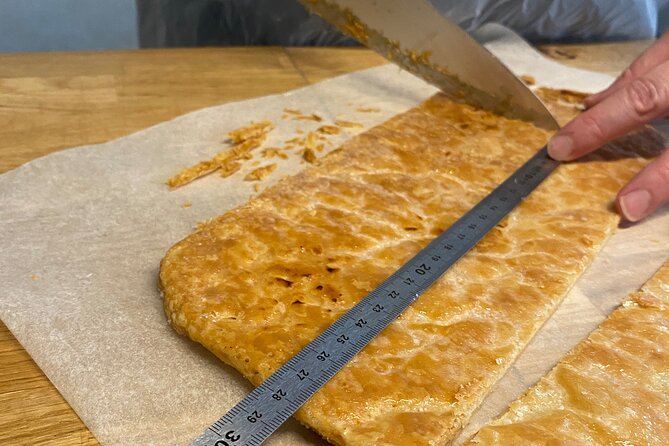
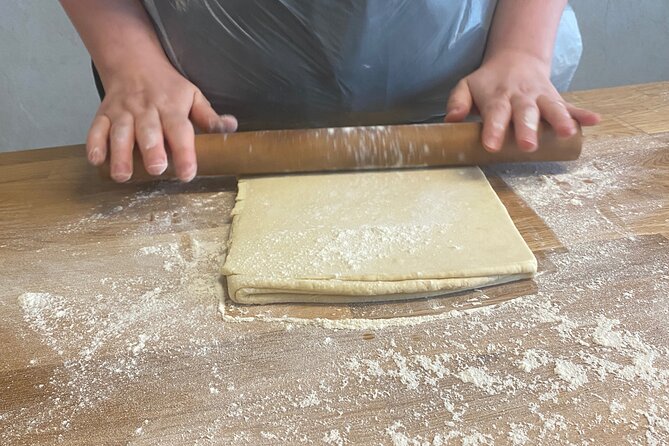
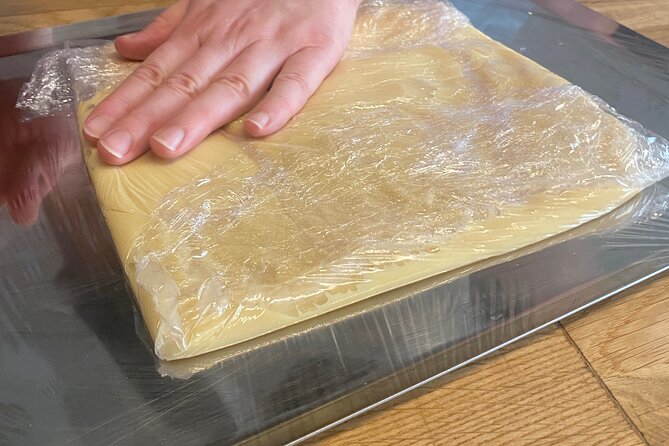
The class focuses on the part many people skip when they bake at home: the crisp, caramelized puff pastry base. Puff pastry isn’t just “dough that puffs.” It’s structure, temperature, and timing. If the layers aren’t built and baked properly, the whole Napoleon turns soft instead of crisp.
2) Learning cream: vanilla custard work, with piping and finesse
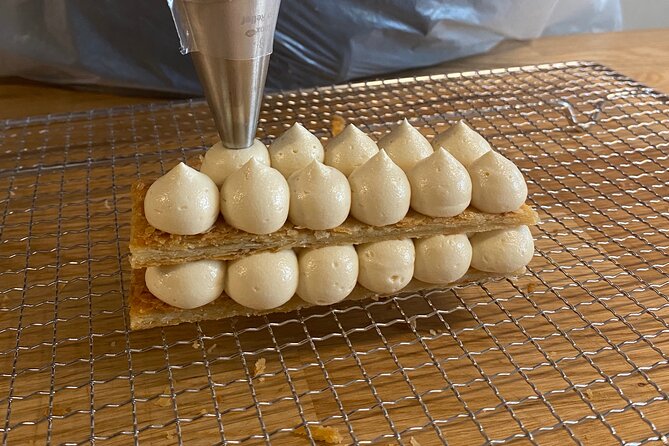
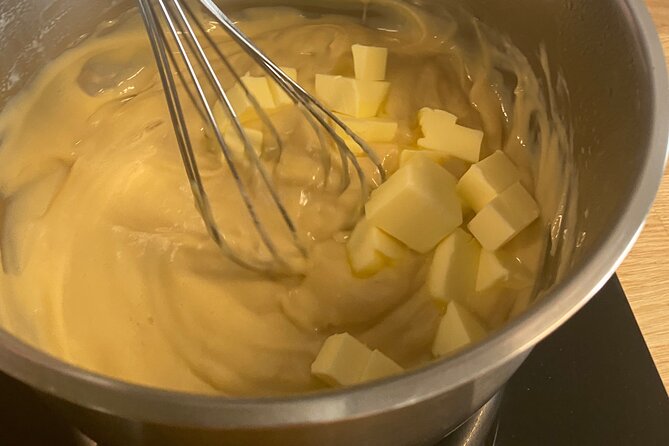
Mille-feuille is half pastry, half cream. The class description calls out delicate layers of vanilla custard, and one of the stand-out mentions from a past participant includes crème anglaise piping.
That’s a big deal because piping isn’t just decoration. It helps portion the cream consistently so each bite has the right ratio of pastry to filling. It also gives you that clean, stacked look that makes mille-feuille feel “French-fancy” without being impossible.



3) Putting it together: stacking layers that hold their shape
Then comes assembly. This is where many home bakers get frustrated: pastry layers crack, cream smears, and the whole thing looks like it survived a small earthquake.
In this class, you’re guided through the actual process of making yours. The class format emphasizes practice, so you learn how to handle the pastry and how to layer the cream so your Napoleon looks correct and tastes balanced.
4) Enjoying what you made
You’re not leaving empty-handed. The end result is the 1000 Leaves / Napoleon dessert, and the reviews highlight that the final pastries are delicious, especially if you like butter-forward French baking.
What makes the instruction stand out (and why you’ll feel confident)
The best feedback is consistent: the teachers are relaxed, confident, and warm, and they explain steps in a way you can follow.
Two names come up clearly:
- Julie, praised for speaking perfect English and being down to earth
- Chef Minel, praised for giving helpful hints and teaching in a way that makes first-timers feel capable
That matters because mille-feuille has a reputation for being fussy. In reality, it’s a stack of steps. If you understand what each step is supposed to do, the process becomes manageable.
I also like that the class is built for questions. In a group of up to 6, you’re not competing for attention. If something goes wrong while you’re piping or stacking, you can get real-time guidance instead of doing damage control with a spoon.
The value question: is $132.45 per person worth it?
Let’s talk money in a practical way.
At $132.45 per person for about 2 hours 30 minutes, you’re paying for several things at once:
- a small group format (max 6), not a big “tour group + baking demo”
- English instruction
- a real baking school environment
- a butter-and-vanilla dessert you make yourself
- coffee and/or tea included
Is it cheaper than doing a basic pastry class with less equipment? Yes, probably. But is this one more satisfying than just tasting pastries and leaving? For many people, yes. You’re paying for skill, not just sugar.
Also, the class gets booked. On average, it’s reserved about 27 days in advance, which is a hint that good time slots disappear. If you want a spot during your trip, treat it like a “plan ahead” activity, not a last-minute snack.
Who this class suits best (and who should think twice)
This is a great fit if you:
- want a hands-on Paris food experience, not a lecture
- like French pastry and want to learn puff pastry plus vanilla custard technique
- enjoy small-group learning where you can ask questions
- want something memorable that feels more personal than a guided walk
You might think twice if you:
- don’t like rich, buttery desserts (the finished Napoleon is absolutely in that category)
- want a purely sightseeing-focused day and would rather spend less time in a kitchen
- expect a wide menu beyond the main mille-feuille product (the dessert is the point)
Practical details that matter before you go
A few details help you plan smoothly:
- Meeting point: 7 Rue de Béarn, 75003 Paris
- End point: returns back to the meeting point
- Language: English
- Group size: maximum 6 travelers
- Included: coffee and/or tea
- Not included: private transportation
- Ticket: mobile ticket
- Location access: near public transportation
- Animals: service animals are allowed
One more practical point: because it’s a class where you handle pastry, wear something you can relax in. Paris outfits are great, but you’re making a mess on purpose. Plan around that.
Should you book the Mille-feuille (Napoleon) pastry class in Paris?
If you want a true “learn while you eat” experience, I’d book it. This class is small, English-friendly, and built around making the pastry yourself, including the steps that create the crisp layers and vanilla custard effect. The fact that instructors like Julie and Chef Minel get highlighted for teaching clearly is a strong signal that first-timers won’t feel lost.
But if you’re only in Paris for quick bites and zero time in a kitchen, you might prefer a tasting tour instead. And if you don’t like butter-heavy French desserts, you may not fall in love with the final product.
FAQ
FAQ
How much does the Mille-feuille (Napoleon) pastry class cost?
The price is $132.45 per person.
How long is the class?
The duration is about 2 hours 30 minutes.
Where does the class meet in Paris?
It meets at 7 Rue de Béarn, 75003 Paris, France.
What dessert will I make?
The class focuses on Mille-feuille, also known as 1000 Leaves / Napoleon.
Is the class taught in English?
Yes, the class is offered in English.
How many people are in the group?
The class has a maximum of 6 travelers.
What is included in the price?
You’ll receive coffee and/or tea.
Is private transportation included?
No, private transportation is not included.
What’s the cancellation policy?
You can cancel for a full refund up to 24 hours in advance. If you cancel less than 24 hours before the start time, the amount paid is not refunded.