REVIEW · PARIS
Montmartre and the Sacré-Coeur with the best guides in Paris
Book on Viator →Bookable on Viator
Montmartre feels like Paris in miniature. This 1.5-hour guided stroll strings together three big hits—Montmartre, Moulin Rouge, and Sacré-Cœur—with enough context to make the views and street art clues feel meaningful, not random. You’ll hear why Van Gogh and Toulouse-Lautrec keep coming up, then end with one of the best panorama rewards in the city.
I especially like the way the guide helps you navigate steep lanes without losing time. People praised guides like Denise and Katie for pacing, clear explanations, and fun stories that actually connect the dots between neighborhoods, artists, and the big landmarks. I also like that the tour includes a visit for pie, so you’re not left figuring out a snack plan mid-walk.
One thing to consider: you’re going uphill. Even with smart route choices, plan for real stairs and city steps, especially around Sacré-Cœur. If you’re hunting for a slow, sit-down sightseeing day, this one is better as a focused afternoon plan.
In This Review
- Key things to know before you go
- Start at Au Petit Montmartre, then let the hill do its job
- Moulin Rouge stop: Belle Époque energy, daytime version
- Montmartre on foot: Place du Tertre and the artists’ square
- The “artist Montmartre” angle: more than postcards
- Sacré-Cœur: white basilica, stained-glass light, and serious views
- Guides make it (or break it): why people mention Denise, Katie, Sylvia, and Kati
- Timing and walking reality: plan for steps and short bursts
- The included pie: a small stop that actually helps
- Value check: is $30.04 worth it?
- Who this tour fits best
- Should you book this Montmartre and Sacré-Cœur tour?
- FAQ
- What is the price per person?
- How long is the tour?
- What language is the tour offered in?
- What time does it start?
- Where is the meeting point?
- What does the tour include?
- What is not included?
- Do I get a mobile ticket?
- Is it suitable for most people?
- What is the cancellation rule?
Key things to know before you go
- Moulin Rouge first: You’ll start with Belle Époque flair before you climb into Montmartre proper.
- Place du Tertre, live art energy: Expect streets where artists draw and paint right there in the square.
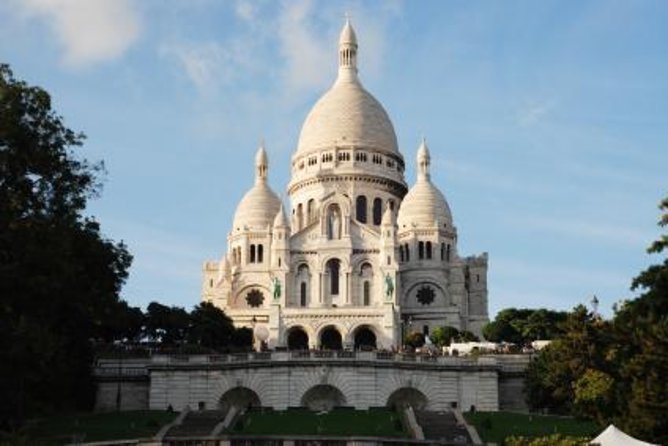
- Sacré-Cœur with skyline payoff: You’ll get the top-hill panorama and a clear sense of the basilica’s look and light inside.
- Real artist connections: Van Gogh and Toulouse-Lautrec show up as more than names on postcards.
- Included pie: A practical food win built into the schedule.
- Afternoon timing: The 2:30 pm start works well if you want to avoid the most rushed morning crowds.
Start at Au Petit Montmartre, then let the hill do its job
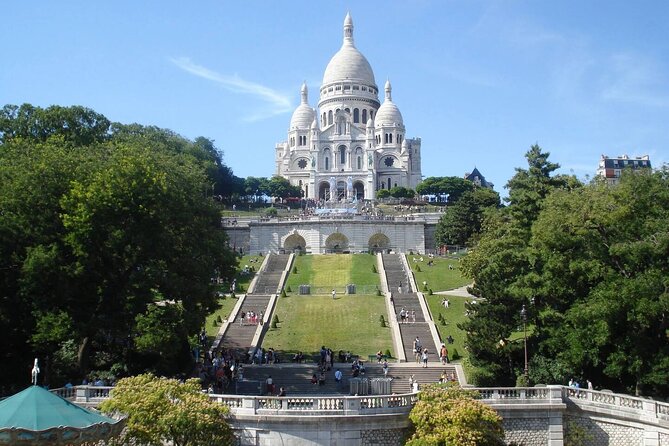
This tour meets at Au Petit Montmartre, 16 Pl. des Abbesses (2:30 pm). That location is a smart choice because it’s right where Montmartre’s “street level” vibe begins. From there, you’re walking as you go—no big bus detours—so the neighborhood feels like a place, not a checklist.
You’re getting a guided tour in English for about 1 hour 30 minutes. The listing includes a mobile ticket, so you won’t be fumbling with paper. Also, the tour notes most travelers can participate and service animals are allowed, which helps if you’re planning a trip that needs a little flexibility.
If you’ve ever tried to do Montmartre alone, you know how easy it is to waste time zigzagging. A guide helps you keep your eyes up: where to look, where the sightlines are, and what to notice as you climb.
Moulin Rouge stop: Belle Époque energy, daytime version
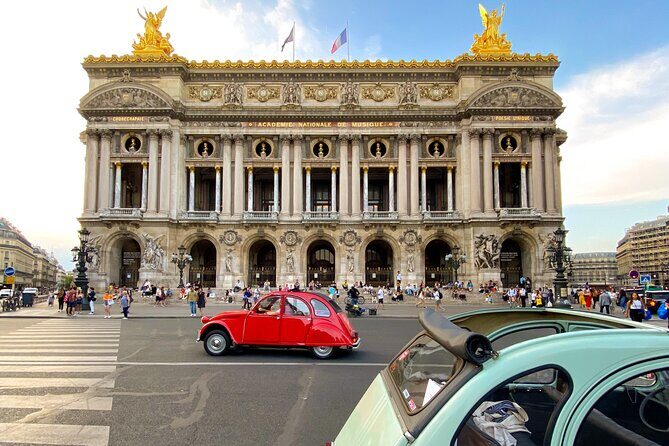
The tour begins with a stop by Moulin Rouge, the iconic cabaret in Montmartre. Even if you’ve seen it in photos, it hits differently when you understand the setting. This is where the neighborhood’s nightlife legends meet the look of the Belle Époque—part glamour, part theater history.
You’ll also hear the Toulouse-Lautrec connection here. That matters because he didn’t just paint people—he captured the attitude of the era. So when you see Moulin Rouge’s famous silhouette, you’re not just thinking, That’s a landmark. You’re thinking, That’s part of a whole cultural moment.
Practical note: this stop sets the tone, but it’s still daylight walking. If your priority is nightlife (tickets, dinner, a show), this tour won’t replace that. But it’s a great way to get the neighborhood context that makes the later Paris nights feel louder.
Montmartre on foot: Place du Tertre and the artists’ square
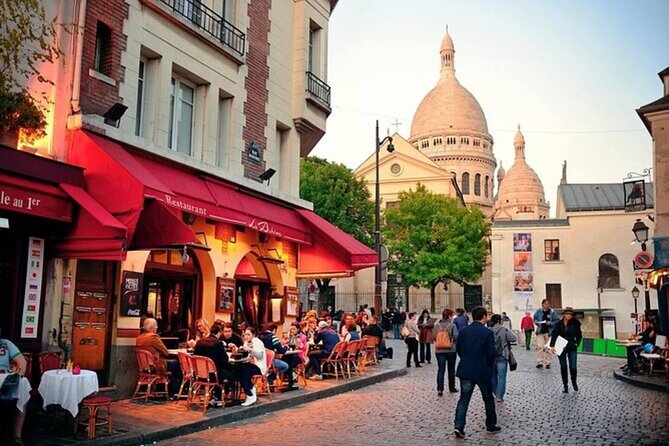
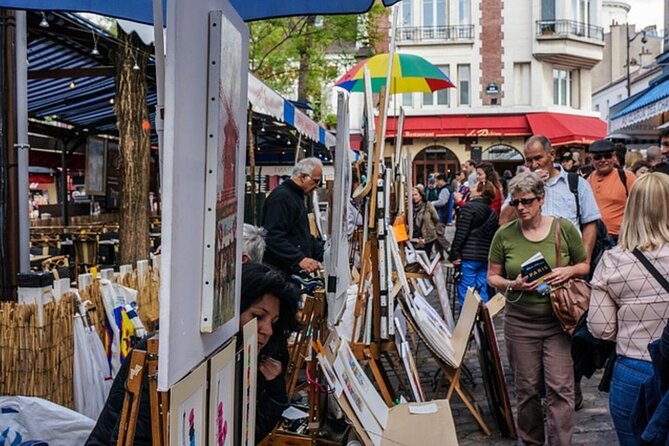
Once you’re into Montmartre, the heart of the experience shifts to Place du Tertre. This is the square where you’ll see local artists working—portrait drawings, sketches, and small original pieces. The big value here isn’t that it’s famous. It’s that you can watch the process and understand the living art tradition that keeps the square going.
The guide also helps you connect Place du Tertre to the broader Montmartre story—how artists gathered here, how styles and reputations spread, and why this area became such a magnet for creative people. The tour specifically calls out artists like Van Gogh and Toulouse-Lautrec, which gives you a thread to follow as you walk.
Food-wise, you’ll be moving toward the included pie during your time in the neighborhood. That’s a nice detail because it removes the pressure to find a snack on your own while you’re dealing with steps. If you’ve ever tried to plan food in Montmartre without a plan, you know it can turn into a long search.
One more practical thing: Place du Tertre is crowded on good days. A guide helps you keep your bearings, so you spend your time looking instead of standing still trying to find the next turn.
The “artist Montmartre” angle: more than postcards
Montmartre is often sold as a postcard. This tour leans into the idea that it’s still an artist-driven neighborhood, not just a theme. It’s not only about what’s there now; it’s also about why it became that way—through the pull of painters, stages, and cafés where creativity became the local language.
As you move through the area, you’ll hear about the neighborhood’s creative past and its present-day artistic energy. The tour also points you toward viewpoints and landmarks that give you perspective as you climb, so it feels like you’re learning the geography, not only the art names.
If you’re a history-light traveler, don’t worry. The guide’s job is to translate all that artist talk into street-level meaning—what you’re seeing, why it’s positioned where it is, and how the neighborhood layout shapes the views.
Sacré-Cœur: white basilica, stained-glass light, and serious views
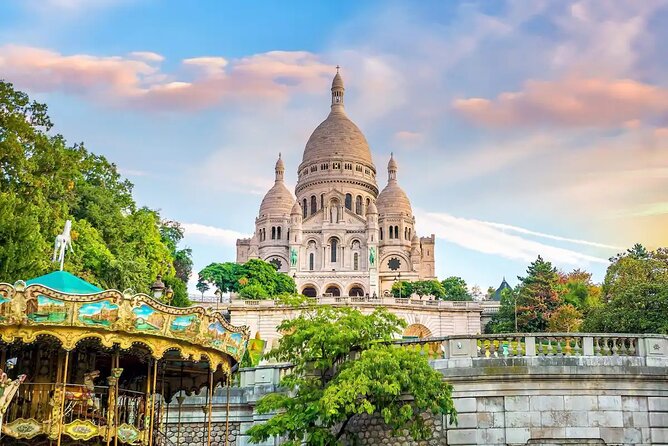
The highlight climb ends at Sacré-Cœur on the hill. The basilica’s look is part of the spectacle: that bright white facade with mixed neo-Gothic and Romano-Byzantine styles. From outside, it’s already dramatic. Inside, the tour focuses on the stained-glass windows and the gentle shift in atmosphere once you’re inside.
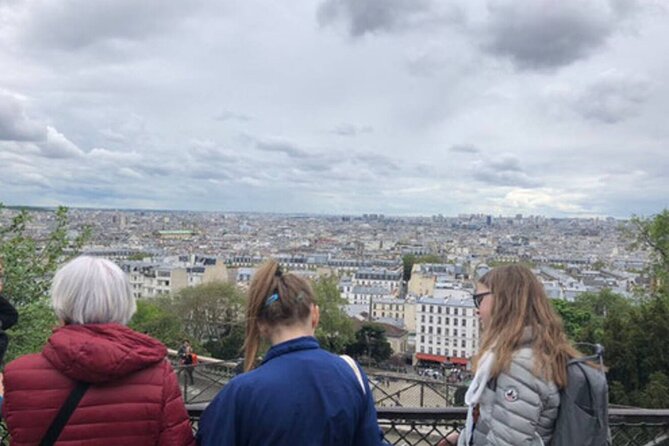
Then comes the payoff: the view over Paris. The tour emphasizes what you can spot from up there—like the Eiffel Tower and the rhythm of rooftops. This is where Montmartre becomes useful. It gives you a map in your head, so when you later move around Paris, you understand how neighborhoods stack and where the major landmarks sit in relation to one another.
Getting there is the real consideration. The tour notes you can reach Sacré-Cœur via the stairs or the funicular. If you want the easiest route, choose funicular when it fits your comfort level. If you want to feel like you’re earning the view, stairs are the classic move—but start slow and don’t try to race the hill.
Also, Sacré-Cœur is a place of meaning for believers and a symbol of peace and hope for many others. That context helps you treat it like more than an attraction photo—whether you’re religious or not.
Guides make it (or break it): why people mention Denise, Katie, Sylvia, and Kati
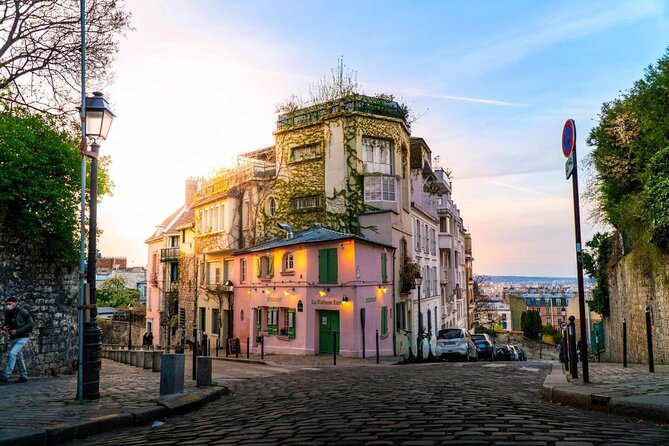
One of the most repeated themes from the tour experience is guide quality. Names that came up in a big way include Denise, Katie, Sylvia, and Kati. People describe them as friendly, funny, and good at explaining the area without turning it into a lecture.
Here’s what you should look for when choosing a guide-style experience in Paris: clarity, pacing, and story relevance. These names came up because the tour approach helps you connect what you’re seeing—Moulin Rouge, Place du Tertre, Sacré-Cœur—to why Montmartre mattered to artists. You’re not just hearing dates. You’re getting the “why does this place look like this?” answer.
Even better, the tour is set up so you aren’t wandering alone. On a steep hill like Montmartre, a bad plan wastes energy. A good guide saves it for the parts that actually deliver.
Timing and walking reality: plan for steps and short bursts
This is an afternoon tour that runs about 90 minutes, starting at 2:30 pm. Ninety minutes is short, which is good—because Montmartre can chew up time fast. But it also means you should expect a pace that’s more “guided highlights” than “wander all you want.”
If you’re going with family or teens, the tour notes it’s for most travelers. Still, reviews often highlight the uphill walking as the main challenge. My advice: wear supportive shoes, bring water, and accept that you’ll be out of breath at least once. That’s not a complaint. It’s part of how Montmartre works.
To make the walk easier, use the guide’s route. Don’t improvise while you’re tired. Wait for directions, follow the group line, and focus on short goals: one square, one viewpoint, one big interior moment.
If weather is rough, the main strategy is the same: keep moving and let the guide adjust. Paris weather can change fast, and a guided plan helps you avoid getting stuck in the wrong part of the neighborhood.
The included pie: a small stop that actually helps
The tour includes a visit to pie. The exact type or location isn’t spelled out in the provided details, but the value is clear: it gives you a planned food moment during a walking-heavy afternoon.
For practical travelers, that matters. Montmartre can make food hunting feel like a second job—especially if you’re trying to stay on the same schedule as the guide. Here, you get a built-in break so you can keep your energy for Sacré-Cœur.
If you’re sensitive to sugar or dairy, you might want to check what kind of pie is served before you assume it fits your diet. The tour info confirms pie is included, but it doesn’t list options.
Value check: is $30.04 worth it?
At $30.04 per person for about 1.5 hours, you’re paying for three things: guidance, coordination in a hilly neighborhood, and an included food moment (pie).
Compared to doing Montmartre solo, the value is strongest if:
- you want to understand what you’re seeing (artists, places, and why the landmarks matter)
- you’d rather not spend time figuring out the best route up to Sacré-Cœur
- you like the “walk and learn” format more than the “read a guidebook on a bench” format
The price is less convincing only if you already know Montmartre well and you mainly want quiet time. In that case, self-guided walking could feel just as satisfying. But if you want the shortcut from scenery to meaning, this is the right kind of buy.
Who this tour fits best
This tour is a strong match if you:
- want an efficient Montmartre and Sacré-Cœur plan in the afternoon
- like artist connections (Van Gogh, Toulouse-Lautrec) tied to real places
- enjoy street scenes like Place du Tertre with live art energy
- prefer a guided walk over route-planning headaches
It’s also a good first stop for travelers who want to “get oriented” in Montmartre before doing more parts of Paris later.
If you’re the type who needs long museum time, you may find the 90 minutes feel fast. This is a highlights tour with serious views, not a museum day.
Should you book this Montmartre and Sacré-Cœur tour?
I’d book it if you want a guided route that turns Montmartre’s famous sights into a connected story, with the practical help you need for steep walking—and you’ll appreciate the included pie stop.
I might skip it if you strongly prefer to control every minute, plan to spend lots of time lingering indoors at multiple venues, or you’re worried about uphill movement. Also, because guided tours can occasionally change due to staffing or communication issues (and those can ruin an afternoon), double-check your confirmation details when booking.
If your goal is: see Moulin Rouge, feel the artistic Montmartre vibe at Place du Tertre, then finish with Sacré-Cœur views—that goal fits this tour very well.
FAQ
What is the price per person?
The price is $30.04 per person.
How long is the tour?
The duration is approximately 1 hour 30 minutes.
What language is the tour offered in?
The tour is offered in English.
What time does it start?
The start time is 2:30 pm.
Where is the meeting point?
Meet at Au Petit Montmartre, 16 Pl. des Abbesses, 75018 Paris, France.
What does the tour include?
It includes a guided tour and a visit to pie.
What is not included?
Tips, food and drinks (beyond the included pie), and transfer are not included.
Do I get a mobile ticket?
Yes, the tour uses a mobile ticket.
Is it suitable for most people?
The tour notes most travelers can participate, and it allows service animals.
What is the cancellation rule?
You can cancel for a full refund if you cancel up to 24 hours in advance of the experience start time.