REVIEW · PARIS
Musee d’ Orsay and l’Orangerie Combo With Seine River Cruise
Book on GetYourGuide →Operated by Get Paris Tours · Bookable on GetYourGuide
A former train station full of paintings. This Orsay + Orangerie combo pairs two of Paris’ best art stops with a 1-hour Seine River cruise, using audio guides in multiple languages and live commentary during the boat ride. I like how the plan hits both sides of the Impressionist story: big-name oil paintings at Musée d’Orsay and Monet’s light-and-water world at l’Orangerie.
What I also like is the art lineup. At Musée d’Orsay, you’ll see major Impressionist and Post-Impressionist works tied to artists like Monet, Renoir, and Van Gogh, plus Rodin sculptures, all in a building that used to be a railway station. Then l’Orangerie’s Tuileries location lets you slow down with Monet’s Water Lilies series in a setting designed for that kind of quiet focus.
One drawback to consider: some people have reported last-minute issues (like missing audio guide materials or tight timing between museum starts). So you’ll want to walk in with your confirmation ready and keep your expectations flexible, especially if you’re hoping to see every corner of both museums.
In This Review
- Key Things You’ll Notice on This Tour
- The 5-Hour Flow: Orsay, Orangerie, then the Seine
- Musée d’Orsay: Where Impressionists Feel Almost Modern Again
- L’Orangerie and Monet’s Water Lilies: The Pace Shift You’ll Feel
- The 1-Hour Seine Cruise: Paris Landmarks From the Waterline
- Audio Guides and Commentary: How to Use Them Without Losing Time
- Skip-the-Line at Orsay: Helpful, But Not a Free Pass
- Price and Value: Is $103 Actually a Deal?
- Who This Tour Suits Best
- Should You Book This Orsay–Orangerie + Seine Cruise Combo?
- FAQ
- How long is the Musée d’Orsay and l’Orangerie combo with Seine cruise?
- What is included in the tour price?
- Does the tour include a guide or host?
- Is the audio guide included?
- What languages are available for the audio guide?
- Is transportation included in the tour?
- Is skipping the ticket line included?
- What is not allowed during the tour?
- Is the tour wheelchair accessible?
- Is there free cancellation?
Key Things You’ll Notice on This Tour
- Musée d’Orsay in a converted railway station: the building itself adds drama to Impressionist and Post-Impressionist viewing.
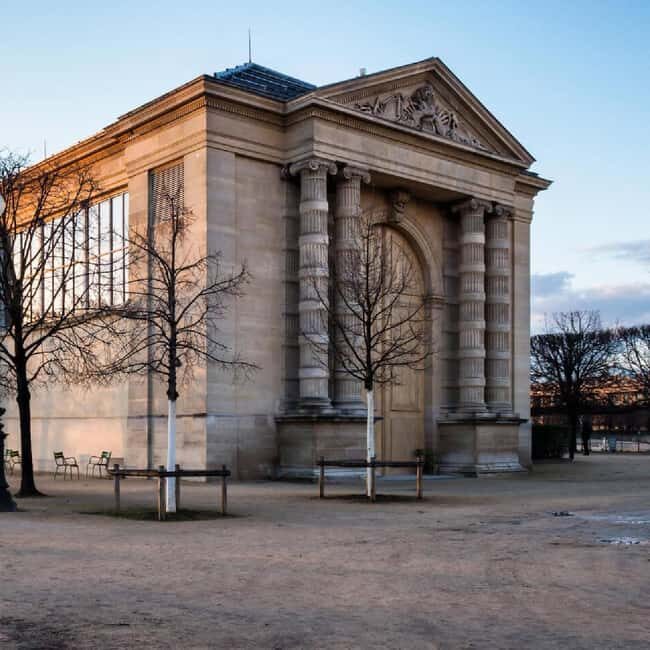
- Monet’s Water Lilies at l’Orangerie: the Tuileries Garden setting changes the pace of your art day.
- 1-hour Seine cruise with live commentary: you get landmark views without the work of planning route by route.
- Audio guides in many languages: from English to Japanese and Chinese, you can follow along at your own speed.
- A shared 5-hour time box: it’s great for a taste of everything, but not for a full slow museum marathon.
The 5-Hour Flow: Orsay, Orangerie, then the Seine
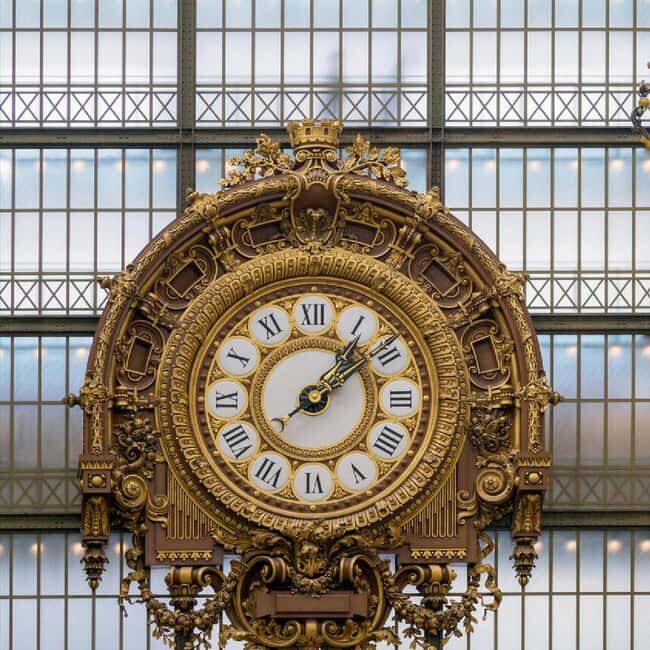
This is a tight but satisfying “greatest hits” format. You’re out for about 5 hours, starting with Musée d’Orsay, then moving to l’Orangerie, and finishing with a 1-hour Seine River cruise.
That order matters. Orsay is your visual warm-up: paintings, sculpture, and the art movements that made modern art happen. Then l’Orangerie gives you a contrast in mood—Monet’s Water Lilies are designed for big, calm looking rather than quick scanning. Finally, the cruise gives your eyes a break from galleries and swaps frames of art for frames of Paris.
The key thing for you to plan around is pacing. Two large museums in one half-day can feel rushed if you treat this like a full self-guided museum day. If you tend to linger (especially in long galleries), I’d be honest with yourself and go in with a short list of what you don’t want to miss.
You can also read our reviews of more boat tours in Paris



Musée d’Orsay: Where Impressionists Feel Almost Modern Again
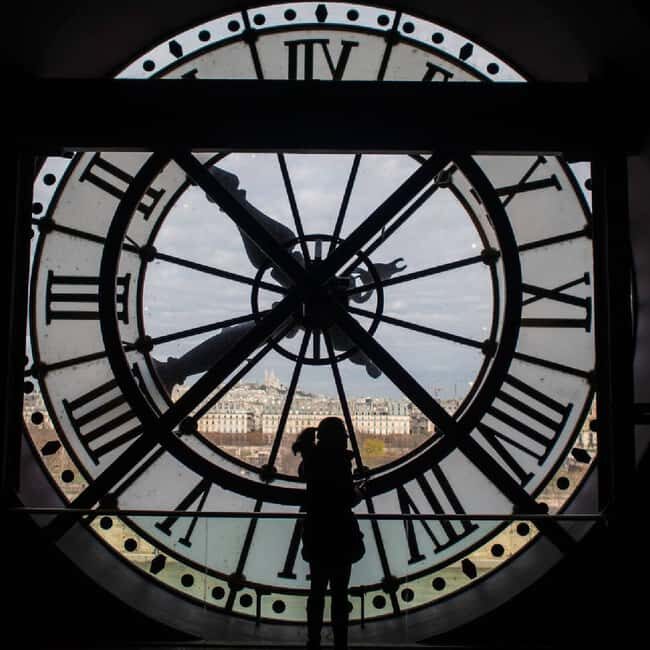
Musée d’Orsay is famous for a reason, and not just because it holds great paintings. It’s in a former railway station, so the space feels theatrical—high ceilings, a strong sense of structure, and lots of visual light. That setting fits Impressionist art surprisingly well because so much of the movement is about perception and atmosphere.
In terms of what you’ll actually see, the tour focuses on Impressionist and Post-Impressionist masterpieces. You’ll also be pointed toward the big names—Monet, Renoir, and Van Gogh—along with Rodin sculptures. The combination is smart because it helps you understand that the art story wasn’t just about painting styles. Sculpture and modern subject matter were moving forward at the same time.
Orsay is also a good place to slow down and learn. Audio guides are included on both museum stops, and they’re available in a long list of languages. You can pick the language you want and take your time without needing to track down a human guide.
One practical tip: because you’re doing a combo, your goal at Orsay should be “hits plus context,” not “everything.” Focus on the artists listed for the experience and then use what you learn from the audio guide to make your own choices. That’s how you avoid feeling like you’re just walking through rooms.
L’Orangerie and Monet’s Water Lilies: The Pace Shift You’ll Feel
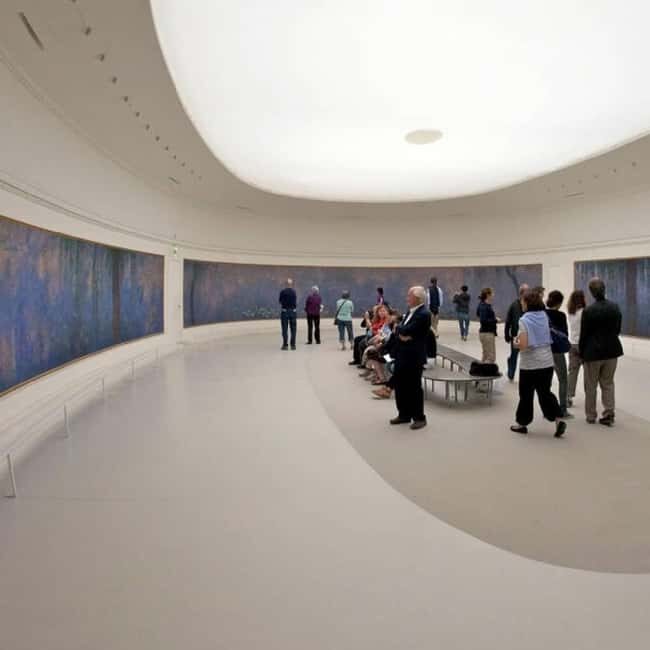
Then comes l’Orangerie in the Tuileries Garden, which is a different kind of Paris experience than museum rooms with crowds stacked wall-to-wall. The garden setting matters because it changes your rhythm. You go from structured indoor galleries to a calmer space where you can arrive mentally ready to look closely.
Here, the headline is Claude Monet’s Water Lilies. This is not just a painting to identify. It’s a large installation meant to affect how you stand, how long you stay, and how you experience light and color over time. The tour description frames it as a play of light and color, and you’ll feel that while you’re inside.
If you’re the type who likes to understand why art works—not only what it looks like—l’Orangerie is a strong follow-up to Orsay. Orsay gives you the revolution happening in art. L’Orangerie lets you see what that revolution became when it focused on mood, surface, and perception.
Timing is the one area where you may want a little extra patience. Some people have reported that the gap between museum starts felt tight and that entry logistics (like time slots) were handled less smoothly than expected. So plan to keep your priorities sharp: pick the Water Lilies experience as your must-see, and use the rest of l’Orangerie as bonus time.
The 1-Hour Seine Cruise: Paris Landmarks From the Waterline
After the museums, you get a break that still feels like the “main event.” The Seine River cruise lasts one hour, and it’s built around seeing classic Paris landmarks from the water.
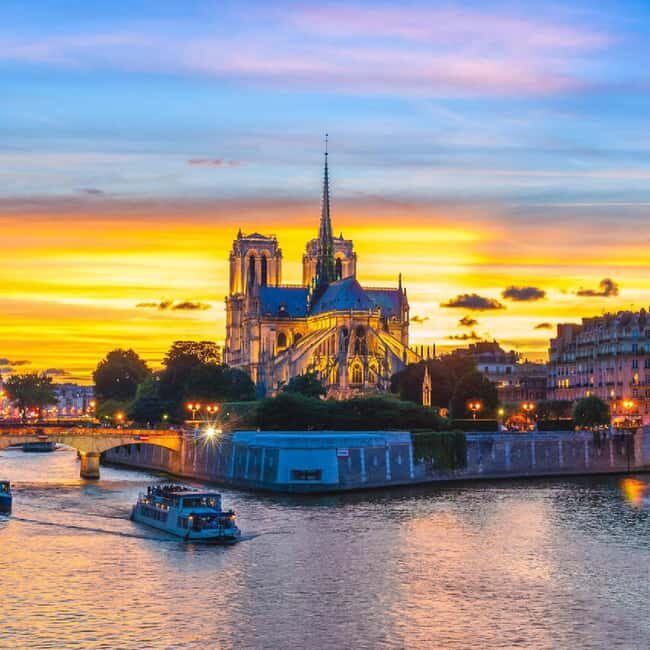
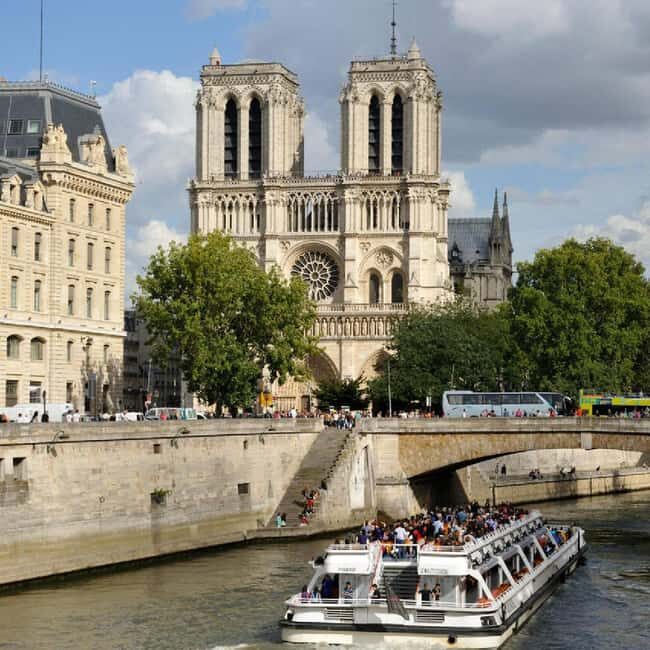
The tour highlights the sights you’re likely to notice: Eiffel Tower, Notre-Dame Cathedral, and the Louvre. Even if you’ve seen photos of these, viewing them from the Seine is different because you get a moving sense of scale. Buildings rise and shift perspective as the boat turns and passes bridges.
Another reason the cruise works in this combo: it’s a decompress tool. You’re leaving behind the indoor “look mode” of galleries and moving into a “watch the city” mode. For many first-time visitors, this is where the day clicks emotionally, because the landmarks feel connected rather than separate.
This specific cruise also includes live commentary, which is useful because it saves you from guessing what you’re seeing. You’ll get context while you enjoy the view, without having to stop and read signage every few minutes.
Audio Guides and Commentary: How to Use Them Without Losing Time
Audio guides are included for both museums, and they come in many languages: French, English, German, Spanish, Italian, Portuguese, Russian, Japanese, Chinese, and Korean. That’s a big deal if you’re traveling with a group that needs different languages, or if you prefer to move at your own speed rather than follow a strict spoken tour.
Here’s how to get value from an audio guide in a combo tour. Don’t start listening at minute one in every room. Use it to choose the right sections, then shift into your own looking. In other words, treat the audio guide like a map and a curator, not like a script you have to finish.
Do keep one caution in mind. A few recent experiences have flagged issues like audio guide delivery not matching what was expected. Before you assume everything is covered, arrive with your confirmation ready, and if you don’t receive what you expected, ask quickly at the museum entrance desk so you’re not stuck losing time later.
For the cruise, the live commentary helps with the same problem, just in reverse. When you’re on a boat, there’s no way you can read everything. Live commentary lets you connect the view to meaning in real time.





Skip-the-Line at Orsay: Helpful, But Not a Free Pass
You do get skip-the-ticket-line entry at Musée d’Orsay. In practical terms, that can save stress because Orsay can have lines that slow your day down. On a combo tour, time is the currency.
But here’s the catch: skipping the line is helpful for entry, not for museum time itself. Once you’re inside, you still need to make choices. If you treat Orsay like a full-day museum visit, you’ll likely feel rushed when it’s time to transition to l’Orangerie.
This is where the combo format can either feel brilliant or frustrating, depending on how you shop for art. If your style is: I want the famous works plus context, and I’m okay with not seeing every room—this fits you well. If your style is: I want to wander every floor and read every label—this might feel too compressed.
Also consider what you’re bringing. The tour doesn’t allow pets and bans luggage or large bags. That’s one more reason to travel light so you’re not dealing with storage lines or bag checks.
Price and Value: Is $103 Actually a Deal?
At $103 per person for Musée d’Orsay entry, l’Orangerie entry, audio guides, a one-hour Seine cruise, and live commentary, the price can be a strong value if the experience runs smoothly.
The math that helps you: you’re paying for three major components in one package. You’re not just buying “access to two museums.” You’re also getting a structured transition to l’Orangerie and a landmark-focused cruise that ends your day with views.
Where the value can wobble is when the “included” elements don’t work as expected. A couple of recent reports mention missing or delayed audio guide delivery and communication problems (like not receiving tickets until a call was made on-site). When that happens, you effectively pay for one extra burden: figuring it out while you’re already on the clock.
One reviewer felt the cruise portion alone didn’t justify the add-on cost. That doesn’t mean the cruise isn’t worth it. It means you should decide what you’re buying the combo for. If you want two museum experiences with built-in structure plus a cruise, the package can feel fair. If you’re mostly interested in the cruise, you might find separate planning better.
Who This Tour Suits Best
This combo is best for you if you want a high-signal art day in Paris. It’s ideal for art enthusiasts who want to hit key works—Monet, Renoir, Van Gogh—plus Rodin, without needing to plan a multi-day museum strategy. It also works well for history buffs because the tour format supports learning through audio, not just looking.
It’s also a good fit if you’re short on time and you want the Seine cruise as a payoff. If your Paris trip is packed, this gives you a full arc: galleries, then Water Lilies, then landmarks from the river.
It may be less ideal if you’re traveling at a slower pace or you hate tight schedules. If you want to read every placard, sketch, or plan a deep comparison across rooms, you’ll probably feel the time limits.
If you’re someone who depends on smooth communications (especially for time slots between sites), consider arriving early and keeping a close eye on your confirmation details before museum entry.
Should You Book This Orsay–Orangerie + Seine Cruise Combo?
If you want a focused art-and-Paris-view half day with audio guidance and a planned ending, I’d say this combo is worth serious consideration. Musée d’Orsay and l’Orangerie are both top-tier stops, and pairing them with a Seine cruise makes the day feel complete.
But don’t ignore the caution signs. Because there have been reports of audio guide delivery issues and communication hiccups, I’d only book if you’re comfortable handling small on-the-spot problems and you keep your priorities clear: Orsay highlights, Monet’s Water Lilies, and then the cruise views.
If you’re the type who needs a perfectly choreographed experience with zero surprises, you might prefer building your own schedule with museum tickets and the cruise separately. For many people, that’s more control. For others, the combo is exactly the right level of structure.
FAQ
How long is the Musée d’Orsay and l’Orangerie combo with Seine cruise?
The total duration is 5 hours, including a 1-hour Seine River cruise.
What is included in the tour price?
You get access to Musée d’Orsay (temporary and permanent exhibitions) and l’Orangerie (temporary and permanent exhibitions), audio guides for both museums, a 1-hour Seine cruise, and live commentary.
Does the tour include a guide or host?
No guide or host is listed as included. Live commentary is included, but a dedicated guide/host is not.
Is the audio guide included?
Yes. An audio guide is included for both museums, and it’s available in many languages.
What languages are available for the audio guide?
French, English, German, Spanish, Italian, Portuguese, Russian, Japanese, Chinese, and Korean.
Is transportation included in the tour?
No transportation is included.
Is skipping the ticket line included?
The tour includes skip-the-ticket-line entry for Musée d’Orsay.
What is not allowed during the tour?
Pets are not allowed, and luggage or large bags are not allowed.
Is the tour wheelchair accessible?
Yes, the tour is wheelchair accessible.
Is there free cancellation?
Yes. You can cancel up to 24 hours in advance for a full refund.