REVIEW · PARIS
Montmartre Treasure Hunt — Fun and Cultural Investigation
Book on Viator →Operated by From Paris With Fun · Bookable on Viator
Montmartre has a secret side—and you get to chase it.
This fun, cultural treasure hunt turns the artistic streets into a game, with riddles tied to real landmarks like Sacré-Cœur, Place du Tertre, the Moulin Rouge, and even the Montmartre vineyards. I especially like how it stays self-guided (no guide hovering, no app to fight) while still teaching you plenty along the way. One thing to consider: the clock matters, so if you stop for too long, you can feel rushed near the finish.
You’ll wander narrow cobblestones, spot cabaret-style corners, and solve clues that can be observation-based, logical, or just plain curiosity. The booklet approach is low-tech and practical: game booklet + map + riddles + answer sheets, plus cultural anecdotes, and you can play at your own pace. And if you get stuck, assistance is available during the game, with the game master Marion described as friendly and helpful.
The main drawback is the 3-hour time limit (it auto-ends after 3 hours and 30 minutes), so coffee breaks and detours need planning. That said, with a little pacing, it’s a relaxed way to see Montmartre without turning it into a checklist.
In This Review
- Key Highlights You’ll Actually Care About
- Montmartre by Puzzle: Why This Treasure Hunt Feels Different
- The 3-Hour Walk Starting at Anvers (and Where You Finish)
- Sacré-Cœur and the Artist Streets: Clues Built Around Real Sights
- Sacré-Cœur area
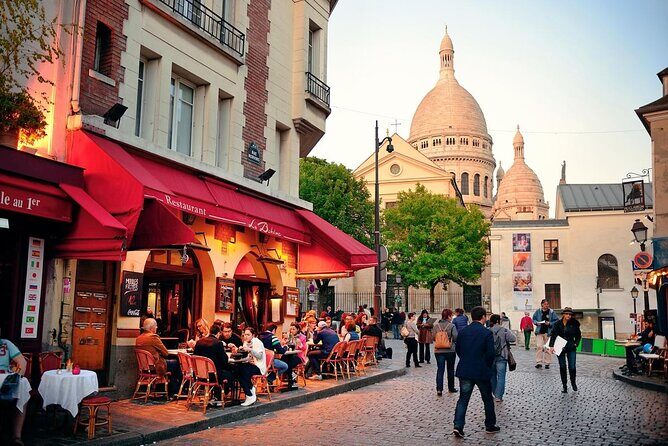
- Place du Tertre
- Stroll moments you might otherwise skip
- Moulin Rouge Finale: Ending the Investigation at the Right Moment
- How the Booklet + No App Works in Real Life
- Support When You Get Stuck (Without a Full Guide)
- Families, Couples, and Small Groups: Who This Suits Best
- Price and Value: Is $41.70 Worth It?
- Timing Tips: Coffee Breaks and Staying Under the Limit
- Getting Around: Transit-Friendly but Physically Moderate
- Should You Book This Montmartre Treasure Hunt?
- FAQ
- FAQ
- How long does the Montmartre treasure hunt take?
- Is there a mobile app required?
- What language is the experience offered in?
- Where does the treasure hunt start and end?
- Do I need to join a group with a guide?
- Is assistance available if I can’t solve a clue?
- What age is this suitable for?
- Is it suitable if I take coffee breaks?
- How difficult is the walking?
- What if the weather is bad?
Key Highlights You’ll Actually Care About
- Self-guided format: no app, no downloads, no need to match a group pace
- Landmark-based clues: Sacré-Cœur, Place du Tertre, Moulin Rouge, and more are part of the puzzle map
- Family-friendly challenge: adults get a real brain workout; kids 8+ can still participate
- Booklet with history and funny bits: the cultural anecdotes aren’t dry, they’re tied to what you’re seeing
- Support when you’re stuck: hints are available if a clue feels tricky
- Weather-proof flexibility: it can be played in any weather, but expect walking on cobblestones
Montmartre by Puzzle: Why This Treasure Hunt Feels Different
If you only do Montmartre the usual way—stairs up, views down, souvenir shop in between—you’ll miss the neighborhood’s rhythm. This treasure hunt gives you a reason to look closely. You’re not just passing buildings. You’re hunting for clues in doorways, street angles, and landmark details.
What makes it work is the mix of puzzle styles. Some clues reward you for careful noticing (what’s placed where, what looks out of place, what’s literally in front of you). Others ask for logic or simple curiosity. That means you’re not dependent on trivia knowledge. If you see it, think it through, and follow the booklet’s nudge, you can solve it.
I also like the pacing freedom. Because it’s self-guided, you can slow down for photos, double back for a good look, or keep moving when you’re in the zone. A group tour can feel like you’re always catching up. Here, you set the tempo—as long as you respect the time limit.
You can also read our reviews of more tours and experiences in Paris.



The 3-Hour Walk Starting at Anvers (and Where You Finish)
The adventure starts in Anvers (75018), Paris, and it ends back at the meeting point. That “loop back” design is more practical than it sounds. It helps you avoid the stress of figuring out transit at the end with tired legs and a head full of riddles.
Duration is about 3 hours, with an auto end at 3 hours and 30 minutes no matter where you are. That matters for two reasons:
- Montmartre has real walking friction—cobblestones, slopes, and stair pockets—so you want enough time buffer for normal slowing-down.
- If you plan breaks (like the classic Montmartre café stop), you need to keep them short. Even a nice coffee can steal minutes you’d rather spend finishing the puzzle trail.
Group size stays small, with a maximum of 20 travelers. That’s helpful even for self-guided activities, because it typically means less crowding and a smoother start.
Sacré-Cœur and the Artist Streets: Clues Built Around Real Sights
The treasure hunt is structured around major Montmartre landmarks, and that’s the biggest value. You don’t have to wonder what’s worth seeing—you get a route goal at each stage, and the clues point you to the reasons those places matter.
Here’s what that usually feels like on the ground:
Sacré-Cœur area
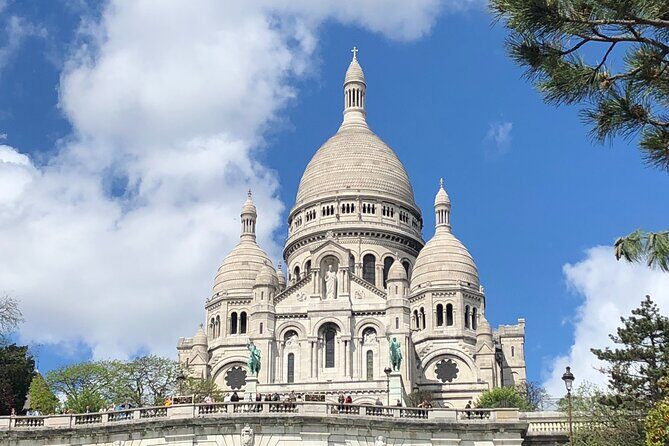
You’ll be drawn into the famous “top of Montmartre” views, but the game logic keeps you from rushing past. Instead of treating Sacré-Cœur as a quick photo stop, you’re encouraged to look for details and use clue prompts to guide where you stand and what you notice next.
Place du Tertre
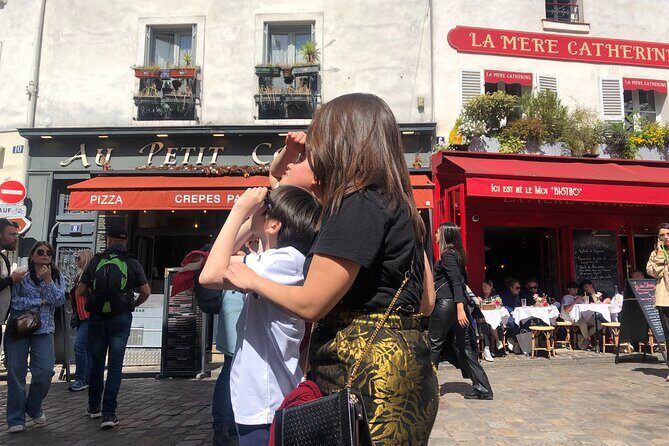
This is where Montmartre’s art-world image becomes real. The booklet-style puzzles help you connect what you’re seeing—artists, street life, the landmark vibe—with the neighborhood’s history through short cultural anecdotes. You’re still in “Paris mode,” but with better eyes.



Stroll moments you might otherwise skip
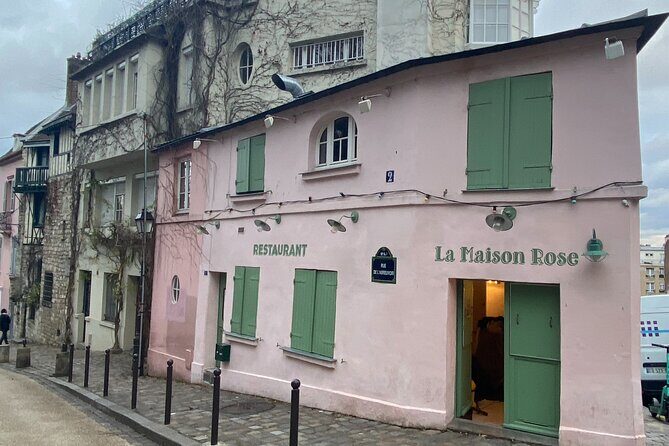
One of the most practical route benefits is that it takes you past the art nouveau church of St. Jean de Montmartre. Many visitors skip smaller stops because they’re focused on the headline attractions. When a puzzle nudges you toward a side stop like this, it turns “oh, cool” into “I’m glad I noticed that.”
Moulin Rouge Finale: Ending the Investigation at the Right Moment
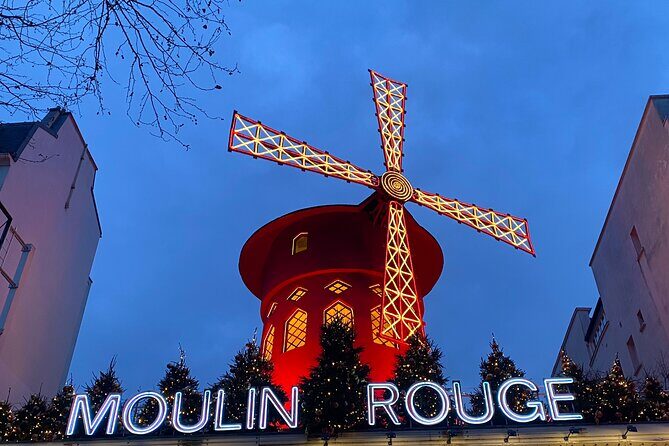
The hunt concludes at the Moulin Rouge, and this matters more than a typical end-of-tour photo. Your clues lead to a resolution—an investigation finish—so the Moulin Rouge feels like a payoff, not just a location you pass on the way to dinner.
Also, because the activity ends where it starts (back at the meeting point), you’re not trapped in “what now?” mode. You can plan dinner or transit with less uncertainty.
One extra note: the puzzles build in a way that keeps the experience moving, which is ideal for families and couples. It’s designed so you don’t spend the last third of the walk stuck on one unsolvable clue.
How the Booklet + No App Works in Real Life
This is a booklet-based hunt, not an escape-room app. You get:
- a game booklet with riddles, map, and cultural anecdotes
- answer sheets and all supporting materials (including a pen)
- instructions that let you play at your own pace
- assistance available if you need a hint
No mobile app or downloads is a small detail that makes a big difference. In Paris, phones die. Battery drains. Signal gets weird. You end up needing to “find Wi-Fi” like it’s 2009. A paper booklet avoids all of that.
And because the game is self-guided, you’re also less at the mercy of a guide’s pacing. If your group likes wandering, you can. If your group prefers finishing the puzzles quickly, you can. The route still has structure; you’re just in control of timing.
Support When You Get Stuck (Without a Full Guide)
The activity is explicitly self-guided—no tour guide—yet you’re not completely on your own. If a clue seems tricky, you can get help or a hint.
In practice, that gives you the best of both worlds:
- you still feel like you’re investigating (not being lectured)
- you’re less likely to face the dreaded “we’re stuck, do we just give up?” moment
And in the experience’s human support, Marion is noted as being friendly and welcoming. That kind of support is comforting when you’re doing a puzzle with kids.
Families, Couples, and Small Groups: Who This Suits Best
This is one of those rare Paris activities that works for mixed ages. It’s suitable for children aged 8 and up, and it’s also a good fit for couples who want something more active than a standard walking tour.
A key strength is the puzzle difficulty balance. Adults can face challenges that aren’t just trivia quizzes. At the same time, kids ages around 10 and 13 can stay engaged and not get bored—especially because the clues include both observation and logic, so everyone can contribute.
For families, the treasure hunt format also helps with the “walk fatigue” problem. Kids can focus on the next clue rather than just counting minutes until you reach the next landmark.
For couples, it’s a date-friendly change of pace: you’re doing something together, laughing at the puzzles, and getting built-in conversation topics.
It’s also a solid option for small groups who want to stay flexible without paying for a private guided tour.
Price and Value: Is $41.70 Worth It?

At $41.70 per person, you’re paying for a structured game experience: booklet, map, riddles, answer materials, and on-call support.
So what’s the value?
- You’re not just seeing Montmartre—you’re working through it. That makes the time feel more productive.
- The route touches multiple iconic sights (Sacré-Cœur, Place du Tertre, Moulin Rouge) plus extra stops like St. Jean de Montmartre. That means less “wasted” walking between attractions.
- It’s designed to fit several styles of visitors: kids, adults who want mental stimulation, and couples who want a more playful route.
Is it a bargain compared with a basic walking tour? Not necessarily, because you’re paying for puzzle materials and a more interactive experience. But if you’ve ever regretted a tour where you remembered almost nothing afterward, this format usually buys you better recall.
Timing Tips: Coffee Breaks and Staying Under the Limit
This is the part that makes or breaks the experience. The treasure hunt lasts around 3 hours, and it auto-ends after 3 hours and 30 minutes. That’s enough time for a relaxed pace, but not enough time for long wandering detours.
Here’s the practical advice that saves you stress:
- Treat café stops as quick breaks, not sit-down resets. The experience specifically notes that coffee breaks reduce total game time.
- If you’re traveling with kids, keep snacks simple and nearby so you don’t lose momentum.
- When you’re close to a clue, finish it before drifting off for pictures. Photos are great, but the puzzle wants attention right then.
And remember: the game can be played in any weather. That’s good. Just don’t ignore the real-world impact of wet cobblestones on walking speed.
Getting Around: Transit-Friendly but Physically Moderate
The start point is near public transportation, which helps if you’re coming in from another neighborhood. The walking is described as requiring a moderate physical fitness level, which makes sense in Montmartre: hills, stairs, and cobbled streets are part of the deal.
So if you use mobility aids, this might require more planning than a flat area tour. The activity does allow service animals.
Should You Book This Montmartre Treasure Hunt?
If you like learning without a lecture, want a route with built-in goals, and enjoy problem-solving, this is an easy yes. It’s especially good if you’re traveling with kids who need something active and interactive to keep attention.
Book it if you’ll:
- enjoy self-guided walking
- stay willing to look closely at what’s around you
- keep an eye on time so you finish the Moulin Rouge finale
I’d skip it (or pair it with a separate, slower activity) if you prefer a fully guided explanation at every step, or if you tend to linger a long time at cafés and museums. The time limit is real, and Montmartre has plenty of distractions.
Still, for a single afternoon in Paris, this treasure hunt is a smart, memorable way to see Montmartre as more than a postcard.
FAQ
FAQ
How long does the Montmartre treasure hunt take?
It lasts about 3 hours and will automatically end after 3 hours and 30 minutes.
Is there a mobile app required?
No. You use a game booklet with riddles, a map, and supporting materials. No app or downloads are required.
What language is the experience offered in?
The activity is offered in English.
Where does the treasure hunt start and end?
It starts at Anvers (75018), Paris, and ends back at the same meeting point.
Do I need to join a group with a guide?
No. This is self-guided, with no tour guide during the game.
Is assistance available if I can’t solve a clue?
Yes. Assistance is available throughout the game if you need help or a hint.
What age is this suitable for?
It’s suitable for children aged 8 and up, and it works well for couples and families.
Is it suitable if I take coffee breaks?
Coffee breaks are okay, but they reduce your total game time, so keep stops shorter than you might at home.
How difficult is the walking?
You should have a moderate physical fitness level. The route involves walking on cobblestone streets and slopes typical of Montmartre.
What if the weather is bad?
The experience requires good weather. If it’s canceled due to poor weather, you’ll be offered a different date or a full refund.