REVIEW · PARIS
Musée d’Orsay: Impressionists with skip-the-line ticket
Book on GetYourGuide →Operated by My Super Tour · Bookable on GetYourGuide
Orsay moves fast, in the best way. This tour pairs skip-the-line entry with a guided walk through the museum’s biggest highlights, all while the building itself does part of the storytelling. The setting matters here: you’re in a former railway terminal, later turned museum, so you’re not just looking at art—you’re walking through 19th-century design made real.
I especially like the tight focus on the main names (Monet, Manet, Renoir, Degas, Cézanne, Rodin) plus the way the guide connects paintings, sculpture, and the era’s technology. I also like the small group size, capped at 6 people, and the included headsets, which keep you from losing the guide’s commentary in the crowd. One thing to consider: this tour is not suitable for wheelchair users, so if mobility is an issue, you’ll want a different option.
In This Review
- Key points worth knowing before you go
- Orsay’s building: why you’re seeing 19th-century design as art
- The skip-the-line plan and what it means for your time
- Your 2-hour gallery route: the highlights you actually came for
- Impressionists and the painters who changed what modern light could do
- Cézanne still lives: realism with an edge
- Degas and the ballet dancers: motion you can almost feel
- Van Gogh vs. Gauguin: collision of styles and ideas
- Realists and Courbet: when painting got provocative
- Rodin sculptures: why Orsay is great for 3D art
- How the guide connects art styles across one 19th-century world
- Industrial surprises in Orsay: Lumière, early photos, and Liberty’s first model
- What to watch for during famous stops (so you enjoy more)
- Group size, hearing clearly, and guides like Sacha, Maria, and Deli
- Price and value: is $104 worth it?
- Who this tour fits best (and who should skip it)
- Should you book the Musée d’Orsay skip-the-line tour?
- FAQ
- How long is the Musée d’Orsay skip-the-line tour?
- Where do I meet the guide?
- What’s included in the ticket?
- Can I skip the waiting line?
- What’s the group size?
- What languages are offered?
- Is it wheelchair accessible?
- How much does it cost?
Key points worth knowing before you go

- Skip-the-line entry through a separate entrance, so your 2 hours start sooner
- The station building is part of the exhibit, showing real 19th-century architecture
- Headsets included, so you can hear clear commentary even in busy galleries
- A targeted route through major schools of 19th-century art, from Impressionism to Realism
- A small group (max 6), which makes it easier to ask questions and keep pace
- English or Russian guide, with live interpretation throughout
Orsay’s building: why you’re seeing 19th-century design as art
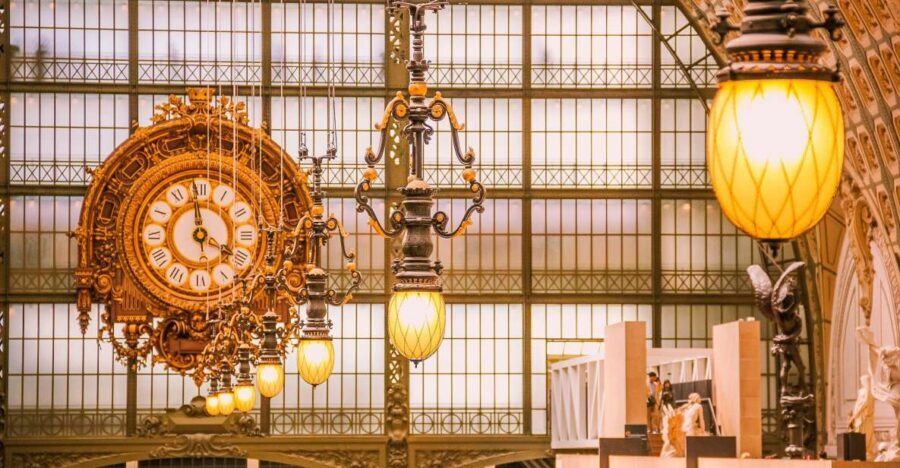
Most museums are just containers. Musée d’Orsay is different. The museum is built around the original railway station structure, and the guide treats that architecture like a second storyline. You’re not only learning about 19th-century style in paintings—you’re standing inside a 19th-century landmark that was later transformed into a museum in 1986.
This station connection gets even better because Orsay was the first electrified urban terminal station in Paris (and the tour frames it as a world first). Translation for you: you’re watching the 19th century’s tech story unfold in the same walls where the art is displayed. That’s why the tour highlights things like the first photographs and early film work by the Lumière brothers, plus industrial-era design surprises you wouldn’t expect to associate with an Impressionist museum.
The guide also points out how the museum presentation links multiple visual styles under one roof—neoclassicism, neo-Gothic, romanticism, eclecticism, Arts & Crafts, academism, realism, symbolism, and of course Impressionism. Even if you’re not a “style nerd,” it helps you see why 19th-century art can look like it’s all over the map. It wasn’t one uniform trend. It was competing ideas.
You can also read our reviews of more tours and experiences in Paris



The skip-the-line plan and what it means for your time
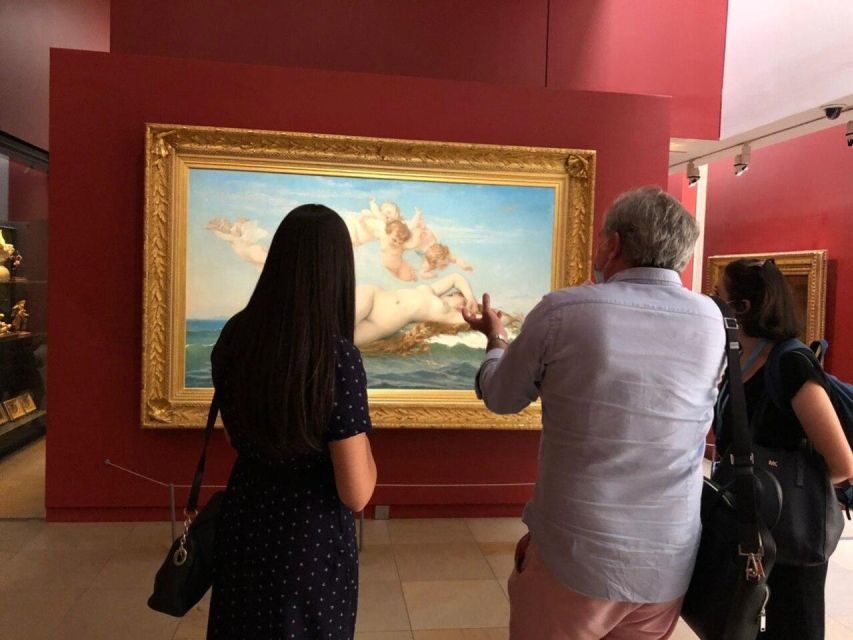
A 2-hour museum visit can either feel rushed or feel smart. With this format, it’s the smart one. You enter through a separate skip-the-line entrance, which matters at Orsay because lines can eat up the time you actually want to spend looking slowly at the paintings.
The tour also includes headsets, so you don’t have to play guess-the-quote with your ears. In a museum, that’s a big deal. Even with a guide doing their best, normal group speaking gets swallowed by other conversations and the building’s echo. Headsets keep the pacing clean, and they let you focus on what you came for.
If you want the practical move: plan to arrive a little early at the meeting point so you’re not searching while the group gathers. The guide waits for you under the statue of an elephant in front of the main entrance, holding a yellow sign that says My Super Tour.
Your 2-hour gallery route: the highlights you actually came for

This tour is built around a strong “greatest hits” approach, but it’s not shallow. It’s designed so you can understand how Impressionism sits inside a much bigger 19th-century picture.
Here’s what you can expect to see as you move through the galleries:
Impressionists and the painters who changed what modern light could do
You’ll focus on major Impressionist names like Monet, Manet, Renoir, and others. The value here isn’t just spotting famous works. It’s learning what the guide wants you to notice—how the artists treated light, how they handled everyday subjects, and how the style grew out of older training rather than arriving fully formed.
Cézanne still lives: realism with an edge
You’ll also see still life work by Cézanne. The tour frames this as part of the era’s shift—artists were moving away from purely decorative realism and toward a more structured way of seeing. If you like detail, still lifes are where this becomes obvious, because you can compare color, form, and arrangement without needing the help of big action scenes.
You can also read our reviews of more tours and experiences in Paris






Degas and the ballet dancers: motion you can almost feel
Ballet dancers by Degas show up as a key stop. Degas is one of those artists where the subject matters less than the viewpoint and the cut of the composition. In a guided format, you’ll get told what to look for so it doesn’t just feel like “pretty dancing.”
Van Gogh vs. Gauguin: collision of styles and ideas
You’ll see the concurrence between Van Gogh and Gauguin. The way to make that moment click is to let the guide frame it as more than two famous names. Think of it as a snapshot of competing directions—where color, brushwork, and symbolism start pointing toward different futures.
Realists and Courbet: when painting got provocative
The tour includes realists like Millet and Courbet, plus Courbet’s provocative Origin of the World. If you’ve ever felt 19th-century art can be too formal or too “museum quiet,” this is where it snaps back into human territory. Even when you’re shocked by the subject matter, the context helps you understand why it caused a stir in its time.
Rodin sculptures: why Orsay is great for 3D art
Finally, you’ll get to Rodin sculptures. Orsay is a good place for sculpture because the building’s original scale and light make the space feel less sterile. In a guided visit, you’ll also get help noticing how Rodin’s surfaces and forms communicate movement and emotion in a way that painting alone can’t.
How the guide connects art styles across one 19th-century world
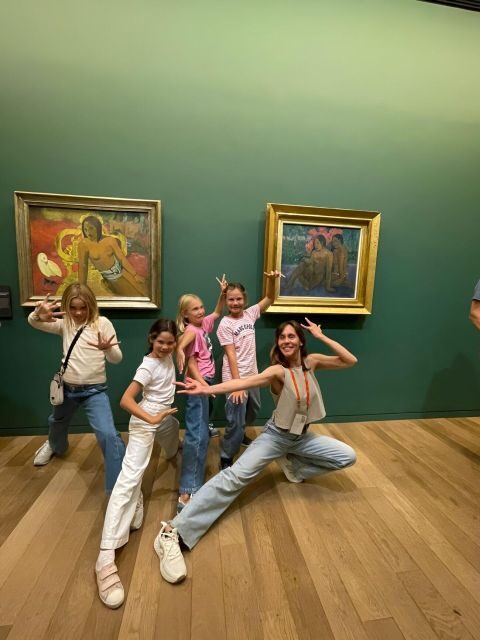
One reason people love Orsay is that the museum doesn’t force you into a single school of art. The guide leans into that. You’ll see how neoclassicism and neo-Gothic architecture sit alongside romanticism, eclecticism, Arts & Crafts, academism, realism, symbolism, and Impressionism—all in the same big walk-through experience.
For you, that means the tour becomes a map of the century rather than a pile of famous paintings. You’ll leave with a clearer sense of why artists often changed approaches. The 19th century wasn’t just art. It was industry, technology, social change, and new ways of seeing.
And here’s a practical bonus: when you understand the “why,” you stop trying to rank works and start noticing patterns. That makes the 2-hour pace feel worth it instead of exhausting.
Industrial surprises in Orsay: Lumière, early photos, and Liberty’s first model
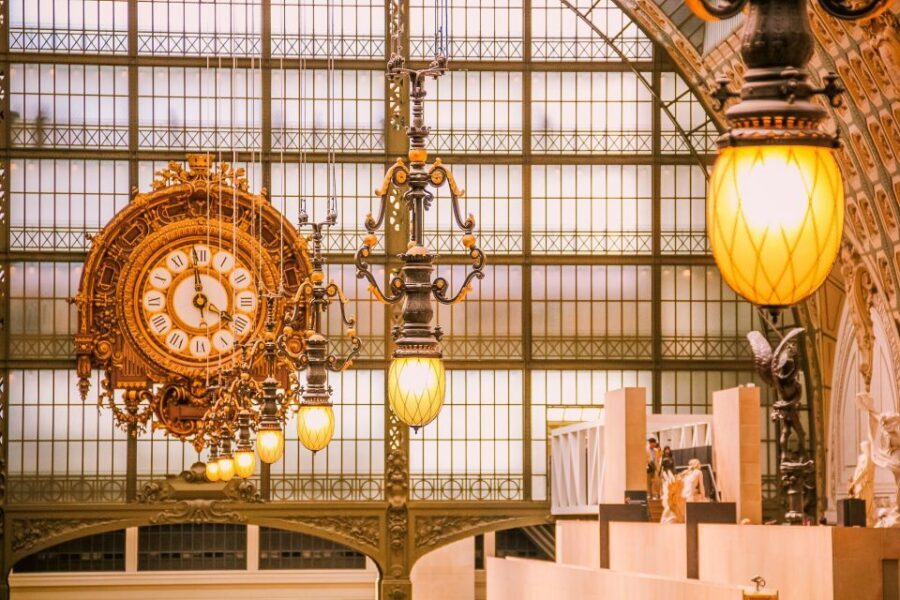
Orsay doesn’t only do art. It also tells the story of the industrial age showing up everywhere.
You can expect stops that connect to:
- the first model of the Statue of Liberty
- the first photographs and early films created by the Lumière brothers
This part is valuable because it explains how fast the 19th century was moving. When photography and early film arrive, art has to respond. When industrial design goes mainstream, artists and audiences start expecting new kinds of detail and realism.
Even if you’re not obsessed with technology, you’ll get that “oh right, this is the same era” feeling. It’s a great reset from treating Impressionism like it exists in a sealed bubble.
What to watch for during famous stops (so you enjoy more)
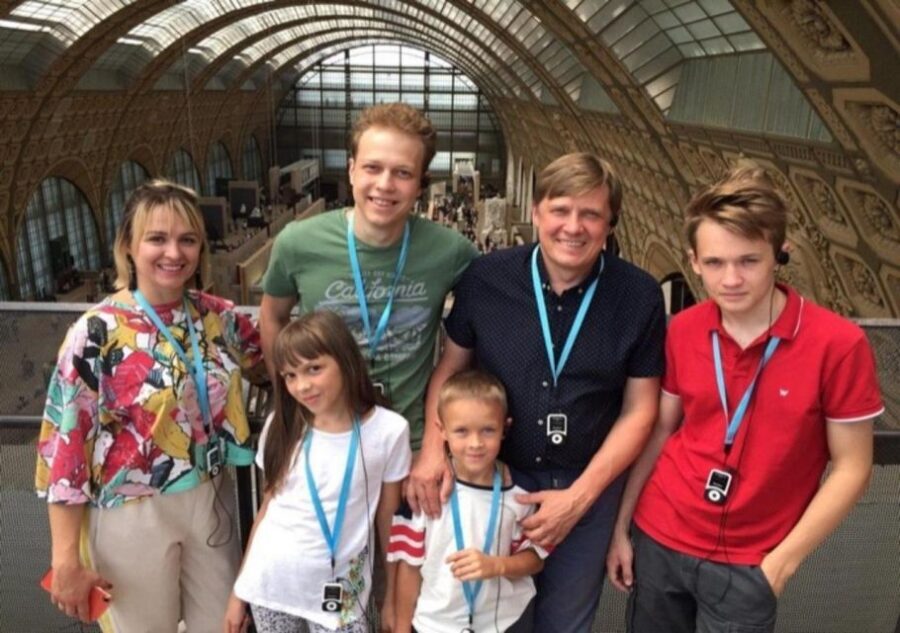
With a guided museum visit, you want more than a headline. You want a short checklist in your head so the works start talking to you.
A few good watch-for ideas based on the kinds of works the tour highlights:
- With Monet/Manet/Renoir, focus on how light changes a scene and how brushwork builds texture
- With Degas ballet scenes, look at viewpoint and the way the body is framed, not just the subject
- With Cézanne still life, notice structure—how shapes and colors lock together
- With Courbet’s provocative Origin of the World, pay attention to why the work mattered in its day (the guide will give you the context)
- With Rodin, look at surfaces up close—how form feels different from painting
If you do just that, you’ll get more than “I saw the famous artists.” You’ll get a mental model for how 19th-century art evolved.
Group size, hearing clearly, and guides like Sacha, Maria, and Deli
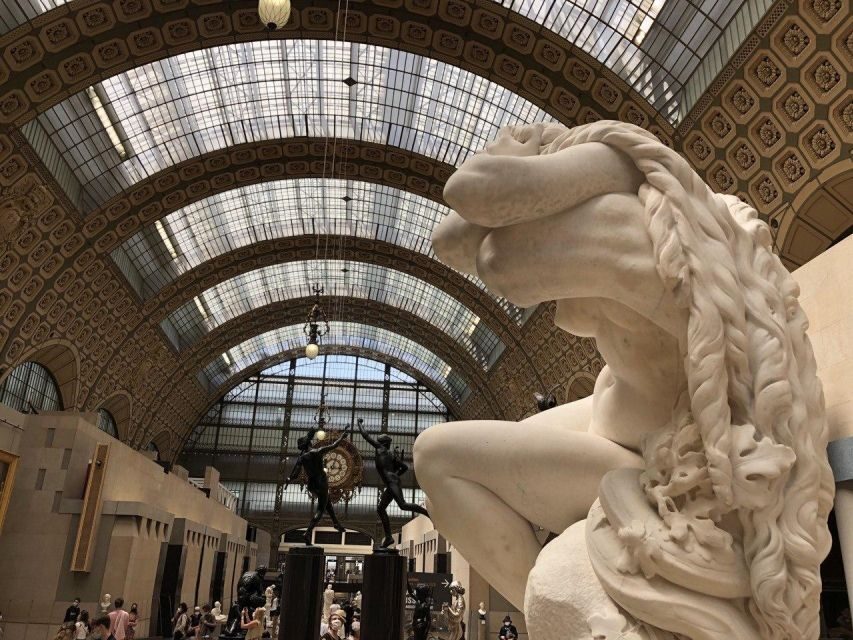
This tour is limited to 6 participants, which changes the experience. It’s easier for the guide to check in, easier for you to ask quick questions, and you’re less likely to get lost in a long ribbon of bodies.
Hearing is also handled. Headsets mean you can stand back slightly to look longer without missing the commentary. That makes a difference at Orsay, where galleries can feel like they’re designed for people who walk fast and talk louder.
On the guide side, you may be with English-speaking guides such as Sacha or Deli, and you might also see Maria referenced for being a real highlight. I like that this tour’s format attracts guides who can explain art and Paris history in a way that stays practical, not overly academic.
Price and value: is $104 worth it?
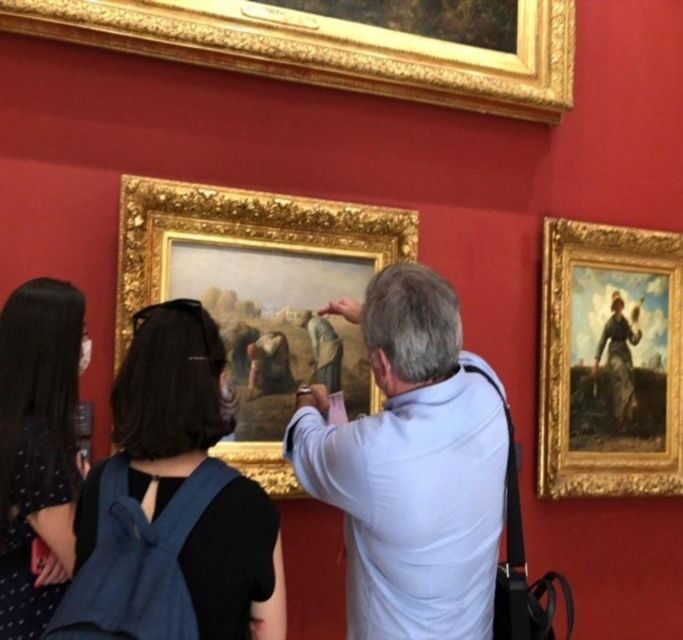
At $104 per person for a 2-hour experience, you’re paying for four things bundled together: a professional licensed guide, the entrance ticket, skip-the-line entry, and headsets.
That bundle is usually the key to value at major museums. If you tried to do it on your own, you’d likely spend time hunting tickets and then waiting outside, and you’d miss the “connect-the-dots” explanation that makes Orsay feel coherent instead of chaotic. Here, you buy time savings plus interpretation, and your visit stays focused on top works like Monet, Degas, Cézanne, Rodin, and the Courbet and realist moments.
Is it the cheapest way to do Orsay? No. But if you only have a short window and you want the museum to make sense quickly, the price starts looking fair.
Who this tour fits best (and who should skip it)
This is a strong pick if:
- you want a high-impact Orsay visit without spending your day in lines
- you like Impressionism but also want context for the century’s other styles
- you care about art plus architecture and the story of the building
It’s less of a fit if you:
- need wheelchair accessibility (the tour is not suitable for wheelchair users)
- prefer unguided museum wandering for long stretches
The 2-hour length is also a signal. This tour is for seeing a lot of important works with guidance, not for slow, hour-by-hour devotion to one single painting.
Should you book the Musée d’Orsay skip-the-line tour?
If you’re going to Orsay anyway, I think booking this makes your day easier. The mix of skip-the-line entry, headsets, and a curated selection of major works turns Orsay into a guided overview you can trust. You’ll also get a unique bonus: the station building and the industrial-era surprises are treated as part of the experience, not background.
If you only want to do Orsay on your own and you plan to spend most of your day there, you might not need a guide. But if your time is limited and you want to leave with names, context, and a clear sense of the 19th century, this is a solid value choice.
FAQ
How long is the Musée d’Orsay skip-the-line tour?
It runs for 2 hours.
Where do I meet the guide?
Meet under the statue of an elephant in front of the main entrance of the Musée d’Orsay. Look for the guide holding a yellow sign that says My Super Tour.
What’s included in the ticket?
You get an entrance ticket to the museum, skip-the-line access through a separate entrance, a professional licensed guide, and headsets to hear the guide clearly.
Can I skip the waiting line?
Yes. The tour includes skip-the-line entry via a separate entrance.
What’s the group size?
It’s a small group limited to 6 participants.
What languages are offered?
The live guide is available in English and Russian.
Is it wheelchair accessible?
No. This activity is not suitable for wheelchair users.
How much does it cost?
The price is $104 per person.