REVIEW · PARIS
Paris History Walk: Medieval Marais, Notre Dame Islands & Stories
Book on Viator →Operated by Paris Love Affair · Bookable on Viator
Medieval Paris turns into a photo lesson fast. This walk strings together the Marais’s oldest stones, the Île de la Cité birthplace vibe, and the sweeping Seine views around Pont Neuf, with James (an American photographer) guiding in English and using visual aids to make the story click.
I especially like the small group feel (max 8), because James keeps the pace friendly and the explanations personal. I also like that you get complimentary group photos taken with your phone, plus practical spot-by-spot context so you know what you’re looking at while you’re looking at it.
One thing to plan for: entrances aren’t included, so if you want to go inside major sites yourself, you’ll need separate tickets and a bit more time.
In This Review
- Key takeaways
- Entering the Marais: where medieval Paris still shows its bones
- Meet James on the Hôtel de Ville quai: easy starting point and smart pacing
- Hôtel de Sens, Maison Faust, and the Philippe Auguste Wall: medieval Paris in plain sight
- Hôtel de Sens: Gothic splendor with royal tales
- Maison Faust: Renaissance detail and a calmer courtyard mood
- Philippe Auguste Wall: a rare relic from the 1190 fortifications
- Île Saint-Louis: quieter quays, elegant houses, and optional Berthillon time
- Île de la Cité: Paris’s birthplace, and why everything feels close together
- Marché aux Fleurs and Palais de Justice: everyday Paris meets old power
- Sainte-Chapelle and the Conciergerie: royal worship and revolutionary shadow
- Sainte-Chapelle: stained glass history without needing a full detour
- Conciergerie: a former royal palace and prison on the island
- Place Dauphine and Square du Vert-Galant: your calm intermission with the best Seine angles
- The Pont Neuf finish: historic bridge views and a secret-style moment
- What’s included (and how to use it for better photos)
- Price and value: what you’re really paying for at $82.91
- Who should book this Paris history walk—and who might skip it
- Should you book this Paris History Walk?
- FAQ
- Is this tour offered in English?
- How long is the Paris History Walk?
- What is the group size limit?
- What’s included in the price?
- Are entrance fees included for sites like Notre Dame or Sainte-Chapelle?
- Is the tour flexible if the weather is bad?
- Should you book this Paris History Walk?
Key takeaways
- James, the American photographer guide helps you read Paris like a local, not like a brochure.
- Small group size (up to 8) makes questions and stop-and-look moments easy.
- Medieval-to-Royal timeline on foot: Hôtel de Sens, Maison Faust, Philippe Auguste Wall, Sainte-Chapelle area.
- Photography support: complimentary group shots + historical visual aids.
- You finish with a view at Pont Neuf after Square du Vert-Galant.
- Marais and Île Saint-Louis balance: big sights plus quieter quays and streets.
Entering the Marais: where medieval Paris still shows its bones
This tour is built for people who like cities with layers. You start on the Hôtel de Ville side of Paris, then shift into the Marais, where buildings and street lines still hint at how the city grew. The pacing feels designed for seeing, not sprinting—so you can stop for photos and actually understand why a spot mattered.
If you’re there for your first day, this is also a good way to get your bearings fast. James frames what you’re about to see—then you connect the dots as you walk. That matters in Paris, because the city looks gorgeous at every angle, but history can feel scattered unless someone organizes it for you.
You can also read our reviews of more tours and experiences in Paris.


Meet James on the Hôtel de Ville quai: easy starting point and smart pacing
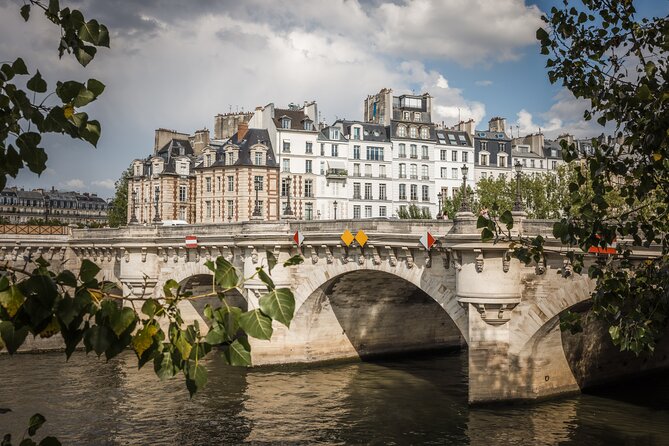
Your starting point is Le Louis Philippe, 66 Quai de l’Hôtel de ville (75004), with an end at Pont Neuf (75001). Start time is 10:00 am, and the 2 hours is approximate walking time during the experience. That time window is short enough to fit into a busy itinerary, but long enough to cover a real chunk of central Paris.
Logistics are simple in the sense that the meeting area is near public transportation, and you end at a major landmark that’s easy to build the rest of your day around. Also, the tour uses a mobile ticket, so you’re not hunting for paper.
The vibe is active. Comfortable walking shoes are a must, and you should expect a steady on-foot route rather than a sit-down history class.
Hôtel de Sens, Maison Faust, and the Philippe Auguste Wall: medieval Paris in plain sight
The Marais section is where the tour earns its name. You’re not just looking at famous neighborhoods—you’re learning how specific structures relate to medieval life, royalty, and defense.
Hôtel de Sens: Gothic splendor with royal tales
You’ll see Hôtel de Sens, described as a 15th-century Gothic mansion. That’s a mouthful, but James makes it easier by focusing on what you can notice: the architectural style, why places like this were built, and how such a building fits into the story of Paris before the modern city hardened into place.
Maison Faust: Renaissance detail and a calmer courtyard mood
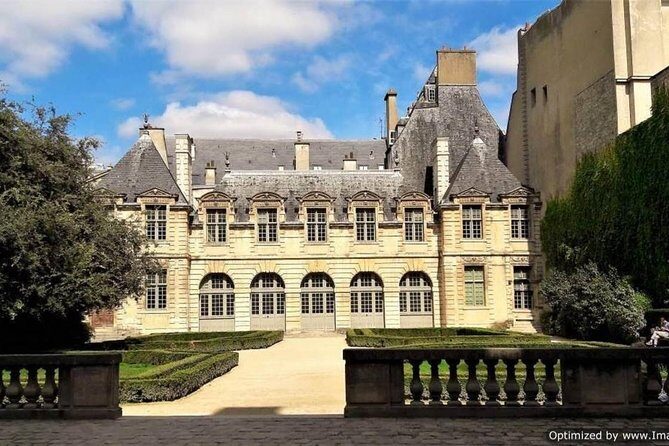
Next up is Maison Faust, a Renaissance gem with ornate courtyards. Courtyards can be tricky on a walking tour because you often can only see part of them from the street. Still, the stop is useful because you learn what to look for when you’re in the neighborhood later on your own.



Philippe Auguste Wall: a rare relic from the 1190 fortifications
Then comes the standout history object: the Philippe Auguste Wall, built in 1190 for the Crusades, described as a rare survival from Paris’s third fortification. This is the kind of stop that can make the whole area feel different. A wall like this turns a neighborhood from pretty to meaningful—you start thinking about movement, protection, and how Paris defended itself long before it became the postcard capital.
Photography tip: the wall and mansion exteriors are often where you can get strong geometry shots—straight lines, repeating textures, and that contrast between old stone and newer streets.
Île Saint-Louis: quieter quays, elegant houses, and optional Berthillon time
After the Marais, you cross into Île Saint-Louis, a 17th-century island known for elegant mansions and a quieter charm. This part of the route is a breather after the denser streets. The tour encourages you to stroll the tree-lined quays and cozy lanes away from the biggest crowds, which is exactly what you want during a short guided walk.
If you’re the kind of person who likes to time a sweet stop with a cultural one, you’ll have an optional moment for Berthillon. It’s not included, but it’s highlighted as Paris’s iconic ice cream shop since 1954—an easy way to taste daily life after you’ve been working your way through centuries of stone and stories.
Even if you skip the ice cream, the island itself gives you something valuable: a sense that Paris isn’t only boulevards and monuments. It’s also quiet corners, water views, and residential elegance.
Île de la Cité: Paris’s birthplace, and why everything feels close together
Île de la Cité is the heart of the “how did Paris begin?” question. You’ll be in the part of the Seine where the city’s origin story is physically real—streets, bridges, and landmarks all orbit this island.
This stop works well because the tour doesn’t treat the landmarks like separate trivia cards. You get a connected sense of place: the idea that religion, law, royalty, and daily life all grew up around the same compact core. That makes your later self-guided wandering much easier.
You’ll also walk by Notre Dame, described as a majestic Gothic cathedral that has witnessed centuries of Parisian history. Since entrance isn’t included, you should think of this as a learn-while-you-look moment—what the building represents, why it matters culturally, and what makes Gothic style so recognizable.
Marché aux Fleurs and Palais de Justice: everyday Paris meets old power
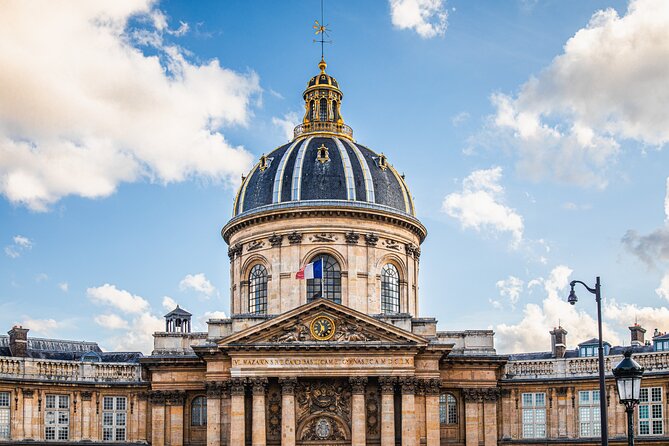
You’ll then shift to Marché aux Fleurs, a historic flower market known for colorful blooms and Parisian flair. Even if you’re not there when flowers are in full peak mode, the idea of this stop is smart. Markets are how you understand a city’s rhythm. They’re where beauty shows up for practical reasons, not just for photos.
Next is the Palais de Justice, a historic complex at the heart of French legal affairs for centuries. This is architecture with a job. James explains how it functioned as part of Paris’s judicial history, and it helps you realize that power in Paris isn’t just palaces and churches—courts shape people’s lives too.
Photo angle note: flower markets and formal stone facades give you contrast. One is color and movement. The other is symmetry and weight. Together, they keep your camera (and your brain) awake.
Sainte-Chapelle and the Conciergerie: royal worship and revolutionary shadow
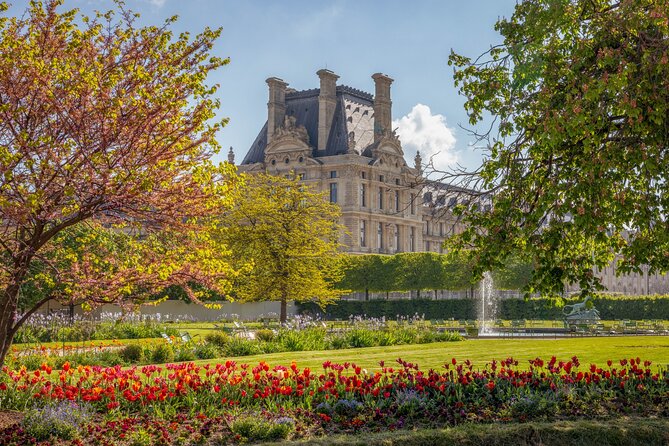
Two stops in the royal-and-legal zone really pay off if stained-glass stories and Gothic interiors are your thing—even when you’re only there for the background.
Sainte-Chapelle: stained glass history without needing a full detour
You’ll learn the secrets of Sainte-Chapelle, famed for its stained glass windows. Because entrances to sites and monuments aren’t included, plan to spend your time learning the context at the site and deciding on your own whether you want to pay separately to experience the interior properly.
Either way, this stop helps you understand why Sainte-Chapelle is more than a pretty chapel. It’s a royal project with political meaning, and once you know what to listen for, the building’s purpose makes sense fast.
Conciergerie: a former royal palace and prison on the island
Then you move to the Conciergerie, once a royal palace and prison on Île de la Cité. The tour includes its history, including its role during the French Revolution, along with the impressive Gothic architecture.
This is the kind of contrast that makes the whole route feel real. You go from royal space to confinement space within the same island footprint, and suddenly the island’s name in your head isn’t just a landmark list. It’s a timeline with consequences.
Practical expectation: again, without included entrance, you’ll want to treat these as explanation-heavy site stops. If you want interiors, set aside budget and time.
Place Dauphine and Square du Vert-Galant: your calm intermission with the best Seine angles
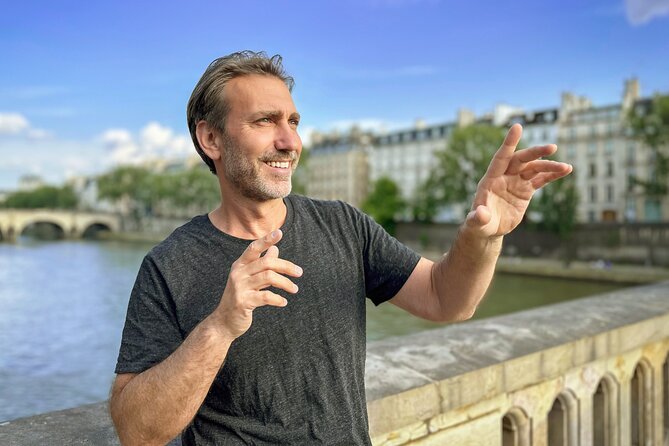
After the heavier historical stops, you get a payoff in atmosphere.
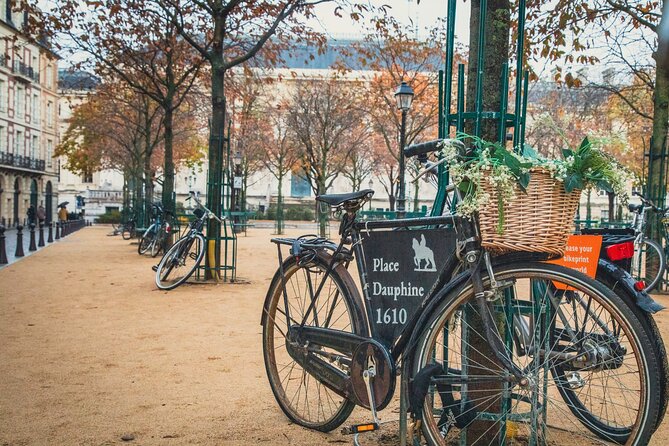
Place Dauphine is a charming triangular square—once tied to royal life—and it offers a quieter pause amid the city’s motion. It’s a good spot to reset your senses after walking through law-and-royalty architecture.
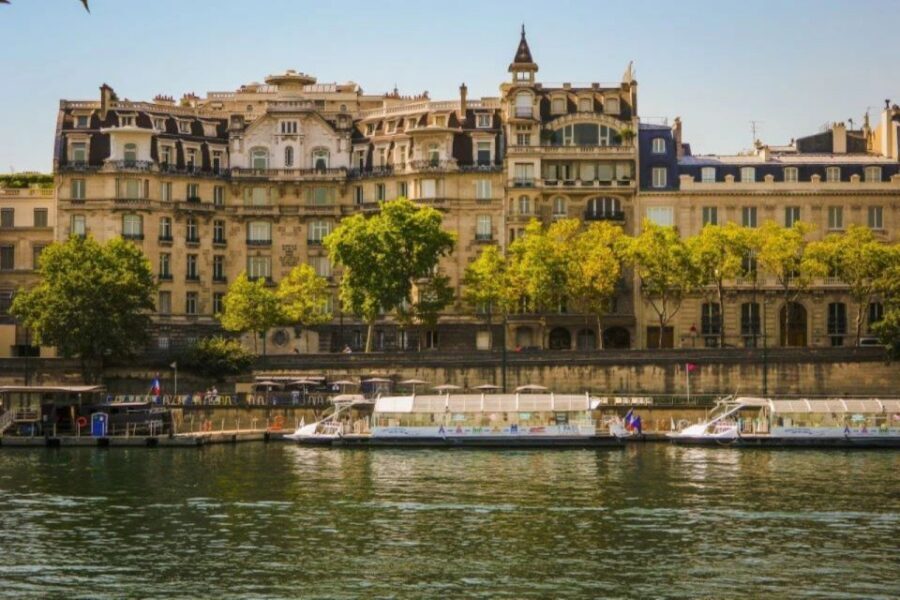
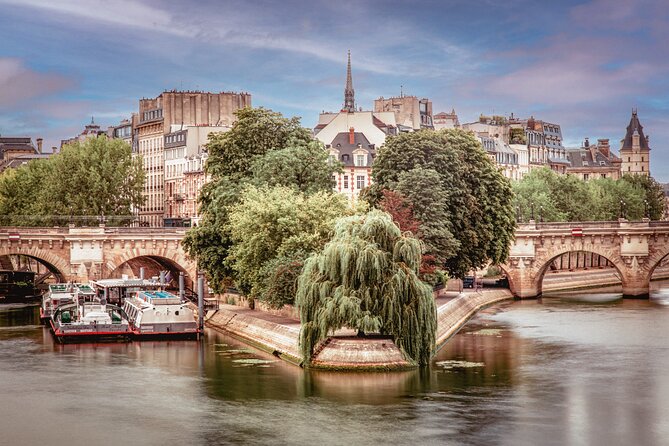
Then you reach Square du Vert-Galant, one of the tour highlights as James’s favorite stop in Paris. It sits at the tip of Île de la Cité and delivers peaceful Seine views. This is where you can slow down, look across the water, and let the city’s scale land.
The Pont Neuf finish: historic bridge views and a secret-style moment
The tour ends back at Pont Neuf (1578)—Paris’s oldest bridge, highlighted as part of what makes it special. After visiting Square du Vert-Galant, you’ll also get a secret spot on the Seine’s bank under a willow tree for a quieter view.
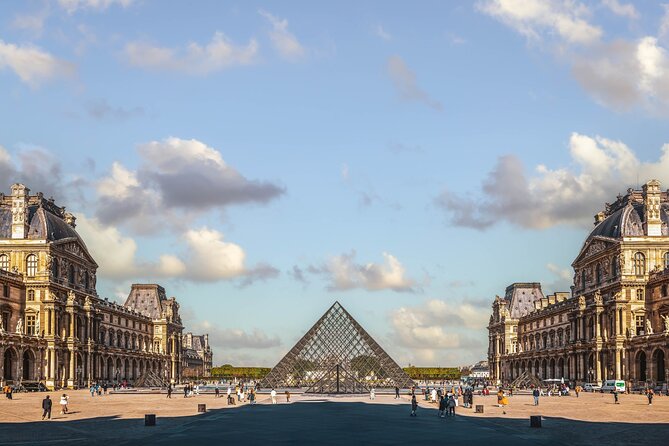
The route closes with those classic sightlines, including Louvre views and historic landmarks. It’s a nice way to end: you finish not in a chaotic shopping street, but with a broad perspective and a natural stopping point for planning the rest of your day.
What’s included (and how to use it for better photos)
This is one of those tours where the extras actually matter, because they’re aimed at you, not the tour operator.
- Complimentary group photos: These are taken with your device. That means you don’t have to ask strangers or fight for a clean angle. When you leave, you’ll have real proof you did the route—not just a blurry selfie at the edge of a crowd.
- Historical visual aids: These help turn stone and street layout into something you can remember. If you struggle with history in museums, this kind of visual context makes a big difference on the sidewalk.
- Local restaurant recommendations: Not included as meals, but useful if you’re planning where to eat afterward. A good recommendation can save time, especially on a first day.
If you want better photos, come with a simple goal: one “wide view” shot per major island/bridge moment, and one “texture detail” shot when you’re at a wall, courtyard, or chapel exterior. James’s explanations help you know where those shots should be.
Price and value: what you’re really paying for at $82.91
At $82.91 per person for about 2 hours, the value comes from three places: the guide, the compression of multiple landmarks, and the photography support.
First, you’re paying for a guide who’s also an American photographer. That matters because he doesn’t just recite dates—he thinks in visual terms. For many first-time visitors, that turns Paris from overwhelming into understandable fast.
Second, the itinerary covers a strong range: the Marais, Île Saint-Louis, Île de la Cité, major landmarks, and then a scenic finish. For a short stay, that’s a lot of “first day foundation” without requiring you to plan dozens of stops.
Third, you get included photos plus on-the-spot guidance. A normal walking tour might tell you where to stand. This one helps you get the shot and understand what you’re looking at.
The main value trade-off is entrance fees. Since entrances to any site or monument aren’t included, you’ll need to budget separately if you want interiors. That’s not a dealbreaker—it just means you should treat this as an exterior-and-context experience unless you plan extra ticket time.
Who should book this Paris history walk—and who might skip it
This tour fits best if:
- you’re a first-time visitor who wants a clear timeline across central Paris
- you like photography and want help noticing what makes each spot worth shooting
- you want a small group and a guided pace that leaves room for questions
You might choose something else if:
- you’re hoping for a lot of indoor cathedral or chapel time on-site (entrances aren’t included)
- you want a very slow stroll with minimal walking effort (this is described as active)
- you travel when weather is unreliable, since the experience requires good weather
Should you book this Paris History Walk?
If you want a smart first-day route that blends medieval Paris, royal islands, and Seine views—with an American photographer guide named James—this is a strong pick. The biggest reason to book is the way the tour teaches you how to see Paris: visual aids, photo help, and stops tied together by theme, not by random geography.
Just go in with the right expectations: you’ll learn a lot at the sites, but if you’re serious about going inside major monuments like Sainte-Chapelle, plan for extra tickets and time.
FAQ
Is this tour offered in English?
Yes. The tour is offered in English.
How long is the Paris History Walk?
It lasts about 2 hours, and the stated time is approximate.
What is the group size limit?
The tour has a maximum of 8 travelers.
What’s included in the price?
Included features are a local Paris guide, complimentary group photos taken with your device, historical visual aids during the tour, and local restaurant recommendations.
Are entrance fees included for sites like Notre Dame or Sainte-Chapelle?
No. Entrance to any site or monument is not included.
Is the tour flexible if the weather is bad?
The experience requires good weather. If it’s canceled due to poor weather, you’ll be offered a different date or a full refund.
Should you book this Paris History Walk?
Yes—if you want an efficient, photo-friendly way to understand Paris’s medieval core and royal islands, book it. The small group size, the guide’s photo-based way of explaining history, and the included photo support make it a great first-day foundation, as long as you’re comfortable with a good amount of walking and handling any site entrances separately.