REVIEW · PARIS
Paris (Marais District) Scavenger Hunt and Self-Guided Tour
Book on Viator →Operated by Explorial · Bookable on Viator
Paris turns into a game quickly.
This Marais District scavenger hunt lets you explore at your own pace, using an app to guide you between landmarks while you solve questions and complete photo prompts. I like the fact that you can start at a time that works for your group, not the other way around.
My second favorite part is the mix of “city tour” and “challenge,” all folded into one walk. You’ll earn points for finding sights with hints, answering sight-based questions, and nailing creative photo tasks, which keeps the streets from feeling like a checklist. It also stays private to your group, so you’re not stuck pacing with strangers.
The main drawback: this is app-first. If you’d rather have a live guide talk nonstop, you may miss that kind of storytelling. Still, the prompts are designed to get you looking closely, which is where the fun (and learning) happens.
In This Review
- Key points before you go
- Why a scavenger hunt in the Marais beats a rigid walking tour
- Start at Place du Châtelet: how the route actually works
- How the game works: sights, questions, and photo tasks with points
- Place des Vosges: where you’ll start the “look closer” phase
- Bastille: the second anchor stop and your next clue cluster
- Other sights along the way: Hôtel de Sens and more
- Timing: how long it takes, and why the tour length feels forgiving
- Who this suits best (and who might not love it)
- Price and value: what $11.88 buys you in Paris time
- Practical tips so your group finishes the hunt happy
- Should you book the Paris Marais Scavenger Hunt?
- FAQ
- Where does the scavenger hunt start and end?
- How long does the experience take?
- Can we start at any time?
- How do we access the tour in the app?
- Is the experience available in English?
- Is it just for our private group?
- What is the cancellation policy?
Key points before you go
- Start when your group is ready: no fixed meeting-time pressure during the open window
- App routes you with a map function: follow hints to each stop at your own pace
- Questions are tied to what you see: answers are often hidden in signs, pictures, and details
- Photo tasks score points: you can play for laughs as much as for accuracy
- Two main anchor stops: Place des Vosges, then Bastille, with additional sights on the way
Why a scavenger hunt in the Marais beats a rigid walking tour
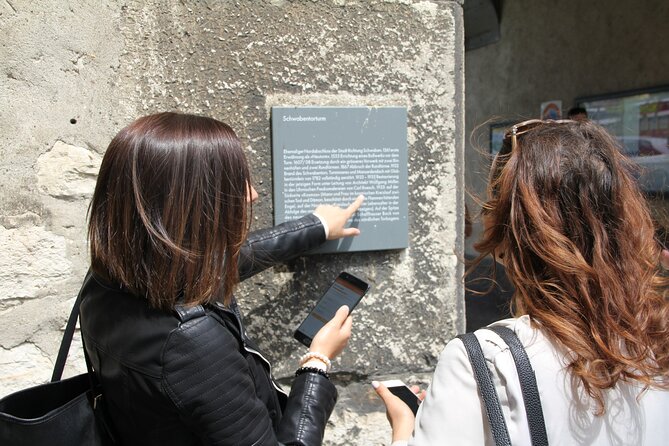
This format is great for Paris because it gives you freedom without turning the day into aimless wandering. You’re still walking a logical route, but you decide when to slow down, stop for photos, or linger when something catches your eye. The scavenger part keeps you engaged, while the “tour” part helps you notice details you might otherwise speed past.
I also like that the experience is built for groups. The rules are clear enough to play comfortably with friends, and open-ended enough that kids and adults can each contribute in their own way. One review-style setup that makes sense here: a 9-year-old can “drive” the hunt by leading the way and answering questions, while adults enjoy the history threads that show up in the prompts.
There’s no heavy itinerary pressure either. The tour lasts on average about 1–2 hours, but it’s not limited in time, so you can turn it into a longer stroll if you’re enjoying the neighborhood.
You can also read our reviews of more tours and experiences in Paris.



Start at Place du Châtelet: how the route actually works
Your starting point is Place du Châtelet (Pl. du Châtelet, Paris), and the experience ends back at the meeting point. From there, the app handles the direction and pacing so you’re not constantly checking street corners or hunting for exact locations.
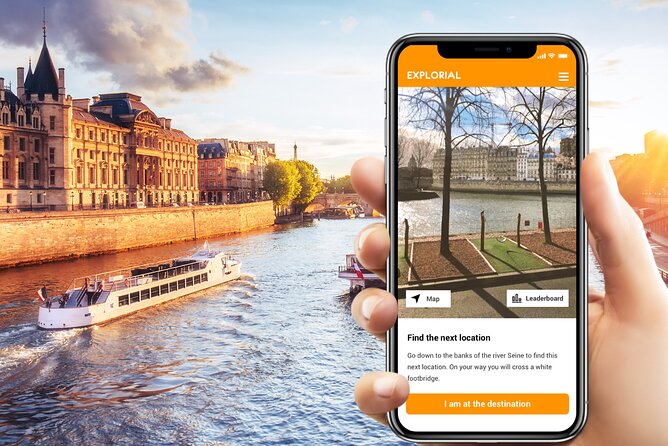
A couple practical touches matter. First: the tour is offered daily with very wide hours (12:00 AM to 11:30 PM). That means you can pick the start time that fits your day, whether you’re doing Paris at morning-light, afternoon crowds, or a later evening stroll. Second: you’ll receive an access code after purchase. Use that in the app, download and open the Explorial-App, then jump into the hunt at the starting spot.
And yes, this is near public transportation, which helps if your group wants to arrive close-by and then walk the route without fuss. If you’re coming by metro or bus, you’ll probably find it easy to regroup before you start.
How the game works: sights, questions, and photo tasks with points
This experience isn’t just “walk and look.” It’s structured as a chain of small missions, and each one pulls you into a different way of paying attention.
Here’s what you do:
- Find sights using hints: the app uses a map function to get you there.
- Solve questions when you arrive: the answers are usually hidden in the real-world details—think signs, pictures, or other visible references at the site.
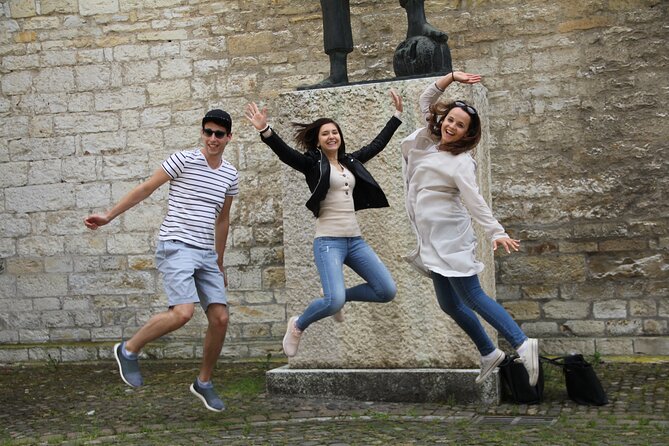
- Complete photo tasks for points: these require creativity, so it’s not only about being right. It’s about playing.
This combination is what makes it feel different from a standard self-guided walk. If you’re the kind of person who normally takes photos but never knows what you’re looking at, these prompts turn that into an actual scavenger game. Even if you don’t love puzzles, the sight-and-question loop helps you slow down and read what’s in front of you.
The scoring is also a nice energy boost. It gives you a reason to collaborate—adults can analyze details while younger players experiment with photo prompts, and everyone gets a say.
Place des Vosges: where you’ll start the “look closer” phase

Your first anchor stop is Place des Vosges. This is where the hunt kicks in, and it’s a smart choice for an opening chapter because it sets the tone: you’re meant to look at your surroundings, not just move through them.
At Place des Vosges, you can expect the app to guide you with hints, then ask you questions that connect to what you’re seeing. The format is practical: answers are often there in plain sight, but not always obvious until the prompt tells you what to look for. That’s the fun of it—you’re turning the square from a backdrop into a puzzle board.
What to watch for:
- Sign or display details that feel like they were meant for reading at eye level
- Visual clues from pictures or nearby references
- The “challenge” feeling that comes from trying to confirm an answer before you move on
A small planning benefit: if you’re traveling with kids, the first stop matters. Starting with a structured place helps them buy in fast, and it gives everyone a quick win before the route builds.
Bastille: the second anchor stop and your next clue cluster

Next comes Bastille (you’ll also see it referenced as Place de la Bastille). This second stop is where the hunt often feels like it shifts from learning-by-looking into learning-by-context—still interactive, but with a little more weight to the atmosphere.
Like Place des Vosges, the app will bring you to the area, then ask questions tied to what you can find around the stop. The key difference is that the vibe of the prompt is usually a bit more story-driven: you’re asked to connect details you spot to what they represent.
Here’s the practical angle: Bastille is a great “mid-hunt checkpoint” because it breaks up the walk. Even if you’re doing the hunt in under the average time, you get a clear sense of progress—mission one, then mission two—before you decide whether to keep exploring.
If your group is the type that likes to take breaks, you’ll also appreciate that the experience isn’t locked to a strict end time. After Bastille, you can slow down, regroup, and decide how much extra walking you want.



Other sights along the way: Hôtel de Sens and more

Even though the route lists two anchor stops, the experience is designed so you reach other notable places along your walk. The highlights specifically call out Hôtel de Sens, Place des Vosges, and Place de la Bastille, plus additional sights “and many more” depending on the route prompts.
This matters because it keeps the day from feeling like a straight line. You’re not only going to two points and calling it a tour. The app-driven hints help you pick up extra context as you move through the area, and those side stops tend to be the ones you remember later because you earned them through the game.
Think of it like this: the anchor stops give you structure, and the extra sights give you payoff.
Timing: how long it takes, and why the tour length feels forgiving

The tour is listed as about 2 hours, but the average duration is around 1–2 hours. That range is a big deal in a city like Paris where crowds, lines, and weather can wreck a strict schedule.
The real flexibility is that the experience is not limited in time. You can keep playing, pause when you want, and explore at your own pace without feeling like you’re racing the clock. The app also encourages breaks since you’re not required to move continuously between tasks.
If you’re planning a day with museums later, I’d treat this as a warm-up or a connective tissue between bigger activities. Start it earlier in the day, and you’ll probably feel more grounded walking through the Marais afterward. Or do it later to break up the evening with something active outdoors.
Who this suits best (and who might not love it)

This hunt works especially well for groups who enjoy teamwork and problem-solving. The experience is private, so you can spread out a bit while still staying together. And the way tasks are written means people can contribute in different ways: some players will focus on reading details, while others enjoy the photo challenges.
I can see it working great in three common travel setups:
- Families: the questions are designed to be solvable while you’re standing in the place itself, which helps kids participate instead of just tagging along.
- Friends: photo tasks add a playful edge, and the point system makes it feel like a friendly competition.
- Small groups with a casual agenda: it can act as an easy “social activity” because everyone can play without needing special background knowledge.
Who might not love it: if you want a deeply narrated, step-by-step guided experience where someone explains every detail out loud, this is more about you exploring with prompts than being taught by a guide.
Price and value: what $11.88 buys you in Paris time
At $11.88 per person, you’re paying for a self-paced, app-driven experience rather than a traditional guided tour. In practical terms, that’s a bargain if you like active travel—because you get multiple “jobs” to do across the walk: solving sight questions and completing photo tasks.
You also aren’t locked into a long time commitment. Many people finish in the average 1–2 hours, but you can keep going if you’re enjoying it. That flexibility alone often makes a low-cost tour feel like better value than a rigid, fixed-duration tour.
And the overall feedback is very strong: it’s rated 5 out of 5 with 16 reviews, and 100% recommendation is a rare pattern at this price. That doesn’t mean it’s perfect for every style of travel, but it does suggest the format reliably lands well with real groups.
Practical tips so your group finishes the hunt happy
You’ll get the most out of this if you treat it like a game, not an assignment. A few simple moves help:
- Bring a fully charged phone. The app is your map, your prompts, and your score system.
- Wear comfortable walking shoes. This is a walking tour, and it’s easy to get distracted by photo tasks.
- Assign roles. One person can lead navigation in the app, another can handle reading the prompt details, and someone else can handle photo creativity.
- Don’t rush the question moments. If answers are hidden in signs or pictures, speed means you’ll miss them.
- Use the “start anytime” freedom to avoid stress. If your group starts together, you’ll enjoy the hunt more and argue less about where to go next.
Should you book the Paris Marais Scavenger Hunt?
Book it if you want Paris to feel interactive without paying for a full guided tour. This is a good fit if your group likes walking, solving small challenges, and using an app to guide you instead of following a scripted route. It’s also a solid choice for mixed ages, especially if you want kids to participate rather than just observe.
Skip it if you strongly prefer live narration, or if your group doesn’t like app-based activities. If you’re the type who hates puzzles and wants someone to point things out, you may find the prompts more effort than reward.
FAQ
Where does the scavenger hunt start and end?
It starts at Place du Châtelet (Pl. du Châtelet, Paris, France) and ends back at the meeting point.
How long does the experience take?
It lasts on average about 1–2 hours, though it is not limited in time, so you can keep exploring at your own pace.
Can we start at any time?
Yes. You can start at any time that suits your group. The listed opening hours run from 12:00 AM to 11:30 PM, Monday through Sunday.
How do we access the tour in the app?
After you buy the ticket, you receive an access code. You then use that code in the Explorial-App and go to the starting point to begin.
Is the experience available in English?
Yes, the tour is offered in English.
Is it just for our private group?
Yes. This is a private tour/activity, and only your group will participate.
What is the cancellation policy?
You can cancel for a full refund up to 24 hours in advance of the experience start time. Within 24 hours, there is no refund.
If you want, tell me your group’s ages and what day/time you’re aiming for, and I’ll suggest the best way to pace the hunt so it fits your Paris plan.