REVIEW · PARIS
Paris Treasure Hunt – Explore the Seine from Louvre to Eiffel
Book on Viator →Operated by From Paris With Fun · Bookable on Viator
This Seine walk turns sightseeing into a game. You start near the Louvre, follow clue after clue along the river, and end in the Eiffel Tower area while passing major sights like Musée d’Orsay, Pont Alexandre III, Les Invalides, and the Grand Palais. It’s self-guided, no app, and help is available if you hit a snag.
I like the way this is built for real groups, not just “one-size-fits-all.” The riddles are designed to keep kids engaged without turning it into something childish, and the format works well for mixed ages, which is exactly what I want when I’m traveling with family.
One thing to think about: it’s still a 4.5 km walk. If you’re prone to long café detours or slow starts, the activity’s 3-hour end time can sneak up on you.
In This Review
- Key highlights to know before you go
- Starting at the Louvre: what the treasure hunt format really feels like
- No app, just a booklet: how the clues and pacing work
- The Seine route in real life: Louvre to Eiffel Tower area
- Musée d’Orsay: the moment you start noticing angles and river views
- Pont Alexandre III: where the route turns scenic fast
- Les Invalides: a “stop and think” zone
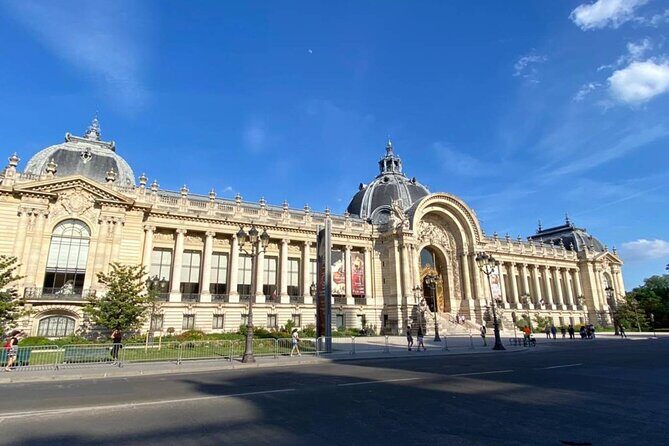
- Le Grand Palais: a big-city scale moment
- Eiffel Tower finish area: wrapping the story where it belongs
- How long you’ll be out there (and how to avoid running out of time)
- Price and value: what $42.05 buys you (and what it doesn’t)
- Who this hunt suits best (and who may want something else)
- Should you book this Louvre-to-Eiffel Seine treasure hunt?
- FAQ
- How long is the Paris treasure hunt?
- How far do you walk?
- Do I need an app or downloads?
- Where do we meet?
- What languages are available?
- Is there an age recommendation for kids?
Key highlights to know before you go
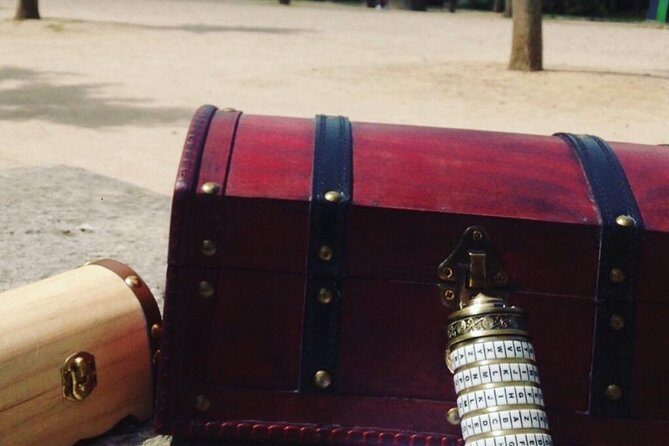
- Self-guided, no app needed: you get a booklet with the map and riddles, plus answer sheets.
- Iconic Seine route: you’ll be moving past big Paris landmarks along the river instead of hopping randomly around town.
- Family-friendly challenge level: the clues are meant to keep children engaged while remaining interesting for adults.
- Real flexibility: it’s not a rushed guided tour, so you can pause for photos and breaks.
- Small group cap: up to 20 people, which keeps the vibe calmer than many organized outings.
- Physical help on-site: if you need a hint, the team is there in person (including Marion, per the team responses).
Starting at the Louvre: what the treasure hunt format really feels like
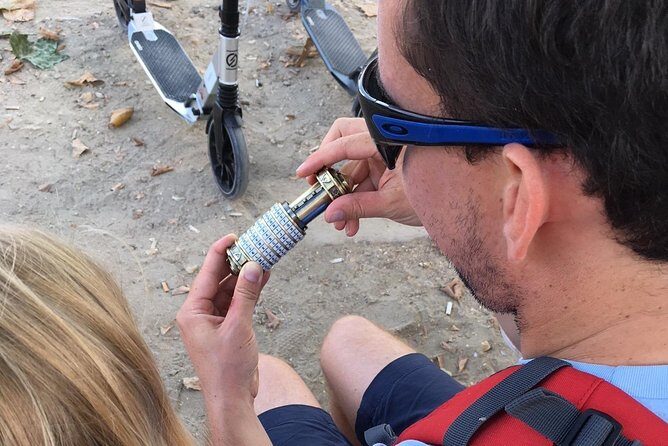
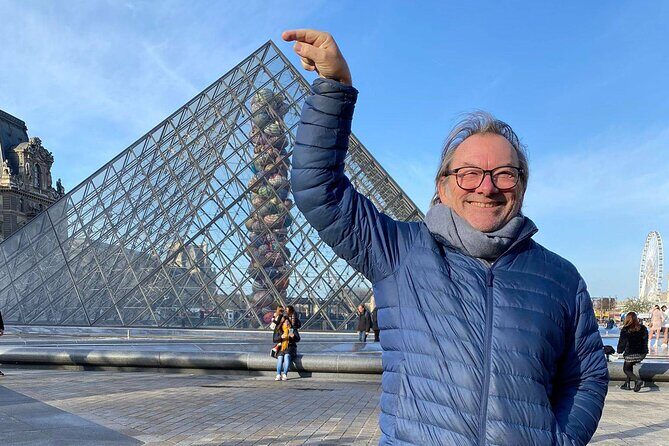
The meeting point is in the 1st arrondissement at 19 Pl. du Carrousel. From there, you begin right in the Louvre area and orient yourself with the materials you receive. What makes this format fun is that you’re not just looking at buildings. You’re solving little tasks while the city slides past at walking speed.
The experience is designed so you can work independently, but not feel stranded. There’s assistance available throughout the game because the team is physically on the route (not behind a screen). That matters in Paris, where it’s easy to wander a little too far when you’re trying to line up with clues.
You’ll also be working with a clear structure: a game booklet with riddles, a map, and cultural notes, plus answer sheets. This keeps the activity from feeling like random scavenger searching. Instead, it’s more like a guided story told through your own choices.
You can also read our reviews of more tours and experiences in Paris.



No app, just a booklet: how the clues and pacing work
One of the biggest practical wins here is that you don’t need a phone app or any downloads. You use the booklet, the map, and whatever answers you need to confirm you’re on track. That means you can keep your phone for photos and navigation, not for trying to decode a digital interface.
The activity is completely self-guided. There’s no guide walking backward giving commentary. Instead, you move at your own pace and collaborate with whoever you’re with. If you’re traveling as a couple, you get that low-pressure “let’s figure this out” rhythm. If you’re traveling with kids, you get built-in turns at being the clue reader, the clue solver, and the one who checks the map.
There’s also a time constraint you should respect. The treasure hunt lasts about 2.5 hours for roughly 4.5 km, and it automatically ends after 3 hours, wherever you are on the route. I like that it sets a clear boundary, but it also means you need to manage your own breaks.
If you stop often for snacks or a long photo session, build that into your pace. The experience notes that taking breaks reduces the time available to finish the investigation, so plan for shorter pauses rather than a full sit-down meal halfway through.
The Seine route in real life: Louvre to Eiffel Tower area
This isn’t a “see everything in Paris” plan. It’s a focused postcard-style route along the Seine, with a built-in reason to keep walking: each clue leads you onward.
Even without knowing exactly what each riddle says, you can expect the emotional arc of the route. You start in the grand museum zone, then you progressively shift into the riverside viewpoints where the city opens up. As you pass through different landmark zones, the clues keep you looking up, looking around, and reading details you might otherwise skip.
Musée d’Orsay: the moment you start noticing angles and river views
One of the sights on your path is Musée d’Orsay. As you move along the route near it, you’ll likely find that the riverside angle changes your perspective. That’s the practical value here: you’re not stuck staring at one façade from one spot.
The treasure hunt approach also encourages you to move in a way that feels intentional. Instead of “walk until you get bored,” you get “walk until you solve the next clue.” That keeps momentum going, especially for kids who can struggle with traditional sightseeing formats.
Pont Alexandre III: where the route turns scenic fast
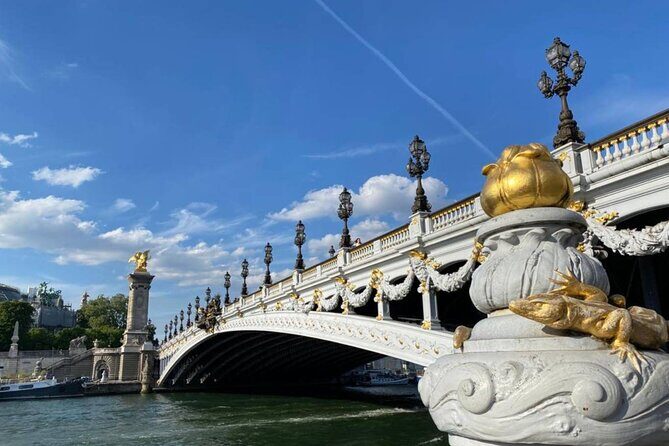
Pont Alexandre III is another key stop on the route. Bridges can be tricky for visitors because you’re either rushed across them or you don’t know why they matter. Here, the clue format gives the bridge a job. You’re encouraged to slow down, examine what’s around you, and connect the monument to the kind of information hinted in the riddles and cultural notes.
This is also a strong area for photos. Just remember: photos are great, but don’t let them steal all your remaining clue-solving time.



Les Invalides: a “stop and think” zone
Les Invalides comes next on the path. This is the kind of landmark that’s visually striking even when you’re not looking for details. The treasure hunt design turns that into a thinking break. You’re meant to observe, collaborate, and work through the next clue with the monument as your visual anchor.
If you prefer interactive travel over passive listening, this is where you’ll feel that difference. Instead of an explanation happening to you, you’re driving the next step.
Le Grand Palais: a big-city scale moment
Le Grand Palais is part of the route as well. Large monuments can sometimes blur together when you’re moving fast. The clue format helps you “focus the eyes” again. You’ll likely find it easier to remember the route because each segment has a question you’re actively working on.
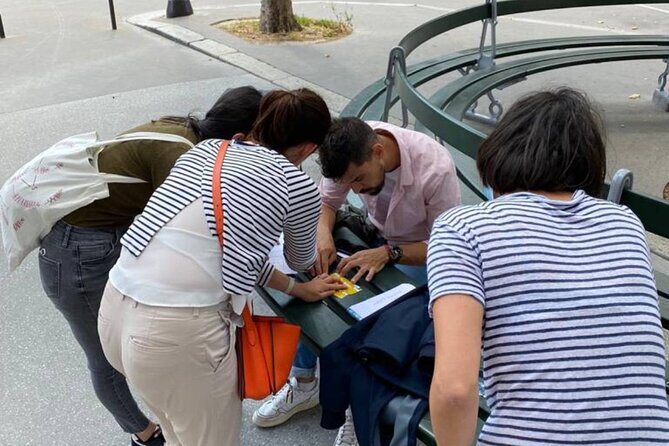
This is also a nice spot to pause briefly and regroup with your group. If one person’s stuck on a clue, another can check the map and help you get back on track.
Eiffel Tower finish area: wrapping the story where it belongs
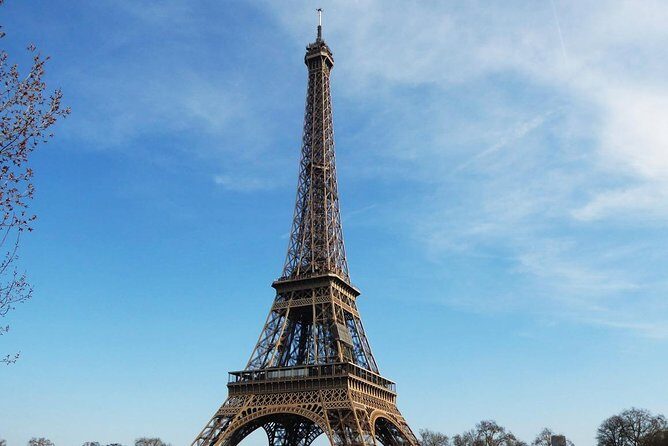
You’ll end in the Eiffel Tower area. The experience information also says the activity ends back at the meeting point, which can sound contradictory at first. Practically, the tour is designed so your walk culminates around the Eiffel Tower. So plan your final stretch as the celebration moment: finish the last clue and enjoy the river-to-icon view.
If your group is the type that loves a “final photo,” this works well. The end point is the kind of scene everyone recognizes immediately, even people who are still learning their way around Paris.
How long you’ll be out there (and how to avoid running out of time)
The activity is designed for around 2.5 hours and then it automatically ends after 3 hours. That makes it a good match for travelers who don’t want a half-day tour, but still want something substantial.
A few timing realities:
- You’re covering about 4.5 km, which is manageable for many people with moderate physical fitness.
- The self-guided nature means your pace is your own, but the clock doesn’t care.
- Breaks reduce clue-solving time, so keep snack breaks tighter if you still want to finish everything.
My advice: when you start, do a quick “group agreement.” Decide how you’ll handle clues if someone gets stuck, and choose how often you’ll stop. For example, one longer photo stop is fine, but too many small detours can add up.
Also, keep in mind that this activity needs good weather. If conditions are poor, it may be rescheduled. That’s typical for outdoor walking plans in Paris, and it’s part of why the hunt remains enjoyable: you’re not trying to solve riddles while sprinting through rain.
Price and value: what $42.05 buys you (and what it doesn’t)
At $42.05 per person, you’re paying for a specific kind of value: a themed, self-guided walking experience that covers a great visual corridor along the Seine, with built-in activities.
Here’s what you get:
- a game booklet with riddles, map, and cultural notes
- answer sheets
- on-site assistance if you need a hint
- availability in English and French
- no app and no downloads
- a small group cap (up to 20)
Here’s what you don’t get:
- a traditional tour guide with extended explanations
- food and drinks (so you’ll want to plan your own snack timing)
That last part is important. If you’re comparing this to a guided tour that includes commentary all day, this is more active and more “hands-on.” The value is in the activity itself and the fact that you’re walking a scenic route you’ll probably want to revisit later anyway.
If you’re someone who gets impatient with long lectures, this format can feel like a better use of your time. If you love deep, continuous narration from a guide, you might prefer a guided tour for at least part of your day. The sweet spot is when you want movement, fun, and learning without the fatigue of standing still.
Who this hunt suits best (and who may want something else)
This is a strong fit for:
- families who want kids to stay engaged without forcing them to sit through classic sightseeing
- couples who like playful problem-solving during travel
- small groups who can collaborate and share the roles of map-checking and clue reading
The experience also recommends a minimum age of 8 years old so children can stay engaged. That said, it notes that children under 5 join for free, which helps make it more budget-friendly for younger families if you’re comfortable with a slower pace.
One more practical fit check: it requires moderate physical fitness. If your group is dealing with mobility limits, the 4.5 km walking portion might be harder than it sounds, especially if you’re stopping frequently.
Should you book this Louvre-to-Eiffel Seine treasure hunt?
I’d book it if you want a fun way to see the “greatest hits” of the Seine without the stiffness of a guided tour. The big draw is that you’re actively participating—solving clues as you pass Musée d’Orsay, Pont Alexandre III, Les Invalides, and the Grand Palais, then finishing at the Eiffel Tower.
Don’t book it if you’re expecting a step-by-step guided lecture the whole way. This is self-guided, and the hints come from the team on-site only when needed. Also, if you know your group always takes long sit-down breaks, you should treat this as a walking-and-photo plan, not a lunch-and-linger plan.
If you like the idea of learning through playful questions and keeping the day light and interactive, this treasure hunt is a smart use of a couple of hours in Paris.
FAQ
How long is the Paris treasure hunt?
It typically lasts about 2.5 hours, and it automatically ends after 3 hours wherever you are on the route.
How far do you walk?
The route is about 4.5 km on average.
Do I need an app or downloads?
No. You use a game booklet with riddles, a map, and cultural notes. There’s no mobile app required.
Where do we meet?
You start at 19 Pl. du Carrousel, 75001 Paris, France.
What languages are available?
The treasure hunt is offered in English and French.
Is there an age recommendation for kids?
The recommended minimum age is 8 years old to help children stay engaged. Children under 5 join for free.