REVIEW · PARIS
Paris Wonder: Half-Day Easter Adventure
Book on Viator →Operated by Wonder Meets and Tours · Bookable on Viator
Four hours can feel like a whole week. This Paris Wonder Easter Adventure mixes classic sights with practical guidance, from the Champs-Élysées to Arc de Triomphe and Musée d’Orsay, plus Olympic venue photo spots you can actually use. I especially like the small-group feel, which makes it easy to ask questions (Yemisi and Ife come up again and again for that kind of patient, friendly help). The one thing to consider: there’s no hotel pickup, so you’ll need to get yourself to Place Clemenceau on your own.
What makes this outing smart is how it’s paced and how the guide helps you connect the dots. You’ll get a guided look at major architecture and art (including the big-name artists at Musée d’Orsay), then you’ll end near the museum so you can keep going on your own with a 24-hour Hop-on-Hop-off pass along the Seine. If you’re expecting a full, all-day deep museum immersion or Easter-specific church events, you might feel a bit rushed or underwhelmed by the time limits.
In This Review
- Key things to know before you go
- Starting at Place Clemenceau: a strong launch point for Paris
- Champs-Élysées with context, not just window-shopping
- Arc de Triomphe: the timed ticket that protects your view time
- Musée d’Orsay: former railway station energy plus art hits
- Descend beneath Île de la Cité: Notre-Dame’s foundations with meaning
- Ending near Musée d’Orsay: use the Seine pass while you still have momentum
- Value check: what you’re really paying for (and what you’re not)
- Who this tour fits best in your Paris plan
- Should you book Paris Wonder for this half-day route?
- FAQ
- How long is the Paris Wonder Half-Day Easter Adventure?
- Is the tour offered in English?
- Is this a private tour?
- Where do I meet the guide?
- Where does the tour end?
- What kind of tickets are included?
- Is the tour affiliated with the official Olympic Games Paris?
- Is hotel pickup included?
- What do I do after the tour ends near Musée d’Orsay?
- What happens if I cancel?
Key things to know before you go
- Small-group format: more chances to ask questions and get real answers, not just announcements.
- Olympic venue photo guidance: the guide helps you find good angles for what you came for.
- Arc de Triomphe timed entry: the skip-the-line timed ticket helps protect your schedule.
- Musée d’Orsay focus: you get a guided overview centered on major artists like Van Gogh, Monet, and Renoir.
- Notre-Dame foundations visit: you’ll head beneath Île de la Cité to see the historical foundations and original structures.
Starting at Place Clemenceau: a strong launch point for Paris
Your day begins at Place Clemenceau in the 8th arrondissement. This matters more than it sounds. It’s a central, easy-to-reach spot that puts you in the middle of Paris’s big “picture” sights fast, instead of wasting time crossing the city before you even start.
You meet your English-speaking expert guide and then you’re taken around by a dedicated private vehicle. That combo is ideal in a place like Paris, where walking every segment can turn into stop-and-go frustration. The guide also sets expectations early, so you know what you’re looking at and why it’s there. And since this is a private tour for your group, the pace can match your questions instead of forcing you to follow a strict script.
If you want to get the most out of it, show up with two things ready: a couple of questions you actually care about, and a willingness to move when your guide moves. That’s how you’ll capture the best photo moments and not end up watching the clock.
You can also read our reviews of more tours and experiences in Paris



Champs-Élysées with context, not just window-shopping

The first stop is the Champs-Élysées area, starting from Place Clemenceau. This is where the tour stops being only sightseeing and starts being storytelling: history, architecture, and the city’s festive-season atmosphere are part of the guide’s framing. Even if your dates are not in December, the way the guide explains what changes across seasons helps you read the boulevard more accurately as you stroll later.
I like that this segment is built for interaction. A good guide will point out what tourists often miss, like how the buildings and vistas “line up” with the rest of the city. That kind of context makes the next stops easier, because you’ll understand why the route flows where it does.
One practical consideration: the Champs-Élysées can get crowded. If you’re sensitive to crowds or you’re traveling with someone who needs lots of quiet time, keep in mind this is still a central, iconic boulevard. The vehicle help reduces the walking burden, but you’ll still feel the city’s energy.
Arc de Triomphe: the timed ticket that protects your view time
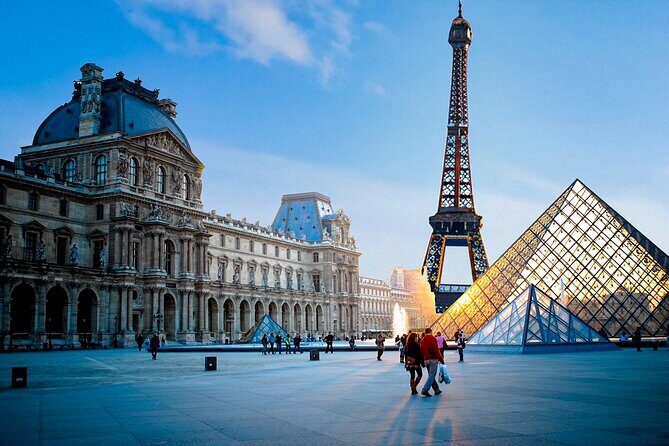
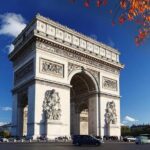
Arc de Triomphe is the classic Paris angle—tall, dramatic, and made for photos. What makes it especially valuable on a short tour is the skip-the-line timed ticket. Timed entry is the difference between enjoying the monument and spending your hour in a queue, wondering why you planned this so tightly.
Once you’re inside, you get the monument’s history and the big view reward: the 12 avenues radiating from the arch. The guide’s job here is not only to tell you what you’re seeing, but to help you look effectively. That’s where the Olympic theme comes in. You’ll learn the best photo spots for the Olympic facility from vantage points around the arch area, so you can aim your camera with intention instead of guessing.
The one drawback is the time limit. You’ve got about an hour, so you won’t linger for long, and you might need to choose between extra photos or extra explanation. If you’re the type who likes to stay until the light changes, you may want to plan a quick return after the tour ends.
Musée d’Orsay: former railway station energy plus art hits
Musée d’Orsay is one of those places where the building is part of the experience. On this tour you get a focused guided overview of major works, with attention on artists like Van Gogh, Monet, and Renoir. That’s a smart use of limited time: the guide helps you identify what you’re looking at and where those works fit in the bigger story of art and the era.
You’re also stepping into a former railway station, and that alone changes how you feel inside. It’s roomy and airy in a way that makes the art easier to take in, especially when you’re not trying to see everything at once. This is not the tour for someone who wants to read every label and measure every brushstroke. It’s for people who want the highlights explained clearly so they can keep building their Paris impression later.
I’d think of this stop as your “anchor museum.” After a good guided introduction, you’ll often feel more confident wandering the galleries afterward, even if you only get a little extra time.
Descend beneath Île de la Cité: Notre-Dame’s foundations with meaning
The Notre-Dame stop here is different from the usual “stand and photograph the façade” routine. Instead, the tour takes you beneath Île de la Cité to see the historical foundations of Paris and the original structures of the city’s heart.
What I like about this approach is how it adds depth to everything else you’ve seen. Champs-Élysées and Arc de Triomphe are about scale and grandeur. This part is about the city’s roots—what came before the famous landmarks you recognize from postcards.
It’s guided throughout, so you’re not left trying to infer what you’re looking at. The guide frames why these foundations matter and how they connect to the Paris you walk through today. You’ll likely finish this stop with a different mental map of the city, not just more photos.
The only consideration: this section is underground. If you prefer brighter spaces or you don’t like enclosed areas, it can feel more intense than the outdoor stops.




Ending near Musée d’Orsay: use the Seine pass while you still have momentum

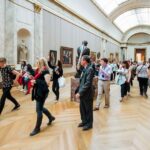
The guided portion concludes near Musée d’Orsay, then you switch to self-paced sightseeing with your 24-hour Hop-on-Hop-off pass. The idea is simple: don’t rush the day into a hard stop. Use the Seine time after your museum and foundations visit, when your feet are warm and your curiosity is already turned on.
This is a strong move for a half-day tour because it keeps you from feeling trapped in a schedule. If you want to linger near the river, you can. If you want a quick loop and then dinner, you can do that too. And since you already ended at Musée d’Orsay, it’s easy to re-orient yourself in a place that’s clearly marked and popular with public transit.
If your goal is to see the Seine glow in the evening, this pass is the tool that helps you chase that without running back and forth across town.
Value check: what you’re really paying for (and what you’re not)
This tour’s value comes from three things working together: a guide who explains, timed entry that saves time, and admission coverage for the major stops you visit.
You get an English-speaking expert guide, plus a dedicated vehicle for the car portions. On top of that, the experience includes admission tickets for the listed monuments and museum time, and a skip-the-line timed ticket for Arc de Triomphe. That’s a meaningful bundle when you’re trying to plan a tight visit and you don’t want to spend your vacation hours figuring out ticket windows.
Two extra touches also help: a complimentary e-gift called 101 Paris Travel Tips, and the practical recommendations your guide can give you for what to do next. In the reviews, Yemisi and Ife are specifically praised for helping people get their onward plans sorted, including restaurant and museum suggestions. That kind of guidance often pays off more than another landmark photo.
Just note the boundaries: the experience is not affiliated with the official Olympic Games Paris, and monument access beyond what’s included would require additional tickets you arrange separately. Also, this is not hotel pickup, so you’re responsible for getting to the start point.
If you compare this to buying everything one by one, the biggest savings are usually time and coordination, not just money.
Who this tour fits best in your Paris plan

This half-day tour is a great match if you want a focused slice of Paris without spending your day bouncing between far-apart locations. It’s also a strong option if you like the idea of Olympic venue context, especially because the guide gives tips for where to stand for photos.
I’d send it to:
- First-time visitors who want major sights explained clearly
- People with limited time (four hours is not much, so you need good flow)
- Anyone who enjoys asking questions and expects a guide to answer, not just recite facts
- Travelers who want art highlights without committing to a full museum day
I wouldn’t pick it as your only plan if you:
- Need long, unhurried museum time
- Want a very specific Easter-focused program (the tour content you’ll experience is still built around classic Paris landmarks)
- Have very strict mobility needs, since you’ll spend time moving between outdoor and underground areas
Should you book Paris Wonder for this half-day route?
I think you should book this tour if you want a short, organized day with real guidance, especially at Arc de Triomphe and Musée d’Orsay. The timed entry helps protect your schedule, and the guide-led approach keeps the stops from feeling like disconnected photo stops.
Book it only if you’re comfortable meeting at Place Clemenceau and handling your own start logistics. And if you’re the type who needs more time than four hours to process museums and cathedrals, plan to add extra independent time afterward.
If your goal is to get the highlights, learn how Paris fits together, and still have energy for the Seine after, this is an efficient choice with strong guide quality—particularly when Yemisi or Ife is leading your group.
FAQ
How long is the Paris Wonder Half-Day Easter Adventure?
The tour runs about 4 hours.
Is the tour offered in English?
Yes, it’s offered in English.
Is this a private tour?
Yes. It’s private, and only your group participates.
Where do I meet the guide?
You meet at Place Clemenceau, Pl. Clemenceau, 75008 Paris, France.
Where does the tour end?
The guided portion ends near Musée d’Orsay, Esplanade Valéry Giscard d’Estaing, 75007 Paris, France.
What kind of tickets are included?
Admission tickets are included for the stops listed, and Arc de Triomphe uses a skip-the-line timed ticket.
Is the tour affiliated with the official Olympic Games Paris?
No. The experience provider is not affiliated with the official Olympic Games Paris.
Is hotel pickup included?
No hotel pickup and drop-off is included. Car/chauffeur service can be arranged separately.
What do I do after the tour ends near Musée d’Orsay?
You can use a 24-hour Hop-on-Hop-off pass to continue exploring on the Seine River at your own pace.
What happens if I cancel?
The experience is non-refundable and cannot be changed for any reason.