REVIEW · SEINE RIVER CRUISES
Paris World Fairs Walking Tour Top Sights Along the Seine River
Book on Viator →Bookable on Viator
Paris’s World Fairs are all around you.
This walk helps you read the city like a timeline, from the 1855 Exposition Universelle to the 2024 Paris Olympics glow on the same bridges and monuments. I like how the route keeps pulling one theme forward: how trade, tech, and art exhibitions reshaped what you see today—especially along the Seine.
What I really like is the small group (max 15) and the way the guide keeps the pace easy to follow while still answering questions. I also like that the stops include major icons and quick “look closer” moments, like the 1900 fair origins behind the Champs-Élysées metro area and the ornate details on Pont Alexandre III.
The main drawback to plan for: the tour is fast—you get brief stops at many sites. If you want long museum time (or a full Eiffel Tower visit), you’ll need to add that on your own after the walk.
Key takeaways
- Max 15 people means more back-and-forth with your guide and less waiting around.
- World’s Fair timeline on foot: you connect 1855, 1867, 1878, 1889, and 1900 to the Paris you know.
- Photo-friendly river sights: bridges, fountains, and viewpoints built for major events.
- Guide-led context: you learn what each building was designed to do, not just when it was built.
- Free admission at the stops keeps the cost focused on the guide and experience (no museum ticket scramble).
- If you get Olivia, the storytelling style is repeatedly praised as clear, fun, and not overwhelming.
In This Review
- World-Fair Paris in Two Hours Along the Seine
- Starting at the Clemenceau Area: A Metro Station Born for 1900
- Grand Palais: The 1900 Exposition Made into a Long-Running Stage
- Petit Palais and the Art Museum Courtyard Vibe
- Pont Alexandre III: When a Bridge Becomes an Art Object
- The Seine as the World-Fair Main Stage
- Bateaux Mouches, Pont de l’Alma, and the Story of Visitor Transport
- Flamme de la Liberté: Liberty’s Flame, Franco-American Links, and a Diana Footnote
- Passerelle Debilly: A Fair-Era Footbridge with a 120m Sense of Scale
- Palais de Tokyo and Palais de Chaillot: Old Fair Structures, New Cultural Jobs
- Trocadéro Fountain, Pont d’Iéna, and the Eiffel Tower Finale
- Price, Time, and What Makes the Value Feel Right
- Who This Tour Suits Best (and Who Might Want a Different Plan)
- Should You Book the Paris World Fairs Seine Walking Tour?
- FAQ
- How long is the walking tour?
- What does it cost?
- Is the tour offered in English?
- What is the group size limit?
- Where does the tour start and end?
- Is transportation to and from the meeting point included?
- Do I need to buy entry tickets for the stops?
- Does the tour include food and drinks?
- What kind of walking fitness level is needed?
- Can I cancel for a full refund?
World-Fair Paris in Two Hours Along the Seine
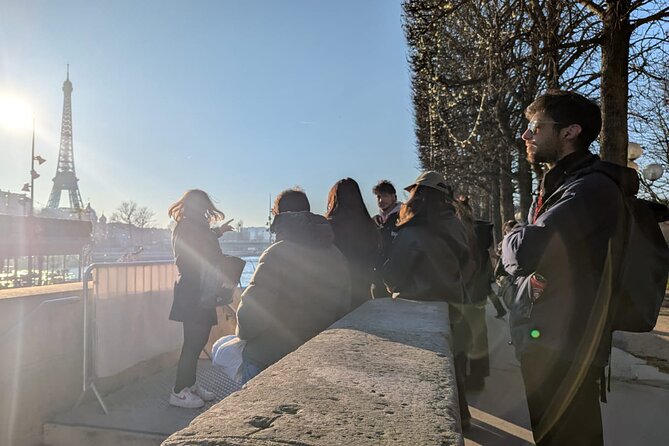
This is the kind of tour that changes how you look at Paris without slowing you down. Instead of a generic highlights loop, you follow the Seine corridor and learn how the city used large exhibitions to sell ideas—engineering, fashion, national pride, and art—then turned that attention into long-lasting buildings.
In about 2 hours, you’ll see a chain of iconic places: grand glass-and-stone architecture, gold sculpture bridges, fair-era river infrastructure, and the Eiffel Tower’s original World’s Fair role. It’s not just “pretty.” It’s explained.
And because it’s a small group, the guide can calibrate. The stories stay clear, the pace doesn’t feel like a race, and you can ask questions when something sparks your curiosity—like why Paris keeps reusing the same river crossings for major events across centuries.
Starting at the Clemenceau Area: A Metro Station Born for 1900
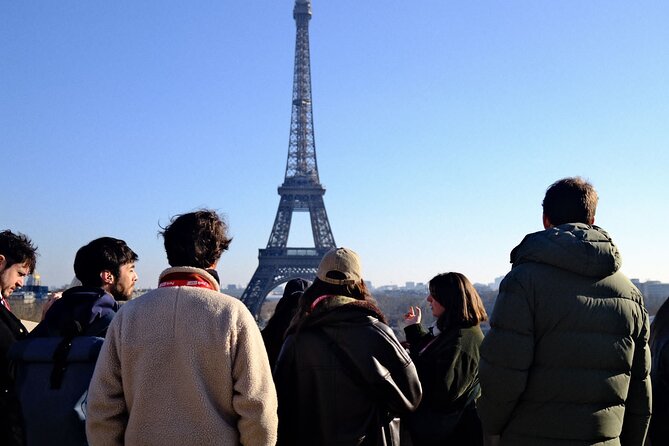
You begin near the Statue du Général Charles de Gaulle, at Pl. Clemenceau (Line 1 area). Right away, the tour gives you an underrated angle: world fairs were not only about monuments. They also pushed systems like transport so millions of people could move.
At the Champs-Élysées – Clemenceau metro station, the tour points to its connection with the 1900 Paris Exposition Universelle. That detail matters because it reframes the Champs-Élysées area from “shopping boulevard” into “future-facing gateway.” You’re learning to spot design intent: build something impressive, then make it functional enough for crowds.
Practical tip: start with your camera ready. Even at the first stop, you’re in a zone where you can frame the boulevard energy against grand civic buildings nearby.
Grand Palais: The 1900 Exposition Made into a Long-Running Stage
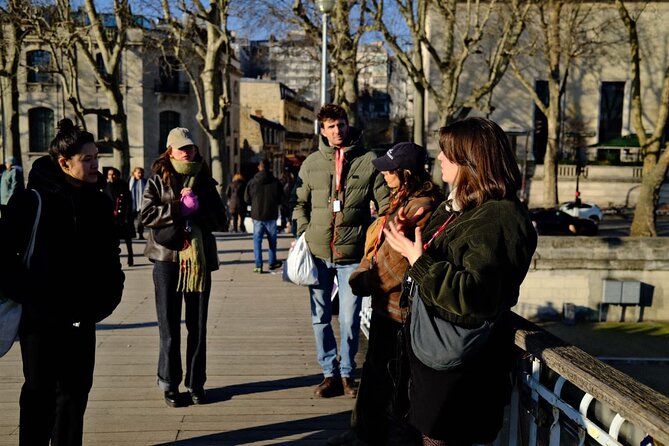
Next comes the Grand Palais, built for the 1900 Exposition Universelle. The headline feature is the famous glass-domed roof, and you’ll get the “why it matters” version of that architecture: it blends industrial and classical styles in a way that signals Paris embracing both modern technique and traditional grandeur.
You’ll also learn that it’s not a dead monument. The building hosts major art exhibitions, fashion shows, and cultural events—basically the same function it was designed to serve. That continuity is what makes the site feel more meaningful than a one-time historical artifact.
A balanced note: the tour time here is short. You’ll take in the exterior and key architectural cues rather than do a full deep architectural critique. If you love interiors, plan a separate visit later when you can slow down.
Petit Palais and the Art Museum Courtyard Vibe
The walk continues to the Petit Palais, also built for the 1900 Exposition Universelle and now home to the Musée des Beaux-Arts de la Ville de Paris. Here the focus is on the mix of art and atmosphere: frescoes, impressive architecture, and a serene courtyard.
The tour’s angle is especially useful if you usually treat these places as postcard stops. This one turns the building into a context lesson: it helps you understand how Paris used exhibition-era prestige to create lasting public access to art, spanning antiquity through the early 20th century.
One consideration: like the other major sites, you won’t have hours here. You’re getting the “spot the signals” experience. If you want to read labels and really absorb the art, you’ll need an extra museum block later.
Pont Alexandre III: When a Bridge Becomes an Art Object
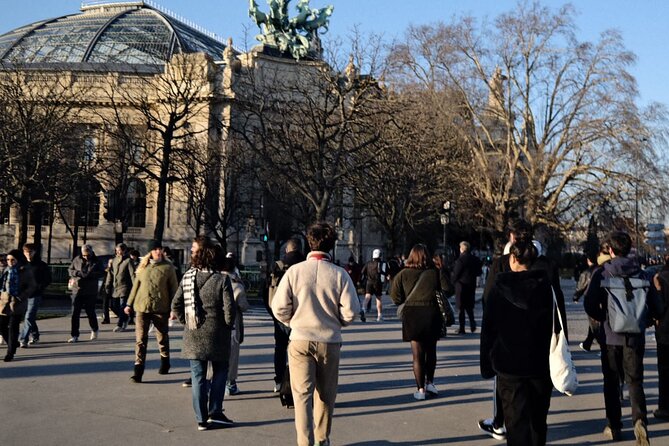
Then you move to Pont Alexandre III, one of Paris’s most ornate bridges. This is a top photo stop for a reason: gilded sculptures, intricate ironwork, and Art Nouveau lamps. You also get an important political lens—Franco-Russian ties—so it’s not only decorative. The bridge is doing diplomacy, in metal and light.
You’ll get city-view payoff too. Standing here, you’re positioned to see the river as a corridor connecting the fair-era showgrounds. The tour makes that connection feel logical: the bridge wasn’t just crossed; it was performed.
Practical tip: if you want crisp photos, watch for shifting sun and passersby around the edges. This is a popular area, even when you’re just taking a quick look.
The Seine as the World-Fair Main Stage
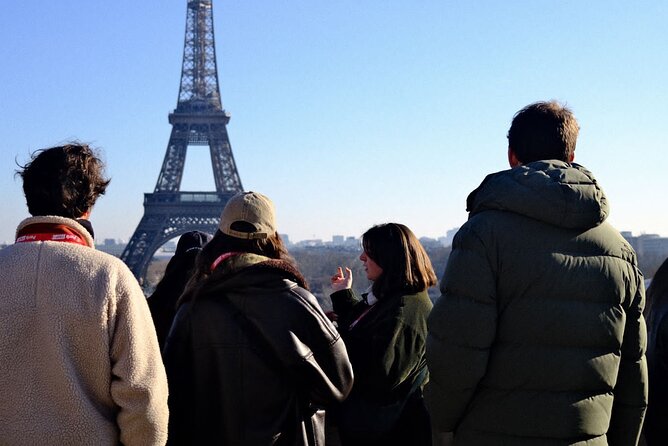
After the bridge, the tour expands the story of the Seine itself. The point is simple and smart: the river wasn’t just scenery. It linked major exhibition zones and helped turn Paris into a visible showcase of progress and cultural exchange.
As you walk, you’ll connect the dots between what you see now—big landmarks along the water—and the world fairs that helped create the modern Paris layout. The tour’s framing makes the Seine feel like a timeline you can physically follow: walk a section, learn the fair-era role, then look again at what you’re standing beside.
Why this part is valuable: it helps your brain stop treating monuments like isolated objects. Instead, the city becomes a designed system, where water routes and new buildings reinforce each other.
Bateaux Mouches, Pont de l’Alma, and the Story of Visitor Transport
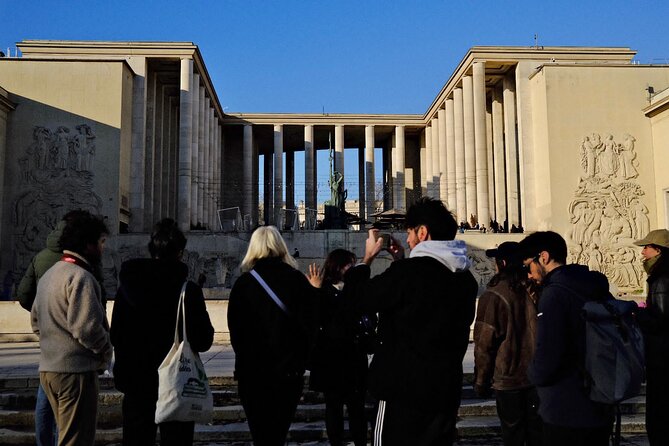
The tour also highlights Bateaux Mouches, explaining that they began as visitor transport for the 1867 Exposition Universelle and later became a symbol of Paris sightseeing. That’s a neat reminder that the fair-era impact didn’t only live in buildings. It also shaped how people experience the city.
From there, you reach Pont de l’Alma, built for the 1855 Exposition Universelle. Even though it has been rebuilt, the tour notes the enduring Zouave statue, once used as a flood gauge. That detail gives you a different kind of engineering story—one tied to the river’s real risks.
So you don’t just learn about glamour. You also see how the city prepared for the practical challenges that come with a busy urban river.
Flamme de la Liberté: Liberty’s Flame, Franco-American Links, and a Diana Footnote
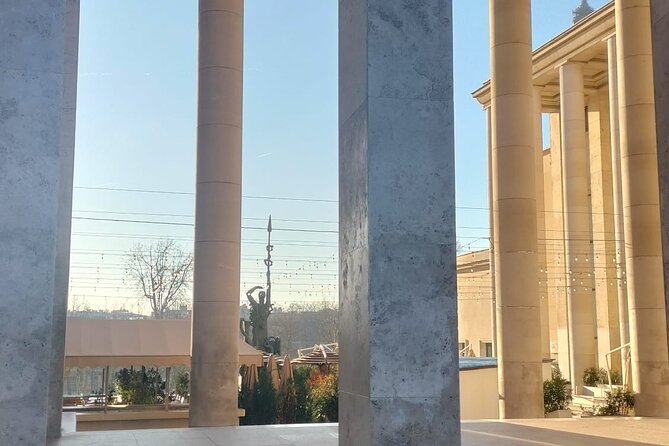
Nearby is the Flamme de la Liberté, a full-scale replica of the Statue of Liberty’s flame. The tour connects it back to the 1878 Exposition Universelle, when the Statue of Liberty was first showcased in Paris before moving to New York.
It also covers why this monument gained added meaning over time. Donated by the International Herald Tribune in 1989, the flame is described as an unofficial memorial to Princess Diana—so it carries layers of public memory, not just its original exhibit purpose.
If you like symbolism, this stop is one of the most interesting. It shows how a fair-era object can be reinterpreted by later generations without losing its origin story.
Passerelle Debilly: A Fair-Era Footbridge with a 120m Sense of Scale
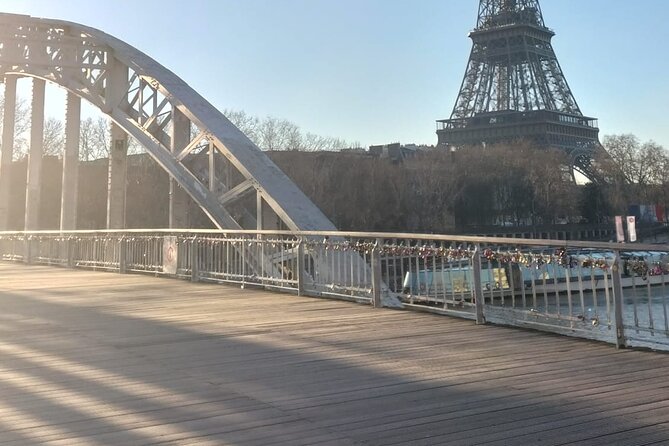
Another standout is Passerelle Debilly (Debilly Footbridge), built for the 1900 Exposition Universelle and spanning 120 meters over the Seine. The tour uses this to help you “feel” the size and ambition of these projects.
What I like about this stop is that it isn’t just about a famous monument name. It’s about the design of movement: a footbridge made for the event era still serves people today. That continuity makes Paris feel intentional, not random.
Photo tip: aim for wide shots that show both banks and the bridge length. The 120m detail makes the structure feel more impressive once you can frame the full span.
Palais de Tokyo and Palais de Chaillot: Old Fair Structures, New Cultural Jobs
You then shift from river infrastructure to large exhibition-era buildings.
Palais de Tokyo was inaugurated in 1937 for the Exposition Universelle and has evolved into Europe’s largest center for contemporary art. The tour’s message is that these big structures weren’t meant to fade after the crowds left. They were built to outlast the event cycle.
Next is Palais de Chaillot, built for the 1937 International Exposition and designed by Léon Azéma, Jacques Carlu, and Louis-Hippolyte Boileau. The tour notes it was one of three structures intended to outlast the event, alongside Palais de Tokyo and Palais d’Iéna.
Why you should care: you’ll understand these buildings as more than “where museums are.” They’re answers to a planning question that world fairs forced on cities: what can we build that will keep giving long after the headline moment is gone?
Trocadéro Fountain, Pont d’Iéna, and the Eiffel Tower Finale
Near the Eiffel Tower viewpoint zone, the tour focuses on how the same staging logic keeps returning.
You’ll see the Trocadéro Fountain, built in 1937 to replace an original 1878 Exposition Universelle fountain. The tour points out its water display with jets, columns, and cannons—plus the payoff views of the Eiffel Tower.
Then comes Pont d’Iéna, a historic bridge linking the Eiffel Tower to Trocadéro. The tour notes it was commissioned by Napoleon I and became a symbolic entryway for millions attending Expositions Universelles in 1867, 1878, 1889, and 1900. Today it’s again in the spotlight because it takes center stage for the Paris 2024 Olympic Games.
Finally, you reach the Eiffel Tower—built for the 1889 Exposition Universelle. The tour covers the key arc: it was criticized at first, then became the icon of Paris and a symbol of engineering progress. It also ties the tower’s enduring role to the Paris 2024 Olympics, as an international beacon that unites crowds and history in one place.
This ending works because you’re not just looking at an icon. You’re seeing the reason the icon exists in the first place.
One consideration: this is also an area where crowds naturally cluster. The tour’s job is to get you the story and the best moments without lingering too long. If you want extra time on viewpoints, budget it after the tour.
Price, Time, and What Makes the Value Feel Right
At $43.26 per person for about 2 hours, you’re paying for three things: a certified local guide, a well-paced route, and the convenience of having context carried for you.
The value gets better because many stops are free to visit (and the tour focuses on those key exterior/area experiences). So you’re not getting nickel-and-dimed with constant ticket costs to follow along.
The group size—max 15 people—also matters. For a walking tour with so many visually dense stops, a big group can turn into traffic. Here, small-group handling keeps the experience more conversational.
The one “math check” I’d give you: if your goal is strictly to spend the whole afternoon in museums, this might feel too brief. If your goal is to learn what you’re seeing and get smart photo angles while moving between major World-Fair landmarks, it’s a strong use of time.
Who This Tour Suits Best (and Who Might Want a Different Plan)
I’d book this if you:
- love history but hate reading it alone
- want a guided way to connect famous Paris spots to one clear theme
- care about photo framing from bridges and viewpoints
- appreciate when a guide explains why a building or monument exists
I’d think twice if you:
- want long interior museum time at each stop
- prefer slow, neighborhood strolling without major monuments
- don’t like standing/walking through busy public areas (it’s not exhausting, but it’s a guided walk with multiple stops)
It also fits solo travelers and couples well because small-group dynamics still let you ask questions without feeling lost.
Should You Book the Paris World Fairs Seine Walking Tour?
Yes, if you want Paris in “explained mode” fast. This tour does a good job turning the Seine corridor into a clear storyline—from fair-era transport and exhibition buildings to the bridges and viewpoints that still host major moments today.
Book it now if you can, since it’s commonly reserved about 37 days in advance. Also, if you care about the guide personality, keep an eye out for groups led by Olivia, since multiple reviews highlight a style that’s fun, passionate, and easy to follow.
If you’re pairing this with other plans, treat it like your smart pre-game: do this early in your trip (or early in the day you’ll see the Eiffel Tower), then use what you learn to make museum visits and self-guided wandering more fun.
FAQ
How long is the walking tour?
It runs about 2 hours (approx.).
What does it cost?
The price is $43.26 per person.
Is the tour offered in English?
Yes, it is offered in English.
What is the group size limit?
The tour has a maximum of 15 travelers.
Where does the tour start and end?
It starts at Statue du Général Charles de Gaulle, Pl. Clemenceau, 75008 Paris and ends at Eiffel Tower, 5 Av. Anatole France, 75007 Paris.
Is transportation to and from the meeting point included?
No. Transport to/from the meeting point is not included.
Do I need to buy entry tickets for the stops?
The tour lists admission ticket free for the stops in the route description.
Does the tour include food and drinks?
No. Food and drinks are not included.
What kind of walking fitness level is needed?
A moderate physical fitness level is recommended.
Can I cancel for a full refund?
Yes. Free cancellation is available if you cancel up to 24 hours in advance for a full refund.