REVIEW · PARIS
Paris: Aura Invalides Immersive Experience Entry Ticket
Book on GetYourGuide →Operated by Cultival · Bookable on GetYourGuide
Paris can be noisy. This night is different.
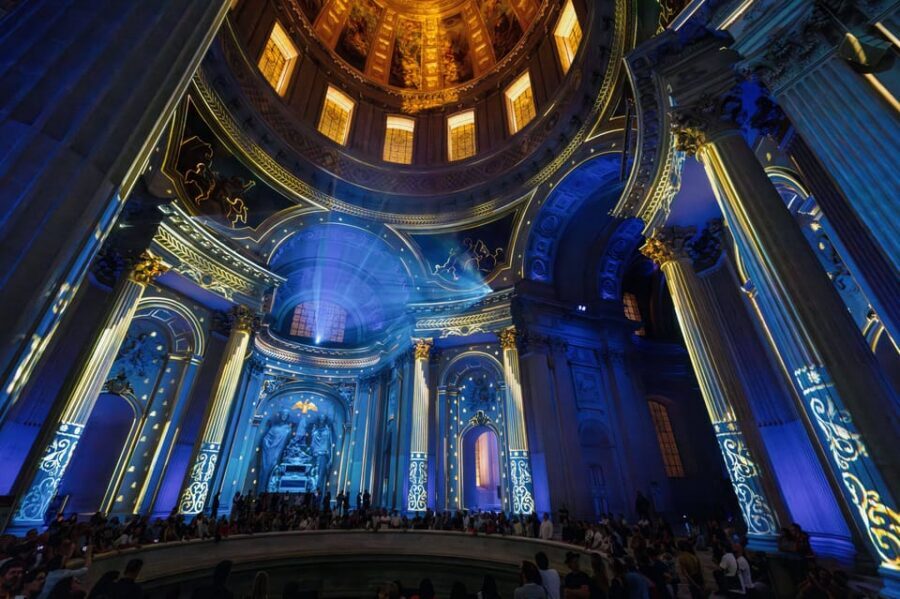
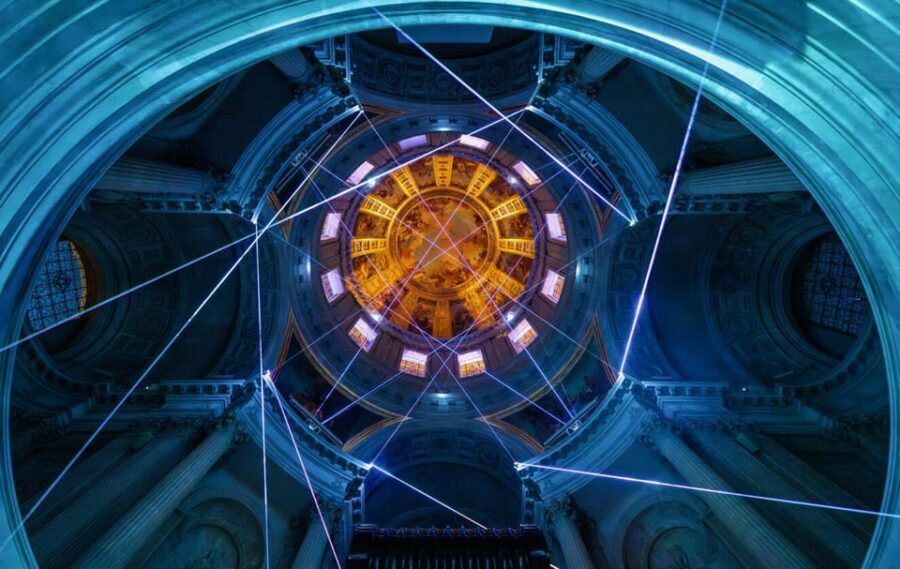
The Aura Invalides show turns the Dôme des Invalides into a dramatic, three-part light-and-sound experience using video mapping, orchestral music, and spatialized audio. I love how the projections make the architecture feel new again, especially the towering interior where you’re looking up at painted details high overhead. I also love the way the program guides your attention from Napoleon I’s tomb to the decorative ceilings and onward through the site’s six chapels. One drawback: the show runs with flickering lights and high sound volume, so if you’re sensitive to noise or light effects, plan ahead.
You’ll be walking a bit inside this historic monument, not just sitting and watching. The format is also timed tightly: the show starts about 20 minutes after your session time, and no latecomers get in once it begins. That’s great for flow, but it means you should arrive with your warm layers on and your expectations set.
This is not a quiet sit-down museum lecture. Some people will come for the history beats, but the experience is mainly a multimedia spectacle that still helps you notice what you might otherwise miss—especially how the building is designed to hold sound and attention under that giant dome.
In This Review
- Key points that make Aura Invalides worth your evening
- Where you enter the Dome des Invalides (and why it matters)
- The 50-minute show: what actually happens once you’re inside
- Napoleon I’s tomb and the six chapels under projection
- Sound design: orchestral music, high volume, and why you should prep
- Finding your spot: stairs, movement, and the best way to avoid frustration
- Temperature, toilets, and other real-life details people learn the hard way
- Price and value: is $33 a good deal for a 50-minute show?
- Pair it with an earlier visit to Invalides for extra context
- Who this experience suits best (and who might not enjoy it)
- Should you book Aura Invalides in Paris?
- FAQ
- How long is the Aura Invalides show?
- When does the show start compared to the time on my ticket?
- Where do I enter the Dome des Invalides?
- Is this experience good for young children?
- Can I bring a stroller or large bag?
- Is food or drink included?
Key points that make Aura Invalides worth your evening
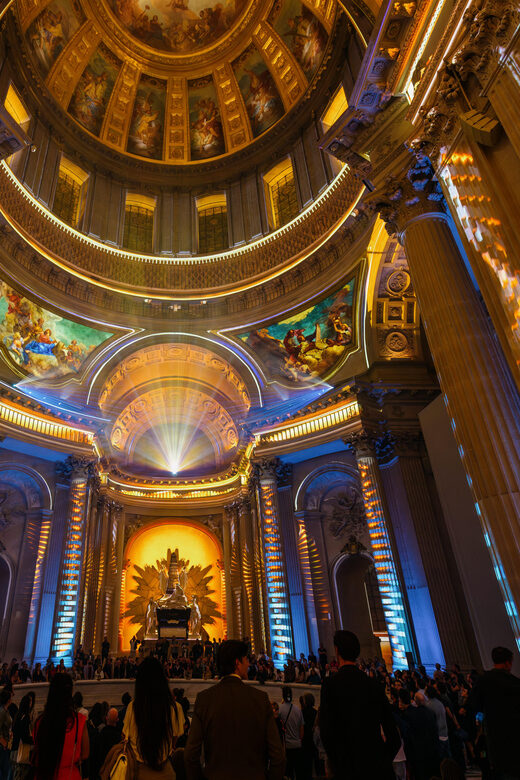
- Three-part light-and-video journey that uses orchestral music and spatialized sound to shape what you notice
- Made for the Dome and its chapels: you’ll focus on architecture across multiple spaces, not one single screen
- Napoleon’s tomb at night feels more personal when the lighting and sound shift the mood
- Expect to move and reposition during different parts, so bring comfortable shoes and stay flexible
- No on-site comforts: it’s cold, there are stairs, and the site doesn’t offer toilets or catering
Where you enter the Dome des Invalides (and why it matters)
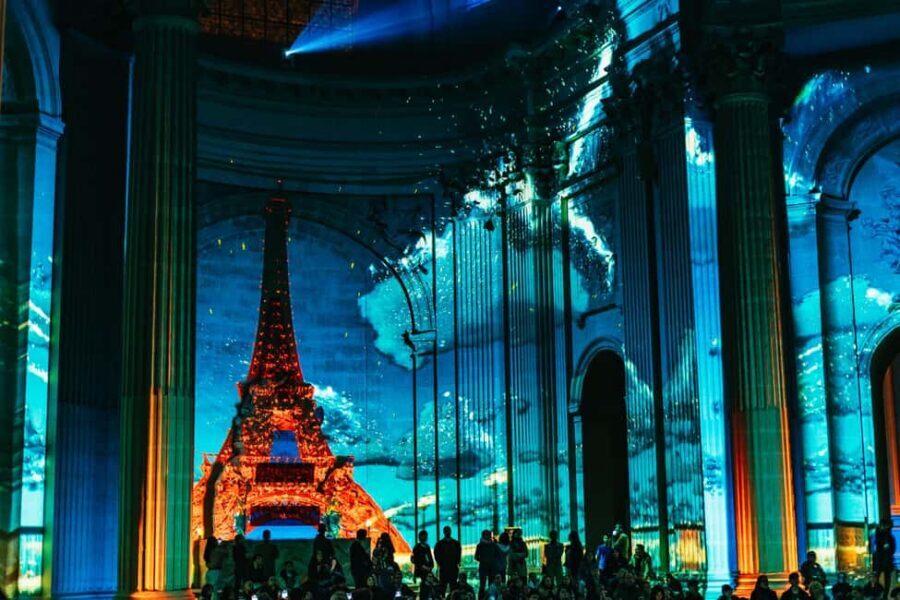
The entrance details are simple, but they’re also the kind of thing that can cause a minor panic if you skip them. You enter via Place Vauban, on the Dôme des Invalides side (near the Ecole Militaire or St François Xavier metro stations). And here’s the key catch: no one is admitted via the Esplanade entrance. The walk between the two entrances is about 12 minutes, so make sure you’re aiming at the right side from the start.
This is also where timing matters. People line up outdoors, and the reviews hint that the wait can feel cold and windy, especially in winter. I’d rather you show up ready—warm jacket, maybe gloves—than arrive late and feel rushed. If you can, plan your metro-to-Place Vauban route so you’re not cutting it close.
One more practical note from the vibe of the experience: you’re not going in for a relaxed arrival ritual. You’ll likely be checked in and directed into the building around the session start, then the show itself begins about 20 minutes later. That gap can feel a little odd the first time you attend, so think of it as a pre-show window where you get oriented and settle in.
You can also read our reviews of more tours and experiences in Paris

The 50-minute show: what actually happens once you’re inside
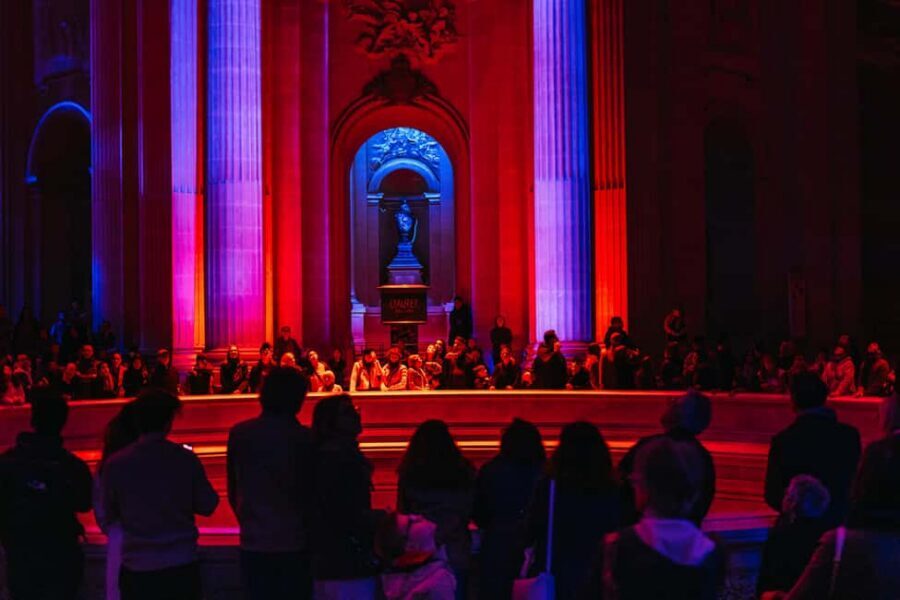
Aura Invalides runs about 50 minutes, and the content is structured like a sensory program, not a narration-heavy tour. You’ll experience a three-part journey that uses lights, video mapping, sound, and special effects. The goal is to point your eyes and ears. It’s less about reading plaques and more about letting the building do the work while the technology amplifies it.
You’ll notice the pacing quickly:
- There’s a lead-in period where you get placed and start taking in the space.
- Then the program pushes through different “moments,” shifting what feels important: height, symmetry, ceiling paintings, and the feel of the chapels.
- Toward the middle, there’s a window where you can move around more and explore.
One detail I appreciate: the reviews describe an interlude of about 15 minutes where you can wander through the chapels of the tomb area. That’s not just a nice break. It helps you connect what you saw earlier with what you’re seeing in a new space once the lighting changes.
And yes, seating can be part of the plan. Several people talk about watching from staircases, sitting on steps, and getting a good view of projection effects from specific angles. So when the crowd shifts and you’re invited to reposition, it’s your cue to take it seriously rather than cling to one spot.
Napoleon I’s tomb and the six chapels under projection
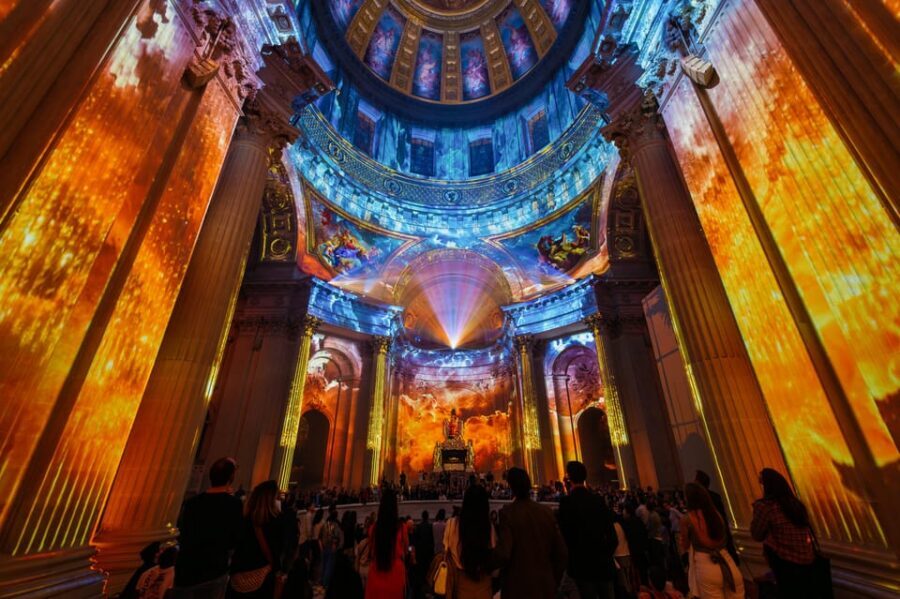
The Dôme des Invalides is famous in daytime, but at night it changes character. The show uses the structure like a giant stage—especially the main focus around Napoleon I’s tomb. The lighting doesn’t just decorate the space. It frames the tomb and nearby surfaces so you can see details you might otherwise overlook.
The architecture is part of the script. The program draws attention to the Dome’s interior and moves through key visual themes, including the high vaulted ceiling painting area (the ceiling artwork culminates around 90 meters up). Even if you don’t know the first thing about French imperial history, it’s hard not to feel the scale when the building is lit in a way that makes the height “pull” your gaze upward.
Then come the six chapels. The show guides you through them with light, sound, and shifting attention. You’re not just passing by chapels like you would on a regular visit. You’re being steered into a sequence that turns each chapel into a scene. If you love religious art, you’ll likely enjoy how the multimedia effects bring out shapes and surfaces that can feel flat when the lighting is ordinary.
One balanced note: if you want a pure history lesson, this may not be the best fit. Some reviews basically say it’s more of a light show than a guided lecture. For me, that’s not a dealbreaker. It becomes a question of what you want from the evening. If you want architecture plus emotion, you’re in the right place.
Sound design: orchestral music, high volume, and why you should prep
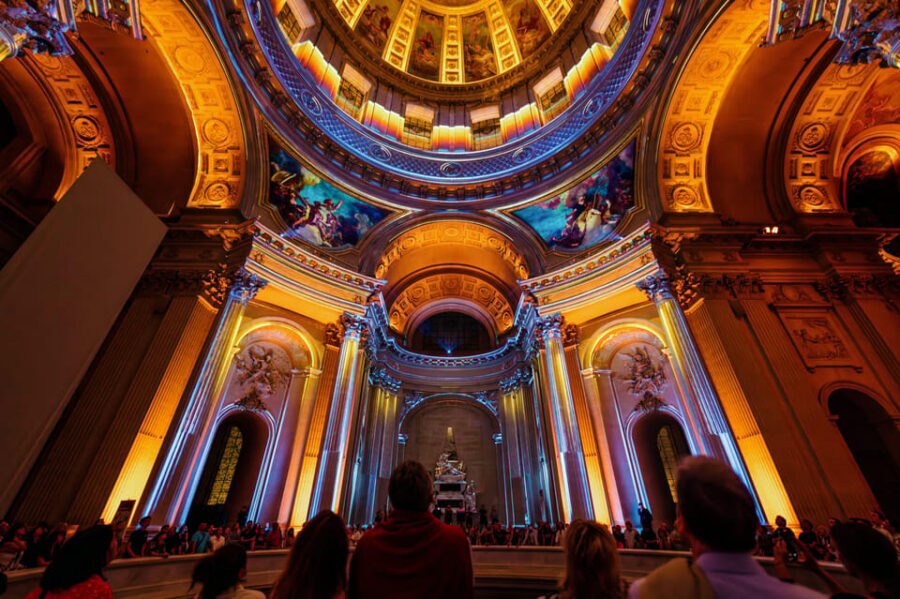
Aura Invalides uses spatialized sound. That means the audio isn’t just loud; it’s placed and directed so it feels like it’s coming from the room, not from one speaker. Reviews repeatedly mention how moving it is, with people describing chills and even tears. That reaction makes sense: orchestral music plus acoustics in a monumental space can hit your gut faster than any museum explanation.
But sound here is also a safety-and-comfort issue. The show uses high sound volume, and the lights can flicker. If you’re traveling with anyone who’s sensitive to loud audio, bring earplugs or appropriate hearing protection. The rules don’t advertise a “quiet option,” so you should take it seriously as a plan-ahead item.
Also, this is not the place to pack a bulky bag or stroller. The site does not allow baby strollers, and it prohibits luggage or large bags. Keep it light. Think small daypack, not a rolling suitcase plan.
Finding your spot: stairs, movement, and the best way to avoid frustration
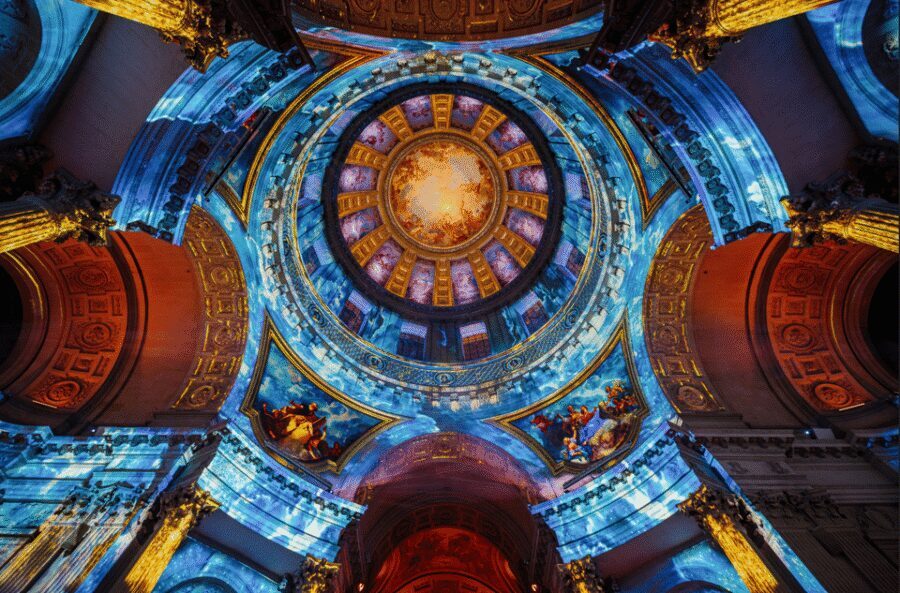
This show is described as ambulatory, meaning you’re not staying still for the full program. There are stairs inside and outside the Dôme des Invalides. Even if you’re a confident walker, expect uneven pacing and occasional crowding as people reposition.
So what should you do?
First, treat seating like strategy. Some reviews suggest getting a good view from the steps and even indicate that watching from steps across from the main screen area can help you catch certain visuals. It’s not that you need to be perfectly placed, but having a clear line of sight matters for projections.
Second, don’t plan on a sturdy backrest. People mention that sitting on staircases can mean you’re balancing a bit without much support. Bring a mindset of “I’ll stand or sit as needed.” Comfortable shoes matter more than people think for this one.
Finally, remember there’s no late-entry. No matter how tempting it is to stroll in after taking photos outside, you should be ready for the show to start on schedule (about 20 minutes after the indicated session time). Once it starts, latecomers won’t be admitted.
Temperature, toilets, and other real-life details people learn the hard way
This is a historic site, so it can be quite cold inside. That’s not an artistic choice; it’s just reality. Bring warm clothing even if the day in Paris feels mild. A thin scarf and a light jacket often beat hoping you can tolerate the cold.
The other big practical issue is comfort: the site has no changing rooms, toilets, or catering facilities. Food and drinks are also prohibited throughout the site. So if you’re planning dinner right after, do the “bathroom and water” part before you go in. Don’t assume you’ll find a place to pause inside.
And one more rule to respect: smoking (including electronic cigarettes) is prohibited throughout the site. Keep that in mind for anyone in your group who needs nicotine breaks.
Price and value: is $33 a good deal for a 50-minute show?
At $33 per person for about 50 minutes, the value comes down to what you want out of your Paris evening. This ticket isn’t paying for a long guided tour. It’s paying for a tightly produced use of a landmark: Napoleon’s tomb area + six chapels + orchestral music + video mapping inside a building built for dramatic presence.
If you like multimedia shows and you enjoy noticing architecture in a new way, the price often feels reasonable. Reviews back that up with consistent praise for the “wow” factor and the emotional impact. People also mention it runs smoothly and the show length feels just right—long enough to matter, not so long that you get exhausted.
If, instead, you want a traditional history walk with lots of explanations, you might feel a little misaligned. One review calls out that it’s not ideal if you came specifically for a history lesson. In that case, treat it as an artistic interpretation of a monument, not a replacement for a guided history tour.
My take: $33 can be a solid value when you pair it with your overall plan. Do it as your “event night,” and earlier in the day, get the facts in whatever format you prefer.
Pair it with an earlier visit to Invalides for extra context
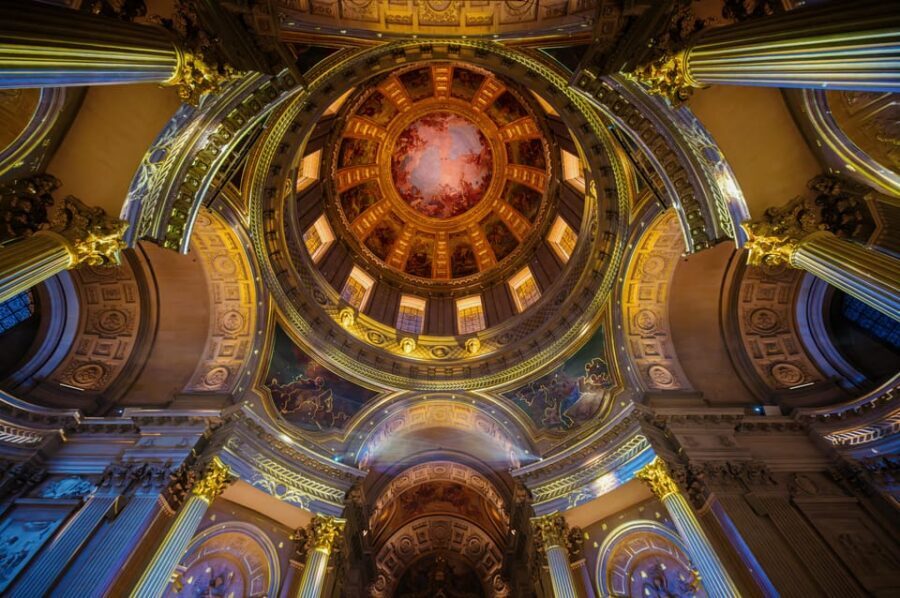
Even though the show carries its own emotional logic, you can get more out of it if you know what you’re looking at. One review recommends doing a daylight visit first so you understand the background, then returning at night to see the transformation.
You don’t need to turn this into a full itinerary project. But if you want your evening to feel smarter and more grounded, plan a daytime look at Les Invalides. Then at night, the show’s attention to detail—especially the dome scale and tomb-focused moments—lands harder.
It’s also a good way to avoid the “what am I looking at?” problem. Night lighting is beautiful, but it’s still helpful when you’ve seen the main spaces in regular daylight first.
Who this experience suits best (and who might not enjoy it)
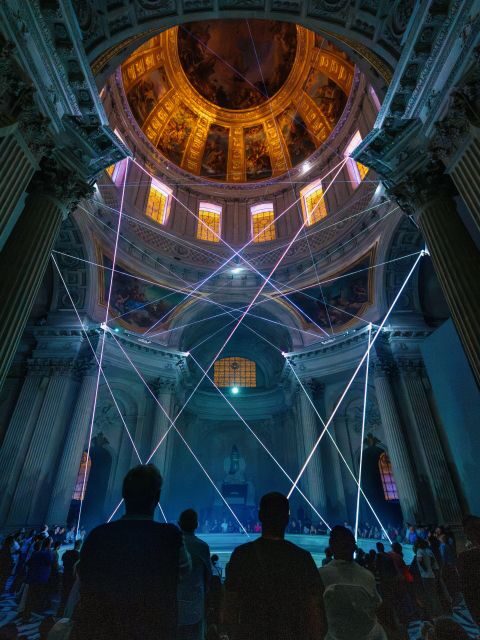
Aura Invalides is a strong match if you:
- Want a short, high-impact night activity that’s indoors
- Like classical music plus modern light-and-video effects
- Enjoy architecture and religious art enough to notice it even when the lighting changes fast
- Can handle crowds and repositioning during the show
It’s a weaker match if you:
- Have trouble with loud sound or flickering lights
- Need a fully accessible experience: the rules say it’s not suitable for wheelchair users, and it involves stairs
- Are traveling with children under 5 years old (it’s not recommended)
- Need toilets and food on site (there aren’t any)
Also, if you’re the type who prefers a guided lecture, go in expecting more feeling than facts. You can still learn a lot by paying attention, but it’s not built like a traditional tour.
Should you book Aura Invalides in Paris?
Yes, if you want an unforgettable night inside one of Paris’s most theatrical buildings. I’d book it if your ideal evening includes music, light, moving through monumental spaces, and an experience that makes you look up at ceilings and scale you’d miss in a normal visit.
Skip it or reconsider if you’re noise- or light-sensitive, or if stairs and crowds stress you out. Also, if your top priority is a history lecture, you may feel let down by the format.
If you’re flexible and you want a “Paris at night” moment that feels special without being a half-day project, Aura Invalides is one of the easiest yes-decisions you can make.
FAQ
How long is the Aura Invalides show?
The show experience lasts about 50 minutes.
When does the show start compared to the time on my ticket?
The show begins about 20 minutes after the session time indicated on your ticket.
Where do I enter the Dome des Invalides?
Enter via Place Vauban on the Dôme des Invalides side, near the Ecole Militaire or St François Xavier metro stations. No visitors are admitted via the Esplanade entrance.
Is this experience good for young children?
It’s not recommended for children under 5 years old.
Can I bring a stroller or large bag?
No. Baby strollers and luggage or large bags are not allowed.
Is food or drink included?
No. There is no food or drinks included, and food and drink consumption is prohibited throughout the site.