REVIEW · PARIS
Paris: Louvre Masterpieces Tour with Pre-Reserved Tickets
Book on GetYourGuide →Operated by Walks In Europe · Bookable on GetYourGuide
The Louvre can swallow a day whole. This tour focuses it into a smooth, priority-entry plan with a small group size and a guide who knows the museum’s shortcuts. You’ll hit the major icons fast, then use the rest of your time to explore at your own rhythm.
I like two things a lot: the six-guest max (so you’re not just another face) and the pre-reserved priority entry that helps you start seeing art sooner. The route is built to connect masterpieces across eras, so it feels less like sightseeing and more like understanding how the collection thinks.
One thing to consider: the timed tickets are strict. They expire within minutes, and tickets are single-use, so you’ll want to stay on your plan and avoid wandering into a different wing too soon.
In This Review
- Key highlights worth your attention
- Why this Louvre tour works better than winging it
- Meeting at Café Le Nemours and what that means for your timing
- The skip-the-line part, plus the “timed ticket” reality
- Your route starts at the Louvre Pyramid, then moves into the masterpieces
- The icons: how the Mona Lisa, Venus de Milo, and Winged Victory fit together
- Stops that turn 2 hours into a real art education
- Small-group pacing: why six people matters in the Louvre
- After the 2-hour tour: how to keep the momentum without getting lost
- Who this Louvre Masterpieces tour is best for (and who should skip it)
- What you pay ($152) and why it can still feel like good value
- Should you book this Louvre Masterpieces Tour with Pre-Reserved Tickets?
- FAQ
- Where is the meeting point for the Louvre Masterpieces Tour?
- What’s the nearest metro station?
- How long is the guided portion of the tour?
- How big is the group?
- Which languages are offered?
- Are tickets included, and do you skip the line?
- Can I stay inside the museum after the tour ends?
- What items are not allowed inside for this experience?
- Is this tour suitable for wheelchair users or mobility impairments?
- What do I need to bring?
Key highlights worth your attention
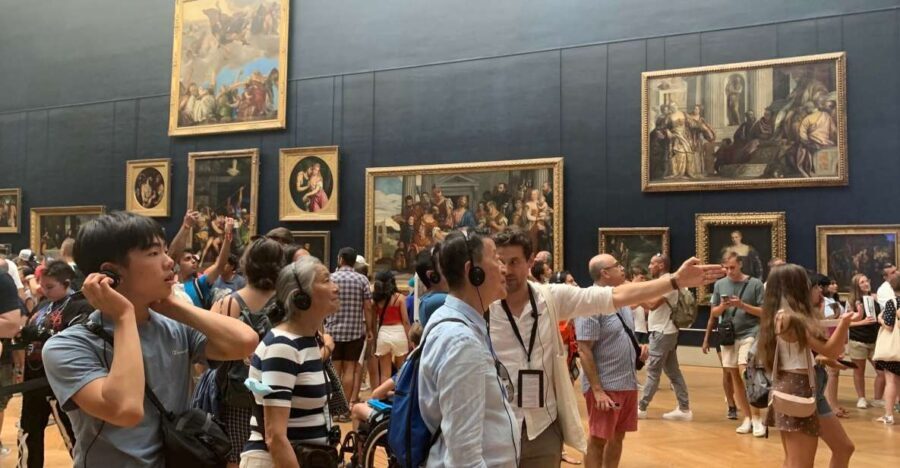
- Six guests, not fifty: a real small-group feel with room for questions
- Pre-reserved priority entry: a separate entrance to reduce queue time
- Louvre-licensed guide: an expert who can explain what you’re actually looking at
- Icon route: Mona Lisa, Venus de Milo, Winged Victory, plus more big names
- Two hours guided, then freedom: you can keep exploring after the tour ends
- Smart coverage across departments: eight departments tied into one “essential highlights” path
Why this Louvre tour works better than winging it
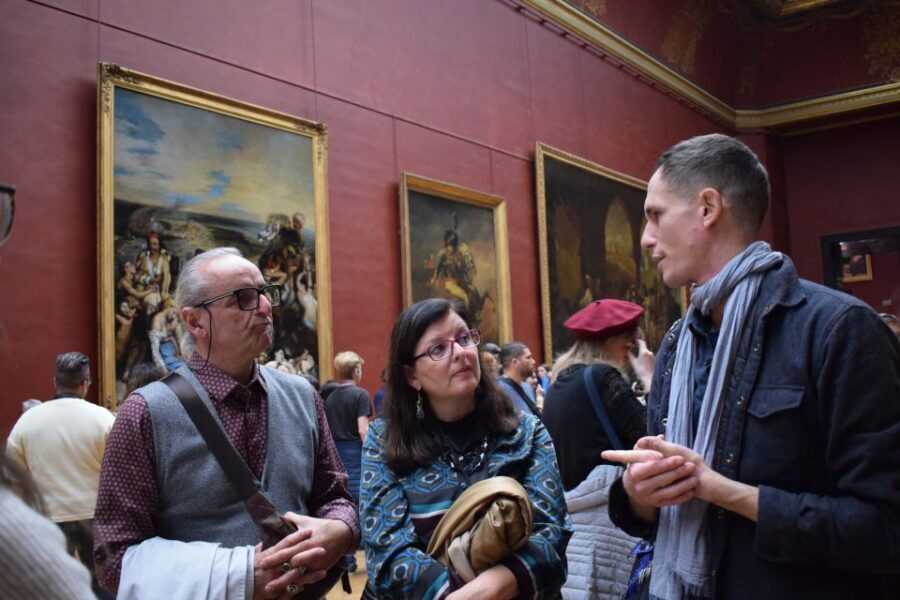
The Louvre is famous for a reason. It’s also famous for being huge, confusing, and full of people who are moving at “panic speed.” With only two hours of guided time, the real win here is direction: you’re not trying to solve a maze while also trying to understand Renaissance vs. Neoclassical.
I like that this tour is designed around the works that most visitors hope to see. You’ll get to the big icons without wasting your energy on “where is it” detours. More importantly, you’ll understand why those works matter, so your photos feel like evidence, not decoration.
And yes, you still get time after the guide’s route ends. That matters because the Louvre rewards lingering. A guided sprint is fine, but your second pass is where things start to click.
You can also read our reviews of more tours and experiences in Paris



Meeting at Café Le Nemours and what that means for your timing
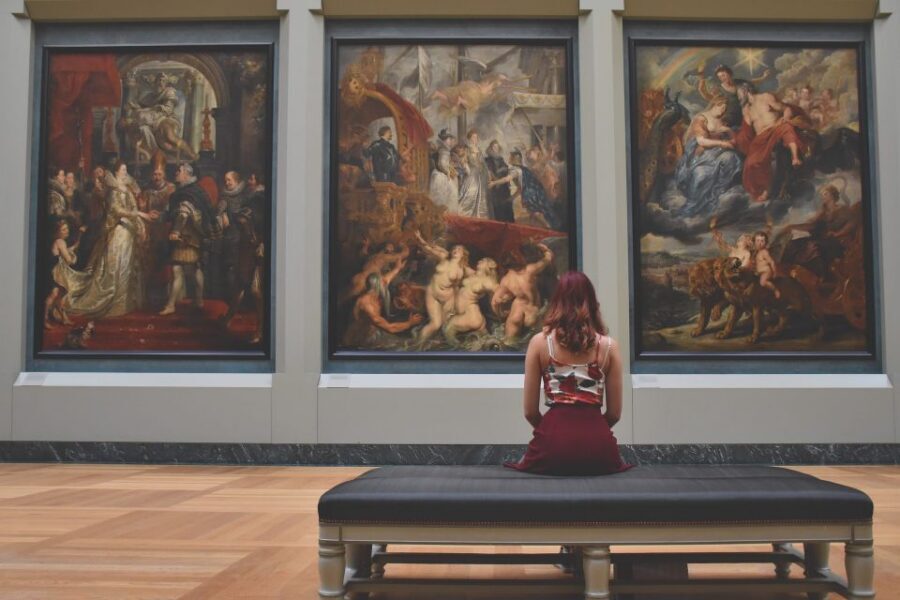
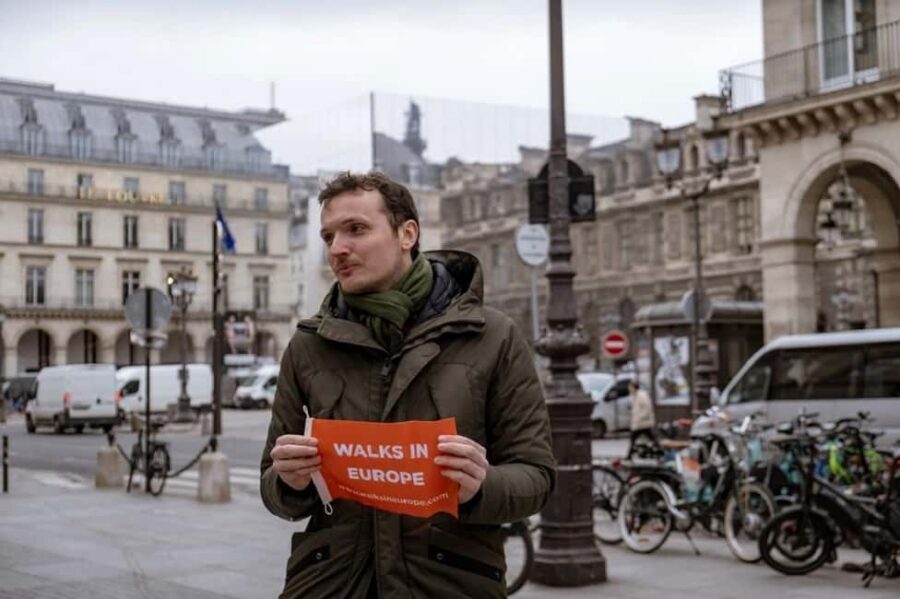
You meet in front of Café Le Nemours, with your guide holding a sign that says Walks In Europe. The closest metro is Palais Royal (exit 5, Place Colette). When you come out, turn around and you should see the café right there.
This is a practical meeting setup: it’s easy to find on foot and it’s close to the museum area, which helps with the biggest stress point in Paris tourist days—timing. Since you can’t join once the tour has started, being early is smart, even if you think you’re being early already.
One more detail that makes a difference: the Louvre area can get slow at peak times. Leaving yourself a little buffer is not overkill here. Your guide can’t magically teleport you into the museum doors.
The skip-the-line part, plus the “timed ticket” reality
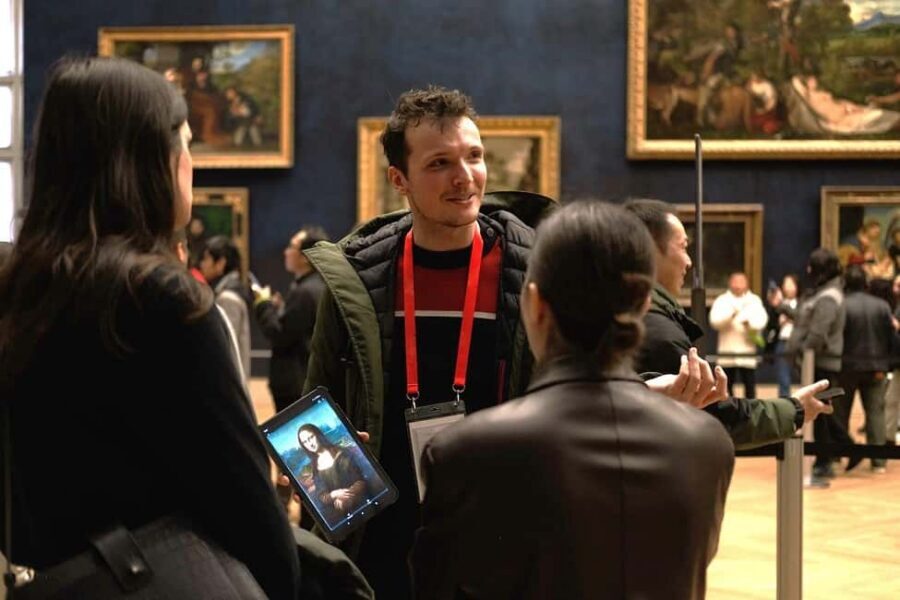
The tour includes pre-reserved tickets with priority access through a separate entrance. That’s the good news. It can cut down the most painful start-of-visit bottleneck.
The reality check is the timed tickets. Your entry time window is short, and tickets expire within about 5 to 10 minutes. Plan for security and getting through doors within that frame. If you show up and spend the first minutes hunting your phone battery or replaying Google Maps, you may lose your window.
Also, tickets are single-use. If you leave one wing, you won’t be able to return. So treat your visit like a flowing route, not a wander-when-you-feel-like-it plan. The guide’s job is to keep that flow working.
Finally, security still happens. Even with priority entry, you must go through security checks, and that line can be long in high season. The goal is not “no line.” The goal is “less time stuck before you see art.”
Your route starts at the Louvre Pyramid, then moves into the masterpieces
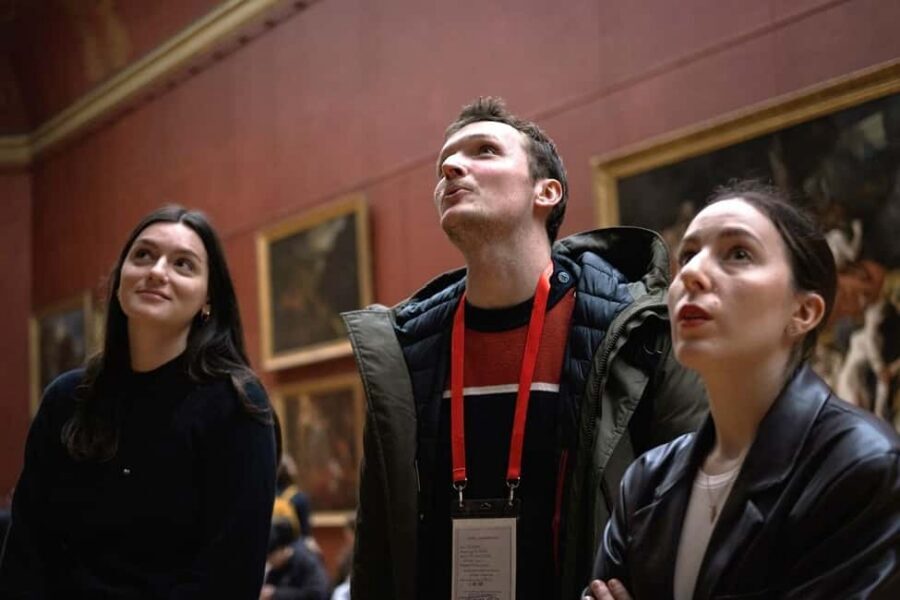
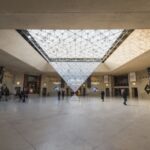
Right away you’ll pass by the Louvre Pyramid. It’s a good way to anchor your bearings before you step inside, especially if this is your first time in the museum. You get a quick sense of scale—then you move into galleries where “scale” becomes a physical problem.
From there, the guided portion focuses on essential highlights across multiple departments. The tour is built to keep you from bouncing randomly between far-apart rooms. That’s key, because the Louvre isn’t just big. It’s big in different directions, and those directions don’t match how your legs want to walk.
Expect the guide to move you through an elegant route that links major works by theme and era. You’re not getting scattered facts. You’re getting a path that makes comparisons easier—Italian Renaissance next to later drama, then neoclassical style, then the political storytelling that shows up in French Romantic works.
The icons: how the Mona Lisa, Venus de Milo, and Winged Victory fit together
These three works are the reason many people book the Louvre in the first place. But they’re also a useful “spine” for your visit.
- Mona Lisa: Everyone knows the face, but a guide helps you notice what makes the painting tick—how it performs visually and why it became such a cultural magnet.
- Venus de Milo: Even without a complete body, it’s an icon of classical ideals. A guide can point out details that get missed when you’re staring upward through a crowd.
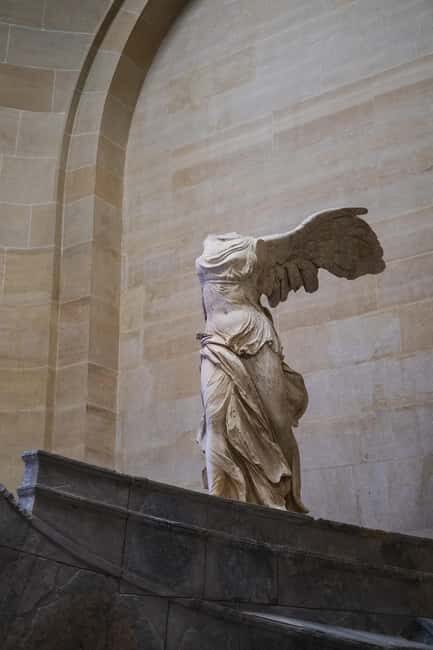
- Winged Victory of Samothrace: This is movement turned into sculpture. It’s not just beautiful; it’s dramatic. When you see it with context, it stops being a “must photo” and becomes a statement about power and emotion.
The best part is how the tour builds momentum. You don’t just stop at a list of famous names. You see how different eras handle the same big questions: the body, storytelling, authority, beauty, and illusion.
And because this is a small group (up to six), you’re more likely to get clear viewing time instead of just “passing by at walking pace.” Several guides have been praised for steering people toward strong sightlines and helping you avoid bottlenecks.



Stops that turn 2 hours into a real art education
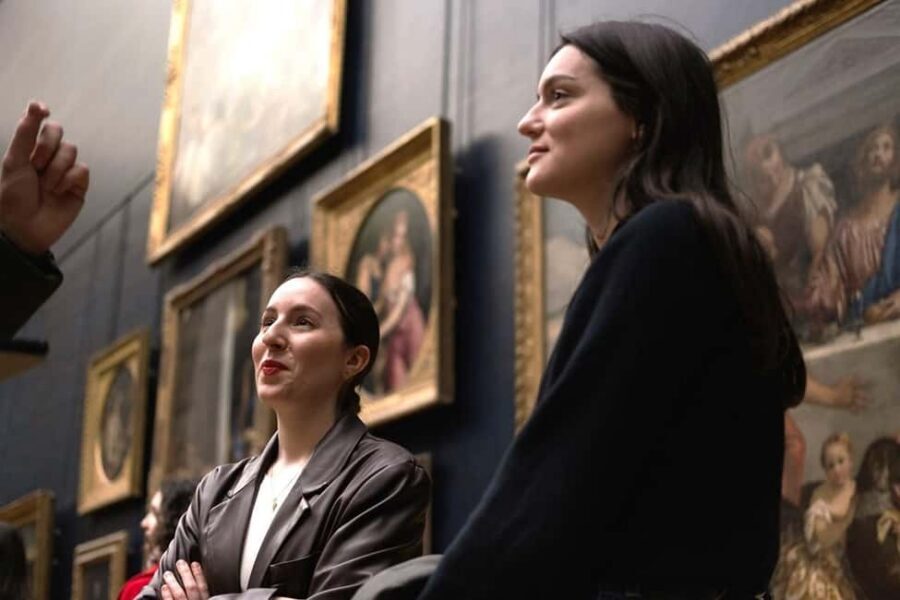
The guided experience lasts 2 hours, and the tour’s itinerary is designed so you don’t feel overwhelmed. You’ll see a high-impact selection—enough to feel like you mastered the museum’s essentials without needing all day.
Here are some of the standout works you’ll encounter:
Italian Renaissance highlights
- Wedding Feast at Cana: A highlight for many people, and for good reason. It’s the kind of painting where the story is the scene, and the scene is the message.
- Michelangelo’s Slaves: Powerful bodies, tense poses, and the sense of motion even when the figures are still. Seeing these early helps you understand how later sculpture and painting keep borrowing that energy.
French Romantic drama
- The Raft of the Medusa: A guide can connect this to the atmosphere of the time and the idea that art can be both witness and judgment.
- Liberty Leading the People: This is propaganda and poetry at once. Context is what turns it from a poster image into a historical argument.
- The Coronation of Napoleon: This is where politics shows up in pageantry. You’ll get a clearer sense of how power wants to look.
Neoclassical and refined beauty
- Psyche Revived by Cupid’s Kiss: A great change of pace if you want sweetness after drama.
- The Caryatids: Don’t just look at them as decoration. They’re structural sculpture—beauty with a job.
- Salon Carré: The tour includes this refined space, and it helps you understand the Louvre not only as a collection, but as a designed environment for showing art.
Guides leading this tour have a reputation for making these stops feel connected. Names that come up often include Jerome, Laura, Patrick, Matteo, Anthony, Ashkan, Alban, and Iasson, with many praised for humor, storytelling, and keeping kids engaged when families joined. Your exact guide can vary, but the pattern is consistent: you’ll get explanations that help your eyes move more intelligently.
Small-group pacing: why six people matters in the Louvre
The Louvre isn’t a museum you can calmly “discover” on your own on a first visit. You need two things: good route planning and the ability to ask questions without feeling rushed.
That’s where small group size (max 6) really pays off. You’re less likely to get split off into a separate cluster where the guide can’t track you. It’s also easier for the guide to adjust on the fly if you’re more interested in paintings than sculpture, or if someone needs a quick moment to regroup.
If your booking isn’t the smallest possible group on the day, the tour can split into separate groups at the meeting point so each guide has up to six people. So you should still expect that tight, controlled feel.
Also, since the guide is licensed for the Louvre, the talk isn’t just “fun facts.” You’ll get interpretive links—how style, symbolism, and politics show up across departments. That’s how you start seeing patterns instead of random masterpieces.
After the 2-hour tour: how to keep the momentum without getting lost
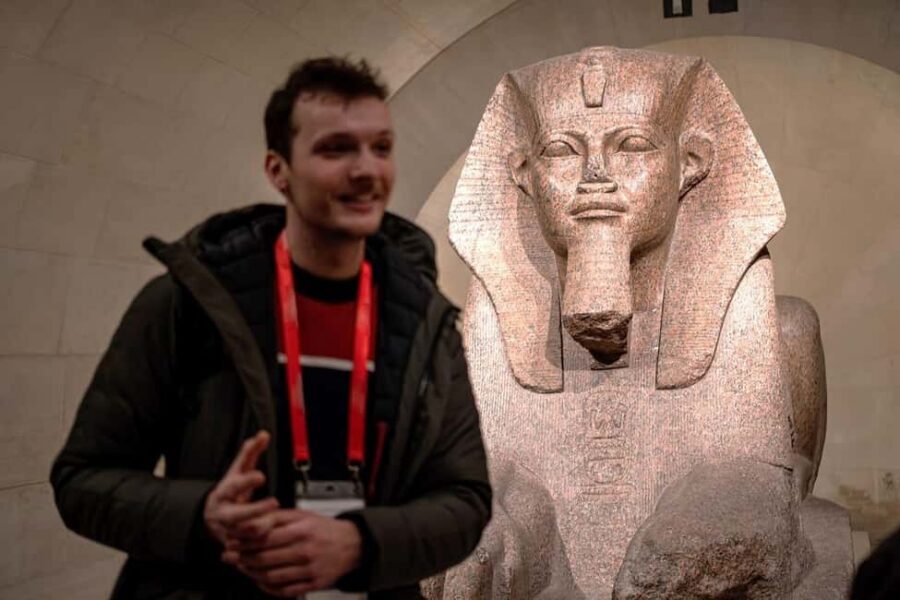
This is one of the most practical perks: after the tour ends, you can remain inside the museum and explore on your own with your pre-reserved tickets.
Because your entry ticket is timed and single-use, you’ll want to treat your self-exploration like a continuation of your path. Once you leave a wing, you can’t come back using the same ticket, so it’s smart to plan your later wander.
Here’s how I’d use the extra time well:
- Return to anything that felt loud (big emotions or big crowds) and give it a second look, slowly.
- If you loved a style—Renaissance composition or Romantic political scenes—look for more works that match that mood.
- Take the pressure off. The guide gets you oriented. Then you can read walls and notice details without asking a question every five minutes.
Two hours of guidance is great. But the Louvre’s real payoff often comes when you stop moving long enough for a painting or sculpture to “speak back.”
Who this Louvre Masterpieces tour is best for (and who should skip it)
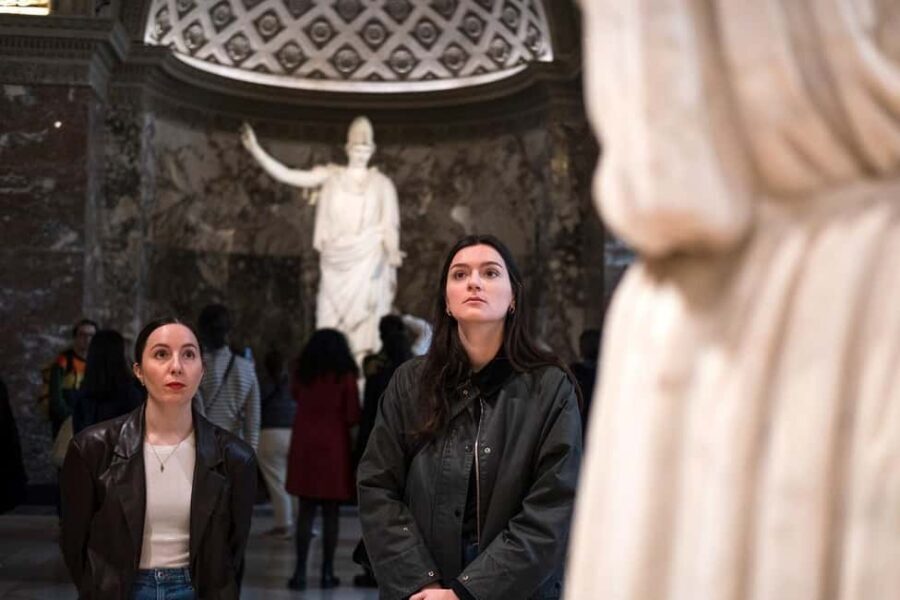
This tour is a strong fit if you:
- Want the essential highlights without building a logistics spreadsheet.
- Have limited time in Paris and want a guided route that respects it.
- Like the idea of a small group where you can actually hear the guide and ask follow-ups.
- Enjoy structure: you want a plan, then freedom after.
It might not be ideal if you:
- Need wheelchair access or have mobility impairments. This tour is not suitable for wheelchair users and mobility-impaired guests.
- Expect to roam across the museum freely right away. The timed, single-use ticket setup means you’re better off staying on the route logic.
If you’re coming with kids, this format can work well. Several guides on this tour have been noted for keeping children engaged, including guides who used humor and interactive explanations.
What you pay ($152) and why it can still feel like good value
$152 is not “cheap,” especially for a tour that’s only 2 hours. But this is one of those cases where the price is mostly paying for time you would otherwise lose.
You’re buying:
- Pre-reserved priority entry through a separate entrance
- A licensed Louvre guide who can point you toward the works that matter most
- A focused route that helps you avoid getting overwhelmed in a museum that’s effectively endless
- The chance to keep exploring after the tour ends
In plain terms: the Louvre costs time. This tour tries to protect that time. If you’ve ever stood in a long queue knowing you’ll miss something you came for, you’ll understand why that priority entry matters.
So if you’re the type who wants to see the big icons and also understand what you’re looking at (not just snap a photo and sprint to the next location), this price starts to make sense.
Should you book this Louvre Masterpieces Tour with Pre-Reserved Tickets?
Book it if you want a guided Louvre visit that’s built around the essentials—Mona Lisa, Venus de Milo, Winged Victory—and you’re fine following a smart route for two hours. The small-group size is a real benefit, and the option to stay inside after the tour helps you turn that first hit of masterpieces into a calmer second look.
I’d skip it if you strongly prefer total freedom from the start, or if mobility constraints make long walking and security navigation hard for you. Also, if you’re the kind of person who always misses timed entry windows, this tour’s ticket timing may feel stressful.
If you want a practical way to experience the Louvre without losing your day to confusion, this is one of the more sensible options.
FAQ
Where is the meeting point for the Louvre Masterpieces Tour?
Meet in front of Café Le Nemours. Your guide will be there holding a sign with Walks In Europe written on it.
What’s the nearest metro station?
The nearest metro station is Palais Royal. Use exit 5, Place Colette. When you come out of the metro exit, turn around and you should see Cafe le Nemours.
How long is the guided portion of the tour?
The guided tour lasts 2 hours.
How big is the group?
This is a small-group tour with a maximum of 6 people. If the group is larger, it may be split into different groups on the day.
Which languages are offered?
The live tour guide is available in English and German.
Are tickets included, and do you skip the line?
Yes. The tour includes pre-reserved Louvre tickets and skip-the-line entry through a separate entrance.
Can I stay inside the museum after the tour ends?
Yes. Your tickets allow you to remain inside the museum and continue exploring after the tour.
What items are not allowed inside for this experience?
Luggage or large bags, umbrellas, and mobility scooters are not allowed.
Is this tour suitable for wheelchair users or mobility impairments?
No. It is not suitable for people with mobility impairments or wheelchair users.
What do I need to bring?
Bring a passport or ID card. You may also want to avoid anything that isn’t allowed, such as large bags or umbrellas.