REVIEW · MONT ST MICHEL
Private Guided Tour in WW2 Jeep of the Landing Beaches
Book on Viator →Operated by Normandy Discovery Tours · Bookable on Viator
Jeep tours in Normandy can hit fast.
This one is built around the Allied story you often hear about in pieces: the US airborne landings across the fields near Sainte-Mère-Église, then down to Utah Beach for what’s left of the Atlantic Wall. The magic is the pace. You stop often enough to take in the names and terrain, but you still get that road-trip feeling in an authentic WWII-style Jeep.
I especially like the small group setup (up to 3 people per group) and the way the guide uses practical tools like maps and photos to connect the dots. One consideration: the tour is only about 2 hours, so you won’t have time for long museum detours or a slow lunch stop—plus it can get windy out near the coast, so pack a layer.
In This Review
- Key things to notice on this WW2 Jeep landing beaches tour
- Why a WWII Jeep works better than a bus for D-Day
- The exact starting point in Sainte-Mère-Église (and why timing matters)
- Stop 1: Sainte-Mère-Église and Holy Mother Church’s parachutist story
- Stop 2: Turqueville in the 101st airborne area
- Stop 3: Beuzeville-au-Plain and the Band of Brothers connection
- Stop 4: Saint-Germain-de-Varreville and the first American paratrooper landing
- Stop 5: Utah Beach, Atlantic Wall remains, and June 6 context
- How guides like Thomas and Flavie make tactics make sense
- Price and value: what $302.34 buys for up to 3 people
- Practical tips before you ride (wind, clothing, and photo sanity)
- Who should book this private Jeep tour
- Should you book this WWII Jeep tour to Utah Beach?
- FAQ
- How long is the private guided tour in the WWII Jeep?
- What does the price include?
- How many people are in a group?
- Where does the tour start and end?
- What language is the tour offered in?
- Can I get a refund if I cancel?
Key things to notice on this WW2 Jeep landing beaches tour
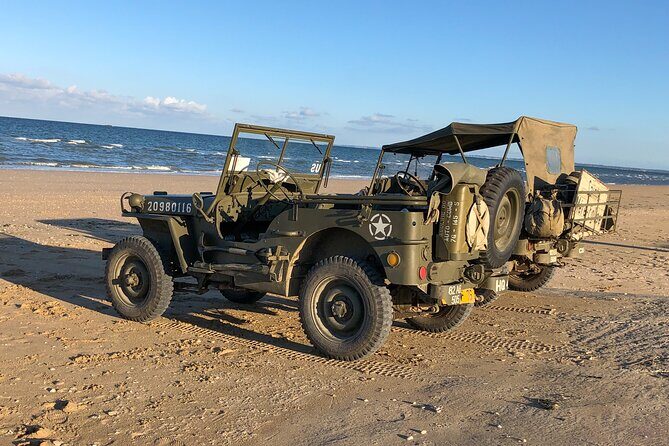
- Private transport in a WWII-era Jeep: you move along back roads at a human pace instead of being herded.
- Five focused stops tied to airborne landings: you’re not just seeing one beach viewpoint.
- Utah Beach plus Atlantic Wall remains: you get the June 6 shoreline story and the defenses that mattered.
- Guides with strong local D-Day grounding: Thomas, Flavie, and Arthur are specifically referenced for making tactics make sense.
- Short walking time at each stop: you can keep momentum without feeling exhausted.
Why a WWII Jeep works better than a bus for D-Day
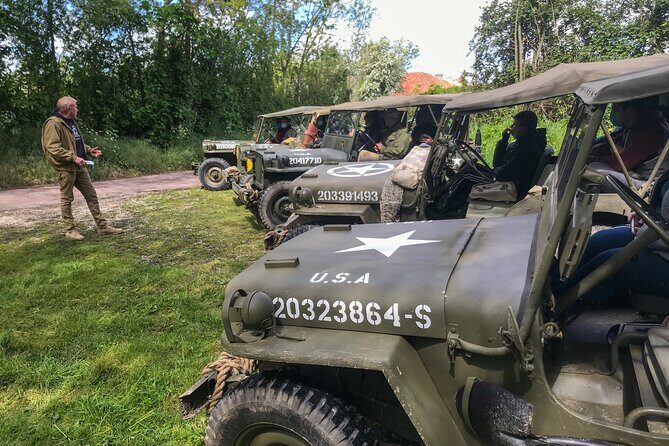
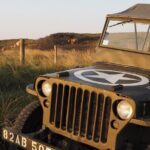
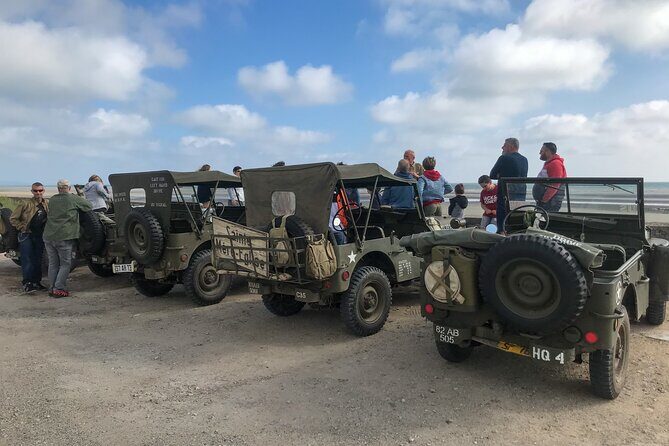
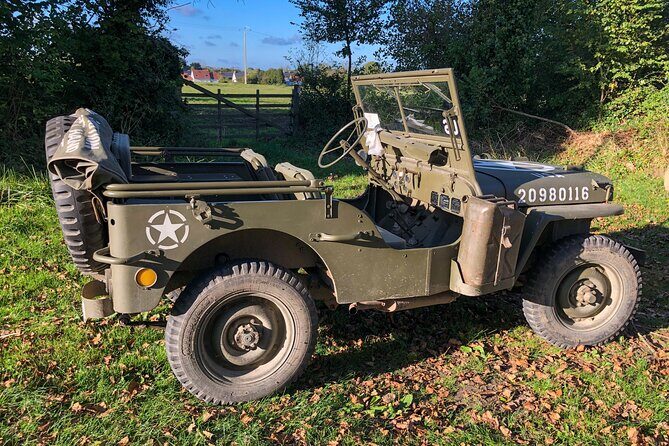
The biggest advantage here is the Jeep itself. It’s not a prop. You ride in an authentic WWII-era style vehicle, which changes how your brain reads the place. You feel the turn radius, the way lanes narrow, and the way Normandy farms and hedgerows shape movement. That matters on a battlefield tour, because WWII history isn’t just dates. It’s terrain, timing, and decisions made in seconds.
A second plus is the format. This is a private guided drive, not a big-coach “photo stop and go” routine. With a small group, your guide can slow down when something connects—like a landing zone reference, a crash location, or why a particular shoreline segment mattered on June 6.
You can also read our reviews of more guided tours in Mont St Michel


The exact starting point in Sainte-Mère-Église (and why timing matters)
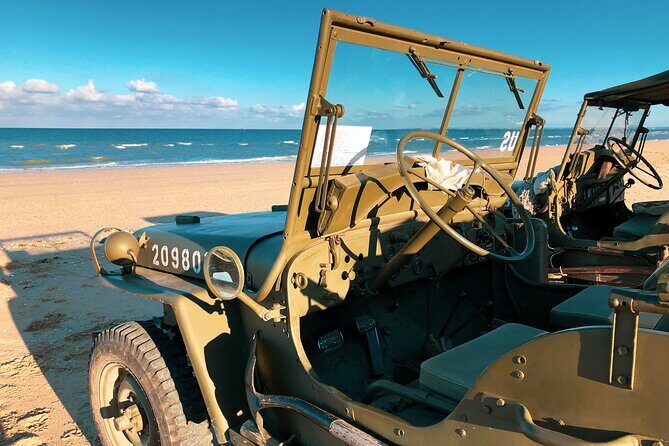
You meet at Parking Rue Eisenhower, 14 Rue Eisenhower, 50480 Sainte-Mère-Église, France, and the tour returns you there at the end. Plan to arrive a bit early. Not because it’s complicated, but because it’s a small local parking area and you want to start the conversation on time—especially if you have questions about airborne units, specific names, or what you already know.
The tour runs about 2 hours, so it’s best thought of as a strong “battlefield overview with real stops,” not an all-day deep course. If you’re the type who likes to walk through museums for hours, you can still do that later. This Jeep drive is the part that helps you understand the ground first.
Stop 1: Sainte-Mère-Église and Holy Mother Church’s parachutist story
Your first stop is Sainte-Mère-Église, a town that sits right at the center of the American airborne narrative. You’ll spend about 10 minutes there, and the focus is Holy Mother Church—famously associated with the parachutist John Steele and the kind of story that turned into a landmark for pop-culture memory.
What’s useful isn’t just the headline. It’s the way the guide frames why this spot became so symbolic. You learn how the airborne landings weren’t a single event—they were dozens of micro-missions scattered across towns, roads, fields, and barns. The church area helps you orient fast: this is the kind of place where an individual story and the larger operation meet.
Drawback to note: with only around 10 minutes, you won’t have time to linger for long photos and study plaques like you would on your own. If you want extra time, you’ll need to plan a second visit later.
Stop 2: Turqueville in the 101st airborne area
Next is Turqueville, about 20 minutes. This is one of those stops where the value is in context. You’re in the broader 101st Airborne world, and your guide should help you picture what it meant to drop into fields and villages where visibility, wind, and ground conditions could change everything.
This is a “place + explanation” stop. You’re looking at terrain you can actually stand on, then hearing how paratroopers navigated it, landed where they could, and tried to regroup afterward. It’s also a nice break from the heavier emotional weight of certain famous landmarks—you’re still learning, but you’re learning through the practical reality of geography.
A small practical note: the stop time is capped. If you’re a serious photo person, you’ll want to bring a strap and keep your camera ready.
Stop 3: Beuzeville-au-Plain and the Band of Brothers connection
At Beuzeville au Plain, you’ll get about 20 minutes, centered on the site tied to the crash of Thomas Meehan’s plane and commonly associated with the Band of Brothers storyline. Even if you’ve seen the series, it can be helpful to see how the location reads in real life rather than in a screen scene.
The benefit of this stop on a live tour is clarity. The guide can explain what a crash site means for the operation: communication failures, lost units, and how quickly the story splits into smaller survival-and-recovery arcs. That’s one reason these stops feel moving. They aren’t just “war trivia.” They’re reminders that an operation is made of fragile parts.
One caution: if you arrive with zero background knowledge, you may want to listen carefully right at this stop. This is the point where the guide’s maps and stories help you connect characters, units, and the physical problem they faced.
You can also read our reviews of more private tours in Mont St Michel


Stop 4: Saint-Germain-de-Varreville and the first American paratrooper landing
Then you move to Saint-Germain-de-Varreville, with about 15 minutes allocated. This village stop focuses on Franck Lilyman, described as the first American paratrooper to land there.
I like this stop because it gives you a “before and after” feeling. When you’re learning airborne history, it’s easy to treat everything as one wave. But a “first landing” reference forces you to think about the minutes, not just the day. You can understand why early landings were crucial: they shaped regrouping, guidance, and the initial ability to find locations that were supposed to be known in advance.
As with the other stops, don’t expect a long walk. It’s structured for an efficient overview, so your time is best spent standing where your guide points and letting the explanation do its job.
Stop 5: Utah Beach, Atlantic Wall remains, and June 6 context
You end at Utah Beach, spending about 20 minutes. This is where the tour shifts from airborne stories across the inland areas to the landing beach moment on June 6, 1944. You’ll learn about the American soldiers who landed here, and you’ll also be shown remains of the Atlantic Wall.
This stop is where the tour earns its “worth it” rating. Utah Beach isn’t only about a single shoreline viewpoint. When your guide points out defenses and remains, you start to see how the beach was planned as a system—barriers, positions, and fields of fire that shaped what troops could do once they hit sand.
Also, this is one of those places where timing matters. In about 20 minutes, your guide’s job is to give you enough orientation so you’re not just reading signs. You should leave understanding how the beach connects to the airborne landings nearby—because the larger success story depends on both.
How guides like Thomas and Flavie make tactics make sense
The biggest reason this tour consistently gets top scores is how the guides teach. Names that show up in guidance include Thomas and Flavie, and another guide, Arthur, is also mentioned for strong maps-and-explanations.
What I like about this style is practical storytelling:
- Maps and photos help you track the “why” behind movements.
- Anecdotes connect the operation to what people actually experienced.
- The guide can slow down to explain strategy and tactics without turning it into a lecture.
If you’re the type who gets lost in big historical narratives, this is exactly the format that helps. You’re not memorizing a timeline—you’re learning through location, and the guide keeps you oriented while you move.
Price and value: what $302.34 buys for up to 3 people
The price is $302.34 per group (up to 3), for about 2 hours. That can look “high” if you compare it to an ordinary bus tour. But value here comes from three things you can actually feel during the experience:
1) Private driving time in a WWII-era Jeep rather than sitting on a coach.
2) Small-group flexibility, meaning the guide can adjust pacing and explanations to your questions.
3) A focused route that ties together multiple airborne-linked stops and ends at Utah Beach with Atlantic Wall context.
Also, you’re paying for transportation as part of the deal, not just for someone to talk to you at a single location. If you have a small family or a couple of history-minded friends, the per-person math often feels more fair fast.
What’s not included is lunch, so plan to eat before or after. Think of this as an intense, smart afternoon, then food and a museum later if you want more.
Practical tips before you ride (wind, clothing, and photo sanity)
A few things will make your experience more comfortable:
- Bring a windbreaker or warm layer. The coast and open fields can feel colder and breezier than you expect.
- Wear shoes you’re happy to stand in and take short steps. Each stop is brief, but you’ll still be outside.
- If you’re bringing cameras, set a routine: quick shot first, then look when the guide starts pointing out details.
One more small tip: this tour is about short stops. Your best photos will happen while you’re waiting for the guide to finish explaining, not while you’re trying to read everything yourself from afar.
Who should book this private Jeep tour
This is a great fit if you:
- Care about D-Day history beyond the most famous beach names
- Want to see the paratrooper side of June 6, not only the landing
- Prefer a small group and a guide who can answer questions
- Like history that connects to the real ground you can walk around
It may be less ideal if you want a long, slow tour with lots of time inside visitor centers. This one is tight and efficient, designed to give you a clear framework in about two hours.
Should you book this WWII Jeep tour to Utah Beach?
Yes, if you want one solid, high-impact way to understand the airborne-and-beach connection around Sainte-Mère-Église and Utah Beach. The combo of an authentic WWII Jeep, a small private group, and strong guidance that uses maps and photos makes it a practical “first Normandy battlefield step” for many people.
Book it especially if you’re traveling with family members who would enjoy learning but don’t want a whole day trapped on a route. And pack for wind, because the Normandy air has a way of reminding you this is a coast and not a classroom.
FAQ
How long is the private guided tour in the WWII Jeep?
The tour lasts about 2 hours.
What does the price include?
The price includes private transportation. Lunch is not included.
How many people are in a group?
This tour/activity has a maximum of 3 travelers per group.
Where does the tour start and end?
It starts at Parking Rue Eisenhower, 14 Rue Eisenhower, 50480 Sainte-Mère-Église, France, and ends back at the same meeting point.
What language is the tour offered in?
The tour is offered in English.
Can I get a refund if I cancel?
Yes. You can cancel up to 24 hours in advance for a full refund.