Paris makes more sense on foot. This private, custom walk strings together big-name Paris with street-level explanations, and I love the tailored recommendations you get for the rest of your trip and the baguette tasting stop that keeps the morning from turning into museum fatigue. One thing to weigh up: you’ll be walking steadily for about three hours, and Louvre admission isn’t included, so you’ll still need to sort tickets on your end.
The route is built for orientation: Palais Royal arcades and courtyards, a quick plan for the Louvre, photo-friendly bridges over the Seine, and even a little-known 360-degree view spot. It’s the kind of tour that helps you stop guessing and start enjoying Paris on your own terms, at your own pace.
In This Review
- Key highlights worth caring about
- Private Paris with a local guide: why this feels different
- Price and value at $143.97 per person for 3 hours
- Meeting point at Café Auguste Rivoli and how to prep
- Champs-Elysées: the “historic quartier” start that sets the tone
- Palais Royal gardens and the Galerie Colbert arcades
- Baguette tasting and Louvre planning: how this saves you time later
- Galerie Vivienne, Opera Bastille area, and a 360-degree rooftop view
- Place de la Concorde, Grand Palais and Petit Palais
- Pont Alexandre III and the Seine banks to Pont de l’Alma
- How customization works when you actually have questions
- Walking pace, ticket timing, and the practical watch-outs
- Who this tour is best for
- Should you book this Paris highlights tour?
- FAQ
- How long is the tour?
- Is this a private tour?
- What is included in the price?
- Is Louvre admission included?
- Where does the tour start?
- Do I need transportation or hotel pick-up?
Key highlights worth caring about
- Private and flexible: it’s you plus your guide, with itinerary adjustments based on your interests
- A real taste stop: baguette tasting and a included local drink are part of the experience
- Photo angles built in: the Seine bridges and Eiffel Tower photo moment are planned into the walk
- Better Louvre strategy: you get practical advice on how to plan your Louvre visit
- Small-surprise architecture breaks: Palais Royal arcades, Galerie Vivienne, and other lesser-noticed spots
- Big-view payoff: a rooftop stop with a citywide 360-degree panorama
Private Paris with a local guide: why this feels different
If Paris is your first time, you can waste a lot of energy walking around with a map and a mild sense of panic. This tour trades that stress for a clear plan and a guide who can read your energy level. It’s private, so you’re not herded, you don’t have to keep up with a fast group, and you can ask questions without feeling like you’re holding everyone up.
I also like the way the tour builds context as you go. You don’t just hear what something is. You learn what matters, what to notice, and how that one place connects to the next stop. That’s especially useful around heavy-hitter sites like the Louvre and the formal, ceremonial areas of central Paris.
The tour also has a practical rhythm: landmarks are paced with smaller “pause and look” moments, like arcades and courtyards where Paris feels less staged. And because it’s customized, your guide can steer you toward what you actually care about—architecture, street scenes, or history with enough detail to make it stick.
You can also read our reviews of more tours and experiences in Paris.



Price and value at $143.97 per person for 3 hours
At $143.97 per person for about three hours, this isn’t a bargain-bin walking tour. But it’s also not trying to sell you a bus ride and a tired script. The value comes from three pieces you can’t easily DIY:
1) A dedicated guide for your group (no joining random people mid-walk).
2) A included tasting/drink, so you’re not spending the day hunting for a snack.
3) Advice you can use immediately, especially for planning a Louvre visit and choosing what to prioritize.
There’s also a timing clue: it’s commonly booked around 58 days in advance on average. That’s a sign this is a popular “start your trip strong” activity, not something everyone forgets to book.
What’s not included matters, too. There’s no hotel pick-up, no transportation, and Louvre admission isn’t included. If you’re already budgeting for entry tickets, you can still get good value because the guide is helping you spend your limited time smarter.
Meeting point at Café Auguste Rivoli and how to prep
You meet at Café Auguste Rivoli, 154 Rue de Rivoli, 75001 Paris. I like this because it puts you near a core walking spine—easy to reach, and it puts you in the center of things fast.
Wear comfortable shoes. This is not a sit-down tour. The route includes multiple areas across central Paris and several “walk-and-look” stretches. If your feet get cranky, bring something that feels broken in, not new.
A small but important practical detail: it’s near public transportation. Still, don’t plan this like a quick hop between metro stops. Plan for walking time between sights, plus a little buffer for security lines if you go into major buildings.
Finally, the tour is listed as CO2 neutral because emissions are offset. That won’t change what you see, but it’s a nice extra checkbox if sustainability matters to you.
Champs-Elysées: the “historic quartier” start that sets the tone
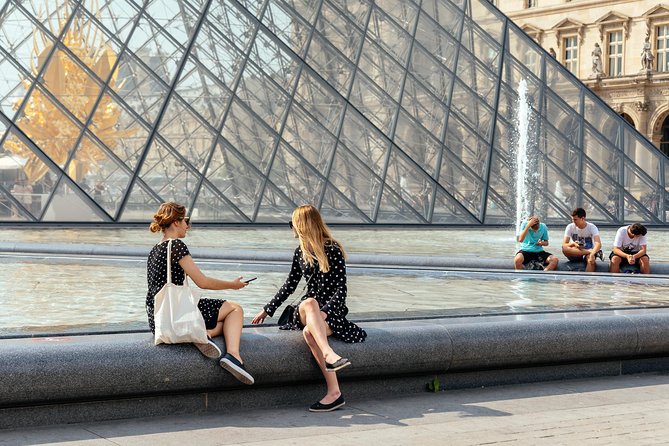
Your walk begins at the Champs-Elysées area (in the 8th arrondissement), framed as one of Paris’s most historic neighborhoods. This matters because the Champs-Elysées isn’t just a shopping strip. It’s where you can feel Paris shifting across centuries—street views with buildings dating from the 18th through the 20th centuries.
Starting here is a smart move. You get the grandeur energy early, then the tour pivots into quieter Paris: arcades, courtyards, and the kinds of corners you usually miss because they’re not on the main photo route.
If you like people-watching and street architecture, this first stop is a strong “warm-up.” You’ll also get a sense for what direction you’re heading and how your guide thinks about the day.
Palais Royal gardens and the Galerie Colbert arcades
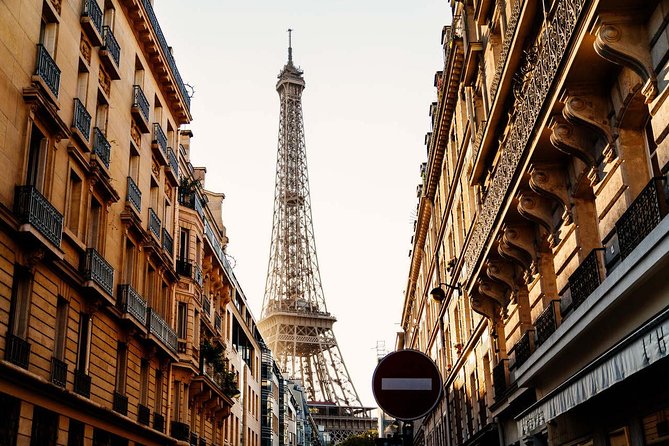
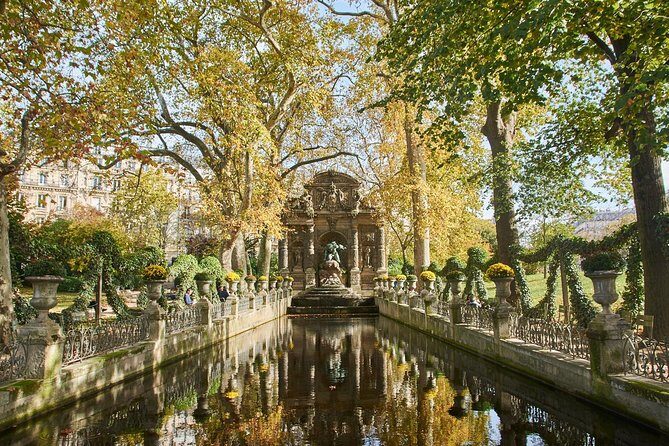
After the initial grandeur, the tour shifts into a more intimate Paris at the Jardin du Palais Royal. This is where the mood changes. You’re looking at space shaped by power and court life, but experienced on foot, at human scale.
You’ll pass sights tied to royal residence—specifically the former residence connected with King Louis XIV—and you’ll walk past a striking large black and white sculpture that creates an old-versus-new contrast. That kind of comparison is one reason the Palais Royal area works so well on a walking tour. You’re not just seeing buildings; you’re seeing how Paris layers eras on top of each other.
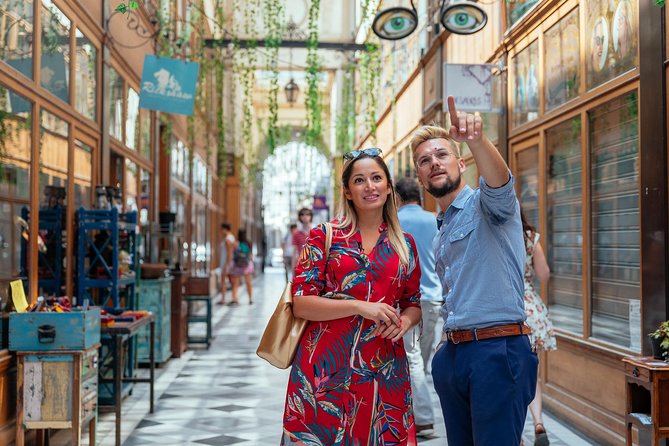
Then you move through the arcades, including Galerie Colbert, described as an icon of the neighborhood with charming passages geared toward education and culture. This is the “look up and slow down” part of the tour. Arcades reward you for pausing, noticing details, and taking a breather before the next stretch.
The tour also includes Place des Victoires, built as a tribute to Louis XVI, with a statue in the middle. It’s a great spot for photos and a quick reset between busier streets. Plus, it’s practical: there are shops nearby if you need a small snack or a last-minute water bottle before moving on.



Baguette tasting and Louvre planning: how this saves you time later
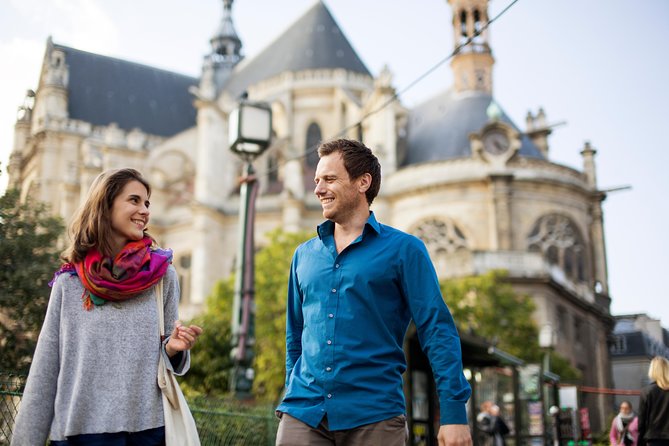
One included highlight is a stop at an old bakery for baguette tasting, plus one local drink/tasting during the tour. I love this because it turns “sightseeing stomach” into a real, planned break. You’re not stuck deciding where to eat while everyone else finishes their photos.
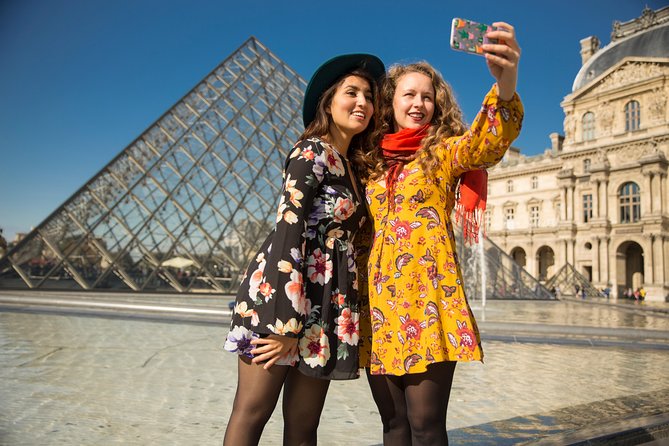
The other big payoff is the Louvre planning conversation. The Louvre is one of those places where you can either have a great visit or a confusing blur. Here, you learn how to plan your visit there—what to focus on and how to think about time inside such a giant museum.
Important: Louvre museum admission is not included. That’s not a dealbreaker, but it does mean your museum time will depend on your own ticket purchase and entry lines. If you’re going to the Louvre later that day or the next day, this tour helps you show up with a strategy instead of aimless wandering.
A practical tip: decide before you leave the tour what your Louvre priority list looks like. Your guide will point you toward what’s most worth your limited time. Then you can build your plan around that.
Galerie Vivienne, Opera Bastille area, and a 360-degree rooftop view
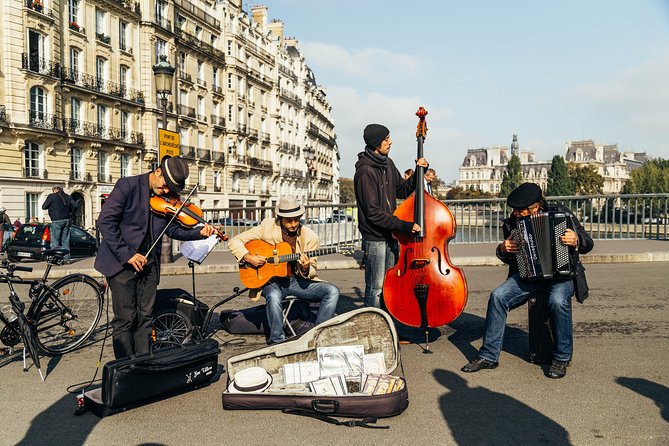
Between formal landmarks and the Seine, the tour squeezes in Paris’s more surprising “in-between” spaces.
You’ll pass through Galerie Vivienne, known as a beautiful arcade area. It’s the kind of place you’d walk past quickly on your own, but on this route you get time to appreciate the details and the change in atmosphere.
You’ll also head toward the Opera Bastille area. Even if you’re not going inside, seeing how the modern opera fits into the Paris map helps you understand the city’s timeline—big classical spaces exist next to newer statements, and your walk is built to show that contrast.
One of the most memorable moments is a stop at a little-known rooftop with a 360-degree view of the city. This is the kind of photo stop that feels like more than a snapshot. From above, Paris’s shape makes more sense—the way neighborhoods relate, where the Seine pulls everything into a central axis, and where major landmarks sit relative to each other.
Place de la Concorde, Grand Palais and Petit Palais
Next comes Place de la Concorde and the area around the Grand Palais and Petit Palais. This is classic central Paris: ceremonial streets, big façades, and a sense of scale that can be hard to understand from a quick street-level glance.
This stop works well on a walking tour because you get a guided sense of what these spaces have been used for, how they fit into the city’s grand planning, and why the surrounding streets feel like part of one large design.
If you like architecture and how the city “frames” famous spots, you’ll enjoy moving from square to façade to photo angle without needing to constantly re-orient yourself with a map.
Pont Alexandre III and the Seine banks to Pont de l’Alma
Now you get the Paris you can’t fully replace with photos: walking near the water.
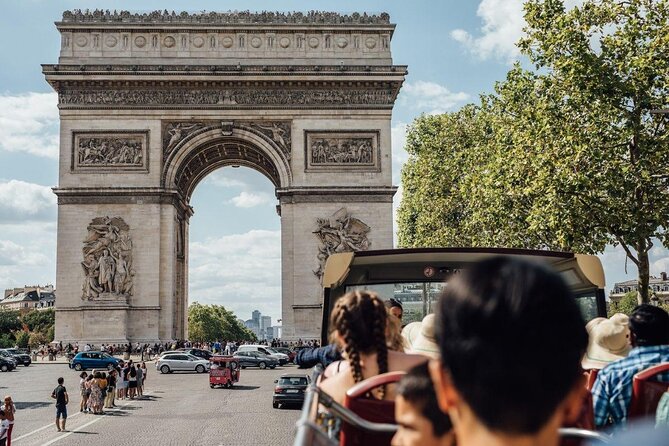
The tour includes Pont Alexandre III, a bridge that’s visually impressive and a major setting for views. From there, you stroll along the banks of the Seine to Pont de l’Alma. This stretch is where Paris feels most walkable and most cinematic, because you’re moving through a corridor of views while your guide explains the city’s geometry and story.
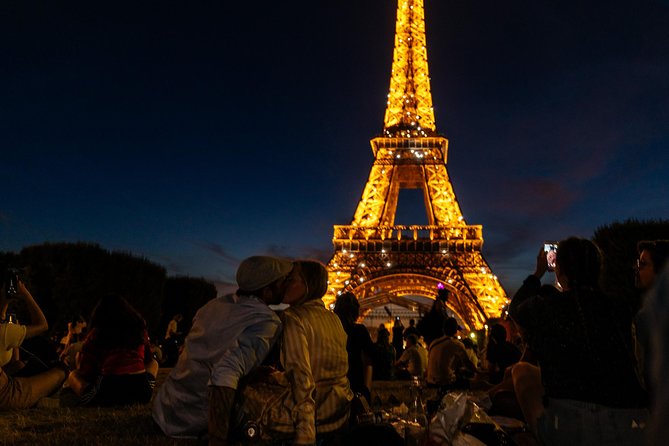
There’s also a photo moment for the Eiffel Tower. You’re not doing the long lines-and-scaling part here. Instead, you’re getting viewpoints that let you frame the Eiffel in context—tethered to bridges and river angles, not isolated as one distant icon.
My advice: treat this portion as your “slow down and look” segment. If you try to power through it, you’ll miss why this route feels special.
How customization works when you actually have questions
The tour is designed to be flexible. In real life, that means your guide can adjust what gets extra time and what moves faster. That flexibility is the reason I think private walking tours are still worth it, even when the route includes famous landmarks.
I’ve seen this tour-style guide approach described as responsive and photo-aware. For example, guides like Paolo are known for taking great photos and sharing smart ideas for what’s worth your time later, even around dining and avoiding long waits. Other hosts, like Zoltan, are described as asking what you want to see and building the route around that. People also note that guides such as Wan can share more than classic museum-style facts, with a mix of history and current life.
You can use this to your advantage. Have at least two “preferences” in mind before the tour starts, such as:
- I want strong architecture and good photo angles
- I want history, but only the parts that connect
- I need help planning my Louvre visit
- I’d rather spend extra time on smaller streets than rushing big squares
If you go in with even a simple shortlist, your guide can steer the day into your kind of Paris.
Walking pace, ticket timing, and the practical watch-outs
A walking tour is a simple concept with a few real-world pitfalls.
First: expect steady walking. The tour is about three hours and includes multiple neighborhoods. If you have limited mobility or your stamina is low, consider whether you can handle continuous walking plus some stops.
Second: Louvre admission isn’t included. That affects your schedule and your budget. If you plan to visit the Louvre at some point during your trip, use the tour’s advice to decide what to prioritize so you don’t waste paid entry time.
Third: pay attention to language and guide identification at the start. Because this is private, you’ll want to confirm you’ve found the right guide early and that communication is working. If your day is tight because you just landed or you have timed plans, arriving a bit early and double-checking details will reduce stress.
Finally: you’ll need to handle your own return. There’s no hotel pick-up and drop-off, and the tour ends back in Paris. In practice, that usually means you should already know how you’ll get home or to your next reservation from the central area.
Who this tour is best for
This fits best if you:
- Want a first-day orientation and a strong set of next steps
- Like a mix of big landmarks and smaller architectural spaces
- Want a food moment (the baguette tasting) without turning the day into a restaurant hunt
- Prefer a private pace and the ability to ask follow-up questions
It may be less ideal if you:
- Hate walking for long stretches
- Want Louvre entry fully handled for you (admission isn’t included)
- Expect to do zero planning for your next stops after the tour ends
If you’re traveling with someone who gets impatient in crowds, private helps. It also works well if you’re celebrating something or want a calm, friendly guide-led route instead of a rushed checklist.
Should you book this Paris highlights tour?
I think it’s a smart booking if your goal is to leave Paris with a map in your head, not just a pile of photos. The combination of private pacing, a planned tasting, and practical help for the Louvre is what makes it feel like real value.
Book it if you’re excited by central Paris architecture, bridges over the Seine, and the idea of getting a 360-degree viewpoint without treating it like a full-day extra ticket adventure.
Skip or adjust if you’re worried about walking, or if you want Louvre entry managed end-to-end. In that case, you might still enjoy the route, but you’ll need to be ready to handle museum tickets and your own transport.
FAQ
How long is the tour?
The tour is about 3 hours.
Is this a private tour?
Yes. It’s private, meaning only your group and your local guide participate.
What is included in the price?
It includes the private tour, a tour guide, and 1 local drink/tasting.
Is Louvre admission included?
No. Louvre Museum admission is not included.
Where does the tour start?
The meeting point is Café Auguste Rivoli, 154 Rue de Rivoli, 75001 Paris, France.
Do I need transportation or hotel pick-up?
Hotel pick-up and drop-off are not included, and transportation is not included.