REVIEW · PARIS
ESSENTIAL MONTMARTRE Walking Tour: the essential highlights+MORE!
Book on Viator →Operated by Black Cat Tours · Bookable on Viator
Three hours, and Montmartre feels personal.
This is a guided walk built around the neighborhood’s big-name landmarks, plus the human stories tied to them, from Sacré-Cœur to the artist squares. I like the clear highlight route and the way it’s paced so you’re not just ticking off views—you’re seeing Montmartre as a working, lived-in Parisian corner. You’ll also get an included coffee stop, which helps when you’re climbing stairs and catching views in short bursts.
One thing to plan for: this area is hilly and stair-heavy, so comfy shoes matter. It’s still doable for most people, but you’ll want to go in expecting some uphill effort and wind.
In This Review
- Key Montmartre Moments You Can’t Miss
- Montmartre in Three Hours: What You’re Really Buying for $59
- Starting in Anvers: The Climb Toward Sacré-Cœur
- Inside Sacré-Cœur: Serenity First, Then the Paris View
- Place du Tertre: The Artist Square That Feels Like a Living Set
- Vigne du Clos Montmartre: A Tiny Vineyard with Big Contrast
- Windmills at Le Moulin de la Galette: Art, Entertainment, and Everyday Life
- Le Bateau-Lavoir: Where Modern Art Takes Hold in a Real Building
- A Wall-Passing Moment: Le Passe-Muraille
- Le Lapin Agile: A Cabaret Worth a Pause
- Dalida Chapter: The Statue and Her House
- Van Gogh’s House: Theo’s Side of the Story
- Café des Deux Moulins: The Amélie Filming Connection
- Rue des Abbesses: A Pretty Street Moment with Real Character
- Finishing at Moulin Rouge: The Big Name Finale
- Price and Logistics: Good Value, With One Real-World Caution
- Who This Tour Is Best For
- Should You Book This Montmartre Walking Tour?
- FAQ
- How long is the Montmartre walking tour?
- What language is the tour offered in?
- Is admission included for the main sights?
- Does the price include the Moulin Rouge show?
- Is coffee included?
- Where do you meet, and where do you end?
- How big is the group?
- Is this tour manageable for most people?
Key Montmartre Moments You Can’t Miss
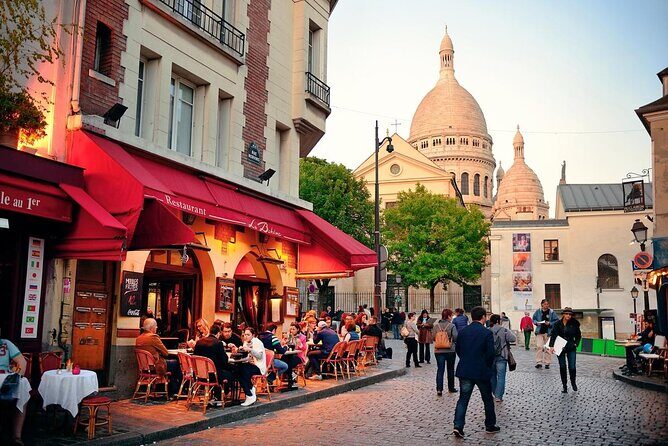
- Sacré-Cœur inside and out: calm time in the basilica, with a wide Paris panorama feel
- Place du Tertre with working artists: see portraits, caricatures, and open-air painting up close
- Le Bateau-Lavoir (Picasso era): a compact stop that ties together modern art’s Montmartre gravity
- Windmills and Montmartre legends: Moulin de la Galette, tied to famous paintings and the area’s cabaret life
- Film-location stop at Café des Deux Moulins: the Amélie connection makes the walk feel pop-culture fresh
- A dramatic ending at Moulin Rouge: finish where the postcard energy lives, without needing a show ticket
Montmartre in Three Hours: What You’re Really Buying for $59
For about 3 hours and $59.13, you’re paying mainly for time and guidance, not entrance fees. This route hits a long list of stops, and most of the major sights on the plan are marked as free admissions (the only “big-ticket” item is the Moulin Rouge show, which is not included). That’s good value if you want structure and stories without spending half your day figuring out where to go.
The tour also keeps the vibe family-friendly, which matters in Montmartre. You’re not stuck listening to a lecture; you’re walking between places where the art and history are literally around you.
You can also read our reviews of more walking tours in Paris



Starting in Anvers: The Climb Toward Sacré-Cœur
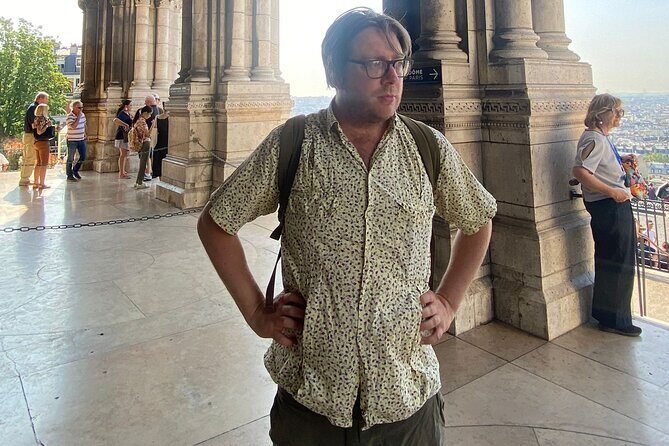
You meet at Anvers (75018) and begin with a classic Montmartre approach: walking from Rue de Steinkerque toward the Gardens of Sacré-Cœur. From there, the route uses the funiculaire to help get you up to the basilica area. This is a smart choice because it keeps the “must-see” climb from turning into a punishment.
Stop 1 is also a good warm-up. You get that first Montmartre perspective—streets and steps, neighborhood angles, and the sense that the hill is part of the experience. Then you shift from views outside to serenity inside.
Inside Sacré-Cœur: Serenity First, Then the Paris View
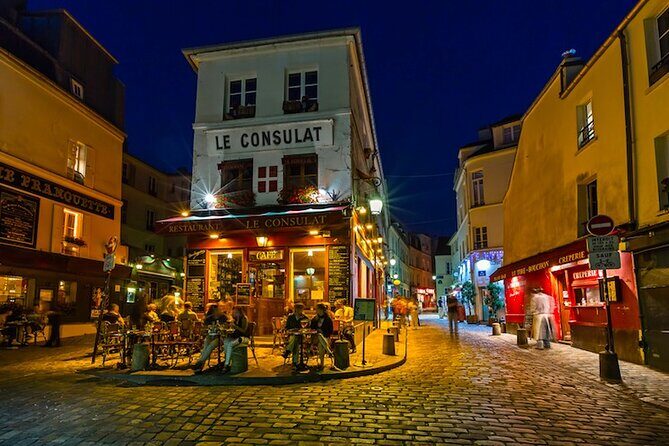
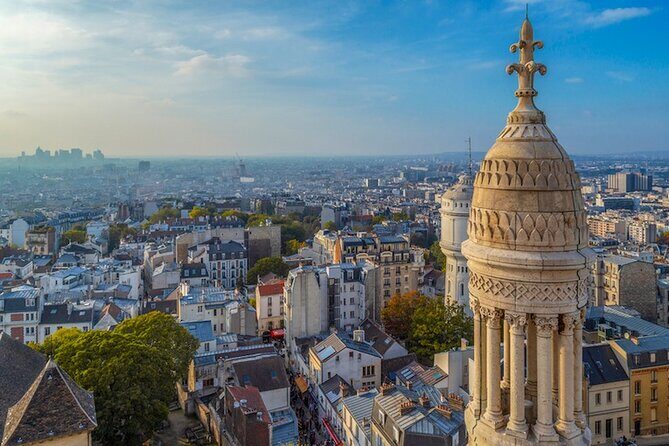
At Basilique du Sacre-Coeur de Montmartre, you take time for a quiet moment in the basilica. This isn’t just a photo stop. It’s where the tone of the area changes from lively street energy to a calmer, grand, stone-and-silence feeling.
After that calm reset, you’re positioned to understand why this spot became a symbol. Montmartre isn’t just about artists and nightlife; it also has this spiritual, “watching over Paris” role.
Place du Tertre: The Artist Square That Feels Like a Living Set
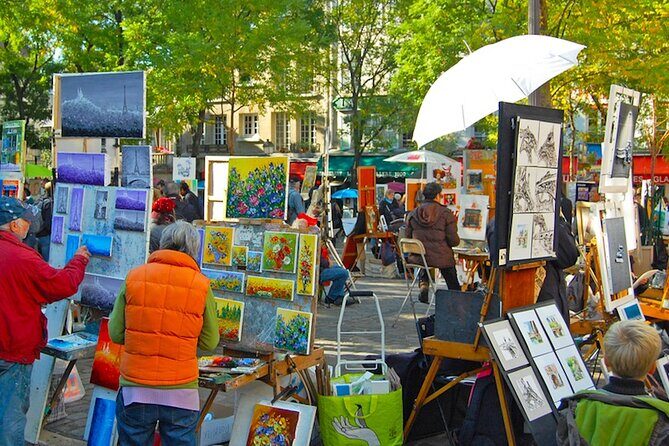
Next comes Place du Tertre, the medieval-feeling artists’ square where you’ll see painters working in the open. This is the moment when Montmartre stops being a map and becomes a scene. You can watch artists create portraits, caricatures, and small works on the spot—often with the kind of working rhythm you don’t get at typical sightseeing corners.
Why this stop is worth your time: it helps you understand how Montmartre’s image became a job. The artists aren’t just decorations; they’re part of how the neighborhood performs for the world.
A practical note: it’s a popular area, so if you need a breather, use it. Look for one quiet angle to watch, then step back and let the square come to you.
Vigne du Clos Montmartre: A Tiny Vineyard with Big Contrast
Then you get a refreshing shift at Vigne du Clos Montmartre. This small historic vineyard adds contrast to all the stone, stairs, and tourist viewpoints. It’s a reminder that Montmartre isn’t only a stage for postcards; it has pockets of older life.
This stop is short, but it’s a nice palate cleanser. It also helps you break the walk into mental chunks, so you don’t feel like you’re marching nonstop from one landmark to another.






Windmills at Le Moulin de la Galette: Art, Entertainment, and Everyday Life
At Le Moulin de la Galette, you’ll see one of the last remaining windmills in Montmartre, along with its neighbor Moulin Blute-Fin. This is one of those stops where the landmark matters because it connects art to real location.
The tour ties the windmill to the famous dance spirit of Montmartre—linked to the ball atmosphere made famous in works by major artists such as Renoir and Picasso. Even if you’re not hunting museum-level details, the idea lands quickly: these structures weren’t just scenery. They helped define the neighborhood’s social life.
Le Bateau-Lavoir: Where Modern Art Takes Hold in a Real Building
Next you reach Le Bateau-Lavoir, the famous space associated with Pablo Picasso and other heavyweights of modern art, including Henri Matisse, Amedeo Modigliani, Jean Cocteau, and more. The stop is brief, but it matters because it compresses a big story into a small footprint: Montmartre wasn’t just where artists were inspired—it became a central meeting point for new ideas.
Here’s how to get more out of the stop: don’t treat it like trivia. Use it as a bridge. When you see the places around it—streets, squares, studios-in-their-imagination—you’ll start connecting why Montmartre drew so many creative personalities.
A Wall-Passing Moment: Le Passe-Muraille
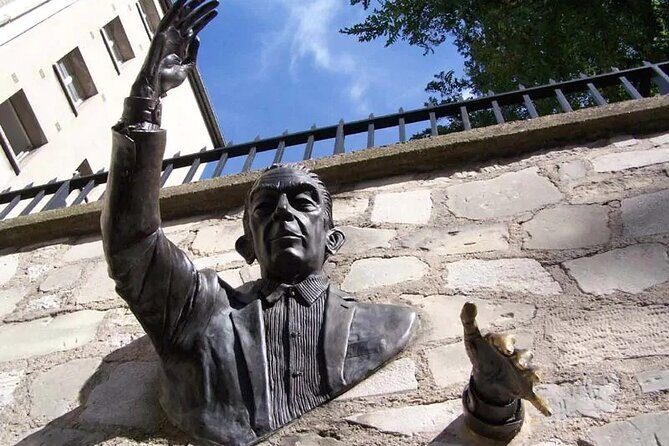
A quick stop follows at Le Passe-Muraille, the sculpture of a man passing through the wall, based on a story by Marcel Ayme. This is the kind of Montmartre detail you’d likely walk past without guidance.
Think of it as your “left turn” moment. The tour keeps moving through famous names, but this one adds local imagination—Montmartre’s humor and myth-making.
Le Lapin Agile: A Cabaret Worth a Pause
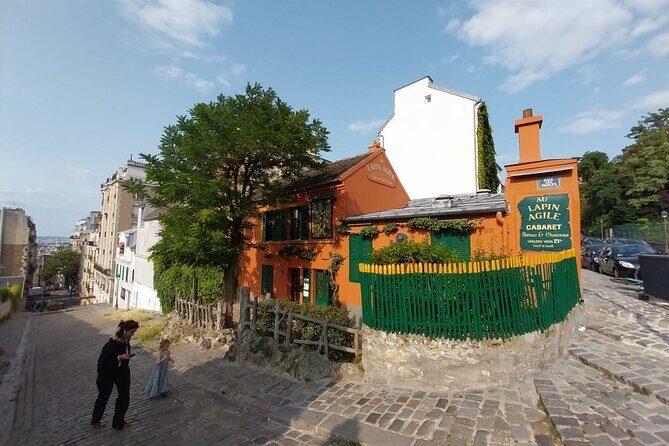
From there, you’ll discover Le Lapin Agile, a historic cabaret venue associated with famous Montmartre figures, including Pablo Picasso and others. It’s a charming stop because the building itself feels like a relic of the neighborhood’s long-running performance culture.
This is also a good spot to slow down for a minute and just look. Montmartre works best when you mix landmark power with human-scale atmosphere.
Dalida Chapter: The Statue and Her House
The tour then adds pop-culture depth with the Dalida statue, followed by La Maison de Dalida—where the iconic singer lived. These stops are short, but they expand the story of Montmartre beyond painters and writers into a more modern Paris.
If you like connecting music and place, this part is a fun rhythm change. It helps you see Montmartre as a recurring source of fame across decades.
Van Gogh’s House: Theo’s Side of the Story
At Van Gogh’s House, you learn where Vincent van Gogh lived with his brother Theo. This is one of the stops that makes Montmartre feel personal, because it ties the name you know to a specific family and household connection—not just a painting title.
Even with a short time window, it’s worth focusing. Look around and try to imagine how the creative life worked from inside those walls.
Café des Deux Moulins: The Amélie Filming Connection
Then comes Café des Deux Moulins, tied to the movie Amélie (Le Fabuleux Destin d’Amélie Poulain). This is where Montmartre’s magic overlaps with modern cinema memory, and the setting often feels familiar even when it’s new to you.
Because this is tied to a recognizable film, it can be a morale boost if you’re starting to feel the walking time. You’re in the neighborhood and also in a story world you already know.
Rue des Abbesses: A Pretty Street Moment with Real Character
Next, you take a stroll along Rue des Abbesses, known as a charming street that’s been highlighted for its beauty. It’s a “slow down and look” stretch, and it’s helpful after the heavier landmark stops.
Use this time to reset your legs. Walk at a comfortable pace, and keep an eye out for side streets and angles—Montmartre rewards the people who take one extra breath.
Finishing at Moulin Rouge: The Big Name Finale
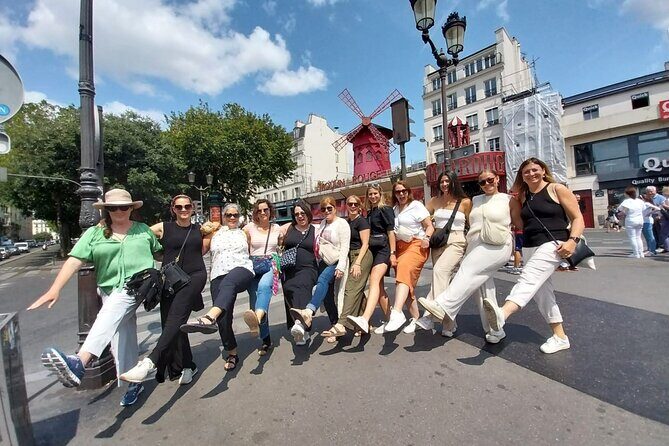
The tour ends at Moulin Rouge on 82 Bd de Clichy. The plan includes getting to the cabaret area, but a Moulin Rouge show ticket is not included. That’s fine for value: you’ve already gotten a guided tour through the neighborhood’s art-history and movie connections, so the final stop can feel like a grand closing frame.
This is also where you’ll notice the neighborhood tone shift. Montmartre can feel romantic on the hill, and then more street-urban near major venues. If you’re sensitive to crowds or busy sidewalks, plan to take a few quiet seconds before you fully step into the Moulin Rouge energy.
Price and Logistics: Good Value, With One Real-World Caution
Let’s talk money and effort. $59.13 for ~3 hours with multiple landmark stops and a coffee break is strong value if you want a guided “best of” route without paying for many admissions. Most of the stops are listed with free admission (and the show is the only noted non-included add-on).
The real caution is physical. The route includes hills and stairs, and some climbs are just part of Montmartre’s reality. If you’re traveling with kids, or anyone who tires easily, set expectations early: this is a walking tour with meaningful elevation and steps.
Also, the tour has a maximum of 20 travelers, which usually helps with keeping the group together and hearing the guide. A smaller group also makes it easier for a guide to manage questions and pace.
Finally, the tour includes mobile ticketing and you meet near public transportation, which makes arrival easier. And since it’s offered in English with three start times, you’re more likely to find one that works with your Paris schedule.
Who This Tour Is Best For
I’d steer you toward this tour if you want:
- A structured Montmartre route that includes the big landmarks and the art-world names
- A guide-led experience that helps you connect the dots between places
- Family-friendly pacing and a route that avoids long museum time
- A finishing point at Moulin Rouge so your evening options open up
If you’re the type who hates walking or you know stairs are tough for you, you might still enjoy the highlights, but you should consider a shorter plan or add breaks. The vibe depends on moving through the neighborhood, not lingering in one building.
Should You Book This Montmartre Walking Tour?
If you want a high-hit, story-driven Montmartre afternoon, I think this is a solid booking. The price makes sense for what you get: a guided route through Sacré-Cœur, Place du Tertre, artist-and-invention stops like Le Bateau-Lavoir, plus film and pop-culture connections at Café des Deux Moulins and the Dalida chapter, ending at Moulin Rouge.
My main “don’t book blindly” reason is the walking. Bring good shoes and plan for a hilly route with stairs. If that fits your day, you’ll leave with Montmartre feeling less like a brochure and more like a real place with layers.
FAQ
How long is the Montmartre walking tour?
It’s about 3 hours.
What language is the tour offered in?
The tour is offered in English.
Is admission included for the main sights?
The itinerary notes free admission for key stops such as Sacré-Cœur, Place du Tertre, and several other landmarks on the route.
Does the price include the Moulin Rouge show?
No. The Moulin Rouge show is not included.
Is coffee included?
Yes. The tour includes a stop for coffee, but drinks are not included.
Where do you meet, and where do you end?
You start at Anvers, 75018 Paris and finish at Moulin Rouge, 82 Bd de Clichy, 75018 Paris.
How big is the group?
There’s a maximum of 20 travelers.
Is this tour manageable for most people?
It’s listed as suitable for most travelers, but Montmartre is hilly and stair-heavy, so comfortable footwear helps. Service animals are allowed.