REVIEW · PARIS
See 10+ Top Paris Sights, Fun Guide
Book on Viator →Operated by Top Sights Tours · Bookable on Viator
Ready for Paris highlights with real street stories? This compact small-group tour (capped at 15) is designed to get you oriented fast, with an English guide guiding you through iconic stops like Montmartre, the Moulin Rouge area, and the Arc de Triomphe. What makes it feel special is the pace: you’re not just looking at landmarks, you’re hearing how the places connect.
I like that the guides bring the streets to life. People specifically mention guides such as Rami, Sascha, Devon, and Eden for keeping things engaging and for working the details for their group, including kids. I also love the mix of big-name sights with smaller, very “Paris” corners—photo stops like Place du Tertre and Le Bateau-Lavoir make the walk feel personal, not like a conveyor belt.
One key consideration: the timing is tight. On the shorter option, you may not get every single named stop, and a couple of major sights are “see from outside” unless you add separate access—Moulin Rouge access and the Arc entry are not included.
In This Review
- Key highlights worth planning for
- Montmartre-to-Arc route: why this order works
- Small group and an English guide who tells the story
- Start at 72 Blvd Marguerite de Rochechouart: then the Montmartre streets begin
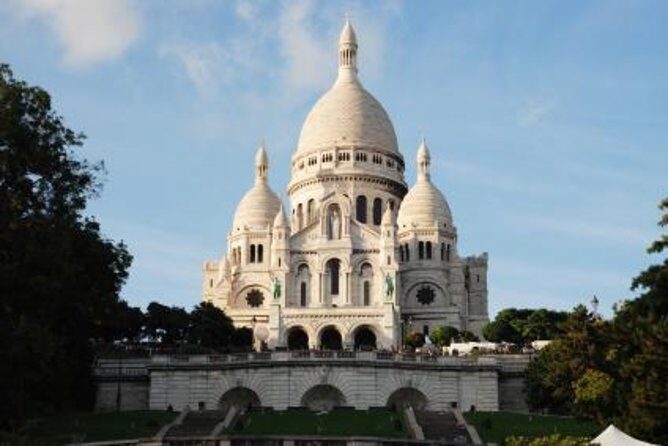
- Montmartre viewpoint and Sacré-Cœur: what you’ll get in 20 minutes
- Moulin Rouge walk-by: a quick look, not a ticketed show
- Arc de Triomphe and Champs-Élysées: the big Paris payoff
- Dalida, Place du Tertre, and Bateau-Lavoir: the Paris you’ll remember
- Metro orientation: the one planning item you can’t ignore
- Price and value: what $36.08 buys you (and what it doesn’t)
- Who should book this Montmartre-to-Arc highlights tour?
- Should you book it? My practical call
- FAQ
- How long is the tour?
- What group size should I expect?
- Is the tour in English?
- Where does the tour start and where does it end?
- Do I need tickets for Sacré-Cœur, Moulin Rouge, or the Arc?
- Is the Metro ride included?
- Is a mobile ticket used?
- Is there any food or café admission included?
- What’s the cancellation rule?
Key highlights worth planning for
- Small group of max 15 keeps the guide’s attention on you
- Montmartre first: you start in the most atmospheric neighborhood, then work your way across the city
- Sacré-Cœur inside visit is built in, not just a viewpoint stop
- Walk-by time at Moulin Rouge and Arc plus a handoff that helps you finish strong at the Arc area
- Metro orientation included so you can use the system the rest of your trip
- Photo-friendly stops across classic streets and landmarks (Dalida, Place du Tertre, Wallace fountains)
Montmartre-to-Arc route: why this order works
This tour’s biggest smart move is where it starts and ends. You begin in Montmartre—the hills, the artists’ squares, the stairs and viewpoints—so the trip feels like you’re “warming up” with atmosphere. Then you move toward the big-picture center of Paris and finish near the Arc de Triomphe.
For first-timers, this order helps you build a mental map. Montmartre teaches you what makes Paris feel different from city to city, and then the tour threads you into the wide, ceremonial Paris you see around the Champs-Élysées and Arc area. By the time you reach the final neighborhood, you’re not lost—you know what direction you’re facing and why.
Also, the tour is designed as a “do it now” experience. It’s meant to give you the highlights you’ll want to return to later. If you’re short on time, it’s one of the easiest ways to get a solid overview without spending half a day figuring out logistics.
You can also read our reviews of more guided tours in Paris



Small group and an English guide who tells the story
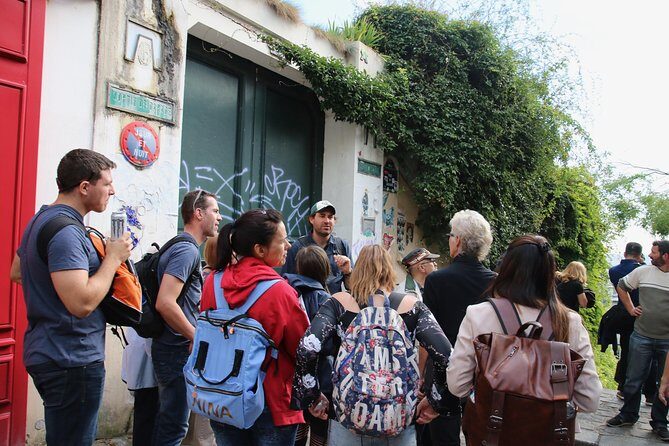
This is capped at 15 travelers, so you’re not stuck behind a wall of people. In practice, that matters because the guide can stop, re-group, and explain things at street level. Several reviews highlight guides for staying engaging and for answering questions without making it feel like a lecture.
You’ll hear stories at each stop—how things started, what changed, and what the city remembers. Guides specifically mentioned include Rami, Sascha, Devon, and Eden, and the common thread is that they keep the route lively. One review even calls out how the guide adjusted the content for an 11-year-old, which is a good sign if you’re traveling with kids and want the tone to work for mixed ages.
The big value here isn’t just facts. It’s context you can use later when you’re walking on your own—especially around Montmartre, where small streets can feel like they all blend together unless someone points out what to notice.
Start at 72 Blvd Marguerite de Rochechouart: then the Montmartre streets begin
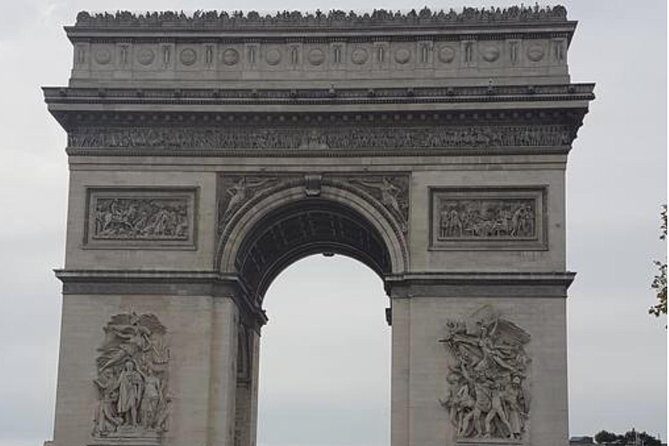
Your tour starts at 72 Blvd Marguerite de Rochechouart, 75018 Paris. That location puts you right where Montmartre energy begins—close enough to reach the neighborhood feel quickly.
From the first stop, the guide’s job is to help you “read” the area. You’ll get history and stories as you move through the streets, and you’ll also get practical photo opportunities. Montmartre is one of those places where the best views often come from walking a little more and turning down side streets, not from standing at the obvious entrance.
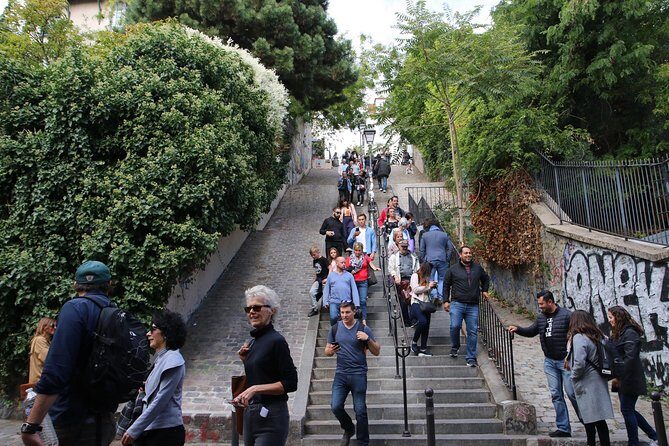
The tour then adds several Montmartre sights in a logical flow—some inside, many outside—so you’re not waiting around for one long ticket line. If your goal is to hit the recognizable moments and also catch the local texture, this route is built for you.
Montmartre viewpoint and Sacré-Cœur: what you’ll get in 20 minutes
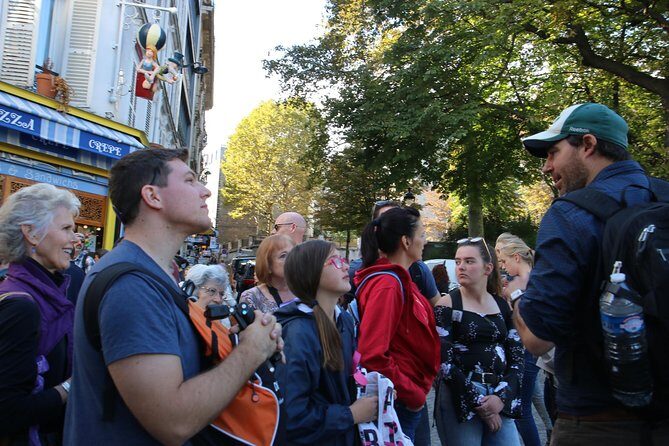
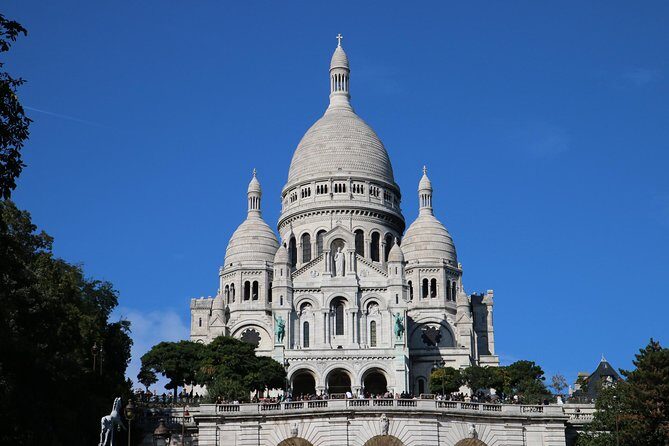
Stop 1 is Montmartre (about 1 hour), then you go to Basilique du Sacre-Coeur de Montmartre for roughly 20 minutes, with admission noted as free, and you’ll go inside.
That “inside” part is important. It’s easy to treat Sacré-Cœur like a photo stop, but walking into a major basilica changes the experience. Even with limited time, you’ll come away with a better feel for the place than you’d get from the outside staircase crowd alone.
What to expect here:
- A short but focused orientation so you don’t feel rushed without explanation
- A quick look that’s long enough to appreciate the interior atmosphere
- Enough time to move on while still keeping energy up for the rest of the route
Potential drawback: 20 minutes is not a full worship-service visit, so if you want a slow, quiet, no-rush experience, you might plan extra time later on your own. But as part of a highlights tour, it’s a good balance.
Moulin Rouge walk-by: a quick look, not a ticketed show
Next is the Moulin Rouge area (about 10 minutes). The tour includes stories, but Moulin Rouge access and show are not included.
So here’s the realistic expectation: you’ll learn what the famous façade represents, then you’ll move on. If you want a seated show, plan it separately. Don’t count this stop as your Moulin Rouge plan—think of it as the “context stop” that tells you why people talk about it so much.
This actually can be a positive. It prevents the tour from getting swallowed by lines and timing issues, and it keeps your schedule moving toward the wider Paris icons. If you’re not going to see the show, this is a good way to still understand the landmark.






Arc de Triomphe and Champs-Élysées: the big Paris payoff
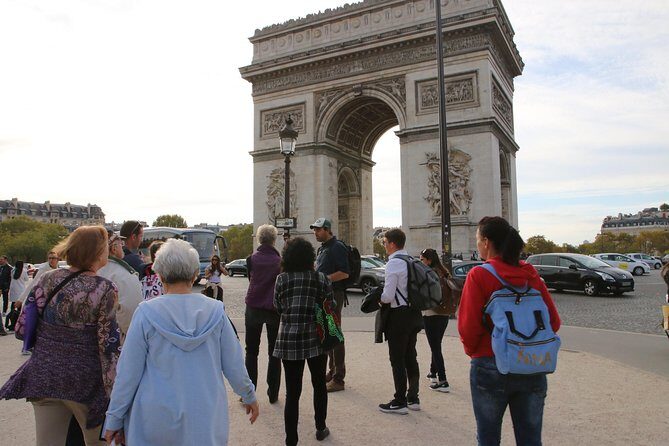
The tour then heads to the Arc de Triomphe area (around 20 minutes), with stories included, but Arc entry is not included.
You’ll also pass by the Champs-Élysées for about 5 minutes—again, focused on the story and what to notice, not a long wander.
Finish point matters too. The tour ends at Arc de Triomphe, Place Charles de Gaulle, 75008 Paris. Several reviews mention that the shorter tour can wrap around the Arc area right on time, which is what you want when you still need energy to explore on your own after.
If the Arc’s situation changes day-to-day (like closures), you might find your guide working around it. One review mentions the Arc being closed during a holiday period and the guide still helping the group get a useful view. That’s exactly the kind of flexible attitude you want from a guide on a time-limited route.
Dalida, Place du Tertre, and Bateau-Lavoir: the Paris you’ll remember
After the big names, the tour adds several stops that feel very Montmartre-specific and very “walkable Paris.”
Here are the included photo/sight stops you’ll move through:
- La Maison de Dalida (sightseeing and photos)
- Place du Tertre (sightseeing and photos)
- Le Bateau-Lavoir (sightseeing and photos)
- Fontaines Wallace (sightseeing and photos)
- Église Saint-Pierre de Montmartre (sightseeing and photos)
- Café des Deux Moulins (a stop for sightseeing/photos on Rue Lepic)
What makes these stops valuable is variety. You get:
- Artist-square energy at Place du Tertre
- A music/celebrity connection with Dalida
- An arts-history vibe around Le Bateau-Lavoir
- Street-level Paris charm from Wallace fountains
- And a true “you’re here” feeling from a classic café stop at Café des Deux Moulins
Some of these locations are best enjoyed with small observations. For example, Wallace fountains aren’t just decoration—they’re a clue to how Paris provides public life in a practical, everyday way. The church and village-like corners of Montmartre also help you understand why people keep returning to this neighborhood.
Also, guides in reviews mention photo help. If you care about having decent travel photos, plan to use your phone/camera—and don’t hesitate to ask the guide for a group picture while you’re stopped.
Metro orientation: the one planning item you can’t ignore
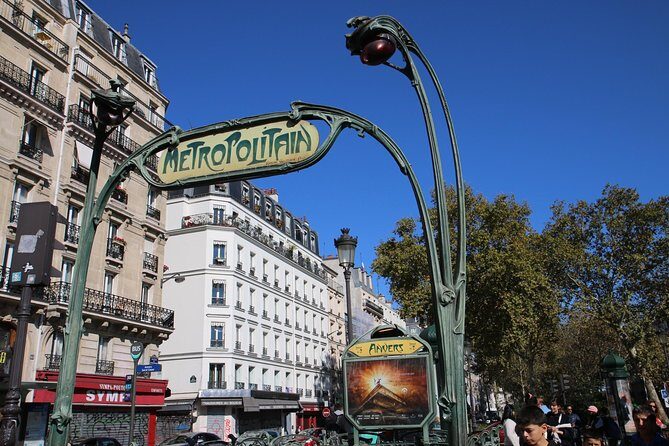
One of the most practical parts of this tour is the Paris Metro segment (about 10 minutes), included as sightseeing/photos. But the system itself requires planning.
You’ll be advised that you need an EASY PASS (Navigo) card topped up with a MOBILIS ticket for Zones 1 & 2. This is a real “make or break” detail. If you show up without the right card setup, you’ll waste time.
Why I like this for you: it removes guesswork. Even a brief Metro orientation helps you feel confident using the system later. Several reviews explicitly mention Metro guidance as a key reason to feel comfortable during the rest of the trip.
What to do:
- Get the EASY PASS / Navigo card before the tour if possible
- Make sure it’s topped up with the Zones 1&2 MOBILIS setup you were told to use
Price and value: what $36.08 buys you (and what it doesn’t)
At $36.08 per person for an approx. 2 to 3 hours tour, the value depends on your goal: an efficient orientation plus stories plus a handful of major sights.
What you get that you’d otherwise pay for in time (if not money):
- A small group with a guide who keeps the flow moving
- Multiple stops that cover both postcard icons and neighborhood details
- Sacré-Cœur included for interior time
- A Metro orientation so you can move around without fear afterward
- A clear finish near the Arc, which is handy for planning dinner or a next stop
What costs extra (or isn’t included):
- Moulin Rouge access and show
- Arc de Triomphe entry
- Metro access requires the right card/ticket (EASY PASS + MOBILIS Zones 1&2)
So I’d frame this as a “highlight sampler with useful coaching.” If you want tickets to a show or a long interior visit, you’ll need to plan those separately. If your goal is to see where everything is and understand what matters, this price feels more like you’re buying time and context than buying admission tickets.
Who should book this Montmartre-to-Arc highlights tour?
This tour is a strong fit if:
- You want an intro to Paris sights without spending hours mapping routes
- You like storytelling and want the city’s meaning explained at street level
- You want a manageable walking day with a small group cap of 15
- You’re traveling with kids who can handle short stops and movement (one review notes an 11-year-old was won over)
It’s less perfect if:
- You only like slow, deep visits inside major monuments
- You’re expecting ticketed experiences at Moulin Rouge and Arc as part of the price
- You have limited tolerance for walking and Metro transfers within 2-3 hours
If you’re unsure, choose based on your energy. The shorter option can be enough to get the highlights and then let you return on your own with better knowledge.
Should you book it? My practical call
Yes, book it if you want a fun, fast way to get your bearings in Paris, with a guide-led route that covers Montmartre, big-name icons, and classic photo stops. The small group size, the English storytelling, and the Metro orientation are the combo that make it feel useful—not just scenic.
Skip or adjust expectations if you’re hoping for ticketed access to Moulin Rouge or the Arc inside. Plan those separately, and consider adding extra time to any one stop you fall in love with—especially Montmartre, where a short guided taste is often just the beginning.
If you like to start your trip with a plan you can build on, this is a solid way to do it.
FAQ
How long is the tour?
It runs about 2 to 3 hours (approx.).
What group size should I expect?
The tour is capped at a maximum of 15 people.
Is the tour in English?
Yes, it’s offered in English.
Where does the tour start and where does it end?
It starts at 72 Blvd Marguerite de Rochechouart, 75018 Paris and finishes at Arc de Triomphe, Place Charles de Gaulle, 75008 Paris.
Do I need tickets for Sacré-Cœur, Moulin Rouge, or the Arc?
Sacré-Cœur is listed as free for admission and you go inside. Moulin Rouge access and show are not included, and the Arc of Triomphe admission is not included.
Is the Metro ride included?
The Paris Metro portion is included for sightseeing/photos, but entry requires your EASY PASS (Navigo) card topped up with a MOBILIS ticket for Zones 1 & 2.
Is a mobile ticket used?
Yes, the tour uses a mobile ticket.
Is there any food or café admission included?
The stop at Café des Deux Moulins is listed as admission ticket free, and it’s a sightseeing/photos stop.
What’s the cancellation rule?
You can cancel for a full refund up to 24 hours in advance of the experience start time.