REVIEW · PARIS
Small group visit to the Montmartre district in Italian
Book on Viator →Operated by Visita Parigi Diversamente · Bookable on Viator
Montmartre is all angles and stories. This Italian small-group walk turns the usual Sacré-Cœur routine into a route with street-life details, local landmarks, and big viewpoints—without feeling rushed. I especially like the max 8 travelers setup, and the way you get an Italian guide who can explain what you’re seeing, not just point at it.
Two things I love: the itinerary mixes the postcard spots with lesser-seen stops, and the guide’s personality (Maurizio, if you get him) keeps the pace fun and lively, even on an uphill stroll. One possible drawback: this area is steep, so you’ll want moderate fitness and comfortable shoes, especially on longer stair segments.
If the weather is decent, this is a smart 2-hour way to get oriented and start loving Montmartre for more than its skyline photos.
In This Review
- Key highlights to look for
- The Montmartre experience: more than Sacré-Cœur photos
- Price and value for a 2-hour Italian small-group walk
- Where you meet and how the walk flows
- Stop 1: Le Mur des Je t’aime in 250 languages
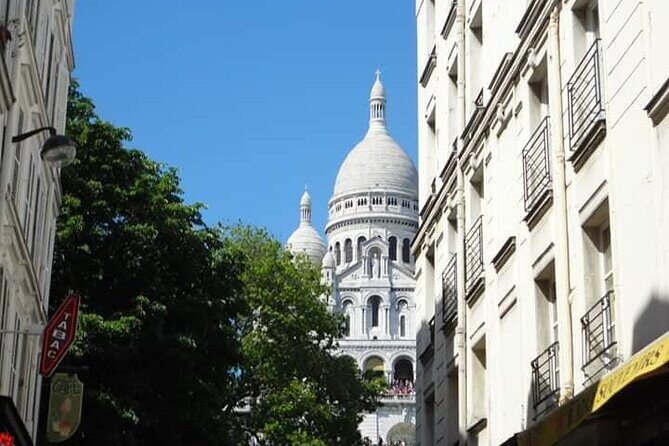
- Stop 2: Sacré-Cœur Basilica and the best Paris views nearby
- Stop 3: La Petite Maison Rose (since 1920) and the mystery of the pink
- Stop 4: Montmartre streets, stairways, squares, and views
- Stop 5: Le Bateau-Lavoir in a classic Paris square
- The sights you pass along the way: windmills, vineyard, Dalida, and Place du Tertre
- Language experience: Italian guidance that keeps it understandable
- Timing, crowds, and weather: what to expect on the hill
- Comfort tips that make a difference
- Should you book this Montmartre tour?
- FAQ
- How long is the Montmartre tour?
- What is the group size?
- Is the tour in Italian?
- Where does the tour start and end?
- Do I need to pay admission at the stops?
- What fitness level do I need?
- Is a mobile ticket used?
- What if the weather is bad?
Key highlights to look for
- Mur des Je t’aime in 250 languages: a quick stop that hits hard, even if you barely read the words.
- Sacré-Cœur viewpoint time: the basilica square is your “Paris from above” moment.
- La Petite Maison Rose (since 1920): a small building with big local meaning—yes, it really is pink.
- Le Bateau-Lavoir: a historically important spot in a classic Paris square setting.
- A guided climb with smart pacing: you’ll move through narrow streets, stairways, and viewpoints without chaos.
The Montmartre experience: more than Sacré-Cœur photos
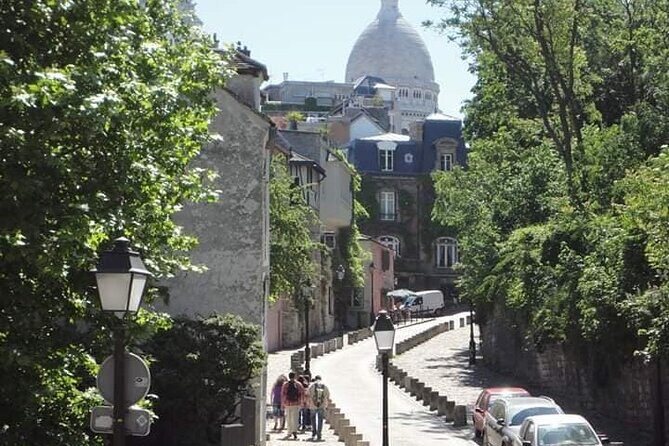
People come to Montmartre for one reason: views. But the neighborhood is also about texture—stairs, stone, little squares, and the sense that art lives in the walls.
This tour does a good job starting your visit in the right mindset. You begin around the Moulin Rouge area and then work your way upward. That gradual climb matters. It helps you understand why Montmartre feels different from the rest of Paris, and it gives you time to spot viewpoints along the way instead of sprinting straight to the top.
It’s also built around the idea that Montmartre has layers. You’ll pass through the classic “artists’ quarter” atmosphere, but you’ll also get pointed toward corners that feel more local than touristy. That shift is what makes the 2 hours feel worth it.
You can also read our reviews of more tours and experiences in Paris.



Price and value for a 2-hour Italian small-group walk
At $37.83 per person, you’re paying for a guided route, a small-group experience, and a planned sequence that keeps you moving with purpose. The nice part: the main stops listed are admission-free, including the Mur des Je t’aime and Sacré-Cœur.
So the value isn’t about entrance fees. It’s about time. In 2 hours you get:
- a guided storyline tying streets to history,
- photo-worthy viewpoints at a human pace,
- and a route that doesn’t rely on you guessing where to go next.
Also, the group is capped at 8 travelers, which tends to make questions easier and the walking rhythm more comfortable. If you dislike big crowds and loud “herd tours,” this kind of size is a big plus.
Where you meet and how the walk flows
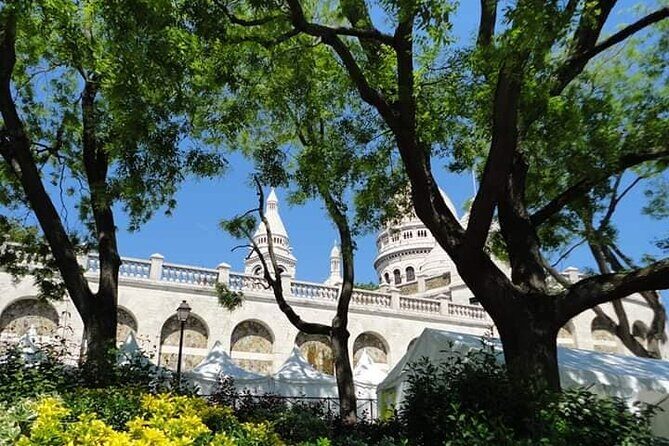
You meet at Place des Abbesses in Montmartre (75018). From there, the walk moves through the neighborhood and ends at Sacré-Cœur Basilica on Rue du Chevalier de la Barre.
That start-to-finish flow is practical. Abbesses sits on the edge of Montmartre’s busier zones, so it’s a natural launch point. Ending at Sacré-Cœur also makes sense because it’s the obvious “capstone” for the area: you finish at the viewpoint everyone comes for, when you’re already oriented.
The tour lasts about 2 hours, so think of it as a concentrated neighborhood introduction. You’ll likely want to extend the fun afterward on your own—especially in the areas around Place du Tertre where street-art energy and artist activity often take over.
Stop 1: Le Mur des Je t’aime in 250 languages
The Mur des Je t’aime is the kind of stop that’s easy to overlook if you’re speed-walking Montmartre. Here, it’s treated as a real moment, not just a quick photo.
You’ll see the wall covered in love messages in 250 languages. That detail matters because it turns a simple landmark into something more universal. Even if you don’t read most of the words, the idea lands fast: this is Montmartre’s romantic side, but filtered through a modern, international lens.
Time is short—around 5 minutes—so don’t plan to study every letter. Instead, treat it like a reset button. It’s a perfect pause before the climb and gives the walk a warmer emotional tone.
Practical note: it’s outdoors and close to other foot traffic, so if you want cleaner photos, you’ll need a little patience and angle play.
Stop 2: Sacré-Cœur Basilica and the best Paris views nearby
Sacré-Cœur isn’t just a building. It’s a whole stage for the city—especially from the square around it. This is where the tour earns its reputation.
You’ll get time on the top area (about 10 minutes), enough to:
- soak in the skyline spread,
- spot landmarks from above,
- and understand why this spot became a Montmartre symbol.
This stop also helps you connect the dots. When you’ve been walking through narrow lanes and stairways, the viewpoint makes sense of the geography. You start to see Montmartre’s layout instead of just reacting to it.
Potential drawback: Sacré-Cœur is naturally popular. Even on a small-group walk, you can expect some crowd flow. If you’re sensitive to crowds, keep your expectations flexible during the viewpoint moment.
Still, for first-timers—or for anyone who wants to see Montmartre properly from above—this is the pay-off.



Stop 3: La Petite Maison Rose (since 1920) and the mystery of the pink
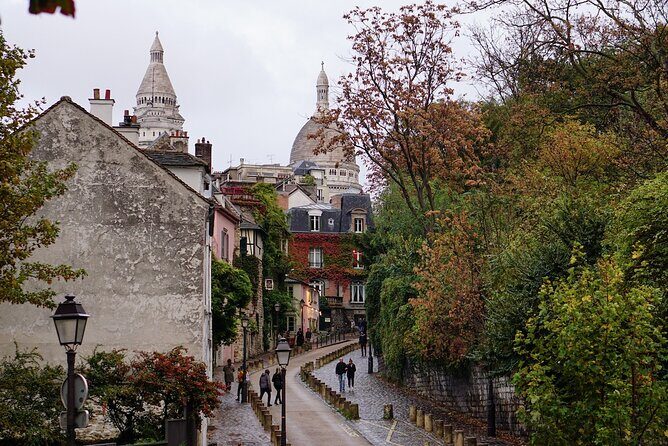
Then you hit a totally different vibe: La Petite Maison Rose, a small pink house that dates back to 1920.
Why pink? That question is basically the point. This isn’t just a quirky building for a quick snapshot. It’s part of Montmartre’s identity: playful, artsy, and slightly stubborn about its look. On this walk, you’re not just seeing it—you’re learning how such a detail becomes famous in its own right.
It’s a short stop (about 5 minutes), which is ideal. You get a taste of the neighborhood’s personality without losing time before the bigger streetscape moments.
Stop 4: Montmartre streets, stairways, squares, and views
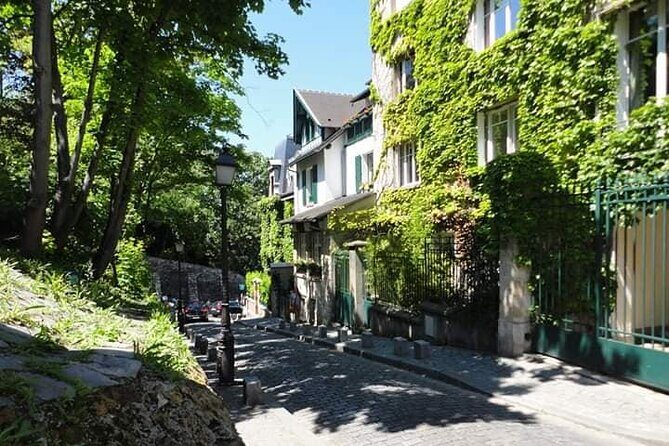
After the “wow” landmarks, the walk becomes more about movement and atmosphere. You’ll spend about 30 minutes in the neighborhood itself—narrow streets, stairways, and those recurring little lookouts where the city suddenly opens up.
This is the portion you feel in your legs, but it’s also where Montmartre becomes real. You’ll notice how the streets curve, how the buildings sit close, and how the views appear in pieces rather than all at once.
Here’s the key value: a guide helps you spot what matters instead of wandering aimlessly. You won’t just cross from one photo stop to the next. You’ll understand why you’re turning here, and why a square or street corner feels important.
The drawback is physical. Even if you’re a competent walker, you’re dealing with hills and stairs. Plan on an unhurried pace and don’t treat it like a cardio workout.
Stop 5: Le Bateau-Lavoir in a classic Paris square
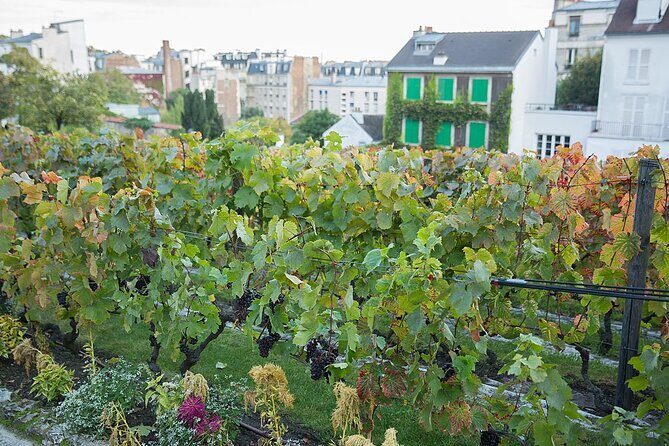
Le Bateau-Lavoir is a historically meaningful stop in a typically Parisian square setting. It’s the kind of place that feels “small” on first look, but it rewards attention if you pause and let the context click.
This stop is timed at about 10 minutes, which works well. You get enough time to:
- understand why it’s connected to the artistic atmosphere of Montmartre,
- notice the way squares shape everyday life in Paris,
- and take a breather before you wrap up at Sacré-Cœur.
If you like art history that feels connected to streets—not just museums—this is a good way to scratch that itch without a full museum day.
The sights you pass along the way: windmills, vineyard, Dalida, and Place du Tertre
Even though the formal stop list highlights specific points, the route also weaves in several famous Montmartre “signals” that help you recognize the neighborhood from guidebook pages—then understand what’s behind the fame.
On this walk, you’ll go past:
- the last two windmills of Montmartre,
- a vineyard area,
- Dalida’s house,
- and the I Love You area we already covered,
- plus the route to Place du Tertre as you reach the top.
Place du Tertre is especially important. It’s where Montmartre’s artist energy becomes obvious. You’ll reach it as part of the climb, and it sets up the final reveal at Sacré-Cœur.
This mix is a win because it balances three types of sightseeing:
- icons (Sacré-Cœur),
- emotional landmarks (the love wall),
- and neighborhood identity (windmills, vineyard, Place du Tertre, artistic squares).
Language experience: Italian guidance that keeps it understandable
This tour is specifically in Italian, and that matters more than you might think. Montmartre is full of small references—names, artistic connections, and local explanations. When the guide talks in your language, you don’t lose the meaning.
You also get the benefit of a guide who can tailor the pace to questions. On a small group, that’s a big deal. You’re not just listening; you’re participating in a moving conversation while you walk.
The reviews you’ll see for this type of tour often highlight that kind of guide energy—someone like Maurizio, who brings passion for Paris and keeps the story flowing without turning it into a lecture.
Timing, crowds, and weather: what to expect on the hill
This is a weather-dependent tour. Montmartre is a walking experience, and the route relies on outdoor time. If conditions are rough, the experience may be canceled and you’ll be offered a new date or a refund.
Crowds are also just part of Montmartre. The small-group size helps, but you still can’t control the area’s popularity. Aim for flexible expectations around the Sacré-Cœur viewpoint window and you’ll enjoy the day more.
If you’re visiting in peak season, consider booking earlier. The average booking time is about 59 days in advance, which usually means slots can fill.
Comfort tips that make a difference
This isn’t a flat stroll. You’ll want:
- good walking shoes (stairs and uneven pavement),
- water, especially if it’s warm,
- and a light layer if evenings feel cooler.
Also, try to bring a photo plan. At Sacré-Cœur and along viewpoint stretches, you’ll likely have only short moments at each angle. Decide what you want most: skyline wide shots, close details, or people-free views.
One practical strategy: enjoy the views with your eyes first, then take photos second. It’s the best way to avoid the classic tourist mistake of standing with your phone while you miss what makes the place special.
Should you book this Montmartre tour?
Book it if you want:
- a small-group Montmartre introduction in Italian,
- a guided route that goes beyond Sacré-Cœur and Place du Tertre,
- and a compact, 2-hour way to learn what you’re looking at while still enjoying the streets.
Skip it or reconsider if:
- you don’t handle hills and stairways well,
- you dislike crowd-heavy viewpoints,
- or you only want the absolute fastest postcard checklist. This walk gives you context, not just a sprint.
My take: for the price, the biggest value is the guided storytelling plus the payoff views. You’ll finish at Sacré-Cœur feeling like Montmartre makes sense, not like you just walked past a string of famous stops.
FAQ
How long is the Montmartre tour?
It’s about 2 hours.
What is the group size?
The tour has a maximum of 8 travelers.
Is the tour in Italian?
Yes, this experience is a guided tour in Italian.
Where does the tour start and end?
It starts at Place des Abbesses and ends at Sacré-Cœur Basilica.
Do I need to pay admission at the stops?
The listed admission for the main stops (like the Mur des Je t’aime and Sacré-Cœur) is free.
What fitness level do I need?
The tour calls for moderate physical fitness because of walking and stairways.
Is a mobile ticket used?
Yes, it includes a mobile ticket.
What if the weather is bad?
The tour requires good weather. If it’s canceled due to poor weather, you’ll be offered a different date or a full refund.